2026 Top High Temperature Resistant Red PE Masterbatch?

Time:2026-10-25 Author:Ethan
0%

In 2026, choosing the top High Temperature Resistant Red Pe Masterbatch requires more than comparing shade cards. Processors need stable color, clean dispersion, and reliable performance during demanding polyethylene extrusion. A red pellet may look excellent in the laboratory, yet lose strength beside a hot die. That gap matters.

Smithers’ The Future of Masterbatch to 2028 highlights continuing demand for performance additives, consistent coloration, and more sustainable polymer processing. Grand View Research also identifies packaging, films, and molded plastics as major masterbatch applications. These reports support a practical view: market growth does not remove formulation risks. It makes quality control more important.

Dr. Chris DeArmitt, a recognized plastics materials expert, has said, “Plastics are not the problem; plastic waste is.” His statement is relevant here. A responsible High Temperature Resistant Red Pe Masterbatch should support efficient processing, reduced scrap, and better end-use durability. Pigment heat stability, carrier compatibility, let-down accuracy, and migration resistance deserve close inspection. Food-contact or other regulated applications require documented compliance in the target market.

The details are tangible. Watch the red during repeated extrusion passes. Check filter pressure, melt appearance, and color difference after cooling. Confirm whether the concentrate remains uniform at low dosing levels. Small variations can become visible on thin film.

No universal winner exists. That is easy to forget. A formulation suited to pipe extrusion may disappoint in high-speed film production. This 2026 guide therefore examines technical data, processing experience, supplier transparency, and real application evidence before calling any product “top.” Some conclusions may remain conditional. That is more honest, and more useful, than an impressive ranking without production proof.
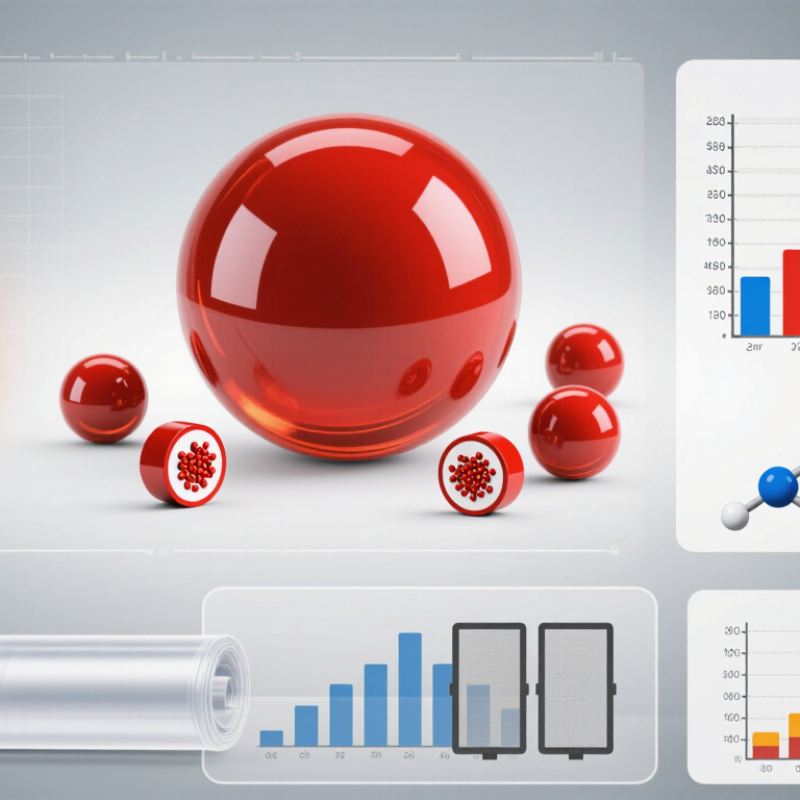
2026 Top High Temperature Resistant Red PE Masterbatch?

What Is High-Temperature-Resistant Red PE Masterbatch?

High-temperature-resistant red PE masterbatch is a concentrated color additive designed for polyethylene processing. It combines heat-stable red pigment with a compatible PE carrier resin. Manufacturers blend these small pellets into natural polyethylene during extrusion, injection molding, or blow molding. The carrier helps distribute the pigment evenly through the melt. This compatibility matters.

The main purpose is to reduce color fading, darkening, or unwanted shade changes under elevated processing temperatures. A stable red masterbatch can support products such as films, pipes, containers, and molded components. In practice, operators may use a low addition rate, often around 1% to 5%, depending on pigment strength and the required color depth. The exact result still depends on temperature, screw speed, and residence time.

Testing should match the real production process. A red shade may look correct at the die, yet change after heat aging or outdoor exposure. Pigment dispersion also deserves close attention. Poor dispersion can create streaks, specks, or uneven gloss. No masterbatch performs perfectly in every PE grade. That is an important limitation. I would test several let-down ratios and inspect both fresh and aged samples before regular production. Small process changes can matter more than expected.

How Is Red PE Masterbatch Formulated for Heat Resistance?

2026 Top High Temperature Resistant Red PE Masterbatch

How Is Red PE Masterbatch Formulated for Heat Resistance?

High-temperature red PE masterbatch begins with a heat-stable red pigment. The pigment must retain color during melting, mixing, and molding. Some organic reds offer bright shades but may lose strength under prolonged heat. Iron oxide reds usually provide better thermal stability, though their shades can appear less vivid. The choice depends on temperature, exposure time, and the final product’s color requirements.

The pigment is combined with a compatible polyethylene carrier resin. A dispersing agent helps break pigment clusters into finer particles. This improves shade consistency and reduces specks on film or molded surfaces. Carefully controlled melt blending also limits pigment damage. Processing stabilizers may protect the mixture during repeated heating cycles. Small details matter. Excessive shear can still create unwanted color shifts.

Laboratory testing should match real production conditions. Technicians can hold samples at selected temperatures, then compare color change, surface defects, and mechanical performance. A masterbatch designed for 220°C may not perform equally during long residence times at higher temperatures. Actual screw speed and cooling conditions also affect results. No formula is perfect. A shade that passes a short oven test may fade during continuous extrusion. This is why experienced formulators review pigment loading, carrier compatibility, and processing history together before approving a red PE masterbatch.

2026 Top High Temperature Resistant Red PE Masterbatch?

How Is Red PE Masterbatch Formulated for Heat Resistance?

Heat-resistant red PE masterbatch typically combines a thermally stable red pigment with a compatible polyethylene carrier, effective dispersion, and a suitable antioxidant package. The chart compares representative upper-end pigment heat-resistance ratings commonly reported in public technical data. Actual performance depends on pigment concentration, residence time, shear, carrier selection, and processing temperature.

Reference range: typical published pigment heat-resistance ratings for plastics processing; values are indicative and should be validated through application testing.

Which Properties Define a High-Performance Red PE Masterbatch?

A high-performance red PE masterbatch must remain stable under heat, shear, and sunlight. Many PE extrusion lines operate between 180°C and 230°C, but the actual profile depends on equipment and resin grade. A reliable concentrate should disperse quickly, deliver strong tinting strength, and avoid specks, plate-out, or filter blockage.

The 2024 Plastics Europe report recorded 413.8 million tonnes of global plastics production in 2023. This scale increases the value of consistent color control, especially in films, pipes, caps, and molded parts. Color accuracy should be checked with CIELAB values, not visual judgment alone. A low ΔE value is useful, but it cannot prove long-term weathering resistance. Pigment heat stability, UV durability, migration behavior, moisture control, and carrier compatibility all matter. I have seen attractive red samples fail after prolonged oven exposure. Testing must reflect the real process.

Tips: Compare let-down ratios under identical conditions. Test pellets after drying and after several extrusion cycles. Check ΔE, surface gloss, haze, and pressure changes across the screen pack. Use ISO 4892-2 for controlled light-aging work, then review the results against actual outdoor exposure. OECD data reports 353 million tonnes of plastic waste in 2019, with only 9% recycled. Cleaner formulations and stable dosing can support better material management, although color performance still needs honest verification.

How to Select Red PE Masterbatch for Different PE Applications?

2026 Top High Temperature Resistant Red PE Masterbatch

Choosing red PE masterbatch starts with the application, not the color chart. PlasticsEurope reports that packaging represented about 39% of European plastics demand in 2023. This scale makes dispersion, migration control, and processing stability critical. For blown film, select a PE-compatible carrier with similar melt flow. Poor matching can create streaks, die buildup, or uneven red shades. Ask for MFR data tested under the same ISO 1133 conditions as your resin.

Injection-molded parts often need stronger heat resistance. High-performance organic red pigments can tolerate demanding processing, but pigment grade and dosage matter. For outdoor pipes, crates, or agricultural film, add lightfastness and weathering data. ISO 4892-2 testing is more useful than a vague “UV resistant” claim. A red that looks stable indoors may fade quickly under sunlight. That mistake is common.

For food packaging, verify the finished article against the destination market’s regulations. Do not rely only on the masterbatch supplier’s general statement. Smithers’ color masterbatch market analysis identifies packaging and film as major demand areas, yet each converter still faces different temperatures, cooling rates, and recycling content. Trial the concentrate at production speed. Check color strength, pressure, odor, ash, and surface defects. A perfect red does not exist. The best choice is the most stable red for your actual PE process.

2026 Top High Temperature Resistant Red PE Masterbatch? - How to Select Red PE Masterbatch for Different PE Applications?

PE Application Typical PE Grade Recommended Red Pigment Type Typical Processing Temperature Recommended Pigment Concentration in Masterbatch Typical Let-Down Ratio Heat Resistance Target Light and Weather Resistance Recommended Carrier Key Selection Criteria Main Technical Caution
Blown Film and Cast Film LDPE, LLDPE, mLLDPE High-performance organic red, such as a quinacridone or high-temperature azo red, depending on shade requirements 160–230 °C 30–50% 1–3% Excellent: typically ≥280 °C Good to excellent; select a weatherfast grade for outdoor film LDPE, LLDPE, or a compatible blend carrier Low filter pressure, good dispersion, low plate-out, and minimal impact on film clarity and sealability Excessive pigment loading or poor dispersion can cause gels, specks, haze, and weak film seams
Injection-Molded Containers and Caps HDPE, MDPE, PP-compatible PE compounds High-temperature red organic pigment; quinacridone red is suitable where strong heat and light stability are required 180–270 °C 30–55% 1–4% Excellent: typically ≥280 °C Good; excellent grades are preferred for long-term outdoor exposure HDPE or a universal polyolefin carrier with suitable melt flow Color strength, short-cycle thermal stability, dimensional consistency, and resistance to migration Check mold temperature, residence time, and regrind content because repeated heat history may change shade
Blow-Molded Bottles and Tanks HDPE, HMW-HDPE High-temperature organic red or selected inorganic red where opacity and durability are more important than brightness 180–250 °C 30–50% 1–4% Excellent: typically ≥280 °C Good to excellent, depending on pigment chemistry HDPE or high-molecular-weight PE carrier Uniform wall color, good melt strength, strong opacity, and low risk of die build-up Very high pigment loading may reduce parison stability and increase melt filtration requirements
Pipe, Profile, and Sheet Extrusion HDPE, MDPE, PE100 compounds Weatherfast high-temperature organic red; inorganic red may be selected for maximum durability and opacity 190–240 °C 30–50% 1–3% Excellent: typically ≥280 °C Excellent for outdoor grades when tested for UV exposure HDPE or the same PE family as the base resin Long-term UV stability, pressure resistance, dispersion after continuous extrusion, and low extractables Color masterbatch should not adversely affect hydrostatic strength, fusion performance, or regulatory compliance
Rotational Molding LLDPE, crosslinkable PE, rotational-molding PE High-temperature red pigment with strong melt stability and good resistance to extended oven exposure 260–320 °C oven temperature; polymer melt temperature is lower than oven temperature 25–45% 2–5% Excellent: typically ≥300 °C preferred Good to excellent for outdoor products LLDPE or rotational-molding PE carrier Uniform coating, low pinholing risk, thermal stability during long cycles, and consistent color between batches Do not judge suitability only from oven temperature; evaluate the actual polymer melt temperature and cycle duration
Wire and Cable Insulation LDPE, HDPE, low-smoke polyolefin compounds High-temperature, low-migration red pigment selected for electrical insulation systems 160–230 °C 30–50% 1–3% Excellent: typically ≥280 °C Good; use a weatherfast grade for exposed cables Low-moisture PE carrier with appropriate electrical purity Low ionic contamination, low moisture, good dispersion, low volatility, and no adverse effect on dielectric properties Confirm halogen, sulfur, heavy-metal, and electrical-property requirements before approval
Agricultural Film and Geomembrane LLDPE, LDPE, HDPE Weatherfast high-temperature red pigment with strong UV durability 160–230 °C 30–50% 1–4% Excellent: typically ≥280 °C Excellent; UV exposure testing is essential LLDPE, LDPE, or HDPE matched to the film resin Resistance to UV, pesticides, fertilizers, moisture, and long-term outdoor aging Verify compatibility with UV stabilizers, antiblock agents, slip additives, and recycled content
General-Purpose PE Film and Household Products LDPE, LLDPE, HDPE Standard organic red for cost-sensitive use; high-temperature red for repeated processing or high barrel temperatures 160–230 °C 25–50% 1–4% Good: typically 240–280 °C Moderate to good, depending on pigment selection Compatible PE carrier matching the base resin Color strength, price efficiency, dispersion, and compatibility with food-contact or consumer-product requirements Low-cost pigments may show shade drift, bleeding, or reduced fastness after prolonged heat exposure
Recycled PE Applications Post-industrial or post-consumer recycled LDPE, LLDPE, HDPE High-temperature red with strong tinting strength and tolerance to variable base-resin color 170–260 °C 35–55% 2–6% Good to excellent: typically 260–300 °C Good; test the complete recycled formulation PE carrier with melt flow close to the recycled resin High hiding power, tolerance to contamination, low odor, stable shade, and reliable dispersion Variable moisture, fillers, previous heat history, and contaminants can affect color and thermal stability

Technical values are typical selection ranges for PE masterbatch development and should be confirmed by laboratory testing with the actual resin, processing equipment, pigment loading, residence time, additives, and end-use requirements. Heat-resistance ratings describe pigment or color-system stability and do not replace validation of the complete molded or extruded product.

How Are Heat Resistance and Color Stability Tested?

2026 Top High Temperature Resistant Red PE Masterbatch

How Are Heat Resistance and Color Stability Tested?

Heat resistance testing starts with controlled PE plaques. The masterbatch is diluted to the target loading and molded under fixed conditions. Technicians record melt temperature, residence time, screw speed, and cooling rate. These details matter. A red shade may look stable at 210°C but shift after a longer hold. Test pieces should match the intended production thickness. Thin plaques can exaggerate color changes.

For heat exposure, samples are placed in a calibrated oven at selected temperatures. Common intervals include 24, 48, and 72 hours, depending on the application. Operators compare exposed samples with unheated controls. They inspect fading, browning, surface defects, and pigment migration. Color stability is measured with a spectrophotometer. The instrument records L*, a*, and b* values, while ΔE shows the overall color difference. Higher ΔE usually means a more visible change.

Repeat testing improves reliability. Different batches, operators, and molding runs should be included. Reprocessing the material through several thermal cycles can reveal hidden instability. One limitation remains: laboratory aging cannot perfectly reproduce every extruder. Moisture, shear, oxygen, and uneven heating may alter results. That gap deserves attention. A practical evaluation should therefore include a production trial before approving a red PE masterbatch for continuous high-temperature use.

FAQS

What makes a red PE masterbatch high-performance?

It should resist heat, shear, and sunlight during processing and use. It must disperse quickly and provide strong, even coloration. Specks, plate-out, and screen blockage should remain minimal. Performance still depends on resin, equipment, and processing conditions.

What processing temperatures should be considered?

Many PE extrusion lines operate between 180°C and 230°C. The real temperature profile varies with equipment and resin grade. A shade stable at 210°C may change during a longer heat hold. Temperature alone is not enough.

How is heat resistance tested?

Technicians dilute the concentrate to its target loading. They mold controlled plaques under fixed conditions. Important records include melt temperature, residence time, screw speed, and cooling rate. Samples are then placed in a calibrated oven. Common exposure periods are 24, 48, and 72 hours.

How is color stability measured?

Exposed samples are compared with unheated controls. A spectrophotometer records L, a, and b values. ΔE indicates the total color difference. A higher ΔE usually means a more visible shift. Visual inspection alone can miss subtle changes.

What defects should technicians inspect after heating?

They should check fading, browning, surface defects, and pigment migration. They should also examine gloss, haze, and surface uniformity. A red plaque may look attractive but still fail after prolonged oven exposure. Appearance can deceive.

Why should testing include several extrusion cycles?

Reprocessing can reveal instability hidden during one thermal cycle. Repeated heat and shear may cause shade changes or surface defects. Testing different batches and molding runs improves confidence. One successful sample proves very little.

How can production trials improve approval decisions?

Laboratory aging cannot reproduce every extruder perfectly. Moisture, oxygen, uneven heating, and shear may change the result. A production trial should use the intended resin and equipment. Pressure changes across the screen pack also deserve review. The gap matters.

What other properties should be reviewed before continuous use?

Review UV durability, migration behavior, moisture control, and carrier compatibility. Check the let-down ratio under identical conditions. Test dried pellets and compare them after several extrusion cycles. Controlled light-aging can follow ISO 4892-2. Outdoor exposure should still be considered. Laboratory data is not a promise.

Conclusion

High Temperature Resistant Red Pe Masterbatch is a concentrated color additive designed to provide strong, consistent red coloration in polyethylene products exposed to elevated processing or service temperatures. Its performance depends on carefully selected heat-stable pigments, compatible carrier resins, dispersing agents, and stabilizers. A well-formulated masterbatch should offer excellent pigment dispersion, strong tinting strength, reliable thermal stability, migration resistance, weatherability, and minimal impact on the mechanical properties of the final PE product.

Selection should be based on the application, including film, injection molding, extrusion, rotational molding, pipes, containers, or outdoor products. Processing temperature, residence time, resin grade, required shade, and exposure conditions all influence the appropriate formulation and dosage. Heat resistance and color stability can be evaluated through controlled thermal aging, repeated processing trials, color-difference measurements, pigment dispersion analysis, and comparison before and after heat exposure. These tests help confirm that the red color remains uniform, stable, and suitable for demanding polyethylene applications.


Ethan

Ethan

Ethan is a seasoned marketing professional with a deep expertise in our company's innovative product line. With a passion for sharing knowledge and insights, he takes the lead in regularly updating our corporate blog, where he explores industry trends, product features, and effective marketing......