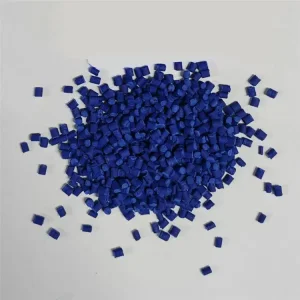
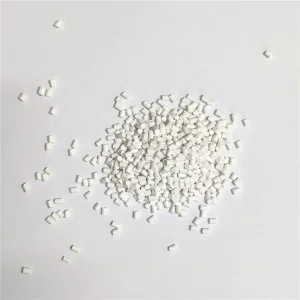
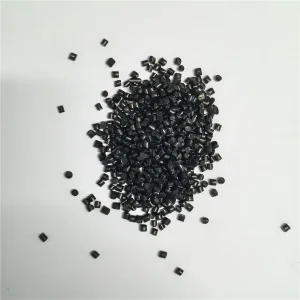
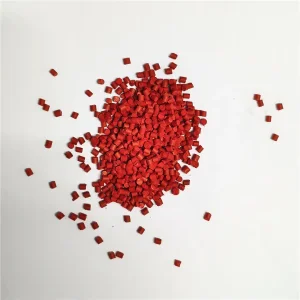
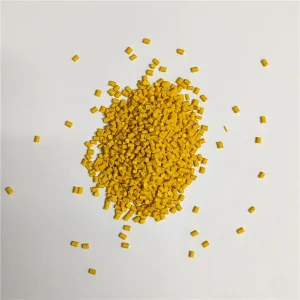
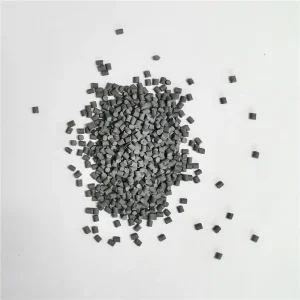
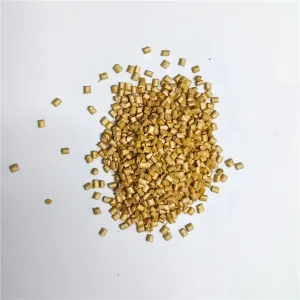
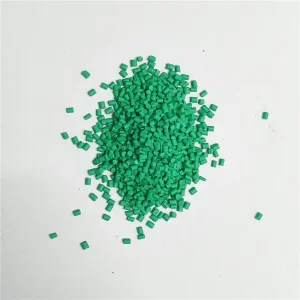
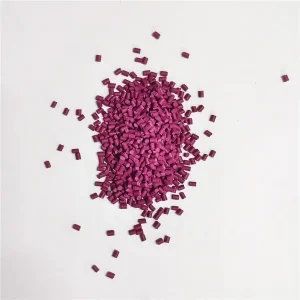
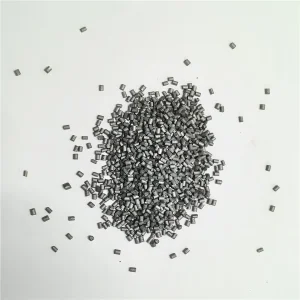
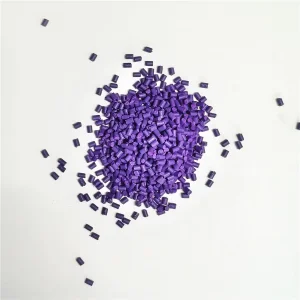
Engineered for blown film extrusion, injection molding, and complex industrial profile manufacturing with heat resistance exceeding 260°C.
Understanding interfacial tension, melt viscosity matching, and the thermodynamics of high-concentration pigment incorporation in polyolefin matrices.
In the modern plastics processing ecosystem, evaluating qualified products suppliers & supplier networks requires going far beyond simple color matching. Industrial polymer compounding demands an intimate technical understanding of micro-dispersion mechanics, interfacial shear stress during twin-screw extrusion, and thermodynamic compatibility between carrier resins and target base polymers.
Masterbatch compounding is fundamentally a process of dispersing solid inorganic or organic pigment particles—often supplied as agglomerates with diameters ranging from 10 to 100 micrometers—down to their primary particle sizes (15–50 nanometers for specialty carbon blacks, and 200–300 nanometers for Rutile Titanium Dioxide, TiO₂). Achieving complete, uniform wetting and stabilization prevents re-agglomeration during secondary thermal cycles such as blown film extrusions or complex thin-wall injection molding.
Selecting the correct Melt Flow Index (MFI) for the PE carrier (e.g., LLDPE/LDPE blends with MFI between 20g/10min and 50g/10min at 190°C/2.16kg) ensures rapid melt transition without causing structural viscosity mismatch or lowering the mechanical tensile strength of the end-product.
Rigorous quality control utilizing EN 13900-5 melt pump filtration tests. Premium masterbatches maintain FPV ratings under 0.5 bar/gram, guaranteeing zero melt line breakages, pinholes, or filter mesh clogging in ultra-thin blown films (<15 microns).
Thermally stabilized organic chromophores paired with high-purity inorganic carriers prevent thermal degradation, discoloration, and gas evolution during long-residence-time processing in heavy industrial machinery.
Strategic market analysis: How regional manufacturing shifts, circular economy mandates, and raw material volatility are redefining global plastic procurement.
The global masterbatch market, currently valued at over USD 12 Billion and expanding at a compound annual growth rate (CAGR) of 5.4%, is undergoing a profound structural transition. Converters across North America, the European Union, and emerging manufacturing hubs in Southeast Asia and Latin America are migrating toward high-concentration masterbatch formulations to decrease freight overhead, lower storage requirements, and minimize carbon footprints associated with logistics.
Key regulatory frameworks—including the European Union’s Packaging and Packaging Waste Regulation (PPWR) and global mandates for Post-Consumer Recycled (PCR) resin incorporation—have shifted supplier selection criteria. Procurement directors no longer choose a supplier based purely on unit price per kilogram. Instead, the focus has pivoted toward total operating cost efficiency, technical batch-to-batch consistency, and the supplier's ability to compound additives that preserve the mechanical integrity of degraded recycled resins.
| Region | Primary Industrial Drivers | Dominant Product Demand | Key Compliance Requirement |
|---|---|---|---|
| North America | Automotive lightweighting, rigid industrial packaging, agricultural stretch film | High-opacity White PE, UV Black Masterbatch, Functional Desiccant Additives | FDA 21 CFR, ASTM D-4236, Heavy Metal-Free |
| European Union | Circular economy, mandatory PCR content incorporation, eco-design packaging | Carbon Black free sortable colors, Bio-carrier compounds, Odor-neutralizing additives | EU REACH, SVHC-free, EN 71-3 Safety Standards |
| Asia-Pacific | Massive consumer packaging expansion, construction geomembranes, electronics housing | High-dispersion Color Masterbatches, Calcium Carbonate Filler Compounds | GB/T Standards, RoHS compliance, ISO 9001:2015 |
| Latin America & MEA | Agricultural greenhouse films, municipal water piping infrastructure, flexible packaging | High-load Carbon Black (P-type/N-type), Weatherable Anti-UV Color Granules | ISO 14001, International Migration Limits |
Exploring advanced polymer physics, hyper-dispersant chemical architectures, bio-based carriers, and NIR-detectable color formulations.
Traditional low-molecular-weight PE waxes are being replaced by hyper-dispersant block copolymers. These additives form dynamic covalent bonds with pigment surfaces, dramatically reducing viscosity drag during extrusion and eliminating surface blooming or chalking in molded components.
Conventional black masterbatches utilizing standard furnace carbon black absorb NIR radiation, making sorting impossible in automated recycling MRF facilities. Next-gen black masterbatches utilize specialty organic black pigments or high-reflective spinels, allowing 100% automated optical sorting of black plastics.
Formulating masterbatches utilizing mass-balance certified ISCC PLUS bio-based PE carriers or high-purity PCR polyolefins. This technological breakthrough empowers brand owners to reduce Scope 3 carbon emissions without compromising mechanical tensile or impact performance.
Tailored masterbatch formulation strategies engineered to solve specific manufacturing challenges across critical industrial sectors.
Agricultural greenhouse films and silage wraps require continuous protection against intense UV irradiation, elevated temperatures, and agrochemical exposure (sulfur and chlorine compounds). Masterbatches for this domain integrate Hindered Amine Light Stabilizers (HALS) combined with non-migrating, weather-fast organic pigments. This guarantees that greenhouse covers retain structural elongation at break and light transmission metrics over 3 to 5 years of continuous outdoor exposure.
Exterior automotive trims, under-the-hood components, and consumer appliance housings require strict color harmony under diverse lighting conditions (D65, A, F11 illuminants) without metamerism. High-concentration PE masterbatches engineered with micro-milled pigments eliminate flow lines, weld line weakness, and surface sink marks in complex, thick-walled injection-molded parts while conforming to VDA 270 low-odor and VOC standards.
Purity is paramount for blow-molded food containers, squeeze bottles, and pharmaceutical packaging. Utilizing low-extractable pigments free of heavy metals (Lead, Cadmium, Hexavalent Chromium), diarylide contaminants, and primary aromatic amines (PAAs), our white, yellow, and blue masterbatches strictly adhere to FDA 21 CFR 177.1520 and EU No 10/2011 regulations. They ensure absolute zero taste transfer or toxicological leaching into contained products.
HDPE pressure pipes for municipal water distribution and mining geomembranes require precise carbon black particle size dispersion (<20nm) at exactly 2.0% to 2.5% loading in the final pipe. High-grade Black PE masterbatch prevents Environmental Stress Cracking (ESCR) and thermal-oxidative degradation, extending the operational service lifespan of buried infrastructure beyond 50 years according to ISO 4427 standards.
How Changzhou Jiazhou Plastic Products leverages industrial cluster synergies to deliver unmatched quality, scale, and cost-efficiency.
In global procurement, navigating supply chain bottlenecks, volatile polymer pricing, and long lead times is a constant challenge for plastic converters. Operating from Changzhou, Jiangsu Province—one of China’s most advanced chemical synthesis and polymer engineering hubs—Changzhou Jiazhou Plastic Products Co., Ltd. provides a fully integrated manufacturing infrastructure that resolves global sourcing vulnerabilities.
China's masterbatch compounding ecosystem delivers distinct advantages through vertical integration, rapid color matching capabilities, and immediate access to top-tier raw material feedstocks (such as high-purity TiO2, furnace carbon black, and localized polyolefin carrier resins). This cluster effect empowers Jiazhou to maintain an agile production pipeline capable of executing custom compounding orders with an industry-leading lead time of just 15 days.
Our 6,000m² facility operates high-torque, co-rotating twin-screw extruder lines equipped with gravimetric loss-in-weight feeders. This guarantees absolute gravimetric accuracy (±0.2%) during raw material dosing, eliminating batch-to-batch color drift.
Utilizing Datacolor 800 spectrophotometers and computerized match-prediction software, our qualified laboratory team provides sample formulation matches and lab swatches within 48 hours of receiving physical customer target samples or RAL/Pantone color codes.
By directly optimizing pigment dispersion efficiency, Jiazhou masterbatches allow converters to lower total let-down ratios (LDR) from standard 4% to 1.5% - 2%, yielding up to 25% direct savings in total raw material cost per metric ton of processed plastic.
Rigorous international certification, laboratory testing, and compliance documentation ensuring seamless integration into global markets.
Exporting to over 100 countries requires comprehensive regulatory alignment and flawless quality documentation. Every production lot at Changzhou Jiazhou undergoes standardized laboratory testing protocols to guarantee absolute compliance with international environmental and health standards.
Explore our full line of specialized color and functional masterbatches engineered for maximum color strength and processability.
Deep technical answers addressing common processing issues, formulation math, and supplier sourcing guidelines.
The carrier resin must be chemically compatible with the base virgin resin to prevent phase separation, delamination, or reduced structural strength. For polyolefin applications (LDPE, LLDPE, HDPE, PP), a Polyethylene (PE) carrier with a significantly higher Melt Flow Index (MFI) than the matrix resin is chosen. This ensures rapid melting and uniform distribution during extrusion without generating un-melted gels or streak marks.
Film defects are primarily caused by un-dispersed pigment agglomerates, poor filtration pressure value (FPV), or carrier polymer cross-linking. Utilizing masterbatches with an FPV rating under 0.5 bar/g guarantees that pigment particles are micro-milled under 2 microns, effectively eliminating die buildup, bubble instability, and pinhole formation in thin films down to 10 microns.
The Let-Down Ratio (LDR) is the percentage of masterbatch blended into the total virgin polymer mass. The formula is: Masterbatch Weight (kg) = Total Polymer Required (kg) × LDR (%). For example, to produce 1,000 kg of finished PE film at a 2% LDR, mix 20 kg of masterbatch with 980 kg of virgin PE resin. High-concentration masterbatches allow lower LDRs (e.g., 1.5% - 2.0%), reducing total unit material cost.
Rutile TiO₂ has a higher refractive index (2.73) compared to Anatase TiO₂ (2.55), imparting vastly superior opacity, tinting strength, and UV weather resistance. Rutile is essential for outdoor applications and thin films requiring maximum hiding power at low dosages. Anatase is typically used only in non-critical indoor packaging or low-cost application profiles.
PCR resins frequently present baseline color variations, residual odors, and thermal degradation history. Utilizing functional color masterbatches formulated with antioxidant packages (Irganox 1010/168) and high tint-power organic pigments neutralizes underlying PCR yellowing, preserves melt stability during re-processing, and restores vibrant aesthetic finishes.
A trustworthy global supplier should provide ISO 9001:2015 certification, ISO 14001 environmental compliance, RoHS and REACH SVHC test reports issued by independent laboratories (e.g., SGS, TÜV), FDA 21 CFR compliance certificates for food-contact items, and detailed Certificate of Analysis (COA) documents for every dispatched batch detailing MFI, ash content, and Delta E tolerances.