How to Choose Pipe Special Black PE Masterbatch?

Time:2026-09-20 Author:Sophia
0%

Choosing the right Pipe Special Black Pe Masterbatch requires more than comparing darkness or price. A pipe may look perfectly black yet fail during extrusion. Its surface can hide poor carbon black dispersion, unstable melt flow, or weak carrier compatibility. These problems often appear as specks, stripes, die buildup, or uneven wall thickness.

Practical selection starts with the polyethylene grade and processing conditions. Check the masterbatch carrier, pigment concentration, recommended dosage, and melt flow behavior. The product should disperse evenly at the plant’s actual screw speed and temperature. Ask for technical data, batch records, and test results from a reliable supplier. Traceability matters when production problems occur. It is also wise to test a small batch before full-scale manufacturing. A simple cut-section inspection can reveal agglomerates that surface checks miss. Do not trust color alone.

For outdoor or buried pipe, carbon black quality and dispersion influence protection against ultraviolet exposure. However, the masterbatch must not damage pressure performance, flexibility, fusion behavior, or long-term hydrostatic strength. Applicable industry standards should guide validation, while independent laboratory testing can strengthen confidence. The correct choice depends on the pipe’s resin, diameter, application, and service environment. There is no universal formula.

Some selection decisions remain imperfect. A lower-cost product may reduce immediate expenses but increase scrap and maintenance later. A highly concentrated grade may seem efficient, yet dosing accuracy becomes more demanding. Review real production evidence, not only brochures. Then confirm performance under controlled extrusion trials.
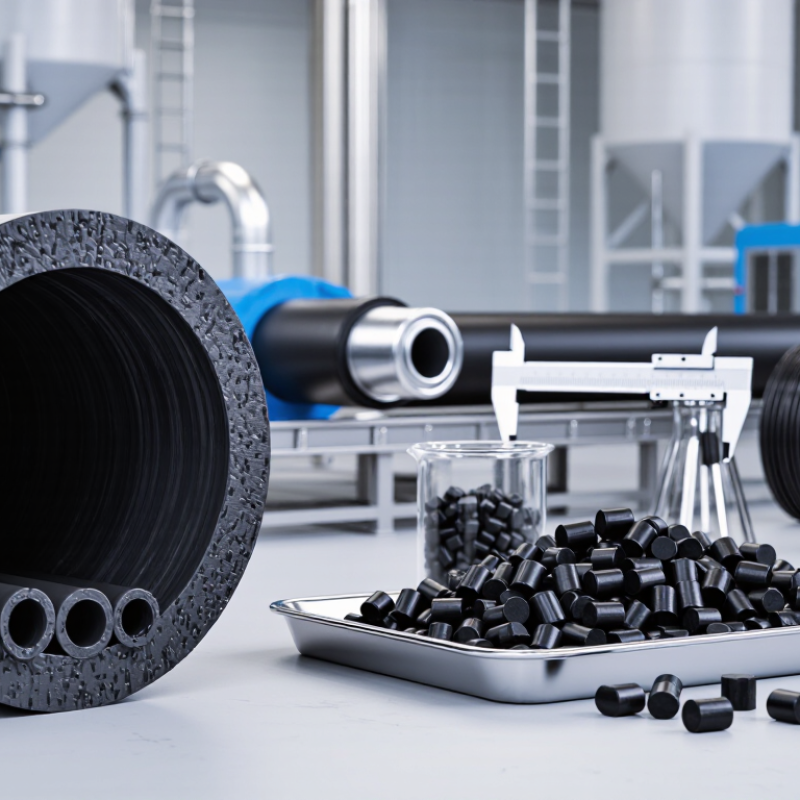
How to Choose Pipe Special Black PE Masterbatch?

What Is Black PE Masterbatch for Pipe Applications?

Black PE masterbatch is a concentrated additive used to color polyethylene pipes black. It typically contains carbon black, a polyethylene-compatible carrier, and carefully controlled processing aids. During extrusion, the masterbatch disperses through the base resin and creates a consistent black appearance. More importantly, suitable carbon black helps protect the pipe from ultraviolet exposure and outdoor weathering. It also supports stable color during production and long-term service.

For pipe applications, selection should begin with the pipe’s working environment. Outdoor water, gas, drainage, and industrial pipes may require different durability and dispersion performance. Carbon black concentration matters, but it is not the only concern. Particle size, structure, carrier compatibility, moisture level, and filtration behavior can affect final quality. Dispersion matters greatly. Poor dispersion may create specks, weak points, or uneven protection. A pipe can look black and still perform poorly.

In practical production, I would review technical data, recommended let-down ratios, and processing temperature ranges before purchasing. The masterbatch should match the polyethylene grade and extrusion equipment. It should also support the relevant pipe specification and testing requirements. A darker pipe is not automatically a better pipe. A higher pigment level may increase cost or complicate processing. Sometimes, a reliable mid-range formulation performs better than an overly concentrated one. Small trial batches reveal problems that laboratory sheets may miss. That part is easy to underestimate.

Which Raw Materials and Formulation Features Matter Most?

Choosing a special black PE masterbatch starts with raw materials, not colour alone. The carrier resin should match the pipe grade, such as HDPE or MDPE, and offer compatible melt flow behaviour. A mismatched carrier may create sharkskin, weak weld lines, or unstable extrusion. High-quality furnace carbon black is essential for UV protection. Common pipe specifications target about 2.25–2.75% carbon black in the finished pipe, while dispersion must remain uniform. Always confirm the exact requirement under ISO 4427, ASTM D3350, or the applicable regional standard.

Formulation details matter during long outdoor service. Carbon black particle structure, surface treatment, and dispersion efficiency influence weathering performance and pressure resistance. The masterbatch should also contain a controlled antioxidant package and low-moisture ingredients. PlasticsEurope reported global plastics production of 400.3 million tonnes in 2022, showing the scale of competition for consistent raw materials. Yet volume does not guarantee quality. A 2023 OECD plastics report also highlighted growing pressure to improve material efficiency and reduce waste. That makes stable dosing and low reject rates commercially important. I would not choose the cheapest grade without extrusion trials.

Tips: Check carbon black loading, dispersion, moisture, carrier type, and melt flow data. Run a blackness test, pressure test, and accelerated weathering test. Inspect the first production metres closely. Tiny agglomerates can become expensive failures.

How to Match Masterbatch Performance with Pipe Requirements?

How to Choose Pipe Special Black PE Masterbatch?

How to Match Masterbatch Performance with Pipe Requirements?

Selecting a black PE masterbatch starts with the pipe’s actual service conditions. Outdoor water pipes need strong ultraviolet protection and stable carbon black dispersion. Gas, drainage, and irrigation pipes may require different processing and mechanical performance. One formula cannot suit every application.

Check the carrier resin first. It should match the pipe’s polyethylene grade and melt behavior. A poor match can create streaks, gels, or unstable extrusion. Fine carbon black particles usually improve protection, but only when dispersed evenly. A glossy surface can hide weak dispersion. Inspect cut sections under magnification.

Dosage also needs practical testing. Begin with the supplier’s recommended range, then adjust through extrusion trials. Watch melt pressure, surface appearance, wall thickness, and color uniformity. Test impact strength and elongation after processing. For outdoor use, accelerated weathering tests provide useful evidence, though they cannot perfectly recreate every climate.

I once focused too heavily on jetness. That shortcut was wrong. The pipe later showed processing variation because dispersion was not checked carefully. Production records matter. Record batch ratios, screw speed, temperature zones, and cooling conditions. Reliable selection combines technical data with plant experience. Small trials reveal problems early. Supplier test reports help, but independent verification remains valuable.

How to Evaluate Dispersion, Compatibility, and Processing Efficiency?

Choosing a special black PE masterbatch requires more than checking carbon black content. Dispersion, compatibility, and processing efficiency must be tested together. PlasticsEurope’s Plastics—The Fast Facts 2024 reports global plastics production at 413.8 million tonnes in 2023. Such scale makes stable pipe performance commercially important.

Evaluate dispersion with a thin-section microscope, following ISO 18553 principles. Look for agglomerates, streaks, and uneven black areas after dilution in the target PE resin. A smooth surface can still hide poor dispersion. Check several samples, not one attractive specimen. Compatibility depends on the carrier resin, density, melt flow rate, and additive package. Matching the masterbatch carrier to the pipe resin usually reduces gels and weak interfaces. Differential scanning calorimetry can reveal unexpected thermal behavior.

Processing efficiency should be measured on the actual extrusion line. Record melt pressure, torque, output rate, screen-pack buildup, and energy use before and after dosing. Compare the masterbatch at the same final carbon black level. A higher concentration may reduce feeding costs, but it can increase dispersion stress. The PlasticsEurope 2024 data also shows packaging, building, and construction remain major plastics-consuming sectors, where reliable production matters. Do not trust laboratory results alone. We sometimes overvalue a clean microscope image and ignore unstable pressure during a long run. That mistake deserves review.

How to Select a Reliable Supplier and Confirm Product Quality?

How to Choose Pipe Special Black PE Masterbatch?

A reliable supplier should understand pipe extrusion, not only sell black pellets. Ask about the carrier resin, carbon black content, dispersion, moisture, and melt flow rate. These factors affect mixing, surface appearance, pressure resistance, and long-term durability. Request a recent certificate of analysis for each batch. Check whether the supplier records raw material sources, production dates, and lot numbers. Traceability matters when a pipe shows unexpected streaks months later.

Tips: Start with a small trial order. Test the masterbatch on your actual PE resin and extrusion line. Inspect pipe surfaces under strong light. Measure dispersion, tensile performance, carbon black distribution, and processing stability. A dependable supplier should provide technical data, safety documents, test methods, and clear storage guidance. Factory audits or video inspections can also reveal whether laboratory controls match daily production.

Experience has taught me that a smooth sample is not enough. A perfect laboratory result can still disappoint during continuous extrusion. Ask for samples from different batches, then compare their color strength and flow behavior. Independent testing adds confidence, especially for pressure pipes. Still, no supplier should promise that one formula suits every machine. Honest technical advice often includes limits, adjustment suggestions, and possible failures. That honesty is worth checking.

FAQS

What is black PE masterbatch used for in pipe production?

It is a concentrated additive for coloring polyethylene pipes black. It contains carbon black and a compatible carrier resin. During extrusion, it disperses through the base polyethylene. The pipe gains an even appearance and improved outdoor protection.

Why is carbon black important in outdoor pipes?

Suitable carbon black helps reduce damage from ultraviolet exposure. It also supports color stability during long-term outdoor service. A black appearance alone proves little. Protection depends on quality, concentration, and dispersion.

Which factors should guide masterbatch selection?

Consider the pipe’s environment, resin grade, and extrusion equipment. Outdoor water, drainage, and industrial pipes may need different performance. Review carrier compatibility, moisture level, particle structure, and filtration behavior. The darkest option is not always the best option.

How can dispersion quality be evaluated?

Dilute the masterbatch in the target polyethylene resin. Then examine thin sections under a microscope. Look for agglomerates, streaks, and uneven black areas. Check several samples. One attractive sample can mislead you.

What problems can poor dispersion cause?

Poor dispersion may create visible specks or black streaks. It can also produce weak points and uneven ultraviolet protection. The pipe may look acceptable while performing poorly. That risk is easy to underestimate.

How does carrier compatibility affect pipe quality?

The carrier resin should match the pipe’s polyethylene as closely as practical. Compare density, melt flow rate, and additive compatibility. Good matching can reduce gels and weak interfaces. Thermal testing may reveal unexpected behavior.

What processing results should be monitored during extrusion?

Record melt pressure, torque, output rate, and energy use. Also monitor screen-pack buildup during longer production runs. Compare results at the same final carbon black level. Stable pressure matters. Laboratory results are not enough.

Is a highly concentrated masterbatch always more economical?

Not necessarily. Higher concentration may reduce feeding costs. However, it can increase dispersion stress or complicate processing. A moderate formulation may run more reliably. Small trial batches often reveal hidden problems.

Conclusion

Choosing the right Pipe Special Black Pe Masterbatch is essential for producing durable, consistent, and cost-effective plastic pipes. The selection should begin with a clear understanding of the pipe’s application, resin type, processing method, and required properties, such as weather resistance, UV protection, color strength, mechanical durability, and long-term stability. Important formulation factors include the quality and concentration of carbon black, carrier compatibility, additive balance, moisture control, and thermal performance.

A reliable evaluation should also consider pigment dispersion, melt flow behavior, filtration performance, and how efficiently the masterbatch mixes with the base resin. Good dispersion helps prevent weak points, surface defects, and uneven coloring while supporting stable production. Before making a final decision, buyers should request technical data, processing recommendations, sample testing, and quality documentation from potential suppliers. Consistent batch performance, responsive technical support, transparent specifications, and suitable quality-control procedures are key indicators of a dependable supplier.


Sophia

Sophia

Sophia is a dedicated marketing professional with an exceptional depth of knowledge about her company's products and services. With a keen understanding of market trends and customer needs, she crafts insightful blog posts that not only inform but also engage readers, enriching the company’s online......