Red PE Masterbatch is a concentrated color additive designed for polyethylene products. It contains red pigments, polymer carriers, and carefully selected processing aids. Manufacturers blend it with natural or recycled PE during extrusion, injection molding, blow molding, or film production. The result can be a strong, even red shade without handling loose pigment powders.
According to plastics color specialist Tony Dalton, “Good masterbatch is not simply a bright color; it must process consistently and protect the product’s performance.” That principle matters on a factory floor. A technician may measure a small dosage, mix pellets in a hopper, and check the melt as it leaves the die. Too little Red PE Masterbatch can create a weak, uneven tone. Too much may increase cost, affect opacity, or change the material’s flow.
The right grade depends on the application. Film producers may need high dispersion and low contamination. Injection molders may prioritize heat stability and short cycle times. Outdoor products often require stronger light and weather resistance. Food-contact or regulated packaging requires documented compliance for the complete formulation, not only the red pigment.
Testing remains essential. A sample can look perfect under factory lighting, then appear different in daylight. That happens. Shade matching, migration checks, heat exposure, and compatibility trials should be completed before full production. Recycled PE can add further variation because its color and melt history may differ.
Red PE Masterbatch sounds simple, but its performance depends on pigment selection, carrier compatibility, dosage, and processing conditions. The color is visible. The chemistry underneath is easier to overlook.
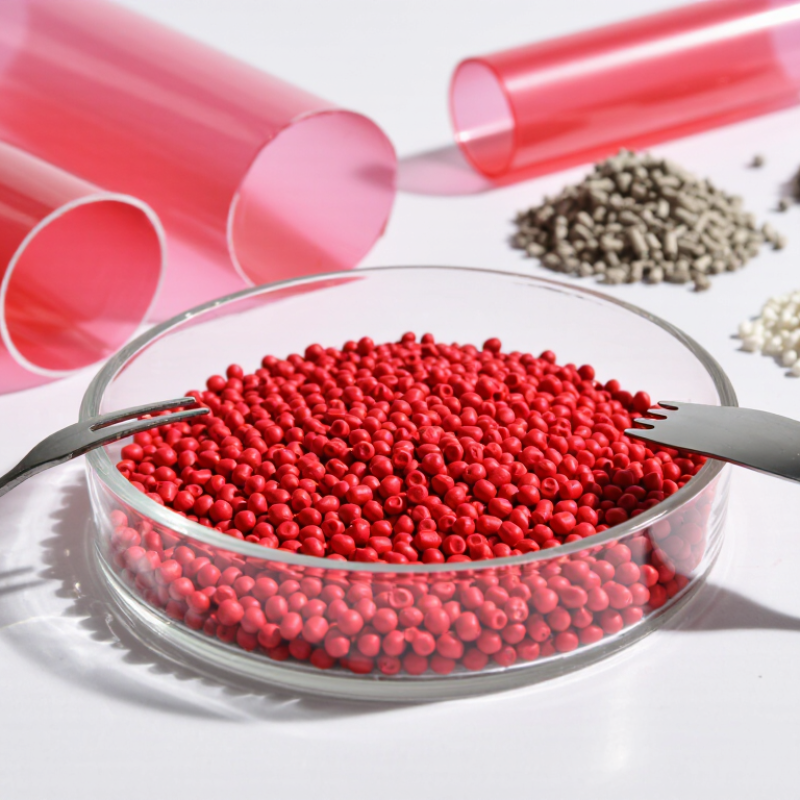
Red PE masterbatch is a concentrated color additive designed for polyethylene products. It usually appears as uniform red pellets, not as a liquid dye. During processing, manufacturers blend these pellets with natural or recycled PE resin. Heat then disperses the color through the melt.
Its core composition has three parts: a polyethylene carrier, red pigment, and selected processing additives. The carrier should match the target resin as closely as possible. This improves melting behavior and reduces uneven streaks.
The red pigment controls hue, opacity, heat resistance, and light stability. Organic pigments may provide bright shades, while inorganic pigments often offer stronger opacity and durability. The exact balance depends on the product’s end use.
Additives can improve dispersion, reduce dust, or support smoother extrusion. However, more additive does not always mean better performance. A poorly matched formulation may cause specks, color drift, or weak surface gloss. It is not a magic red. Operators should check pigment concentration, recommended let-down ratio, processing temperature, and residence time before production. Small trials are valuable, especially when using recycled PE or changing wall thickness. A color that looks correct in pellets may appear darker in a thick molded part. That detail is easy to miss. Reliable technical data should include migration information, heat limits, and batch consistency records.
Red PE masterbatch is a concentrated color additive carried in polyethylene resin. It is blended into natural or recycled PE during extrusion, injection molding, or blow molding. The carrier should match the product resin closely. This supports smoother melting and more even pigment distribution.
Color performance depends on pigment strength, dispersion, and loading level. A well-dispersed red produces a clean shade without streaks, specks, or cloudy patches. Its opacity also matters. Thin film may need stronger coverage than a thick container. Light and heat stability help the color resist fading during outdoor use or repeated processing. However, performance can vary with pigment type and processing temperature. Not every red remains bright.
Small trials are essential. A technician may mix one kilogram of PE with a measured masterbatch dose, then inspect a film sample under daylight. The result should be checked for shade, gloss, surface defects, and color consistency. Melt flow rate is another practical concern. If the masterbatch changes flow too much, film thickness or molded detail may suffer. This is often overlooked.
Red PE masterbatch can also improve production control by reducing direct pigment handling and simplifying dosing. Still, a strong color in one machine may appear different on another. Screw design, residence time, and cooling conditions all influence the final appearance. Color measurement instruments provide useful data, but visual review remains necessary. A target color is never just a number.
Red PE masterbatch is a concentrated color additive carried in polyethylene resin. It provides consistent red color during film extrusion, injection molding, and blow molding. A measured dosage blends with natural or colored PE pellets. This method reduces dust and improves handling on the production floor.
Manufacturing starts with selecting a suitable red pigment and PE carrier. Technicians weigh each ingredient according to the approved formulation. The materials enter a heated twin-screw extruder, where strong mixing disperses the pigment. The molten strand is cooled, cut, and screened into uniform pellets.
Quality control checks pigment concentration, moisture, melt flow rate, and pellet appearance. A laboratory plaque is compared with an approved color reference using visual and spectrophotometric methods. Microscopic checks can reveal weak dispersion or pigment agglomerates.
No laboratory check predicts every processing line perfectly. Resin type, screw design, temperature, and dosage can still change the final shade. That limitation deserves attention.
Tips: Test the masterbatch with the customer’s actual PE grade. Check color after the complete heating cycle, not only in the pellet. Keep samples from each batch for traceability. Small dosage errors can create visible shade differences, especially in thin films.
What Is Red PE Masterbatch and How Is It Used?
Red PE masterbatch is a concentrated pigment blend carried in polyethylene resin. It gives films, pipes, containers, and molded parts consistent red coloration. PlasticsEurope reported global plastics production of 400.3 million tonnes in 2022. This scale makes stable, efficient coloring important for reducing rejected products. The OECD Global Plastics Outlook estimated that only 9% of plastic waste was recycled in 2019. Better color control can help limit avoidable production scrap.
Step-by-step production starts with material checks. Confirm the masterbatch uses a PE carrier compatible with the base resin. Review the technical data sheet, pigment type, recommended dosage, and processing temperature. Keep the pellets sealed and dry. Moisture can cause streaks, bubbles, or unstable feeding. Next, weigh the masterbatch accurately, often within a trial range of 1% to 4%. Do not assume one dosage fits every red shade. Blend it evenly with natural PE before feeding the hopper. A gravimetric feeder usually provides better consistency than manual scooping.
Run a small trial first. Check dispersion through a film sample or molded plaque. Inspect the shade under controlled lighting, then compare it using color measurements such as CIELAB values under ASTM D2244 guidance. Adjust dosage gradually, not dramatically. Monitor screw pressure, melt temperature, output rate, and filter residue. A red shade may look correct initially but shift after cooling. That is an easy mistake. Record the batch number, dosage, and test results for repeat production. Small trials matter.
This chart shows how the final pigment concentration changes when a red PE masterbatch containing 40 wt% pigment is added to virgin PE resin. For example, a 3% let-down rate produces approximately 1.2 wt% pigment in the finished compound. In production, the selected dosage should be confirmed through trial runs, color measurement, and melt-process stability checks.
What Is Red PE Masterbatch and How Is It Used?
Red PE masterbatch is a concentrated color additive carried in polyethylene resin. Manufacturers blend it with natural PE during extrusion or injection molding. The colorant disperses through the melt, creating consistent red products with controlled dosage.
Common applications include packaging films, agricultural sheets, caps, containers, pipes, and household products. It can provide strong color, efficient storage, and cleaner handling than loose pigment powders. A well-designed masterbatch may also reduce dust during production and support faster color changes. However, final shade depends on resin grade, processing temperature, thickness, and light exposure. Red can look deeper in thick parts and weaker in thin film. Results are not always predictable from a small sample.
Tips: Store the masterbatch in a sealed, dry container. Check the recommended addition rate before production. Use a compatible PE carrier for smoother dispersion. Keep equipment clean when changing from red to a lighter color. Excessive heat may dull the shade or affect polymer performance. Operators should review the technical data sheet and wear suitable protective equipment. A short trial run is wise, especially for food-contact, outdoor, or mechanically demanding products. Even experienced processors can overlook moisture or dosing errors.
| Data Dimension | Typical Information | Practical Relevance | Handling or Selection Considerations |
|---|---|---|---|
| Definition | Red PE masterbatch is a concentrated mixture of red pigment dispersed in a polyethylene-based carrier resin. | It provides a convenient and consistent way to color polyethylene and compatible thermoplastic products during processing. | Choose a carrier that is compatible with the base polymer and the intended processing method. |
| Typical Colorants | Formulations may use organic red pigments for bright, clean shades or inorganic pigments for stronger opacity and improved heat or weather resistance. | The pigment type influences shade strength, transparency, durability, migration resistance, and cost. | Confirm compliance with the requirements for food contact, toys, packaging, outdoor use, or other regulated applications. |
| Carrier Resin | Common carriers include low-density polyethylene, linear low-density polyethylene, and high-density polyethylene grades. | A compatible carrier supports uniform dispersion and helps the masterbatch blend effectively with the production resin. | Match the carrier to the host resin, melt-flow behavior, extrusion temperature, and finished-product requirements. |
| Typical Let-Down Ratio | Approximately 1%–5% masterbatch by weight is commonly used, although the required level depends on pigment strength, color depth, opacity, and product design. | Correct dosing balances color consistency, material cost, and processing performance. | Establish the final dosage through a controlled trial using the actual resin, equipment, and target color. |
| Common Applications |
|
Red coloration can support product identification, visual appeal, coding, safety marking, and decorative effects. | Check whether the application requires high opacity, transparency, outdoor durability, low migration, or contact approval. |
| Color Consistency | Properly dispersed masterbatch can provide repeatable color from batch to batch and reduce manual pigment-handling variation. | Consistent dosing and adequate melt mixing help minimize streaks, specks, shade variation, and color bands. | Use calibrated feeders, maintain stable processing conditions, and verify color with standard samples or instrumental measurement. |
| Processing Compatibility | PE masterbatch is generally suited to polyethylene-based processing, including extrusion, injection molding, blow molding, and rotational molding. | Its pre-dispersed format can simplify coloring compared with adding raw pigment directly to the machine. | Compatibility with polypropylene or other polymers should be confirmed before use because the carrier can affect dispersion and surface quality. |
| Thermal Considerations | Processing temperatures should remain within the recommended range for both the carrier and the selected red pigment. | Excessive heat or prolonged residence time may cause shade change, pigment degradation, fumes, or loss of performance. | Review the technical data sheet and avoid unnecessary overheating, long residence times, and repeated thermal history. |
| Benefits |
|
Masterbatch can improve production efficiency and simplify inventory management when several products use the same base resin. | Actual benefits depend on pigment concentration, dispersion quality, equipment design, and process control. |
| Storage | Store in a cool, dry, well-ventilated area in sealed packaging, protected from direct sunlight, moisture, and contamination. | Proper storage helps preserve pellet quality, color performance, and feeding behavior. | Follow the supplier’s recommended shelf-life and first-in, first-out inventory practice. |
| Moisture Management | Polyethylene itself has low moisture absorption, but surface moisture or humid storage can still affect feeding, appearance, and processing stability. | Dry, clean pellets are easier to convey and meter consistently. | Keep bags closed until use; if drying is recommended, follow the product-specific temperature and time instructions. |
| Feeding and Mixing | Use gravimetric or volumetric dosing equipment suitable for the pellet size and target addition rate. | Stable metering and sufficient melt mixing promote uniform color throughout the finished product. | Prevent segregation during conveying and verify feeder calibration at the intended production rate. |
| Quality Checks | Important checks may include color shade, dispersion, pigment concentration, moisture condition, melt-flow behavior, and finished-part appearance. | Testing helps identify processing drift and confirms that the product meets the required specification. | Use production-representative samples and compare results with approved color standards. |
| Safety and Waste Handling | Follow the safety data sheet, use suitable personal protective equipment, and control dust when handling pellets or any generated fines. | Good housekeeping reduces slip, contamination, and occupational exposure risks. | Dispose of off-specification material and packaging according to local regulations and the applicable product safety guidance. |
| Selection Checklist | Evaluate target shade, opacity, polymer compatibility, processing temperature, outdoor exposure, regulatory status, dosage, and required dispersion quality. | A technically suitable masterbatch can reduce color defects and improve production reliability. | Request a technical data sheet and test sample before approving the material for full-scale production. |
| Important Note | Performance values and recommended dosage ranges are general industry guidance; exact results depend on the formulation, pigment, carrier, equipment, and end-use conditions. | Laboratory or production trials are necessary to confirm suitability for a specific product. | Always follow the product-specific technical data sheet and applicable regulatory requirements. |
It is a concentrated color additive in small red pellets. The pellets contain a polyethylene carrier, red pigment, and processing additives. They are blended with natural or recycled polyethylene before heating. It is not a liquid dye.
Heat melts the polyethylene mixture during processing. The pigment spreads through the molten resin. Good dispersion produces an even red shade. Poor dispersion may create streaks, specks, or cloudy areas.
The carrier should closely match the base polyethylene resin. This supports smoother melting and more stable pigment distribution. A mismatch may cause uneven flow or weak surface appearance. Small differences matter.
A common trial range is about 1% to 4%. The correct level depends on pigment strength, opacity, and product thickness. Measure the pellets carefully instead of using a loose scoop. Guessing can waste material.
Check the technical data, pigment type, dosage, and temperature limits. Keep the pellets sealed and dry before feeding. Moisture may cause bubbles, streaks, or unstable feeding. Record the batch, dosage, and test results.
A small trial reveals problems before full production begins. Mix a measured amount with polyethylene and produce a film or molded plaque. Inspect shade, gloss, specks, and surface uniformity. A color that looks right in pellets may appear darker in thick parts.
Yes, screw design, residence time, pressure, and cooling can affect appearance. The same mixture may look different on another machine. Check samples under consistent lighting after cooling. Color numbers help, but visual review still matters.
Recycled resin may contain mixed shades, additives, or uneven flow behavior. These factors can reduce brightness and color consistency. Run extra trials when changing recycled material or wall thickness. The result may surprise you.
Red Pe Masterbatch is a concentrated color additive made by dispersing red pigments evenly in a polyethylene-compatible carrier resin. When blended with natural or recycled polyethylene, it provides consistent coloration, good tinting strength, and reliable dispersion across films, bags, containers, pipes, molded parts, and other plastic products. Its performance depends on pigment selection, carrier compatibility, heat resistance, light stability, and the desired shade or opacity.
The manufacturing process typically includes controlled pigment mixing, melt compounding, filtration, pelletizing, and quality testing for color consistency, moisture, contamination, and dispersion. In production, operators first determine the required dosage through trials, then mix the masterbatch uniformly with polyethylene before extrusion, injection molding, or blow molding. Proper storage in a dry, sealed environment helps preserve quality. Red Pe Masterbatch can simplify color adjustment, reduce handling of raw pigments, and improve production efficiency, but users should follow technical specifications and verify compatibility with processing temperatures and end-use requirements.