7 Tips for Buying Golden Yellow PE Masterbatch

Time:2026-11-09 Author:Ethan
0%

Golden Yellow PE Masterbatch can look perfect on a small sample and still disappoint in a production run. The shade may shift after extrusion, the pellets may disperse unevenly, or the finished film may show unwanted streaks. Small details matter.

The market context is substantial. PlasticsEurope reported 400.3 million tonnes of global plastics production in 2022. The OECD’s Global Plastics Outlook estimated 460 million tonnes of plastics production in 2019. These figures describe the wider plastics sector, not yellow masterbatch demand, but they show why consistent processing and material selection matter. Buyers should check carrier-resin compatibility, pigment concentration, heat stability, dispersion, and color consistency under their own conditions. A lab sample is only a beginning.

This guide presents seven practical tips for comparing suppliers and testing Golden Yellow PE Masterbatch, including how to review technical data and assess samples in the intended application. One limitation deserves a clear note: no verifiable, attributable quotation from a Golden Yellow PE Masterbatch specialist was supplied or identified, so I will not invent one. That is less polished, perhaps, but more reliable. Ask suppliers for documented test results, batch-to-batch color tolerances, and processing guidance. Then run a controlled trial using your own equipment. The result may reveal issues a bright sample cannot.
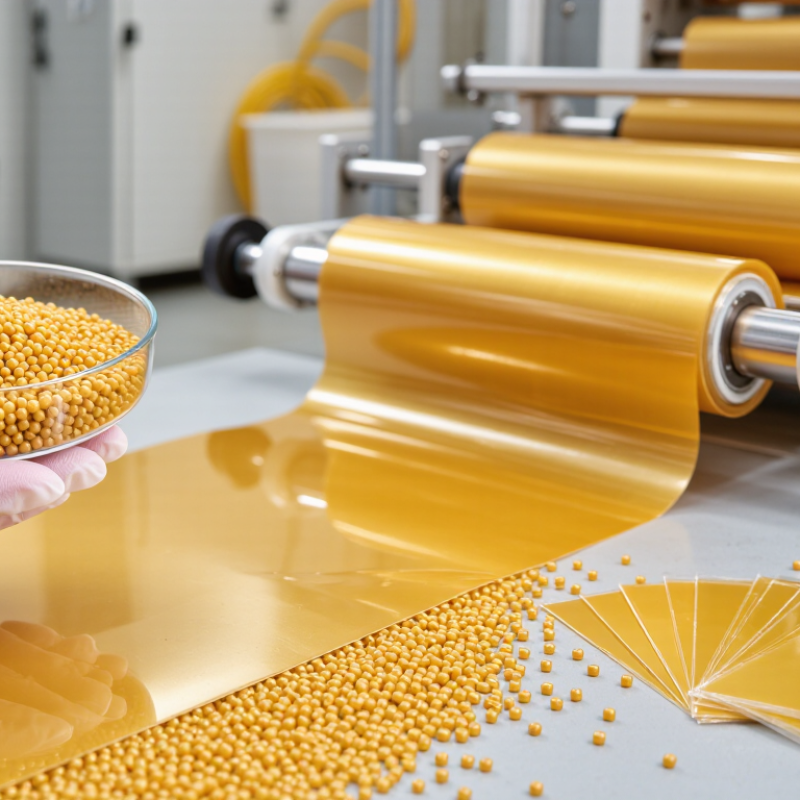
7 Tips for Buying Golden Yellow PE Masterbatch

Identify Pigment Type and Typical Loading: 20–50% in PE Masterbatch

Golden yellow PE masterbatch usually contains 20–50% pigment by weight, but the exact loading depends on pigment strength, dispersion, and carrier compatibility. A strong organic yellow may reach the target shade at a lower dose than a less tinting pigment. Iron oxide yellow can offer useful opacity and heat stability, though its shade may look duller in thin film. Golden tones may also use blended pigments. Check the technical data sheet for pigment identity, recommended processing temperature, and stated loading range.

That distinction matters. The pigment percentage in the masterbatch is not the percentage in the finished product. For example, let down a 30% masterbatch at 2% to deliver roughly 0.6% pigment in the PE, assuming the stated loading is by weight. Start with the supplier’s guidance, then make small trials at the actual film or molding thickness. Compare color under consistent lighting. A pellet can look richer than a thin blown film.

Watch for streaks, specks, or a shift toward orange after processing. These may point to poor dispersion, an unsuitable pigment, or excessive heat. Shade is only part. I would not choose loading from a color swatch alone; I have seen a close match in a lab sample become noticeably weaker in production. Record the resin grade, let-down ratio, screw conditions, and sample thickness before adjusting the formulation.

Match PE Carrier and Melt Flow Rate Using ISO 1133 Test Data

When buying golden yellow PE masterbatch, check the carrier before comparing color strength or price. It should suit the polyethylene grade used in your process, such as film, molding, or extrusion. A compatible carrier helps the color disperse without creating avoidable flow or surface problems. “PE-based” alone is not enough detail.

Ask for melt flow rate data measured under ISO 1133 conditions, including the test temperature and applied load. Compare values only when those conditions match; a number without them can mislead. Small differences matter. A masterbatch with much higher or lower MFR than the base resin may affect feeding, dispersion, or finished-part consistency, though the best match depends on dosage and equipment. Do not guess.

For example, record the base resin’s MFR, then compare it with the masterbatch data under the same test conditions. Confirm the recommended let-down ratio and run a small trial on your own line. Look for streaks, uneven yellow tone, and changes in pressure or output. ISO 1133 data helps narrow choices, but it does not predict every processing result.

One limitation: supplier data and your actual machine conditions may differ. Check both before placing a larger order.

Compare Golden-Yellow Color Strength with CIELAB ΔE* Measurements

7 Tips for Buying Golden Yellow PE Masterbatch

Compare Golden-Yellow Color Strength with CIELAB ΔE* Measurements

A golden-yellow pellet can look vivid in a bag yet turn dull in a thin film. Compare masterbatches in the actual polyethylene grade, at the same let-down ratio and processing conditions. Prepare flat plaques or film samples with consistent thickness. Small changes in thickness can shift the reading.

Use a calibrated spectrophotometer and record illuminant, observer angle, and measurement geometry. ISO 11664-4:2019 defines the CIELAB color space; ASTM D2244-22 describes calculating color differences from instrumental measurements. ΔE*ab compares a sample with a chosen golden-yellow standard. It does not measure color strength by itself. Test several concentrations to see how much pigment is needed to reach the target shade.

CIE publication 142:2001 discusses industrial color-difference evaluation and why acceptance limits depend on the application and viewing conditions. There is no single ΔE* cutoff that suits every product. Set your own tolerance using samples viewed under controlled lighting, then verify it instrumentally. Compare replicate readings, too. Uneven dispersion can make a strong batch look weaker, and one reading may miss it. I would not trust a perfect number from a poorly prepared sample.

Trial the Let-Down Ratio, Commonly 1–5% of the Resin Weight

Golden-yellow PE masterbatch often needs a let-down ratio between 1% and 5% of the resin weight. Treat this as a starting range, not a fixed recipe. A 25-kilogram resin batch at 2% requires 0.5 kilograms of masterbatch. Weigh both materials; a small scoop can introduce a visible shade shift. Keep the resin grade, mixing time, and molding conditions consistent during trials.

Tips: Test three ratios, such as 1%, 3%, and 5%, using the same resin lot. Check the molded parts under consistent lighting, then inspect color uniformity and dispersion. Too little pigment may look pale; too much can affect cost, processing, or final properties. Record each result. Small batches help. One imperfect trial is still useful if its conditions are documented.

For a more reliable comparison, measure color consistently and note melt-flow behavior where relevant. ASTM D6290 provides a standard method for determining color in plastic pellets. Plastics Europe’s Plastics—the Fast Facts 2023 reports global plastics production of 400.3 million tonnes in 2022, underscoring the value of repeatable material controls across large-scale processing. The report does not prescribe a dosage; confirm the best ratio through testing on your own equipment and end-use part.

Check Dispersion, Heat Stability, and UV Performance for the End Use

Golden yellow PE masterbatch should be assessed in the finished product, not just by its bright color in a sample bag.

Tip 1Run a trial with your actual resin and let-down ratio.

Tip 2Check for specks, streaks, and color clouds across the sample.

Tip 3Compare thick and thin sections under consistent lighting. Small flaws show.

Dispersion can change with screw design, shear, and cooling, so a supplier’s lab plaque is only a starting point. Record processing settings during the trial.

Tip 4Confirm the recommended temperature range and consider how long the material stays in the barrel.

Tip 5Inspect samples after realistic heat exposure for yellowing or dark flecks.

Do not guess. A fast production run may behave differently from a short trial.

For outdoor products, shade alone does not indicate UV durability.

Tip 6Request UV performance data for the intended resin and pigment loading.

Tip 7Match the test conditions to expected sunlight, product thickness, and service life.

Accelerated tests help compare options, but they cannot reproduce every climate. This check is imperfect; field exposure may still reveal fading sooner than expected.

FAQS

Why should the masterbatch carrier match my polyethylene resin?

A compatible carrier can support feeding and color dispersion. “PE-based” alone gives too little detail.

What melt flow rate data should I request?

Ask for MFR measured under ISO 1133, including temperature and applied load. Compare it with your resin only under matching conditions.

How can I check whether the yellow shade matches?

Prepare samples using your resin, target dosage, and process settings. Measure them against a chosen golden-yellow standard with a calibrated spectrophotometer.

Does a low ΔE value prove strong color?

No. ΔEab measures color difference, not color strength by itself. Test several concentrations.

What should I inspect during a production trial?

Check for specks, streaks, and uneven yellow tone. Compare thin film with thicker sections under consistent lighting.

Why might a sample look different on my machine?

Screw design, shear, cooling, and residence time can change dispersion. Record settings and check pressure and output, too.

How can I assess heat stability?

Confirm the recommended temperature range and inspect samples after realistic heat exposure. Look for yellowing or dark flecks.

What data matters for outdoor products?

Request UV performance data for your resin and pigment loading. Match test conditions to expected sunlight, thickness, and service life.

Can test results guarantee the final product’s appearance?

No. Supplier tests and machine conditions may differ, and accelerated UV tests cannot represent every climate. I would still run a larger trial.

Conclusion

Choosing Golden Yellow Pe Masterbatch starts with confirming the pigment type and its concentration, which commonly falls between 20% and 50% in the masterbatch. Check that the polyethylene carrier suits the resin being processed, and compare melt flow rate data measured under ISO 1133 to help assess compatibility and processing behavior. For color consistency, request CIELAB measurements and use ΔE* values to compare samples against the desired golden-yellow shade.

Before full production, test the let-down ratio, often around 1–5% of the resin weight, and adjust it to achieve the target color and performance. Evaluate how evenly the pigment disperses, whether the shade remains stable at processing temperatures, and how well the finished product resists UV exposure when required by its intended use. These checks help guide selection and support more consistent results.


Ethan

Ethan

Ethan is a seasoned marketing professional with a deep expertise in our company's innovative product line. With a passion for sharing knowledge and insights, he takes the lead in regularly updating our corporate blog, where he explores industry trends, product features, and effective marketing......