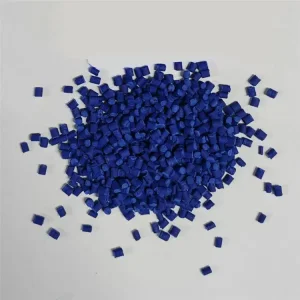
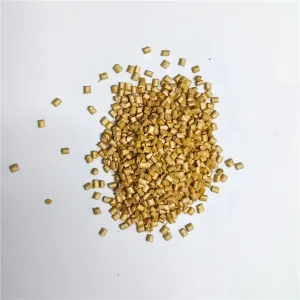
Explore our top-tier polymer coloration and functional masterbatch solutions engineered for agricultural film extrusion, blown film, and injection molding.
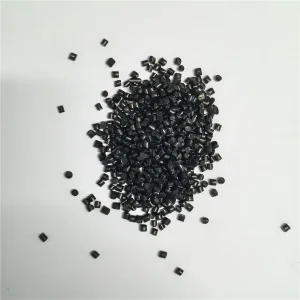
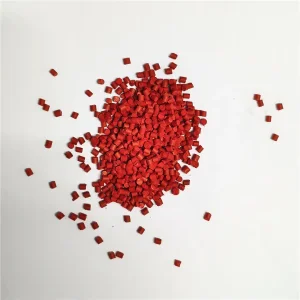
An in-depth whitepaper analysis of how specialized Polyethylene (PE) masterbatches drive crop yields, lower herbicidal chemical dependence, and optimize photothermal dynamics across modern agricultural ecosystems.
Agricultural weed film (mulch film) plays a fundamental role in modern precision farming by modifying the microclimate around crop root zones. The primary function of a specialized black PE masterbatch is complete photothermal management. By absorbing over 99.9% of Photosynthetically Active Radiation (PAR, 400nm - 700nm wavelength range), high-opacity black films deprive weed seeds of light energy, completely suppressing photosynthesis and weed germination without requiring toxic chemical herbicides. Furthermore, specialized masterbatches stabilize soil moisture levels, prevent surface crusting, and maintain optimal root zone temperatures across diverse climate zones.
The global demand for agricultural film masterbatch is expanding rapidly across North America, Europe, Latin America, Southeast Asia, and the Middle East. Global commercial growers face intensifying pressures: climate volatility, water scarcity, rising agricultural labor costs, and strict ESG compliance standards regarding chemical runoff. Consequently, multinational film extruders require cost-effective ("cheap yet high-grade") masterbatches that offer exceptionally high tinting strength, flawless melt dispersion, and extended outdoor lifespan (ranging from 6 to 36 months) under high ultraviolet radiation and agrochemical exposure.
Behind the term "Cheap Agricultural Weed Film Special PE Masterbatch" lies sophisticated polymer engineering, sub-micron particle dispersion, and specialized additive stabilizer chemistry.
To guarantee zero phase separation and pinhole-free film blowing down to 6–10 microns thickness, our masterbatch utilizes pristine virgin Linear Low-Density Polyethylene (LLDPE) or Low-Density Polyethylene (LDPE) carrier matrices. The Melt Flow Index (MFI) of the carrier resin is precisely calibrated (e.g., 10 to 20 g/10min at 190°C/2.16kg) to ensure complete thermal melt harmony with the extruder’s main LDPE/LLDPE resin blend.
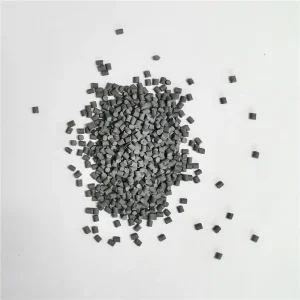
We incorporate specialized P-type industrial Carbon Black with primary particle sizes between 18nm and 25nm. Small particle size delivers exponentially higher surface area, resulting in intense jetness, high jet blackness index, and absolute UV absorption. Through high-shear continuous twin-screw compounding, carbon black agglomerates are broken down cleanly to ensure zero screen-pack clogging on high-speed extrusion lines.
Sunlight degrades polyethylene through photo-oxidation, leading to embrittlement and tearing in agricultural fields. Our masterbatch integrates Hindered Amine Light Stabilizers (HALS) combined with Nickel Quenchers and secondary antioxidants (phosphites/hindered phenols). This multi-component stabilizer package scavenges free radicals generated by intense solar UV irradiation, ensuring long-term film elasticity and physical integrity.
| Property / Parameter | Standard Test Method | Technical Specification Grade A | Agronomic Impact |
|---|---|---|---|
| Carbon Black Content (%) | ASTM D1603 / ISO 6964 | 40.0% - 50.0% (Customizable) | Ensures total light blockage for 100% weed suppression. |
| Carrier Resin Type | FTIR Spectrum Analysis | 100% Virgin LLDPE / LDPE Matrix | Perfect melt compatibility, zero film bubbling or tearing. |
| Melt Flow Index (190°C/2.16kg) | ASTM D1238 / ISO 1133 | 5.0 - 15.0 g / 10 min | High dispersion during ultra-thin film blowing (6-12 μm). |
| Filter Pressure Value (FPV) | EN 13900-5 | < 0.8 bar/g (Mesh 140) | Prevents screen pack blockages; zero extrusion downtime. |
| Thermal Stability (°C) | TGA / Differential Scanning | Up to 260°C | Zero pigment degradation or off-gassing during processing. |
| UV Resistance (QUV Hours) | ASTM G154 / ISO 4892 | 1,500 - 3,500+ Hours | Guarantees 12 to 36 months outdoor soil lifetime. |
Unpacking the economic and logistical drivers that allow Chinese masterbatch companies to deliver world-class agricultural film masterbatch at competitive prices ("Cheap") without compromising performance.
China maintains the world's most complete chemical production cluster. Our facility in Changzhou, Jiangsu, is located at the center of East China’s chemical manufacturing corridor. Direct bulk procurement of polymer carrier resins from top-tier domestic producers (such as Sinopec and PetroChina) and high-structure carbon black directly from nearby chemical complexes eliminates transatlantic resin freight tariffs and minimizes raw material holding costs. These structural savings pass directly to global procurement managers.
Equipped with state-of-the-art continuous co-rotating twin-screw compounding lines featuring automatic gravimetric loss-in-weight feeders, our factory maintains continuous 24/7 output with minimal labor overhead. Automated optical pellet inspection systems automatically isolate off-spec granules. Every batch undergoes real-time Melt Flow Index (MFI) verification, density testing, moisture level analysis (<0.1%), and Filter Pressure Value (FPV) assessment before shipping.
Different agricultural crops and geographical climates demand customized masterbatch formulations. Explore how our functional masterbatches serve tailored farming requirements.
Target Crops: Strawberries, Tomatoes, Peppers, Melons.
Formulation Spec: 40%-45% Black PE Masterbatch at 3%-5% let-down ratio.
Agronomic Function: Achieves complete opacity. Blocks 99.9% of sunlight, preventing weeds while preserving soil warmth during cool early spring planting seasons.
Target Crops: Orchards, Vegetables in High-Temp Regions.
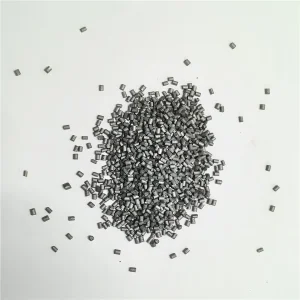
Formulation Spec: Co-extruded 3-layer film utilizing Silver PE Masterbatch on the top layer and Black PE Masterbatch on the bottom layer.
Agronomic Function: Top silver layer reflects solar UV light to disorient aphids and thrips; bottom black layer suppresses weed growth and prevents soil overheating.
Target Crops: Summer Greenhouses, Lettuce, Table Grapes.
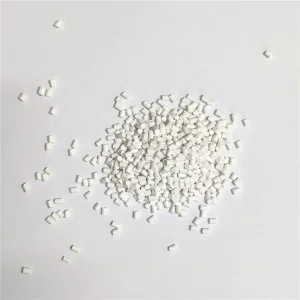
Formulation Spec: Co-extruded White PE Masterbatch (Rutile TiO2) + Black PE Masterbatch.
Agronomic Function: The white outer surface reflects excessive heat to keep lower crop zones cool, while internal black film layer ensures zero weed emergence.
We streamline international B2B procurement by providing full compliance testing, technical data sheets (TDS), safety data sheets (SDS), and custom OEM/ODM masterbatch matching.
Commercial film manufacturers selling into North American and European agricultural sectors must adhere to stringent environmental regulations. Our agricultural PE masterbatches are certified fully compliant with:
To ensure zero moisture absorption during long ocean transport, we supply heavy-duty export packaging tailored for automated film extrusion factories:
Discover how next-generation masterbatches are evolving to meet sustainability goals, ultra-thin down-gauging demands, and biodegradable polymer matrix standards.
As global environmental policies restrict single-use plastic waste, fully compostable mulch films are rapidly gaining market share. We have developed specialized bio-masterbatches utilizing PBAT (Polybutyrate Adipate Terephthalate) and PLA carriers, allowing agricultural films to naturally degrade into organic soil biomass after harvest without microplastic residues.
To reduce plastic usage per hectare, film extruders are reducing film gauge from standard 15 microns down to 6-8 microns. This places extreme demands on masterbatch dispersion. Our high-shear micro-dispersed masterbatches eliminate agglomerate specks, preventing pinhole tears and blowouts during high-speed thin-film extrusion.
Beyond simple black weed suppression, advanced multi-spectral masterbatches filter specific wavelengths of sunlight. By transmitting red light while blocking far-red spectrum light, photoselective mulch films accelerate crop photosynthesis, stimulate early root growth, and enhance overall crop yield potential.
Expert technical answers to common questions regarding masterbatch selection, let-down ratios, UV stability, and agricultural film manufacturing performance.
Select from our comprehensive line of color, filler, and specialized additive masterbatches manufactured in Changzhou, China.