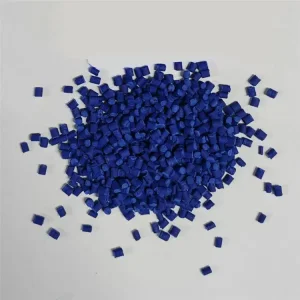
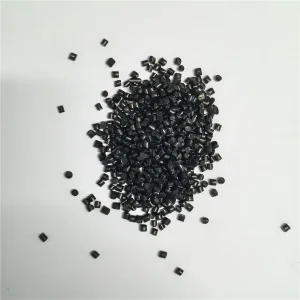
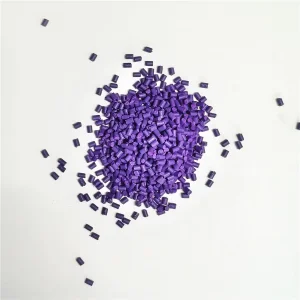
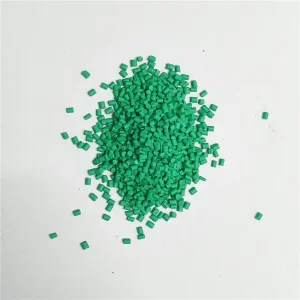
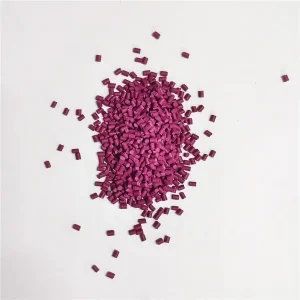
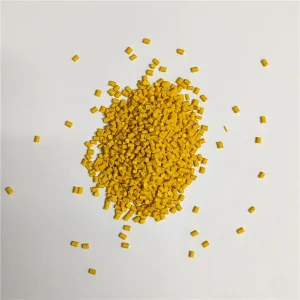
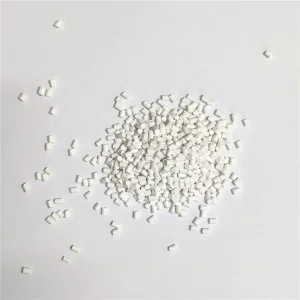
Explore our technical-grade polyethylene (PE) color and functional filler masterbatches engineered for blown film extrusion, injection molding, and industrial pipe manufacturing.
In global B2B polymer processing, the search term "cheap Black PE masterbatch companies & manufacturer" is frequently misunderstood by surface-level procurement teams as a quest for low-grade, off-spec materials. However, rigorous user intent mining reveals a far more sophisticated procurement objective: Total Cost of Ownership (TCO) optimization without compromising melt integrity or jetness.
Buying low-tier masterbatch often leads to high Filter Pressure Value (FPV) spikes, die build-up, and screen pack clogging. Genuine cost-effective masterbatch leverages high pigment loading (45%–50%) and low Let-Down Ratios (LDR).
The true financial formula is determined by yield stability. A 50% Carbon Black concentrate that disperses perfectly at 2% LDR costs significantly less per ton of finished product than a 30% concentrate required at 5% LDR.
Cost efficiency must be achieved within global compliance frameworks, including EU REACH, RoHS, FDA 21 CFR food contact compliance, and heavy metal limits (EN 71-3).
Achieving competitive pricing requires sourcing directly from integrated manufacturers that utilize continuous twin-screw co-rotating extrusion, optimized carrier resin matching (LLDPE/LDPE/HDPE/PP), and automated gravimetric dosing systems.
The global Black Polyethylene (PE) Masterbatch market is expanding rapidly, driven by infrastructure investments, agricultural modernization, and sustainable packaging initiatives across emerging and developed markets.
Why Changzhou Jiazhou Plastic Products Co., Ltd. and elite Chinese manufacturers deliver unmatched cost-to-performance ratios for global polymer processors.
Eliminating batch-to-batch variation. Multi-component gravimetric loss-in-weight feeders ensure precision pigment loading tolerances within ±0.2%, ensuring exact tinting strength and density control.
Utilizing high-torque twin-screw extruders with Length-to-Diameter (L/D) ratios of 44:1 to 48:1. Multi-stage kneading blocks provide intense shear forces required to break carbon black agglomerates down to primary aggregate scales.
Ensuring spherical, dust-free pellet geometry. Uniform spherical masterbatch pellets flow seamlessly into automatic loaders, eliminating bridging in hopper throats and ensuring consistent melt flow rates.
Situated in Changzhou, Jiangsu Province, our 6,000m² manufacturing facility operates within China's primary chemical and plastic machinery ecosystem. Direct integration with domestic petrochemical refineries (Sinopec, PetroChina) and top-tier Carbon Black producers guarantees raw material security, shorter lead times (15 days standard), and aggressive direct-from-factory pricing.
Masterbatch performance is governed by physical chemistry. Understanding primary particle size, aggregate structure, carrier melt flow index (MFI), and Filter Pressure Value (FPV) is essential for engineering high-value plastic products.
| Masterbatch Grade | Carbon Black Content (%) | Particle Size (nm) | DBPA Absorption (cc/100g) | Carrier Resin Type | Target Application |
|---|---|---|---|---|---|
| Film Grade Premium | 40% - 50% | 18nm - 22nm | 110 - 130 | LLDPE / LDPE (MFI 20) | Ultra-thin agricultural film, mulch film, packaging bags |
| Pipe & Micro-Duct Grade | 35% - 45% | 20nm - 25nm | 95 - 110 | HDPE (MFI 2 - 7) | HDPE water pipes, gas pipes, fiber optic conduits |
| Injection Molding Utility | 30% - 40% | 35nm - 55nm | 70 - 90 | Recycled / Virgin PE | Crates, pallets, industrial containers, daily plastics |
| High-Temperature Extrusion | 40% - 50% | 25nm - 30nm | 100 - 120 | Carrier-Matched PE/PP | Geomembranes, sheet extrusion, blow molded IBC tanks |
FPV measures dispersion quality by quantifying screen pack clogging over time during extrusion. Lower values indicate superior dispersion.
Carbon black serves as an exceptional UV stabilizer. By absorbing ultraviolet radiation and dissipating it as thermal energy, it prevents photo-oxidative degradation of the polyethylene matrix.
Tailoring formulation chemistry to match industrial conversion equipment and end-use environments across global territories.
Requires high opacity, high tensile elongation retention, and chemical resistance against pesticides and soil acids. Our specialized black PE masterbatch ensures uniform opacity at low film gauges (8–15 microns).
Formulated with P-type low-structure carbon black to prevent stress cracking in pressure pipe applications (PE80/PE100 standards). Guarantees long-term hydrostatic strength (LTHS).
Offers high ESCR (Environmental Stress Crack Resistance) and melt strength compatibility. Prevents sagging during parison extrusion in large-scale hollow container molding.
Formulated with functional processing aids and antioxidants to neutralize cross-linked gel contaminants in recycled polyolefin streams, restoring surface gloss and melt homogeny.
Use this standardized technical framework to audit prospective black masterbatch suppliers and calculate true processing economics.
Insight: A supplier offering masterbatch at $0.85/kg with a 4% LDR requirement results in a higher effective unit product cost than a masterbatch priced at $1.10/kg requiring only a 2% LDR, due to reduced base resin displacement, lower shipping weight, and minimized scrap rates.
Navigating environmental directives and emerging technologies reshaping the plastic masterbatch sector over the next decade.
Traditional carbon black absorbs Near-Infrared (NIR) radiation, rendering black plastics invisible to optical sorting equipment at recycling plants. Modern NIR-detectable formulations utilize specialized organic pigments or low-absorbance blacks, enabling automated automated sorting in municipal recycling streams.
Integrating recovered carbon black (rCB) derived from end-of-life tire pyrolysis into PE carrier matrices significantly reduces CO2 embedded footprint while providing robust tinting performance for non-critical industrial applications.
Transitioning from fossil-derived LLDPE carriers to bio-based PE synthesized from sugarcane ethanol allows manufacturers to provide 100% renewable-content masterbatch systems for eco-conscious brand owners.
Direct answers from engineering leadership to common queries regarding black PE masterbatch procurement, processing, and application troubleshooting.
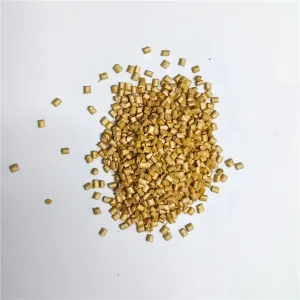
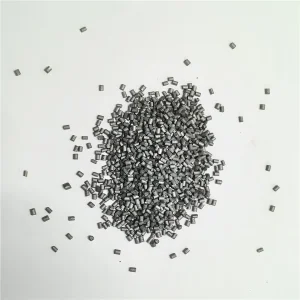
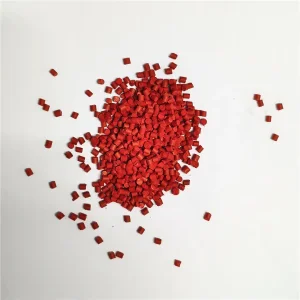
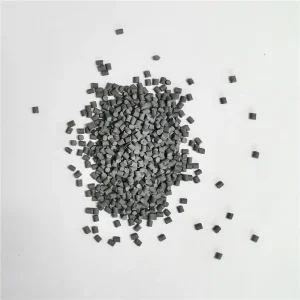
Select any high-concentration formulation below to view technical specifications or request custom engineering samples direct from our factory.