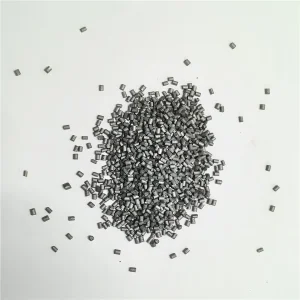
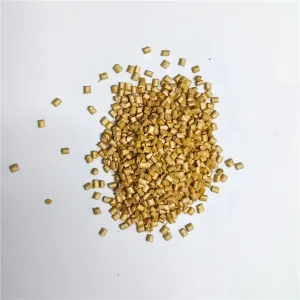
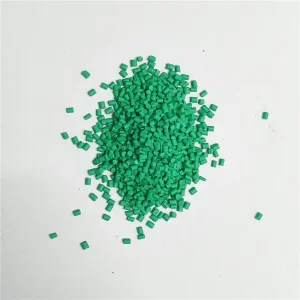
Discover our premier selection of cost-effective color masterbatches engineered for maximum dispersion efficiency and thermal stability.
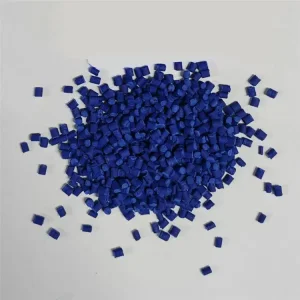
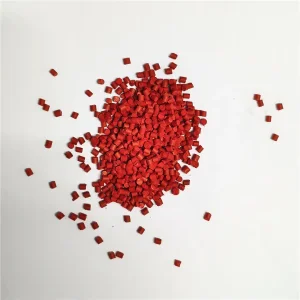
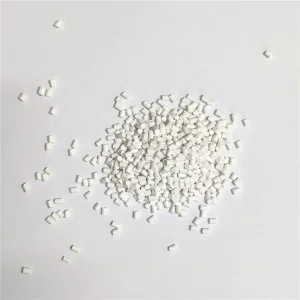
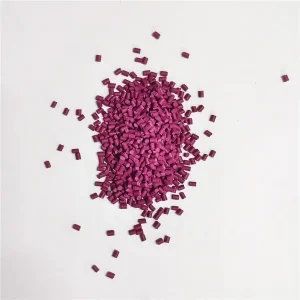
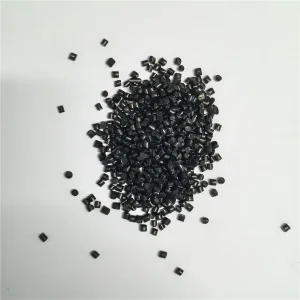
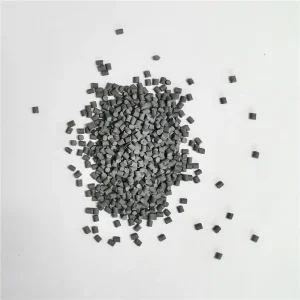
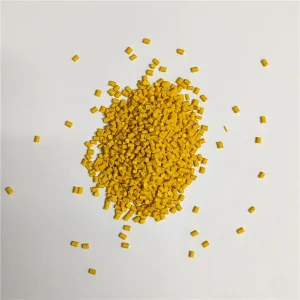
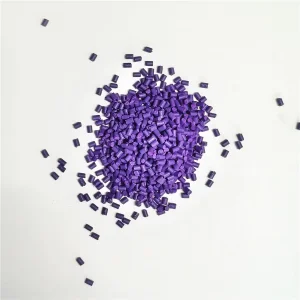
Evaluating the structural economics, supply chain resilience, and chemical consistency of Chinese domestic PE masterbatch production lines.
In the globalized polymer transformation sector, sourcing high-performance colorants while retaining strict cost efficiency is a paramount operational objective. A cheap cost-effective domestic PE masterbatch factory & manufacturer plays an indispensable role in providing high-concentration color concentrate and functional additive solutions to global plastic convertors. Historically, procurement teams faced an agonizing trade-off: compromise on pigment dispersion and run the risk of film blowing pinholes, or overpay for premium Western compounding brands that inflated unit production costs by upwards of 35%.
Today, the technological infrastructure within Chinese domestic masterbatch manufacturing—exemplified by Changzhou Jiazhou Plastic Products Co., Ltd.—has fundamentally rewritten these market dynamics. By integrating upstream petrochemical raw material supply chains (such as virgin low-density polyethylene LDPE, linear low-density polyethylene LLDPE, and high-density polyethylene HDPE carrier resins) with state-of-the-art co-rotating twin-screw extrusion technology, domestic factories achieve unmatched economies of scale. The term "cheap" no longer denotes inferior mechanical properties; rather, it reflects superior process yield, optimized energy consumption per metric ton, and hyper-efficient localized raw material procurement.
Domestic Chinese masterbatch producers leverage direct pipeline and bulk container integration with regional polyolefin refining hubs (such as Sinopec and PetroChina). This eliminates multi-tier distribution markups on LLDPE/LDPE carrier resins, reducing base production overhead by 12–18%.
Operating multi-line continuous extrusion facilities spanning over 6,000 m² allows factories to operate at maximum capacity utilization. Bulk processing of organic and inorganic pigments lowers thermal history degradation and dramatically cuts kilowatt-hour energy expenditure per ton.
Equipped with computerized spectrophotometers, melt flow indexers (MFI), and two-roll laboratory mills, top-tier factories guarantee batch-to-batch color tolerance ($\Delta E < 0.5$) and strict adherence to ISO 9001:2015 quality standards.
Unpacking the micro-rheology, pigment wetting mechanisms, and temperature limits required for high-speed extruders.
The performance of a polyolefin colorant is fundamentally governed by its dispersion mechanics. In masterbatch manufacturing, raw pigment particles naturally aggregate into agglomerates ranging from 10 to 100 microns. If processed through low-shear equipment or formulated with improper carrier resins, these agglomerates fail to disperse evenly, yielding catastrophic failures in end-use applications—such as dielectric breakdown in cable insulation, surface streaks in injection molded housings, or web breaks in thin blown film extrusion.
To overcome this, a leading domestic PE masterbatch manufacturer employs high-intensity twin-screw co-rotating extruders designed with customized screw element configurations (combining kneading blocks, reverse-conveying elements, and shear-mixing zones). This ensures that hydrodynamic shear stress exceeds the cohesive strength of the pigment agglomerates, reducing particle sizes to sub-micron dimensions ($< 1.0\ \mu\text{m}$).
To prevent phase separation and inter-facial tension during extrusion, the masterbatch carrier resin must closely match the Melt Flow Index (MFI) and density of the target host polymer. Using virgin LLDPE/LDPE carriers with customized molecular weight distributions ensures seamless compatibility with HDPE, LLDPE, LDPE, and PP matrix resins, minimizing impact on the host material's tensile strength and flexural modulus.
High-speed injection molding and multi-layer cast film lines operate at elevated processing temperatures (frequently exceeding 240°C to 260°C). Our masterbatches utilize heat-stabilized organic and inorganic pigments (such as Phthalocyanine Blues, Titanium Dioxide, and Carbon Black) coupled with thermal antioxidants to prevent color shifting, thermal gasification, or plate-out on metal dies.
Filter Pressure Value (EN 13900-5) is the ultimate metric for measuring masterbatch dispersion quality. High-concentration PE masterbatches from domestic manufacturers undergo strict EN 13900-5 testing. By maintaining an FPV below 1.5 bar/g (using a 14-micron mesh filter), our products guarantee zero nozzle clogging, zero filter mesh blinding, and seamless operation for ultra-thin blown films down to 8 microns thickness.
Comparing direct compounding, low-grade imported masterbatches, and Jiazhou domestic high-concentration formulations.
| Performance Parameter | Direct Dry Pigment Powdering | Low-Grade Import Masterbatch | Jiazhou High-Con Domestic PE Masterbatch |
|---|---|---|---|
| Pigment Loading Concentration | Uncontrolled (Manual Mix) | 15% - 30% Low Density | 40% - 75% Ultra-High Loading |
| Let-Down Ratio (LDR %) | N/A (Dusting issues) | 4% - 6% High Consumption | 1% - 3% Maximum Efficiency |
| Dispersion Quality (FPV) | Poor (> 8.0 bar/g) | Moderate (3.5 - 5.0 bar/g) | Exceptional (< 1.5 bar/g) |
| Thermal Resistance Rating | Variable (< 200°C) | Up to 220°C | 260°C Continuous Heat Stability |
| Environmental & Workplace Safety | Severe Dust / Worker Hazard | Clean Pelletizing | Zero Dust, RoHS/REACH/FDA Compliant |
| Total Cost per Finished Unit | High Risk of Scrap Failure | Moderate (High LDR Cost) | Lowest Overall TCO (30-40% Cost Savings) |
How technological innovations and environmental directives are reshaping domestic polyolefin colorant production.
With stringent global mandates on Post-Consumer Recycled (PCR) content in plastic packaging, modern PE masterbatches are now engineered with specialized compatibilizers and chain extenders. These additives neutralize yellowing and opacity defects present in recycled polyolefin streams, allowing converters to incorporate up to 70% PCR resin without visual degradation.
The industry is shifting rapidly away from single-function colorants toward multifunctional combo masterbatches. Converters prefer single-pellet solutions that combine vibrant color pigments with UV stabilizers (HALS), slip additives (erucamide), anti-static agents, and processing aids (PPA), eliminating dosing errors on the factory floor.
Smart factories are adopting artificial intelligence spectrophotometry algorithms. Real-time optical sensors monitor color consistency ($\Delta E$) during masterbatch compounding, dynamically adjusting feeder screws in real-time. This guarantees zero batch variance for global B2B procurement programs.
Custom engineering for blown film packaging, industrial piping, and precision injection molding.
Scenario: Heavy-duty shipping sacks, courier express bags, agricultural mulch films, and greenhouse covers.
Solution: Domestic high-concentration PE White and PE Black masterbatches formulated with fine particle TiO2 (Rutile phase) and premium carbon black. Delivers complete opacity, high dart-impact strength resistance, superior weatherability, and zero bubble tearing during high-speed film blowing ($> 120\text{ m/min}$).
Scenario: Industrial crates, thin-wall food packaging, caps and closures, and household appliances.
Solution: Custom PE/PP color masterbatches engineered with low-warpage pigment systems. Eliminates dimensional shrinkage and distortion in complex injection molds while delivering vibrant high-gloss surface finishes and food-contact compliance (FDA/EU 10/2011).
Scenario: Municipal water pipes, gas lines, and corrugated cable conduits.
Solution: Specialized PE Black masterbatch loaded with 40-50% P-type carbon black ($< 25\text{ nm}$ particle size). Provides critical UV protection (preventing polymer photo-oxidation outdoors for 50+ years) and uniform hydrostatic pressure tolerance (PE100 rating compliance).
Scenario: Heavy-gauge industrial sheets, trays, geomembranes, and agricultural liners.
Solution: High-heat resistant masterbatch formulations ensuring uniform chemical resistance and scratch suppression across wide-die sheet extrusion lines without visual flow lines or streak defects.
Actionable audit protocols for enterprise buyers evaluating Chinese masterbatch suppliers.
When evaluating a cheap cost-effective domestic PE masterbatch factory & manufacturer, global procurement teams must look beyond initial per-kilogram pricing. The true metric of purchasing efficiency is the Total Cost of Ownership (TCO), which accounts for let-down efficiency, machine downtime caused by filter clogging, freight optimization, and batch consistency.
Ensure the supplier possesses verified ISO 9001:2015 certifications, operates dedicated laboratory twin-screw extruders for sample matching, and enforces incoming raw material inspection (IQC) for carrier resin density and pigment purity.
Request comprehensive Heavy Metal Analysis (RoHS Directive 2011/65/EU), REACH SVHC compliance documentation, and food-grade safety compliance certificates (FDA 21 CFR 177.1520) for food contact packaging projects.
Conduct a trial run utilizing 25 kg pilot samples. Measure the Melt Flow Index (MFI) shift of the final polymer mix and verify that the Filter Pressure Value (FPV) remains constant over a continuous 4-hour extrusion run.
Proven manufacturing scale, international export reach, and technical quality metrics.
Expert answers regarding polyolefin color concentrates, carrier compatibility, and global procurement logistics.
Cost efficiency is achieved through direct petrochemical carrier sourcing (Sinopec/PetroChina integration), high-throughput twin-screw extrusion automation, and localized raw material supply chains—not by using inferior or recycled pigments. This lowers unit production costs while maintaining premium dispersion and color fastness.
Our standard PE masterbatches use high-grade virgin LLDPE or LDPE carrier resins with high Melt Flow Indexes (MFI). They demonstrate excellent physical compatibility with HDPE, LLDPE, LDPE, and Polypropylene (PP) resins under standard processing conditions.
Due to high pigment concentration (up to 70-75% loading), our masterbatches typically require a low Let-Down Ratio of 1% to 3% depending on wall thickness and opacity requirements, significantly lowering per-ton additive costs.
Yes. Formulated with heat-stabilized organic pigments and antioxidant packages, our color and black masterbatches maintain color stability without discoloration, gasification, or thermal degradation up to 260°C continuous processing.
By enforcing twin-screw high-shear kneading and strict quality testing, our masterbatches maintain a Filter Pressure Value (FPV) under 1.5 bar/g. This guarantees smooth passage through 14-micron fine filter meshes during continuous blown film extrusion.
Yes. Specific custom formulations comply with FDA 21 CFR 177.1520, EU No 10/2011, RoHS, REACH SVHC, and heavy-metal-free directives for safe use in food containers, beverage caps, and medical packaging.
Custom laboratory spectrophotometer color matching and sample dispatch are completed within 3 to 5 business days. Mass production orders of 20 metric tons are typically dispatched within 10 to 15 days from our Changzhou factory.
Products are packaged in 25 kg moisture-proof heavy-duty PP woven or PE valve bags, vacuum-sealed, moisture-barrier lined, and fully palletized with shrink wrap (1,000 kg to 1,250 kg per pallet) for safe ocean freight transit.
Browse our extended product line of high-concentration color and functional masterbatches ready for global B2B shipment.