Precision-engineered color and functional additive concentrates optimized for extrusion, blown film, and injection molding applications worldwide.
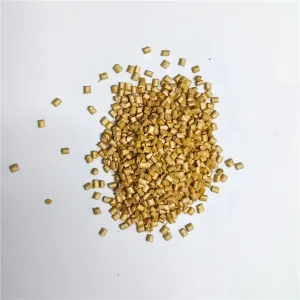
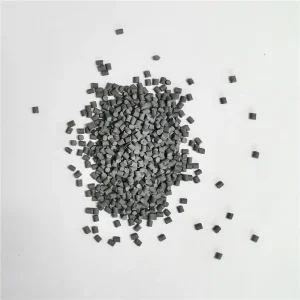
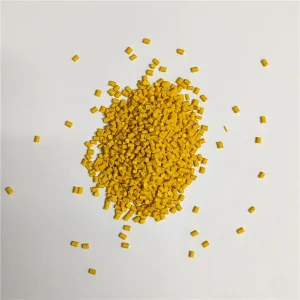
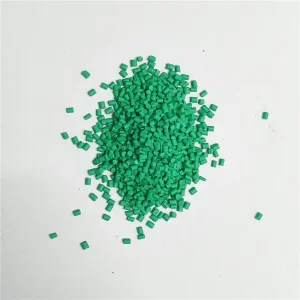
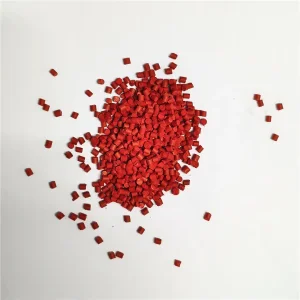
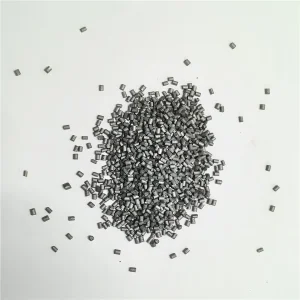
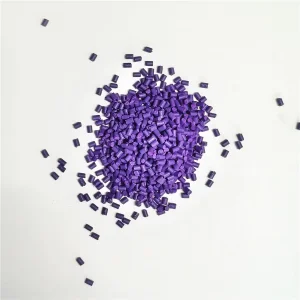
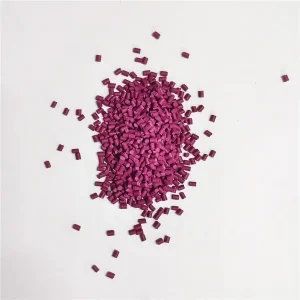
Transitioning from conventional raw pigment compounding to high-dispersion polyethylene carrier matrices for cost-optimized, ultra-stable plastic conversion.
In the contemporary plastics processing industry, the demand for cheap general purpose PE masterbatch factories and manufacturers is no longer merely a search for low-cost raw materials. It represents a strategic imperative for global converters seeking to maintain narrow profit margins without compromising physical properties, color fastness, or regulatory compliance. General Purpose Polyethylene (PE) Masterbatch serves as the primary solid additive vehicle used to impart color, opacity, UV resistance, and processing aids into virgin or recycled thermoplastics. Composed of virgin carrier resins—primarily Low-Density Polyethylene (LDPE), Linear Low-Density Polyethylene (LLDPE), or High-Density Polyethylene (HDPE)—and finely dispersed micro-pigments, these masterbatches allow processors to achieve homogenous melt blending during extrusion, blown film extrusion, and injection molding.
The global masterbatch market is experiencing a profound technological shift driven by three primary catalysts: automated continuous compounding, nano-scale pigment dispersion, and strict environmental decarbonization targets. Leading China masterbatch manufacturers are integrating co-rotating twin-screw extruders with high L/D (length-to-diameter) ratios (typically 44:1 to 48:1). This mechanical configuration provides intense shear stress and chaotic mixing, breaking down organic and inorganic pigment agglomerates into sub-micron particles. Consequently, plastic processors can achieve target Delta E values (ΔE < 0.5) at lower let-down ratios (LDR), directly decreasing raw material expenditures per ton of finished goods.
Furthermore, circular economy mandates across North America and the European Union have compelled manufacturers to engineer general-purpose PE masterbatches compatible with post-consumer recycled (PCR) resin streams. Modern PE color concentrates are now formulated with high-efficiency antioxidants and heat stabilizers, which prevent polymer chain scission during multi-pass extrusion, neutralizing residual odors and yellowing indices in recycled polyolefin blends.
Analyzing the operational challenges faced by plastic converters and how Tier-1 China factories solve cost vs. quality trade-offs.
Mismatches between masterbatch carrier MFI and matrix resin cause un-melted fish-eyes and die build-up. Factories provide tailored Melt Flow Index matching (2 g/10min to 45 g/10min).
For thin blown film applications (<15 microns), high FPV causes screen pack clogging and film tearing. Modern lines guarantee ultra-low FPV (<0.8 bar/g).
Global buyers demand strict adherence to RoHS 3.0, REACH SVHC, FDA food contact status, EN71-3 toy safety, and heavy-metal-free pigment formulations.
When B2B procurement managers search for "Cheap General Purpose Pe Masterbatch Factories & Manufacturer", the word "Cheap" serves as intent-mining shorthand for high total-cost-of-ownership (TCO) efficiency. A cheap masterbatch that causes 5% scrap due to color streaks or filter clogging is infinitely more expensive than a cost-optimized, highly dispersed concentrate. Global buyers across Latin America, Southeast Asia, the Middle East, and Europe require clear verification of pigment purity, carrier compatibility, and thermal stability before placing bulk container orders.
How advanced automation, localized raw material integration, and high-capacity compounding yield unparalleled cost-performance ratios.
China's masterbatch manufacturing ecosystem has underwent a systemic technological upgrade. Industrial hubs such as Changzhou in Jiangsu Province leverage complete upstream chemical integration—ranging from local petrochemical cracking units providing prime-grade LDPE/HDPE carriers to high-purity Titanium Dioxide ($TiO_2$) and Carbon Black processing complexes. This geographic density drastically compresses supply chain lead times and logistics costs.
Legacy masterbatch manufacturing relied on manual batch weighing, resulting in color variations between production lots. China Factory 4.0 facilities utilize multi-component loss-in-weight gravimetric feeders capable of dosing pigments, carriers, and functional additives with an accuracy of ±0.2%. High-intensity liquid-cooled mixers pre-disperse pigments prior to feeding them into twin-screw extruders featuring side-feeders for fragile organic pigments.
Downstream quality assurance incorporates inline continuous spectrophotometers operating under the CIELAB color space standard ($L^*, a^*, b^*$). Every batch is scanned real-time during underwater pelletizing. If color deviation exceeds $\Delta E = 0.3$, automated micro-adjustments are applied to the feed rates instantly. This eliminates human error, guarantees batch-to-batch repeatability, and ensures that large-scale global orders (20ft/40ft containers) deliver identical color consistency across all bags.
| Technical Parameter | Standard Specification Range | Testing Standard | Engineering Significance |
|---|---|---|---|
| Carrier Base Polymer | 100% Virgin LDPE / LLDPE / HDPE | ASTM D1238 / ISO 1133 | Prevents polymer incompatibility & void formation |
| Pigment / Additive Loading | 20% - 70% (Customizable) | ISO 3451-1 (Ash Content) | High concentration lowers customer Let-Down Ratio (LDR) |
| Melt Flow Index (MFI) | 5 - 45 g/10 min (190°C/2.16 kg) | ASTM D1238 | Ensures smooth melt blending in injection/extrusion |
| Heat Resistance / Fastness | 220°C - 260°C | DIN EN 12877-2 | No color fading or thermal breakdown during molding |
| Light Fastness Rating | Grade 6 to 8 (Blue Wool Scale) | ISO 105-B02 | Prevents outdoor weathering & UV degradation |
| Moisture Content | < 0.15% (1500 ppm) | Karl Fischer Titration | Eliminates silver streaks, bubbles, and film pinholes |
Engineered formulations tailored for critical plastic processing sectors across global markets.
Used extensively in T-shirt shopping bags, agricultural mulch films, packaging films, and courier mailers. The masterbatch features fine micron filtration (<5 microns) to prevent film bubble rupture, pinhole leaks, or surface specks, enabling stable processing down to 10-micron film thickness.
Ideal for daily plastic consumer goods, storage crates, bottle caps, household containers, and automotive interior components. Formulated with high-MFI carriers to ensure fast cycle times, minimal mold deposit (plate-out), and zero component warping or dimensional instability.
Applied in HDPE agricultural irrigation pipes, corrugated conduit lines, and architectural sheets. Offers superior UV stabilization (HALS additive packages) preventing environmental stress cracking (ESCR) and weather-induced embrittlement under intense sunlight exposure.
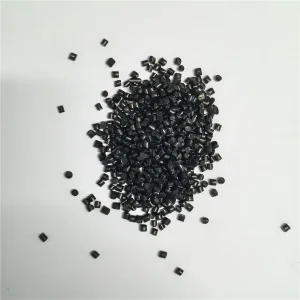
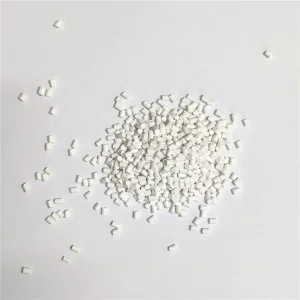
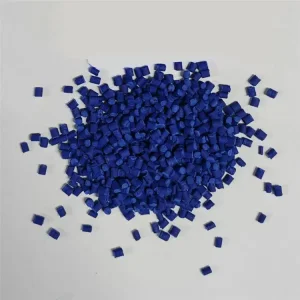
Explore our full line of high-concentration color masterbatches manufactured under strict ISO quality management systems.
In-depth answers regarding polymer engineering, order logistics, Let-Down Ratios, and quality verification.
Cost efficiency in general purpose PE masterbatch manufacturing is achieved through economies of scale, continuous twin-screw compounding automation, and localized raw material sourcing—not by utilizing degraded pigments or recycled filler contaminants. By operating high-capacity lines in China's chemical manufacturing hubs, factories secure direct petrochemical pricing on prime virgin LDPE/LLDPE carriers and titanium dioxide/carbon black pigments. Automated loss-in-weight gravimetric dosing minimizes material waste and human labor overhead, delivering lower cost-per-kilogram directly to international buyers.
The recommended Let-Down Ratio (LDR) typically ranges between 1% to 4% depending on pigment concentration, target wall thickness, and opacity requirements. For thin-gauge blown films (10–30 microns), a higher pigment concentration masterbatch used at an LDR of 1.5% to 2% ensures uniform light blockage without introducing filter clogging. For thick-walled injection molding (e.g., crates or industrial caps), an LDR of 2% to 4% ensures complete color distribution across complex mold geometries without flow lines.
Low-Density Polyethylene (LDPE) carrier masterbatches display exceptional cross-compatibility with Polypropylene (PP), LLDPE, HDPE, and EVA resins due to their flexible polyolefin backbone and high melt flow properties. When added at low percentages (1% to 3%), the LDPE carrier easily incorporates into PP matrices during screw melting without causing phase separation, delamination, or loss of mechanical impact strength.
Reputable B2B manufacturers provide comprehensive Certificate of Analysis (COA) documents per batch. Essential parameters include Filter Pressure Value (FPV testing for film grade), Melt Flow Index (ASTM D1238), Ash Content (ISO 3451-1), Moisture Percentage (Karl Fischer), and Color Deviation (ΔE via spectrophotometer). Furthermore, regulatory documentation such as RoHS 3.0, REACH SVHC compliance letters, and FDA food-contact statements should be requested based on your target end-market application.
Moisture levels exceeding 0.15% (1500 ppm) in polyolefin masterbatch cause water vapor vaporization inside the extruder barrel. This leads to surface defects in molded parts (silver streaks or splash marks), bubble instability, and pinhole micro-voids in blown films. Premium factories utilize continuous desiccant dehumidification drying systems prior to vacuum-sealed moisture-barrier valve packaging, guaranteeing moisture levels under 0.10% upon delivery.
Yes. Advanced factory laboratories employ computer-aided color matching systems equipped with benchtop spectrophotometers. Custom formulations can be developed within 48 to 72 hours matching any standard Pantone, RAL, or physical target sample provided by the client, ensuring strict Delta E control (ΔE < 0.5) across production runs.