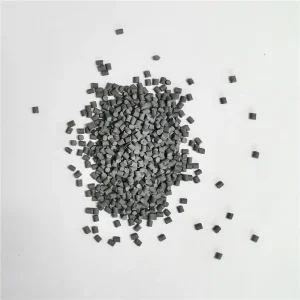
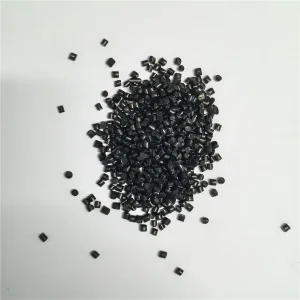
Direct factory supply engineered for high-speed blown film, precision injection molding, and heavy-duty profile extrusion.
Decoding the commercial dynamics behind cost optimization and technical performance in global polyolefin colorant procurement.
In the global thermoplastic conversion sector, Polyethylene (PE) Black Masterbatch represents over 40% of the total functional colorant volume consumed annually. Resin processors—ranging from agricultural film extruders to high-pressure pipe manufacturers—face intense pressure to minimize unit production costs while adhering to stringent physical and aesthetic performance standards.
When procurement teams search for "cheap high blackness black PE masterbatch factories & suppliers", their core objective is not merely purchasing low-cost granules. Rather, it is achieving optimal cost-per-unit jetness without introducing melt instability, screen pack clogging, die-lip build-up, or mechanical degradation in the final end product.
Economic Efficiency Formula: Total Value = (Carbon Black Jetness Index × Dispersion Quality) ÷ (Let-down Ratio × Freight & Resin Cost)
The global cost structure of black masterbatch manufacturing hinges on three primary variables: specialty carbon black feedstock pricing, carrier resin polymer index (LLDPE, LDPE, HDPE), and twin-screw compounding energy consumption. Leading Chinese suppliers leverage integrated industrial parks to optimize compounding kinetics, achieving maximum pigment loading (up to 50%) at reduced energy tariffs.
Understanding carbon black particle morphology, rheological dispersion, and carrier resin compatibility mechanisms.
The color intensity or jetness of a black masterbatch is inversely proportional to the primary particle size of the carbon black. High-jetness grades utilize primary particles between 13nm and 22nm. Smaller particles absorb a higher fraction of visible light, yielding a lower CIE $L^*$ color coordinate (deeper black shade).
However, smaller particles possess immense surface area (BET > 120 m²/g), increasing inter-particle attraction and aggregate formation. Cost-effective masterbatches utilize engineered dispersants (such as low-molecular-weight PE waxes and fatty acid esters) to de-agglomerate these ultra-fine particles efficiently.
A fundamental engineering constraint in high-concentration black masterbatches is maintaining carrier resin compatibility. The virgin PE carrier (typically LLDPE with a Melt Flow Index of 20 to 50 g/10min) must possess a viscosity profile lower than the base polymer matrix during processing.
This viscosity differential guarantees rapid wetting, uniform shear distribution, and seamless incorporation during blown film extrusion or injection molding without causing phase separation or surface pinholes.
High-grade black masterbatch acts as both a colorant and an ultraviolet (UV) stabilizer. Carbon black functions as a powerful photo-antioxidant, trapping free radicals generated by solar UV irradiation.
With thermal stability engineered up to 260°C, top-tier PE black masterbatches prevent heat degradation during high-shear melt processing, ensuring consistent tensile strength and puncture resistance in heavy-duty polyolefin applications.
How top-tier Asian masterbatch manufacturers achieve high-dispersion efficiency and competitive pricing.
Modern masterbatch compounding relies on high-torque, co-rotating twin-screw extruders featuring optimized L/D ratios (ranging from 40:1 to 48:1). Modular screw elements are designed with customized kneading blocks that generate intensive dispersive and distributive mixing.
This ensures complete breakdown of carbon black agglomerates down to the sub-micron scale, preventing filter mesh blockage during client extrusion operations.
Strict quality inspection involves regular measurement of:
When selecting a reliable Chinese masterbatch partner, buyers should evaluate factory infrastructure, ISO9001/ISO14001 compliance, annual production capacity (minimum 10,000 MT/year), and batch-to-batch color consistency guarantees under spectrophotometer testing.
Customizing masterbatch formulations to match specific regional processing and regulatory requirements.
Primary Regions: North America, Southern Europe, Latin America.
Agricultural applications demand ultra-thin blown films (down to 10–25 microns) with high opacity to block weed growth. Masterbatches used here require exceptional dispersion to prevent film tearing during high-speed lay-flat unwinding, combined with UV-stabilizer packages resistant to agrochemical exposure.
Primary Regions: Middle East, Southeast Asia, Eastern Europe.
Infrastructure projects require HDPE pipes (PE80, PE100 grades) capable of surviving 50+ years of underground hydrostatic pressure. The black masterbatch must incorporate fine P-type carbon black with zero agglomerates above 20 microns to avoid localized stress concentrations and mechanical failure.
Primary Regions: Global Markets (China, India, North America, EU).
Multi-layer co-extruded courier bags utilize a black inner layer for privacy/opacity and a white outer layer for printing. Economic PE black masterbatches formulated with high filler loads offer optimal opacity at low let-down ratios (2% to 4%), driving down unit packaging costs.
Innovations reshaping sustainable colorant engineering, circular economy compliance, and smart carbon black formulations.
With global sustainability directives (such as the EU Packaging and Packaging Waste Regulation), factories are transitioning toward carrier systems formulated with 100% PCR Polyethylene. Advanced compatibilizers neutralize impurities and scent in recycled carriers without diminishing melt strength.
Traditional carbon black absorbs Near-Infrared (NIR) radiation, rendering black plastics invisible to automated recycling sorting machines. Next-generation masterbatches utilize special organic/inorganic black pigments or modified carbon blacks that reflect NIR signals, enabling automated circular recovery.
Pyrolysis-derived carbon black from end-of-life tires and bio-char Feedstocks reduces carbon footprint by over 70% compared to conventional furnace black. R&D focuses on surface-modifying rCB to match high-jetness optical standards at economical price points.
Comprehensive comparative analysis of high-blackness formulations, processing parameters, and economic let-down ratios.
| Masterbatch Grade | Carbon Black Conc. (%) | Primary Particle Size | Carrier Resin Compatibility | Recommended LDR (%) | Primary Application Field |
|---|---|---|---|---|---|
| High-Jetness Premium | 40% - 50% | 14 - 18 nm | LLDPE / LDPE / EVA | 1% - 3% | High-end packaging films, automotive trim, cosmetic bottles |
| Pipe Grade (PE100) | 35% - 40% | 18 - 22 nm (P-Type) | HDPE / LLDPE | 2% - 2.5% | Water & gas pressure pipes, cable jacket extrusion |
| Agricultural Film Grade | 40% - 50% | 19 - 25 nm | LLDPE / LDPE | 2% - 4% | Mulch film, geomembranes, greenhouse shading sheets |
| Economic Injection Grade | 30% - 40% | 25 - 35 nm | PE / PP / Recycled Resin | 3% - 5% | Pallets, garbage cans, industrial crates, household goods |
| Ultra-Cheap Recycled Grade | 25% - 35% | 35 - 55 nm | Reprocessed PE | 4% - 6% | Non-critical thick profiles, construction film, drainage pipes |
Troubleshooting Engineering Tip: If melt fracture or "sharkskin" texture occurs on blown film surfaces, verify that the masterbatch melt index aligns with the base resin. Introducing a fluoropolymer Processing Aid (PPA) masterbatch at 0.5% will eliminate die buildup and smooth film optical appearance.
Expert answers addressing quality control, cost optimization, processing behavior, and global supply logistics.
Jetness is primarily governed by the primary particle size, structure, and dispersion of the carbon black feedstock. Smaller particle sizes (14-20nm) provide higher light absorption, yielding deeper blackness (lower L* values). However, complete de-agglomeration during twin-screw compounding is required to unleash full jetness potential; poorly dispersed carbon black will appear greyish or show streaking regardless of particle size.
Cost reduction should be calculated based on Let-Down Ratio (LDR) efficiency rather than price per kilogram. A masterbatch with 50% high-grade carbon black concentration priced slightly higher per ton may allow an LDR of 1.5%, whereas a cheaper 30% concentration masterbatch requires an LDR of 3.5%. Purchasing higher concentration masterbatches from direct manufacturer sources lowers total shipping weight and per-unit coloring costs.
If the carrier resin of the masterbatch has a lower Melt Flow Index (MFI) or melting point mismatched with the primary PE polymer matrix, inhomogeneous mixing occurs. This leads to pinholes, un-melted gels, reduced tensile strength, and frequent film bubble breaks during high-speed blown film manufacturing.
High-performance PE masterbatches are engineered to withstand thermal processing temperatures between 220°C and 260°C without thermal degradation, odor release, or color shifting. This makes them ideal for demanding injection molding cycles and extrusion coating.
For global compliance, direct factory suppliers should possess ISO 9001 quality management, REACH compliance, RoHS certification, and heavy metal testing (EN 71-3). Food contact packaging applications require FDA or EU 10/2011 compliance certificates.
Carbon black is one of the most effective UV absorbers available. It absorbs harmful solar ultraviolet radiation and converts it safely into thermal energy before UV light can cleave polymer chains. Formulations containing 2.0% to 2.5% well-dispersed fine carbon black provide multi-year outdoor weathering resistance for agricultural films and pipes.
Explore our complete spectrum of functional color masterbatches formulated for global plastics processors.