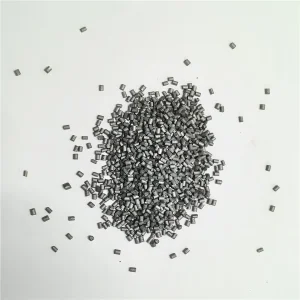
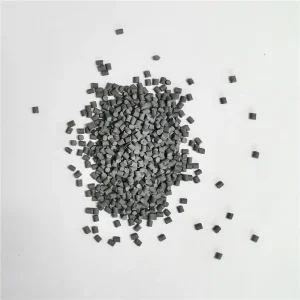
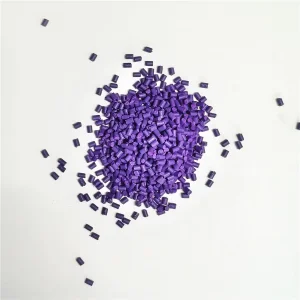
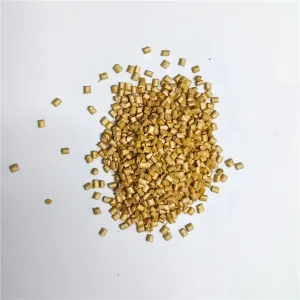
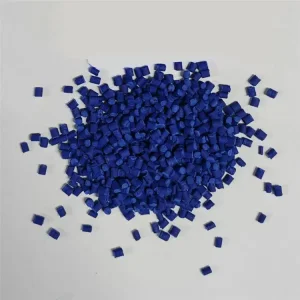
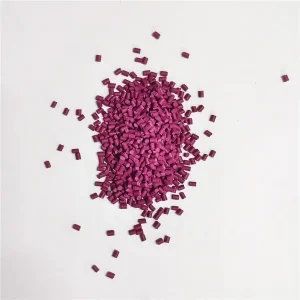
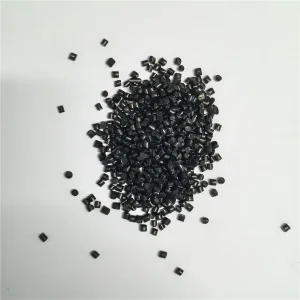
Engineered with premium pigments and optimized polyethylene carriers for maximum dispersion efficiency and thermal stability up to 260°C.
In global polymer processing, procuring a cheap high carbon black black PE masterbatch company & suppliers does not imply compromising on material specifications or rheological performance. Modern industrial procurement mandates a rigorous evaluation of the Total Cost of Ownership (TCO). True cost-effectiveness stems from compounding efficiency, high pigment loading density (up to 40%–50% carbon black content), minimal Filter Pressure Value (FPV), and optimal carrier resin compatibility that reduces scrap rates during high-speed extrusion or blown film operations.
As a 16-year specialized B2B manufacturer based in Changzhou, China, Changzhou Jiazhou Plastic Products Co., Ltd. leverages a 6,000m² standardized facility equipped with co-rotating twin-screw continuous extruders and gravimetric feeder systems. By integrating raw material sourcing direct from furnace-black synthesis plants with high-melt-index virgin Low-Density Polyethylene (LDPE) and Linear Low-Density Polyethylene (LLDPE) carriers, we eliminate intermediate markups. This technical framework allows plastic converters to acquire premium, high-jetness black masterbatches at highly competitive wholesale tier rates.
The performance of black masterbatch in Polyethylene (PE) and Polypropylene (PP) matrices is dictated by the physical morphology of the carbon black particles and the effectiveness of the melt-compounding process. Primary carbon black particles typically range from 15 nanometers (nm) for high-jetness engineering applications to 60 nanometers for economy-grade utility products.
Finer primary particles (15nm–20nm) yield a higher specific surface area (BET surface area > 110 m²/g), producing deeper blackness (high jetness, low L* value) and superior UV absorption. However, finer particles exhibit exponentially higher inter-particle cohesive forces (Van der Waals interaction), demanding advanced dispersant packages and high-shear twin-screw segment geometry during manufacturing.
Dibutyl Phthalate Absorption (DBPA) measures the structure of carbon black aggregates. High-structure carbon blacks form complex acicular chains, enhancing electrical conductivity and melt viscosity. Low-structure grades allow higher filler loading percentages without causing extreme backpressure spikes in the buyer's extruders, enabling economic formulation scaling.
Matching the Melt Flow Index (MFI) of the PE carrier resin to the matrix polymer (e.g., HDPE pipe grade vs. LLDPE blown film grade) is essential. Jiazhou utilizes high-MFI LDPE/LLDPE carriers (MFI 15 to 30 g/10min at 190°C/2.16kg) to ensure rapid phase-dispersion during short residence times in injection molding barrels.
| Masterbatch Grade Code | Carbon Black % | Primary Particle Size | Carrier Resin | MFI (190°C/2.16kg) | Target Applications |
|---|---|---|---|---|---|
| Jiazhou Premium Black Jet-10 | 40% ± 1.5% | 16 - 19 nm | Virgin LDPE | 12.0 g/10min | High-Gloss Injection Molding, Premium Packaging Film |
| Jiazhou Film-Grade Ultra-45 | 45% ± 2.0% | 20 - 25 nm | LLDPE / LDPE | 18.0 g/10min | Agricultural Mulch Film, Thin Blown Film (<15μm) |
| Jiazhou Industrial Pipe-Black 50 | 50% ± 2.0% | 25 - 35 nm | HDPE / LLDPE | 8.5 g/10min | HDPE Pressure Pipes (ISO 4427), Drainage Conduit |
| Jiazhou Economy Utility-B30 | 35% ± 2.0% | 45 - 60 nm | Recycled / PE Blend | 22.0 g/10min | Garbage Bags, Non-Critical Thick Wall Extrusion |
High-carbon black masterbatches are not universal commodities; their formulation must align precisely with localized processing machinery, environmental exposure conditions, and regional regulatory compliance. Below are the primary industrial usage vectors:
Requires complete UV blockage (280nm–400nm spectrum). Jiazhou masterbatches incorporate P-type carbon black with high UV absorption coefficients, guaranteeing 12 to 36 months of field degradation resistance in high-irradiance regions like the Middle East, Australia, and Southern Europe.
Strict adherence to ISO 4427 and EN 12201 standards. Masterbatch must achieve microscopic dispersion rating ≤ 3 (according to ISO 18553) with carbon black particle size ≤ 25nm to prevent localized stress concentrators that induce slow crack growth (SCG).
In high-speed co-extrusion bag production, pinholes or gel specks cause web breaks. Jiazhou masterbatch undergoes continuous melt filtering through 325-mesh screens, ensuring an FPV below 0.8 bar/g for seamless high-speed processing.
Demands deep surface gloss, zero surface blooming, high impact strength retention, and minimal warping. Specialized wax lubricants and processing aids ensure uniform color dispersion in complex mold geometries.
Located in Changzhou, Jiangsu Province, Jiazhou Plastic resides at the core of East China’s chemical processing cluster. Strategic proximity to major petro-chemical refineries and furnace carbon black producers ensures bulk raw material delivery via pipeline and direct tanker, reducing upstream freight costs by up to 14% compared to Western compounders.
Our 6,000m² production site houses high-speed, loss-in-weight gravimetric dosing units paired with triple-flight co-rotating twin-screw extruders. High throughput rates (over 1,500 metric tons/month) drastically lower energy consumption per kilogram of finished masterbatch, passing direct manufacturing savings to international buyers.
Proximity to Shanghai Port and Ningbo-Zhoushan Port enables 15-day standard production-to-FOB dispatch cycles. Flexible B2B payment terms, custom packaging options (25kg moisture-proof PE bags or 1.2-ton jumbo bags), and complete REACH/RoHS compliance documentation streamline international customs clearing.
The global plastics compounding industry is transitioning toward carbon neutrality, circular economy compliance, and functional performance integration. Jiazhou’s R&D division focuses on three major technological fronts over the next decade:
To meet strict European Union packaging directives (e.g., PPWR mandates), Jiazhou has developed a proprietary masterbatch series utilizing up to 70% Post-Consumer Recycled (PCR) HDPE and Post-Industrial Recycled (PIR) LLDPE as carrier resins. Advanced compatibilizers and chain extenders neutralize molecular degradation in recycled carriers, ensuring physical properties match virgin polymer performance.
Emerging applications in electronics packaging (ESD trays) and underground mining conduits require controlled surface resistivity (10^4 to 10^9 ohms/sq). By incorporating carbon nanotubes (CNTs) and highly structured specialty conductive blacks, Jiazhou achieves percolation thresholds at significantly lower total filler loadings, preserving ductility and impact strength.
Traditional carbon black absorbs Near-Infrared (NIR) radiation used by automated optical sorting equipment in MRF recycling facilities, causing black plastics to end up in landfills. Jiazhou's NIR-reflecting black masterbatches utilize organic pigment complexes and modified furnace blacks that allow automated NIR sensors to identify and sort black PE/PP polymers easily.
Maintaining batch-to-batch consistency is the primary challenge faced by low-cost masterbatch suppliers. Jiazhou Plastic mitigates quality variance through a 5-stage laboratory verification protocol before any batch leaves our warehouse:
Evaluated per DIN EN 13900-5. Melted masterbatch blended with base resin is pumped through a 615-mesh screen. Pressure buildup (ΔP) is monitored continuously. An FPV < 0.8 bar/g confirms fine dispersion, free of un-dispersed agglomerates that cause film tearing.
TGA instruments measure exact carbon black concentration levels by burning off organic polymer matrices in a nitrogen/oxygen atmosphere. Guarantees precise pigment loading within an exact ±1.5% margin of specification.
Utilizing Datacolor 800 spectrophotometers in CIELAB color space (L*, a*, b*). Ensures absolute jetness consistency (Delta L < 0.3 against approved master standard), avoiding color variations across multi-cavity injection molds.
Cost reduction is achieved through direct-factory supply chain efficiency, high-volume production scale (6,000m² facility), automated continuous compounding equipment, and local raw material procurement in Jiangsu, China. Quality remains premium because we use virgin LDPE carriers, high-grade furnace black, and perform continuous DIN EN 13900-5 FPV testing on every lot.
Depending on the application thickness and required opacity, our high-concentration black masterbatches (40%–50% carbon content) are typically added at an LDR of 1% to 3% for blown films, 2% to 4% for injection molding, and 2% to 6% for thick-wall outdoor piping and geomembranes.
Yes. We supply specific grades formulated with high-purity carbon black that meet FDA 21 CFR 178.3297, EU Regulation No 10/2011, REACH SVHC, and RoHS directives, making them completely safe for food packaging containers and drinking water pipes.
PE carrier masterbatch is highly compatible with Polypropylene (PP) resins. However, for engineering resins such as PS, ABS, or PET, we recommend using carrier-matched masterbatches (e.g., Universal EVA or SAN carriers) to avoid micro-phase separation or mechanical strength reduction.
Our standard MOQ starts at 1 Metric Ton (1,000 kg). Standard production lead time is 7 to 15 working days upon order confirmation, backed by customized logistics solutions for CIF, FOB, or DDP delivery terms worldwide.
From high-jetness blacks to functional colorants and economic CaCO3 filler masterbatches, Changzhou Jiazhou delivers precision solutions for global polymer processors.