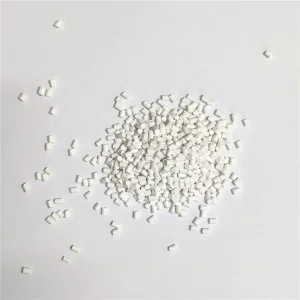
Direct from China's leading ISO-certified manufacturing facility. High concentration, non-migration, and optimized thermal stability.
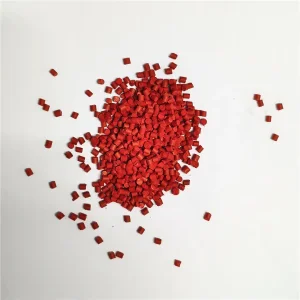
In modern polyolefin processing, opacity—frequently referenced as "covering power"—is not merely an aesthetic requirement; it is a critical functional metric directly dictating barrier properties, light protection, structural integrity, and unit production costs. Selecting **cheap high covering white PE masterbatch companies & factories** requires plastic converters, extrusion engineers, and procurement directors to evaluate beyond basic per-kilogram price points. True cost-efficiency relies on pigment concentration, dispersion quality, particle size distribution (PSD), carrier resin compatibility, and melt index harmonization.
White masterbatch formulation centers around Titanium Dioxide ($\text{TiO}_2$). Among inorganic pigments, $\text{TiO}_2$ possesses an exceptionally high refractive index (2.73 for Rutile and 2.55 for Anatase). When embedded within a polyethylene matrix (refractive index $\approx 1.51$), $\text{TiO}_2$ scatters visible light with maximum efficiency, producing brilliant whiteness and high opacity. Achieving maximum covering power at lower let-down ratios (LDR) demands optimized dispersion of Rutile $\text{TiO}_2$ particles with an optimal mean diameter between **0.2 and 0.3 microns**—matching exactly half the wavelength of visible light for peak Mie scattering.
When compounding high-concentration white masterbatches (ranging from **40% to 80% $\text{TiO}_2$ loading**), poor shear mixing during twin-screw extrusion leads to pigment agglomeration. Agglomerates act as stress concentrators, causing pinholes in blown film extrusion, surface specks, lowered tear strength, and filter mesh clogging. Top-tier Chinese masterbatch factories leverage specialized surface coatings (such as alumina, silica, and organic silane coupling agents) on $\text{TiO}_2$ particles to ensure hydrophobic compatibility with Polyethylene (LDPE, LLDPE, HDPE) carrier resins.
Analyzing the structural, technical, and supply chain efficiencies driving China's masterbatch manufacturing dominance.
Chinese masterbatch manufacturers operate in close proximity to major sulfate and chloride process $\text{TiO}_2$ refineries. This integrated supply chain dramatically reduces raw material freight costs, securing direct factory-gate pricing for premium Rutile pigments.
Utilizing high-torque, co-rotating twin-screw compounding extruders (L/D ratios up to 48:1) equipped with continuous gravimetric loss-in-weight feeders ensures precise pigment dispersion, eliminate batch variations, and yield ultra-high concentration masterbatches.
Exporting to over 100 countries enables factory clusters in regions like Changzhou, Jiangsu to operate continuous mass-scale production lines. This lowers fixed operational overheads, passing direct manufacturing cost savings to global B2B purchasers.
The global masterbatch industry is undergoing a structural transition driven by circular economy mandates, down-gauging of flexible packaging, and strict international chemical safety standards. Below are the key technological vectors defining modern PE white masterbatch manufacturing:
As packaging manufacturers reduce film thickness from 50 microns down to 10–15 microns to cut plastic usage, white masterbatch must deliver double the opacity without causing dielectric breakdown, micro-pinholes, or tear weakness. High-covering 70%+ Rutile formulations are now required to maintain opacity at lower gauge thickness.
Integrating PCR resins often introduces grey or yellowish undertones to base polymers. High-performance white masterbatches are formulated with specialized optical brighteners (OB-1) and blue-toned undertone adjusting pigments to neutralize PCR discoloration while maintaining food-grade compliance.
During high-speed extrusion (temperatures reaching 280°C to 300°C), standard white masterbatches are susceptible to phenolic yellowing caused by interactions between antioxidants and $\text{TiO}_2$ surface treatments. Advanced factories incorporate specialized hindered amine heat stabilizers (HALS) and phenolic-free additive packages to guarantee zero thermal discoloration.
Tailored white masterbatch carrier systems optimized for blown film, injection molding, and profile extrusion.
| Processing Method | Target End Product | Recommended Masterbatch Grade | TiO₂ Content | MFI (g/10min @ 190°C/2.16kg) | Key Performance Metric |
|---|---|---|---|---|---|
| Blown Film Extrusion | Courier Bags, Milk Packaging, Mulch Film | PE White 70% Rutile | 60% - 75% | 8 - 15 | Zero pinholes, high opacity at 15µm, excellent heat sealability |
| Injection Molding | Food Containers, Bottle Caps, Household Goods | PE White Standard 50% | 50% - 60% | 20 - 35 | High flowability, anti-warping, uniform gloss, FDA food contact safe |
| Blow Molding | HDPEDetergent Bottles, Cosmetic Containers | PE White High Opacity 60% | 60% - 70% | 2 - 8 | ESCR (Environmental Stress Crack Resistance) compliance, smooth finish |
| Sheet & Profile Extrusion | PE Geomembranes, Corrugated Pipes, Sheets | PE White UV-Stabilized | 50% - 70% | 1 - 5 | High weatherability, UV resistance > 3000 hrs, heat stability up to 280°C |
1. Co-Extruded Express & Courier Bag Packaging: Modern e-commerce packaging uses multi-layer co-extrusion (ABA or ABC structures). The inner black layer provides opacity and security, while the outer white layer must deliver maximum whiteness index ($L^* \ge 96$) and smooth printability for barcodes. High covering white masterbatch allows converters to minimize the thickness of the outer layer while completely masking the black core layer underneath.
2. Liquid Food & Milk Packaging Films: Food-grade liquid packaging requires zero taste/odor contamination and exceptional barrier protection against UV light to prevent riboflavin degradation. Masterbatches for this application are compounded with virgin LDPE carriers, food-contact approved $\text{TiO}_2$, zero calcium carbonate filler, and low volatile organic compound (VOC) profiles.
Procurement departments often fall into the trap of evaluating masterbatch strictly on unit price per metric ton ($/MT). However, true economic value is defined by the **Total Cost of Ownership (TCO)**, calculated through the Let-Down Ratio (LDR), machine throughput, scrap rate reduction, and filter maintenance costs.
Replacing a low-concentration 40% $\text{TiO}_2$ masterbatch (used at 4% LDR) with a high-covering 70% Rutile masterbatch (used at 1.8% LDR) reduces masterbatch consumption by **55%**, saving freight, storage, and handling costs while maintaining identical opacity.
Agglomerate-free masterbatches reduce backpressure build-up behind the breaker plate. Extrusion lines run uninterrupted without frequent screen pack changes, elevating overall equipment effectiveness (OEE) by up to **14%**.
In blown film production, masterbatch specks cause bubble pops and web breaks. Utilizing ultra-filtered masterbatch (FPV < 0.5 bar/g) lowers scrap rates from 3.5% to under **0.4%**, delivering substantial resin savings.
By switching to factory-direct sourcing from established Chinese masterbatch companies, converters achieve an optimal balance between low initial material costs and high processing performance—yielding significant margin expansion in price-sensitive plastic conversion sectors.
When auditing prospective **cheap high covering white PE masterbatch factories**, global buyers should establish a standardized quality verification framework prior to contract execution. Ensure your supplier complies with the following lab-tested metrics:
Addressing common engineering challenges and procurement queries regarding PE White Masterbatch.
Select from our comprehensive masterbatch line engineered for blown film, injection molding, and custom profile extrusion.