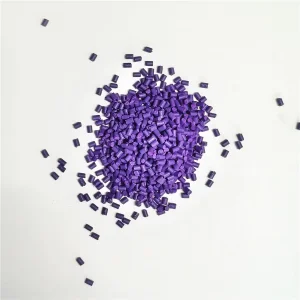
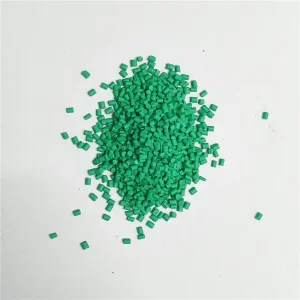
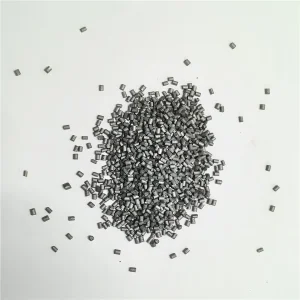
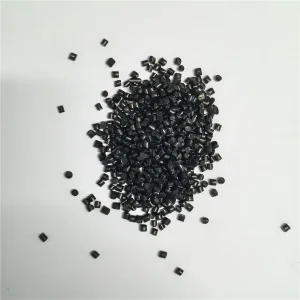
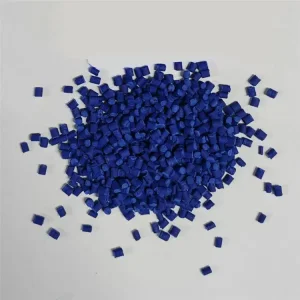
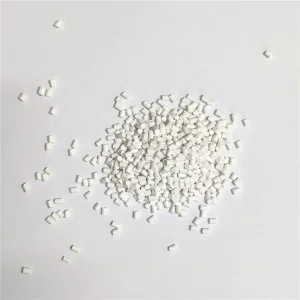
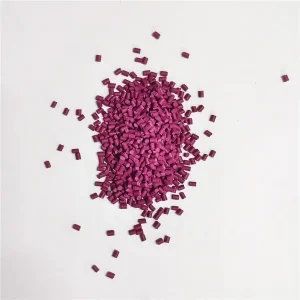
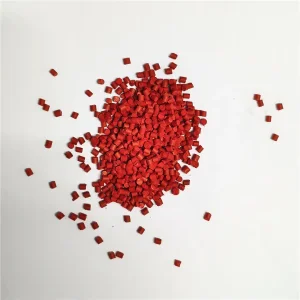
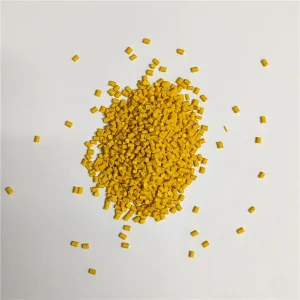
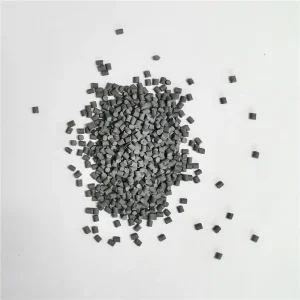
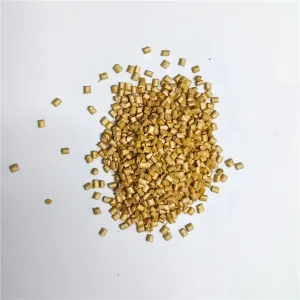
High-concentration carrier-matched masterbatch formulations engineered for blown film extrusion, injection molding, and complex industrial profiles. Select below to explore technical parameters.
Opacity in polyethylene (PE) matrix applications relies on light scattering dynamics governed by Mie Scattering Theory. Achieving high covering power at competitive wholesale pricing requires optimizing the refractive index gradient between Titanium Dioxide ($TiO_2$) and the polyolefin carrier.
Utilizing high-purity Rutile Titanium Dioxide (refractive index of 2.73) over Anatase (2.55) provides maximum light refraction. This yields 35% higher hiding power in thin blown films down to 15 microns.
Micro-milled pigment particles maintained strictly within the 0.20 to 0.30 micron diameter spectrum align perfectly with visible light wavelengths (400-700nm), guaranteeing optimal light reflectance and whiteness index.
Carrier resin matrices formulated with linear low-density polyethylene (LLDPE) possessing a high Melt Flow Index (MFI 20-30 g/10min) ensure seamless shear dispersion and zero melt fracture during processing.
| Grade Category | TiO₂ Concentration (%) | Carrier Type | MFI (190°C/2.16kg) | Heat Stability (°C) | Moisture Content (PPM) | Primary Application |
|---|---|---|---|---|---|---|
| White Masterbatch Premium Film | 70% - 75% Rutile | LLDPE / LDPE | 18 - 25 g/10min | 280°C - 300°C | < 500 PPM | Ultra-thin Blown Film |
| White Masterbatch Standard Extrusion | 60% - 65% Rutile | PE Carrier | 12 - 20 g/10min | 260°C - 280°C | < 800 PPM | Milk Bottles & Sheets |
| High-Cover Economy Grade | 50% Rutile + CaCO₃ | HDPE / LLDPE | 8 - 15 g/10min | 240°C - 260°C | < 1000 PPM | Injection Molded Goods |
| Weather-Resistant Outdoor Grade | 60% TiO₂ + HALS UV | PE Carrier | 15 - 22 g/10min | 260°C - 300°C | < 600 PPM | Agricultural Mulch Film |
In global plastics sourcing, "cheap" often carries a misconception of compromised quality. However, China’s masterbatch manufacturing ecosystem—headquartered in industrial centers like Changzhou, Jiangsu—delivers structural cost advantages through raw material integration and automated compounding efficiency.
Direct supply contracts with domestic titanium dioxide producers and petrochemical refineries allow Chinese compounding plants to bypass intermediary distribution margins. Raw $TiO_2$ and PE resin procurement at high tonnage scales drives down cost-per-kilogram output by 18% to 25% compared to European or North American processors.
Modern Chinese facilities utilize high-speed co-rotating twin-screw extruders featuring length-to-diameter (L/D) ratios of 44:1 to 48:1. Multi-stage side feeding and continuous gravimetric loss-in-weight dosing prevent pigment degradation while minimizing energy consumption per metric ton produced.
Every ready-stock lot of High Covering White PE Masterbatch undergoes standardized testing: Melt Flow Rate verification according to ISO 1133, moisture titrations using Karl Fischer equipment, and ash content evaluations (ISO 3451-1). Digital color matching under CIE L*a*b* standard illuminants ensures shade consistency between production lots.
The global masterbatch market is undergoing rapid evolution driven by circular economy mandates, down-gauging in plastic packaging, and strict chemical safety standards. Leading manufacturers are adjusting compounding formulations to match these industrial imperatives.
With regulations demanding Post-Consumer Recycled (PCR) resin content in consumer packaging, white masterbatches are engineered with specialized compatibilizers to maintain high opacity when blended into recycled HDPE and LLDPE resins.
Moving from traditional 50% white masterbatch formulations to 70-75% titanium dioxide loading reduces let-down ratios (LDR), lowering transportation overhead, inventory footprint, and overall raw material handling costs for plastics processors.
Export-ready masterbatches must comply with international standards including EU REACH Regulation, RoHS 3 directives, heavy metals rules (EN 71-3), and FDA 21 CFR 177.1520 for direct food contact applications.
High covering white PE masterbatch is engineered to perform across diverse processing methods. Tailoring carrier compatibility and melt viscosity prevents processing defects in high-output conversion lines.
In multi-layer co-extrusion blown film lines producing courier mailers, milk pouches, and agricultural silage wrap, white masterbatch provides light barrier properties and high tensile strength retention. Preventing pinhole defects requires sub-micron filtration during compounding.
For daily plastic containers, crates, caps, and electrical housings, high-covering masterbatch facilitates rapid color dispersion without causing mold shrinkage or dimensional distortion. Non-migratory organic surface treatments ensure clean surface finishes.
High-density polyethylene (HDPE) bottle blow molding demands thermal stability up to 260°C without pigment burnout or die build-up. The high refractive index of rutile $TiO_2$ shields chemical contents from UV-induced degradation.
Extruded corrugated sheets, protective PE pipes, and architectural trims require weatherable pigment grades. Incorporating Hindered Amine Light Stabilizers (HALS) into the masterbatch prevents chalking and yellowing under long-term solar exposure.
Plastic converters often encounter operational bottlenecks due to poor masterbatch selection. Below are technical diagnosis guidelines for common processing challenges.
Root Cause: Absorbed moisture in low-grade masterbatch volatilizes into steam at processing temperatures above 200°C, causing micro-voids in thin blown films.
Solution Protocol:
Utilize vacuum-degassed masterbatch batches packed in aluminum-foil barrier bags, maintaining moisture content under 500 PPM.
Root Cause: Low-molecular-weight waxes or un-dispersed $TiO_2$ agglomerates separate from the melt stream under high shear stress at the die exit.
Solution Protocol:
Switch to high-purity LLDPE carrier systems incorporating fluoropolymer Processing Aids (PPA) to lower melt fracture and die friction.
Root Cause: Interaction between phenolic antioxidants in the base polymer and surface-active titanium sites ($TiO_2$) under high extrusion temperatures.
Solution Protocol:
Incorporate alumina/silica passivated $TiO_2$ pigments paired with zinc stearate dispersion packages to prevent phenolic complexing.
For international B2B buyers, balancing inventory carrying costs against production downtime requires agile supply chain execution. Maintaining a permanent ready-stock reserve changes the sourcing paradigm.
With standardized white masterbatch grades pre-packaged in 25kg moisture-proof woven bags stored in climate-controlled warehouses, orders are loaded into ocean containers within 48 to 72 hours of contract confirmation.
Global procurement teams can evaluate sample lots starting from 100 kg up to full container loads (25 Metric Tons per 20ft FCL), lowering trial risk while validating color match compatibility.
Custom shade requests (ranging from bluish-white to warm milk-white) undergo spectrophotometric matching with lab samples dispatched via air express within 5 business days.
Technical insights compiled by masterbatch engineers and international trade specialists to assist plastic converters in optimizing product procurement.
From ultra-high opacity white to specialized anti-fading color concentrates, browse our ready-stock factory inventory for immediate worldwide shipping.