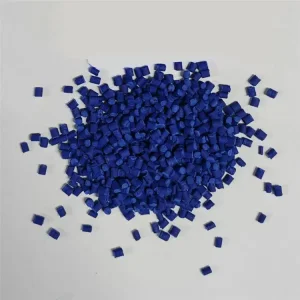
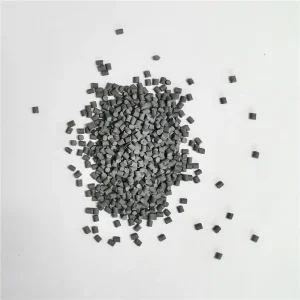
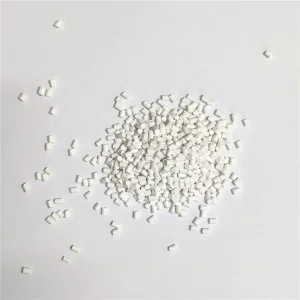
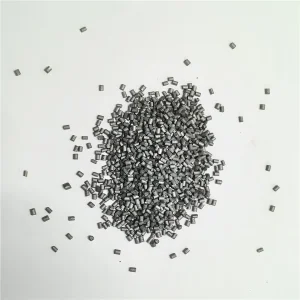
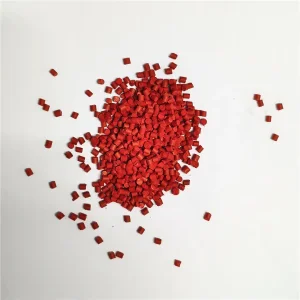
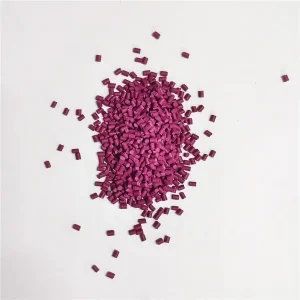
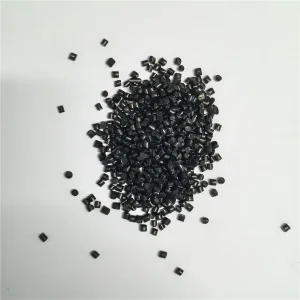
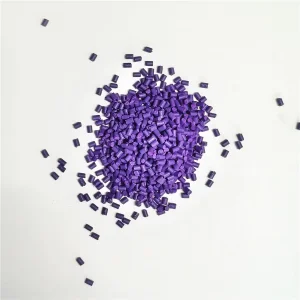
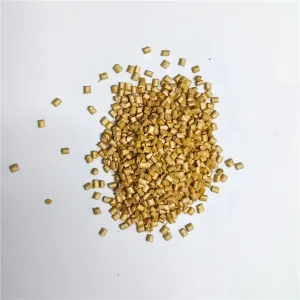
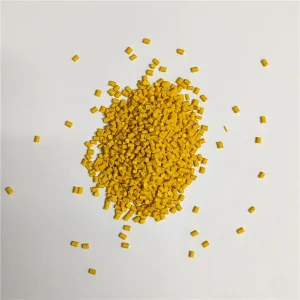
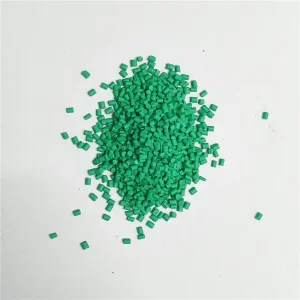
Factory-direct high-dispersion masterbatch formulations engineered for extrusion, blown film, and pressure pipe manufacturing.
The global infrastructure, municipal water distribution, agricultural irrigation, and telecommunications sectors are undergoing a massive transition from traditional metallic or concrete piping systems to high-performance polyolefin thermoplastics. Polyethylene (PE)—specifically HDPE (High-Density Polyethylene) such as PE80 and PE100 grades—has become the dominant material choice. Within this rapid industrial adoption, the visual aesthetic, regulatory color-coding compliance, UV durability, and mechanical integrity of extruded plastic pipes depend directly on the formulation quality of color masterbatches.
When industrial buyers search for cheap high gloss pipe color PE masterbatch companies & manufacturers, the intent is rarely a compromise on chemical performance. In modern extrusion economics, "cheap" signifies optimizing total cost of ownership (TCO) through high pigment loading, low let-down ratios (LDR), reduced cycle times, and minimal extrusion melt fracture. Procurement directors seek manufacturing partners capable of delivering pristine surface finish (high gloss), long-term weather resistance, zero pigment migration, and thermal endurance up to 260°C without inflating operational overheads.
Modern municipal and commercial building standards demand high surface gloss for color-coded pipes (e.g., blue for potable water, yellow for natural gas, orange/red for high-voltage cable conduit, green for recycled water). Gloss is not merely visual; it reflects pristine melt homogenization during profile extrusion.
Pipes deployed in exposed outdoor environments or shallow trenches face severe photo-oxidative degradation. Premium color masterbatches integrate hindered amine light stabilizers (HALS) and micro-fine organic/inorganic pigments to block destructive UV-A and UV-B spectra.
By engineering high-concentration pigment loading (up to 40%-70% depending on pigment chemistry), top-tier manufacturers enable pipe extruders to achieve target opacity and color depth at LDRs as low as 1.5% to 3%, drastically trimming raw material freight and storage expenses.
Achieving a mirror-like high gloss finish on extruded PE pipe outer walls while maintaining low manufacturing costs requires a sophisticated polymer engineering approach. The ultimate surface gloss of a Polyethylene pipe is determined by three physical factors during the melt phase: crystallinity control, pigment dispersion particle size, and carrier resin rheology.
When organic or inorganic pigments are mixed into polyethylene, they naturally exist as dry agglomerates ranging from 10 to 100 microns. If these agglomerates enter the extrusion die unrefined, they protrude through the pipe skin, scattering reflected light and causing a dull, matte finish, as well as creating localized stress initiation points.
Leading manufacturers like Changzhou Jiazhou Plastic Products Co., Ltd. utilize multi-zone co-rotating twin-screw extruders equipped with specialized kneading blocks and shear elements. This process breaks down pigment agglomerates to sub-micron particles (< 2.5 microns), allowing light to reflect uniformly off the polymer matrix, producing a high gloss surface rating exceeding 85 GU (Gloss Units at 60°).
A frequent error in low-grade color masterbatch production is using low-quality recycled carriers or universal carriers with incompatible melt indexes. For pipe extrusion, the masterbatch carrier resin must be strictly compatible with LLDPE, LDPE, or HDPE base resins.
Our engineering team matches the Melt Flow Index (MFI) of the masterbatch carrier precisely to the processing window of the target pipe resin (typically between 0.1 to 1.5 g/10min for pipe extrusion at 190°C/5kg). This prevents viscosity mismatch, melt fracture, and shark-skin surface defects during high-speed extrusion lines.
| Parameter | Standard Grade | Jiazhou High Gloss Pipe Grade |
|---|---|---|
| Carrier Resin | Generic / Mixed LLDPE | 100% Virgin Pipe-Grade PE |
| Pigment Dispersion | < 15 microns | < 2.5 microns (Sub-micron) |
| Heat Resistance | 200°C - 220°C | 260°C Continuous |
| Gloss Level (60°) | 45 - 60 GU | 85 - 98 GU |
| Filter Pressure Value | > 2.5 bar/g | < 0.8 bar/g (Clean die) |
| Weathering (QUV) | 500 Hours | 3,000+ Hours Anti-Fading |
*Data compiled from Jiazhou QC Testing Protocols (ISO 18553 Dispersion Standard).
Masterbatch requirements vary significantly depending on regional civil engineering codes, environmental exposure, and fluid containment types. Below is an engineering analysis of key application vectors:
Standards: ISO 4427, EN 12201, BS 6920.
Potable water pipes require distinct blue striping or full co-extruded blue outer layers. Masterbatches must use non-toxic, organoleptically neutral Pigment Blue 15:3 formulations that do not leach chemical odor or flavor into drinking water, retaining high gloss to prevent dirt accumulation on pipe surfaces during field storage.
Standards: ISO 4437, ASTM D2513.
Natural gas delivery lines utilize vibrant yellow co-extrusion layers. Pigments must be completely lead-free, heavy-metal-free, and resistant to chemical degradation from trace sulfur compounds or odorants present in natural gas. Thermal stability up to 260°C is required to handle high-speed extruder shear.
Standards: Telcordia GR-3155.
Fiber optic micro-duct bundles require vivid, distinct color identification across 12+ standard color codes (Red, Blue, Green, Yellow, Violet, Rose, Grey, White, Silver, Gold, etc.). The masterbatch must deliver extreme dimensional stability to ensure micro-duct inner walls remain friction-free during air-blown fiber installation.
Sourcing color masterbatch directly from specialized Chinese manufacturing hubs like Changzhou, Jiangsu offers global plastic processors an unmatched balance of cost reduction, technical scale, and logistics speed. Understanding how Changzhou Jiazhou Plastic Products Co., Ltd. optimizes its supply chain explains why global buyers achieve up to 25%-35% net savings on masterbatch procurement without surrendering quality assurance.
Situated in the heart of China’s chemical processing delta in Changzhou, Jiazhou enjoys direct upstream integration with world-class petrochemical refiners (Sinopec, PetroChina) for prime PE base resins, as well as top-tier pigment synthesizer networks. Bulk procurement leverage enables wholesale material costs that independent international compounders cannot replicate.
Our facility operates continuous automated gravimetric feeding lines paired with high-torque twin-screw compounders. Automated gravimetric dosing guarantees continuous color matching tolerance of ΔE < 0.5 across 50-ton production runs, eliminating batch-to-batch color shifts on large-scale municipal pipe contracts.
To comply with Google E-E-A-T principles and provide verifiable evidence of technical expertise, our manufacturing processes strictly adhere to international testing regimens. Every batch of High Gloss Pipe Color PE Masterbatch undergoes standardized laboratory verification prior to dispatch.
Microscopic evaluation of pigment particle dispersion quality in polyolefin pipes and fittings, ensuring zero structural void defects.
Oxidative Induction Time testing at 200°C ensures anti-oxidant additives remain active, protecting pipes for a 50+ year service life.
Thermogravimetric Analysis (TGA) guarantees zero pigment degradation, gas formation, or color shifting under high shear extrusion.
100% compliant with EU REACH, RoHS 2.0, and FDA non-toxic food contact standards for clean water infrastructure safety.
Expert answers to common engineering, color-matching, and ordering queries from plastic pipe extruders worldwide.
Discover our comprehensive array of PE carriers for blown film, injection molding, and profile extrusion applications.