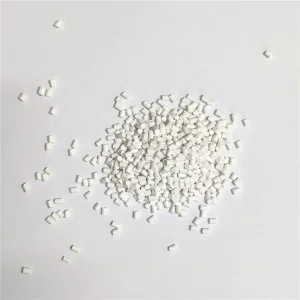
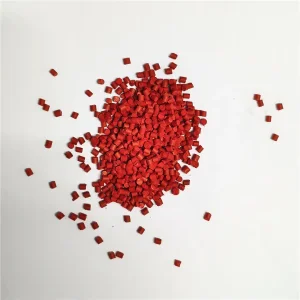
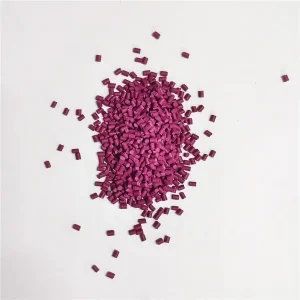
Explore our precision-formulated polyethylene colorants engineered for high melt-flow rate (MFR) stability, non-agglomerating pigment distribution, and maximum let-down ratio (LDR) efficiency.
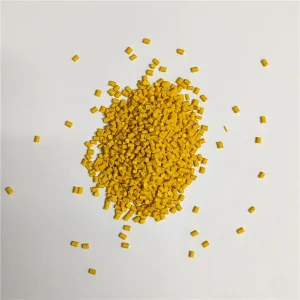
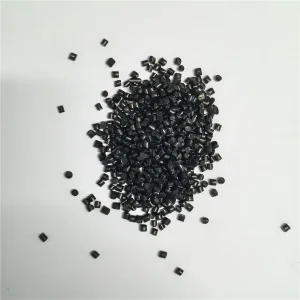
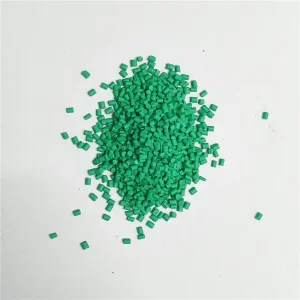
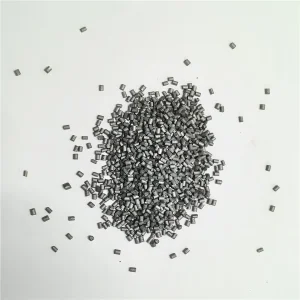
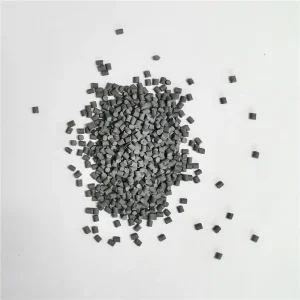
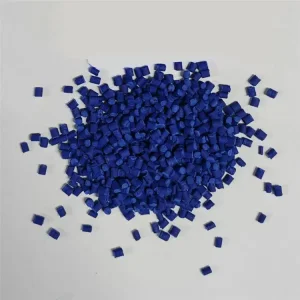
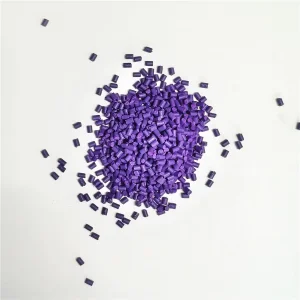
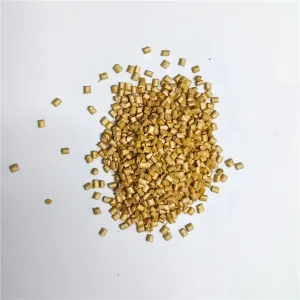
In modern polyolefin processing, the economic requirement for a cheap high processing dispersion PE masterbatch is frequently misunderstood. Procurement managers often equate low unit costs with compromised melt performance. However, state-of-the-art compounding technology decouples price from dispersion efficiency by leveraging optimized polymer carrier rheology, targeted wetting agents, and high-shear twin-screw extruders.
The primary metric governing masterbatch performance is its Filter Pressure Value (FPV) and particle size distribution after melt blending. When raw inorganic or organic pigments (such as Titanium Dioxide $TiO_2$, Carbon Black, or Phthalocyanines) are introduced into Low-Density Polyethylene (LDPE) or Linear Low-Density Polyethylene (LLDPE) carriers, they naturally form micro-agglomerates ranging from 10 to 100 microns. Without superior dispersion additives, these agglomerates cause film pinholes, melt fractures, mechanical weakness, and rapid filter mesh clogging during downstream blown film or extrusion processes.
Breakdown of primary pigment clusters into sub-micron particles via high-shear twin-screw co-rotating extrusion segments, ensuring uniform light scattering and maximum tinting strength.
Carrier PE resins are formulated with melt flow indices (MFI: 20 to 50 g/10min) significantly higher than base resins, guaranteeing rapid breakdown and diffusion without altering virgin polymer properties.
Incorporation of ultra-low molecular weight polyethylene waxes (PE Wax) and modified surfactants to eliminate pigment surface energy barriers, enabling seamless melt homogenization.
The global masterbatch market is experiencing a structural migration toward highly concentrated, low-addition-rate color concentrates. Driven by stringent environmental mandates (EU REACH, RoHS, US FDA Food Contact Compliance) and aggressive price competition in downstream flexible packaging, industrial converters require masterbatch suppliers who can guarantee strict batch-to-batch consistency while driving down Total Cost of Ownership (TCO).
| Application Sector | Core PE Carrier Grade | Pigment Loading Range | Heat Stability Limit | Primary Commercial Metric |
|---|---|---|---|---|
| Flexible Packaging (Blown Film) | LLDPE / LDPE Blend | 40% - 75% | 240°C - 260°C | Pin-hole prevention, High Tinting Power |
| Injection Molding (Crates/Caps) | HDPE (High MFI) | 30% - 60% | 260°C - 300°C | Zero Warpage, High Surface Gloss |
| HDPE/PP Pipe Extrusion | PE100 Grade Carrier | 40% - 50% Carbon Black | 260°C | UV Protection, Filter Pressure Value (FPV) <1.5 bar/g |
| Agricultural Mulch Film | mLLDPE / LDPE | 50% - 70% TiO2/Black | 220°C - 240°C | Weatherability, Anti-UV Dispersion |
As plastic converters transition toward Post-Consumer Recycled (PCR) polyolefins, the technical demands on masterbatches have escalated. Recyclate resins contain inherent impurities, variable viscosity, and residual odors. High-dispersion PE masterbatches act as a stabilizing agent, masking color inconsistencies in recycled feedstocks and reducing melt viscosity variations during high-speed extrusion lines.
International buyers often question how Chinese masterbatch manufacturers achieve pricing structures 20% to 40% lower than European or North American counterparts without sacrificing dispersion quality. The answer lies in localized raw material synthesis, mega-cluster industrial logistics, and automated compounding infrastructure.
Proximity to massive Sinopec and PetroChina petrochemical bases in Jiangsu and Zhejiang provinces grants direct access to low-cost, high-grade virgin PE carriers and specialized PE waxes, bypassing intermediate distributor markups.
Modern Changzhou manufacturing plants operate high-output twin-screw extruders equipped with automatic gravimetric loss-in-weight feeders. This guarantees exact pigment-to-carrier ratios with zero human error.
Every production lot undergoes real-time testing using X-Rite spectrophotometers, melt flow indexers, and two-roll laboratory mills to ensure color tolerance remains strictly under $\Delta E < 0.5$.
Different plastic conversion techniques impose distinct mechanical and thermal stresses upon masterbatch formulations. A universal masterbatch rarely yields optimal results. Below is a deep-dive analysis into custom engineering requirements across major applications:
Film blowers operate at bubble stability limits where undispersed pigment particles cause instant film tears or visual specks. Our PE Masterbatch series uses micro-milled pigments coated with polar/non-polar dispersants.
Injection processes require rapid cycle times and low mold deposit buildup (plate-out). The masterbatch carrier must melt instantly within the barrel shear zone to distribute color across complex mold cavities.
Infrastructure pipes demand long-term structural integrity. Carbon black PE masterbatches must provide maximum UV protection while avoiding stress-concentration nodes caused by pigment agglomerates.
Hollow container production requires consistent wall thickness and opaque light blocking to protect food, chemicals, or cosmetic products from light degradation.
When evaluating suppliers for a Cheap High Processing Dispersion PE Masterbatch, strategic buyers evaluate the true operational cost rather than looking solely at FOB bag pricing. Purchasing cheap masterbatch with poor dispersion leads to hidden operational expenses:
Poorly dispersed masterbatches clog extruder screen packs in hours, forcing costly production downtime and filter mesh replacements. Our sub-micron dispersion extends screen pack life by up to 300%.
Higher pigment concentration combined with superior dispersion allows converters to drop LDR from 4% down to 2%, effectively cutting masterbatch procurement volumes in half.
Defect-free production yields fewer customer returns, lower scrap generation during start-up, and consistent color matching between production batches separated by months.
As the global polymer industry accelerates toward sustainable chemistry and smart processing, PE masterbatch manufacturing is undergoing rapid innovation. Key trends shaping the next decade include:
Advances in liquid dispersion aids and specialized twin-screw kneading blocks enable compounding plants to load up to 80% white TiO2 or fine inorganic pigments while maintaining masterbatch pellet integrity and flowability.
Combining colorants with functional additives—such as anti-static, anti-UV, anti-oxidant, and slip agents—in a single masterbatch granule simplifies resin dosing for plastic converters.
Detailed answers to critical technical questions asked by polymer engineers, plant managers, and global procurement heads.
Browse our global supply portfolio of high-concentration colorants and specialty filler masterbatches designed for modern polyolefin processing lines.