Engineered for flat die thermoforming sheets, geomembranes, and heavy-gauge industrial profiles requiring up to 260°C–300°C thermal stability.
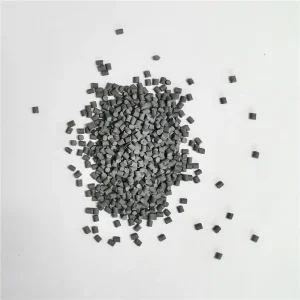
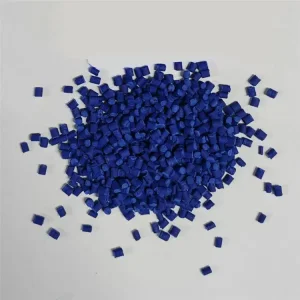
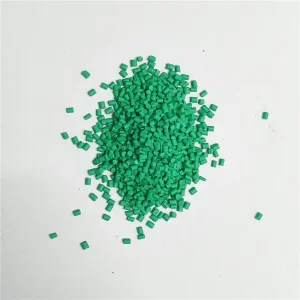
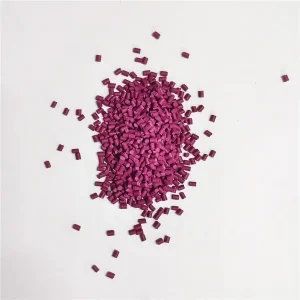
An authoritative whitepaper examining the material science, thermal endurance, and global supply chain vectors defining modern polyolefin sheet extrusion coloring.
In the contemporary global plastics extrusion industry, the demand for high-performance polyolefin sheets—specifically High-Density Polyethylene (HDPE), Linear Low-Density Polyethylene (LLDPE), and Polypropylene (PP) sheets—has experienced exponential growth. Flat die extrusion processes operate under stringent thermodynamic constraints. Processing temperatures frequently reach 240°C to 280°C, accompanied by continuous shear stresses within high-throughput twin-screw extruders and calendar roll stacks. In this demanding environment, standard colorants suffer from thermal degradation, polymer carrier incompatibility, pigment agglomeration, and severe shade migration.
To maintain visual consistency, physical strength, and chemical inertia in heavy-gauge extrusion sheets, global polymer converters rely heavily on specialized high temperature extrusion sheet PE masterbatches. Procuring high-concentration, ultra-dispersed PE color masterbatches from cost-efficient manufacturers in China has become a cornerstone strategy for tier-1 plastic processors across North America, Europe, the Middle East, and Southeast Asia.
During sheet extrusion, residence times inside the barrel can exceed 3 to 6 minutes at melt temperatures above 260°C. Standard organic pigments undergo thermal cleavage of chromophore bonds, leading to catastrophic color shifts (ΔE > 3.0), outgassing (pinholes), and degradation of the carrier resin matrix. Advanced high-temperature masterbatches utilize surface-passivated inorganic pigments and heat-stabilized organic complexes combined with narrow molecular weight distribution (MWD) PE carriers to prevent thermal degradation and preserve mechanical properties.
Understanding carrier polymer selection, micro-pigment dispersion, anti-migration chemistry, and rheological MFI matching for flat sheet processing.
The Melt Flow Index (MFI) of the masterbatch carrier resin must perfectly align with the virgin base resin (HDPE/LLDPE). A carrier resin with an MFI between 15 g/10min and 30 g/10min ensures rapid melting and zero melt fracture during high-shear sheet extrusion.
Utilizing triple-roll milling and co-rotating twin-screw compounding, pigment particle sizes are reduced to sub-micron levels (< 0.5 μm). This prevents streak formation, surface specs, and filter pack clogging in long extrusion runs.
Advanced organic chromophores are chemically coupled with thermal stabilizers and sterically hindered amine light stabilizers (HALS). This blocks pigment sublimation, bleeding, and UV-induced color fading under harsh outdoor exposure.
| Technical Parameter | Testing Standard | High-Temp Sheet Grade PE Masterbatch | Standard Commercial Grade |
|---|---|---|---|
| Heat Resistance (°C) | DIN EN 12877-2 | 260°C – 300°C (5 min residence) | 180°C – 220°C |
| Pigment Dispersion (bar/g) | EN 13900-5 (Filter Pressure Value) | < 0.8 bar/g (Ultra-Fine) | > 2.5 bar/g |
| Light Fastness (Blue Wool Scale) | ISO 105-B02 | Grade 7 – 8 (Exceptional) | Grade 4 – 5 |
| Migration Resistance | DIN 54002 | Class 5 (No bleeding / Non-migrative) | Class 3 |
| Heavy Metal Compliance | RoHS 3.0 / REACH / FDA | 100% Lead-Free, Cd-Free, Phthalate-Free | Varies by supplier |
Unpacking the structural cost efficiencies, automated manufacturing scale, and raw material integration of Changzhou plastic clusters.
Global procurement executives face continuous pressure to reduce unit costs without sacrificing color exactness or mechanical performance. Sourcing cheap high temperature extrusion sheet PE masterbatch directly from established China OEM factories like Changzhou Jiazhou Plastic Products Co., Ltd. provides distinct structural advantages:
Eliminating middleman trader markups allows global plastic extruders to reduce masterbatch procurement budgets by up to 30% annually.
Real-time laser particle size analysis and inline spectrophotometers ensure exact color matching and defect-free extrusion performance.
Proximity to Shanghai and Ningbo deep-water ports guarantees efficient ocean freight shipping with full custom export documentation.
From heavy automotive thermoforming to food-grade deep-draw tray packaging, discover how high-temp masterbatches excel across key industries.
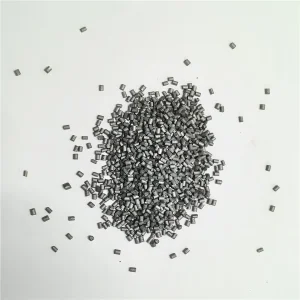
Thick HDPE and PP sheets extruded for wheel well liners, underbody shields, and trunk trays require high carbon black dispersion or weather-resistant silver/grey masterbatches. Our heat-resistant PE masterbatch ensures uniform wall thickness and zero color distortion during secondary infrared thermoforming heating cycles.
Civil engineering applications demand heavy-gauge LLDPE geomembranes for landfill capping and mining containment. High-concentration black masterbatches loaded with 40%–50% P-type carbon black provide maximum UV stabilization and oxidative induction time (OIT) at high continuous extrusion speeds.
White and custom-colored PE masterbatches compliant with FDA 21 CFR 177.1520 and EU No 10/2011 regulations are essential for food contact trays and rigid beverage containers. Non-migrative organic pigments eliminate taste transfer and chemical leaching under hot-fill operating conditions.
A standardized technical framework for procurement teams evaluating high-temperature PE color concentration suppliers.
When qualifying a potential cheap high temperature extrusion sheet PE masterbatch factory & supplier, enterprise procurement departments must conduct rigorous audit procedures spanning technical capability, regulatory adherence, and supply chain reliability:
From circular economy PCR integration to Near-Infrared (NIR) detectable black masterbatches for automated plastic recycling sorting.
The polyolefin extrusion sheet market is undergoing rapid technical evolution, spurred by global sustainability directives, circular economy targets, and advanced automation. Leading manufacturers are investing heavily in innovative masterbatch formulations designed to meet next-generation requirements:
Traditional carbon black absorbs Near-Infrared radiation, making black PE sheets invisible to automated optical sorting systems at recycling facilities. Emerging NIR-detectable black masterbatches utilize specialty organic pigments, allowing post-consumer thermoformed sheets to be identified and recycled efficiently.
With global brand owners mandating 30%+ Post-Consumer Recycled (PCR) content in extruded sheets, specialized masterbatches are formulated with high-compatibilizer additive packages (MAh-g-PE) to bridge viscosity mismatches and prevent gel formation in degraded PCR streams.
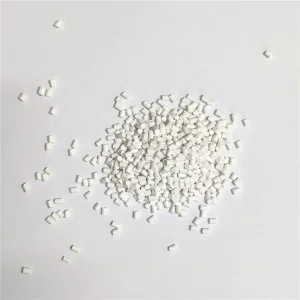
Next-gen hyper-dispersant surface chemistry enables TiO2 white masterbatch loading rates to reach 75%–80% while maintaining low melt viscosity. This reduces shipping freight volume and lowers total storage footprint for international buyers.
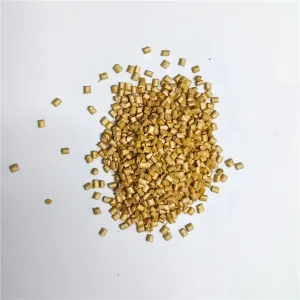
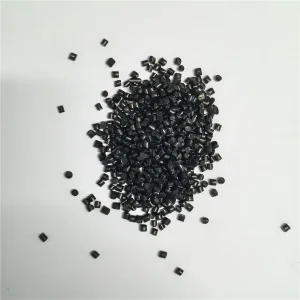
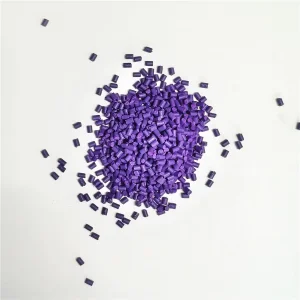
Select your desired color or technical grade below for direct factory quotation and technical data sheets (TDS).
Expert technical responses regarding high-temperature sheet extrusion masterbatches, let-down ratios, and factory customization.