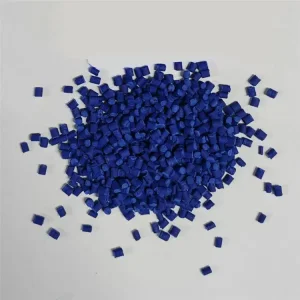
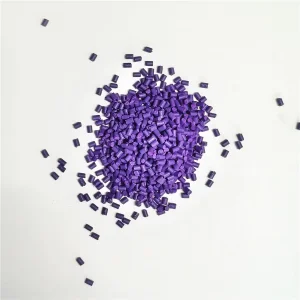
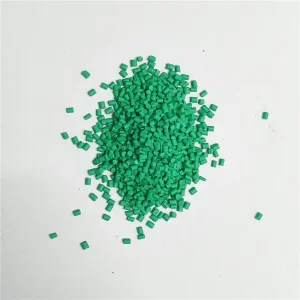
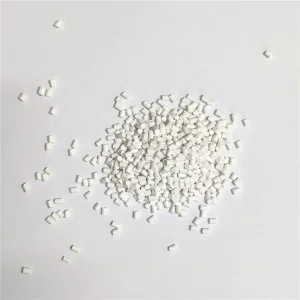
Engineered for high-speed extrusion blow molding (EBM), injection blow molding (IBM), and stretch blow molding (ISBM) lines.
Understanding the economic, technical, and supply chain drivers governing the global rigid plastic container industry.
The global rigid packaging industry is experiencing unprecedented restructuring driven by two competing imperatives: aggressive cost-down targets across fast-moving consumer goods (FMCG) packaging and stringent performance compliance for chemical, cosmetic, and pharmaceutical containers. At the nexus of this industry transformation sits Polyethylene (PE) Bottle Blow Molding Masterbatch—a critical additive system that determines not only the visual brilliance and brand alignment of hollow containers, but also their melt strength, parison stability, barrier performance, and environmental stress crack resistance (ESCR).
When enterprise procurement officers search for a cheap PE bottle blow molding masterbatch company & factory, the operational definition of "cheap" extends far beyond lowest invoice price per kilogram. True economic value—referred to in advanced procurement as Total Cost of Ownership (TCO)—requires a masterbatch formulated to achieve optimal dispersion at minimal let-down ratios (LDR), eliminate parison sag during high-speed extrusion blow molding, and minimize scrap rates during production runs.
According to recent polymer chemical industry surveys, the global demand for blow-molded HDPE, LLDPE, and LDPE containers is expanding at a CAGR of 5.2%. Key growth sectors include:
Formulated with virgin PE resin carriers (MFI matched from 0.3 to 20 g/10min) ensuring instant melt homogeneity with HDPE, LLDPE, and LDPE blow molding resins without phase separation.
Ultrafine pigment particle dispersion (< 1 micron) permits high pigment loading (up to 70% Titanium Dioxide or 50% organic pigment), allowing low let-down ratios from 1% to 3%.
Thermally stable up to 260°C–300°C without color degradation or polymer chain scission. Preserves the natural Environmental Stress Crack Resistance of the base resin.
Why poor dispersion ruins blow molding runs and how advanced twin-screw compounding eliminates defects.
In extrusion blow molding (EBM), molten polymer is extruded vertically downwards through a circular die to form a hollow tube called a parison. The parison is then captured inside a split mold cavity, inflated by compressed air, cooled against the metal mold walls, and ejected. This process places unique rheological and physical demands on masterbatch formulations compared to standard injection molding or sheet extrusion.
Because the parison hangs vertically from the die under its own weight prior to inflation, any inconsistency in melt strength or viscosity will result in parison sag—where the upper portion of the tube thins out excessively. Poorly compounded masterbatch containing un-dispersed pigment agglomerates acts as stress-concentration nodes, causing localized necking and wall thickness variations across the finished bottle.
Changzhou Jiazhou Plastic Products Co., Ltd. engineered its PE carrier matrix using specifically tailored melt flow index (MFI) matching techniques. By maintaining identical shear viscosities between the carrier resin and the blow molding base polymer (e.g., HDPE 5502 or 6070 grades), Jiazhou masterbatches dissolve seamlessly into the melt stream, preventing parison distortion and maintaining uniform wall thickness from neck to pinch-off bottom.
To quantify dispersion quality, polymer scientists measure the Filter Pressure Value (FPV) according to EN 13900-5 standards. High FPV indicates pigment agglomeration, which causes pinholes, surface streaks, and structural weakness in blow-molded bottles.
All Jiazhou PE color and white masterbatches undergo continuous melt-screen filtration tests during compounding. By employing triple-flight co-rotating twin-screw extruders with high-shear kneader elements, Jiazhou maintains an FPV of < 0.5 bar/g, guaranteeing flawless surface finish even in ultra-thin blow-molded film layers down to 15 microns and thin-walled packaging bottles.
Below is a quantitative comparison of technical specifications across Jiazhou's primary PE blow molding masterbatch categories:
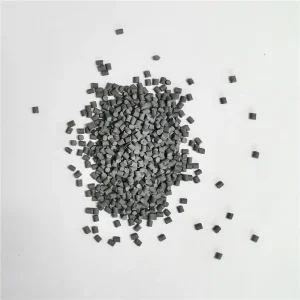
| Masterbatch Category | Pigment Content | Carrier Base | Melt Index (g/10min) | Heat Resistance | Primary Application |
|---|---|---|---|---|---|
| High-Opacity White | 60% – 70% Rutile TiO₂ | Virgin LLDPE/HDPE | 2.0 – 10.0 | 280°C | Milk bottles, cosmetic containers, daily chemical packaging |
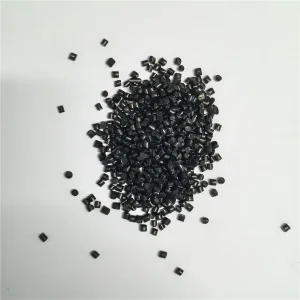
| Deep Black Masterbatch | 40% – 50% P-Type Carbon Black | Low Density PE | 0.5 – 5.0 | 300°C | Industrial drums, UN chemical jerrycans, pipe fittings |
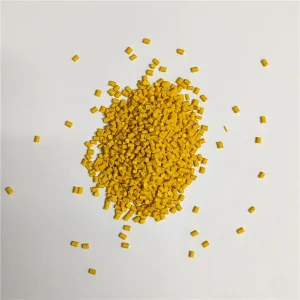
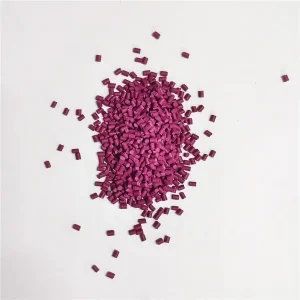
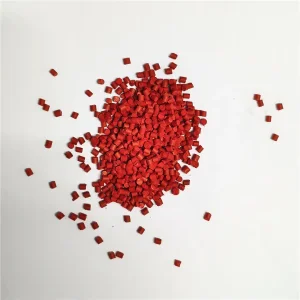
| Vibrant Color Masterbatch | 25% – 45% Organic Pigment | HDPE / EVA Modified | 1.5 – 8.0 | 260°C | Lotion bottles, beverage caps, toys, squeeze tubes |
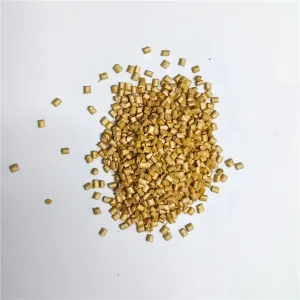
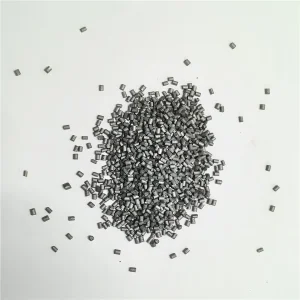
| Special Effect Metallic/Silver | 15% – 30% Metallic Pigment | Linear Low PE | 3.0 – 12.0 | 240°C | Premium cosmetic packaging, personal care bottles |
Deciphering China's industrial cluster efficiency, continuous automated manufacturing, and direct factory pricing.
Global plastic convertors and procurement directors often confront a critical dilemma: how to secure cheap PE bottle blow molding masterbatch without sacrificing quality, batch-to-batch consistency, or international environmental compliance. Changzhou Jiazhou Plastic Products Co., Ltd. (operating from a 6,000m² modern production base in Zouqu Town, Zhonglou District, Changzhou, Jiangsu, China) provides the definitive solution through 16 years of specialized manufacturing experience.
Located in the heart of China's Yangtze River Delta polymer industrial belt, Jiazhou benefits from direct bulk pipeline procurement of virgin PE resins (SINOPEC, PetroChina) and direct partnership with global pigment suppliers (DuPont Titanium, Clariant), reducing raw material input costs by 12–18%.
Equipped with fully automated continuous loss-in-weight gravimetric feeders and multi-zone temperature-controlled twin-screw extruders, eliminating manual mixing errors and guaranteeing tight Delta E color tolerances (ΔE < 0.5) across multi-ton orders.
ISO9001:2015 certified production environment with in-house spectrophotometers, melt indexers, and moisture analyzers. All masterbatches comply with REACH, RoHS, FDA 21 CFR 177.1520, and heavy-metal-free EN71-3 regulations.
From ultra-clean pharmaceutical bottles to rugged 200-liter industrial chemical drums.
The versatility of polyethylene (HDPE, LLDPE, LDPE) makes it the material of choice across millions of blow-molded containers globally. However, different end-use markets demand specialized physical and optical properties from the color masterbatch:
Milk bottles and juice jug packaging require maximum opacity to protect light-sensitive vitamins from UV degradation. Jiazhou high-concentration white masterbatches deliver 99.8% light barrier performance at a minimal 2% LDR without altering taste or odor.
Heavy-duty 5L to 200L chemical containers demand intense UV resistance and weatherability. Jiazhou black and color masterbatches utilize carbon black and high-fastness organic pigments that pass 3000-hour QUV accelerated weathering tests.
High-end shampoo, conditioner, and lotion squeeze bottles require vibrant pastel shades, metallic gold/silver effects, and high-gloss surface finishes. Formulated with anti-blooming additives to prevent pigment migration over shelf-life.
Key technical parameters and verification steps for international procurement specialists.
When enterprise procurement teams conduct audit procedures for China masterbatch factories, evaluating supplier capability extends beyond unit price per ton. To ensure long-term manufacturing stability, enterprise buyers utilize a structured 5-step technical assessment matrix:
A cheaper masterbatch with only 30% TiO₂ loading requires a 4% LDR to achieve full hiding power, whereas a premium 70% TiO₂ masterbatch achieves identical opacity at a 1.5% LDR. Net cost per finished container is significantly lower using higher-concentration masterbatch.
Verify that the masterbatch carrier polymer matches the MFR of your bottle resin. Using an injection-grade carrier (MFR 20) in a blow molding resin (MFR 0.35) causes localized viscosity drops, resulting in parison sag, uneven bottle walls, and pinholes.
Blow molding processing temperatures range from 180°C to 260°C. Low-quality pigments thermally degrade, generating gas bubbles, smoke, odor, and color shifting. Jiazhou masterbatches use thermally stable inorganic and organic pigments rated to 260°C–300°C.
For packaging intended for food, cosmetics, or pharmaceuticals, ensure the factory provides comprehensive third-party lab testing (SGS, TUV, Intertek) confirming compliance with:
Post-Consumer Recycled (PCR) integration, NIR sorting compliance, and bio-based carriers.
The plastic packaging sector is undergoing a rapid transition toward circular economy models. Plastic blow molders must adapt to three major technological disruptions over the coming decade:
As consumer brands commit to using 30% to 100% Post-Consumer Recycled HDPE (rHDPE) in bottle manufacturing, masterbatches must compensate for the natural yellowing, graying, and odor variations inherent in recycled resins. Changzhou Jiazhou has developed specialized PCR-Corrective Color Masterbatches containing optical brighteners, anti-yellowing agents, and odor-neutralizing compounds that restore pristine visual clarity to recycled plastic containers.
Standard black masterbatches manufactured with conventional carbon black absorb NIR radiation, rendering black bottles invisible to automated sorting equipment in recycling plants. Jiazhou's innovative NIR-Detectable Black Masterbatch uses specialized non-carbon black pigments that reflect infrared waves, allowing black HDPE containers to be successfully identified, sorted, and recycled.
To reduce plastic waste and transport costs, bottle manufacturers are thinning container walls by 10% to 20%. This requires masterbatches with sub-micron particle dispersion to prevent micro-structural defects and maintain structural burst strength.
Expert answers to common engineering, procurement, and production questions regarding PE bottle blow molding masterbatch.
Your reliable B2B manufacturing partner for high-concentration color and filler masterbatches.
Founded in 2010, Changzhou Jiazhou Plastic Products Co., Ltd. has grown into one of Eastern China's leading manufacturers of specialized polymer masterbatches. Located at No. 4-3, Shengli Road, Buyi, Zouqu Town, Zhonglou District, Changzhou, Jiangsu, China, our 6,000m² facility houses state-of-the-art co-rotating twin-screw compounding lines, automated gravimetric dosing systems, and a fully equipped laboratory.
With an annual capacity exceeding 20,000 metric tons, Jiazhou serves plastic processors in over 100 countries across Asia, Europe, the Middle East, Africa, and the Americas. Our product portfolio spans high-concentration PE color masterbatches, CaCO₃ filler masterbatches, functional desiccant masterbatches, and additive masterbatches for blown film, injection molding, extrusion profiles, and bottle blow molding.
Direct factory supply with international shipping and full technical customer support.