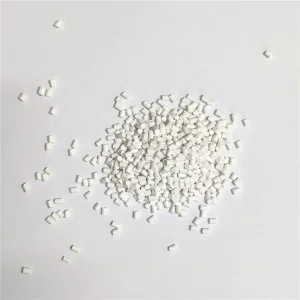
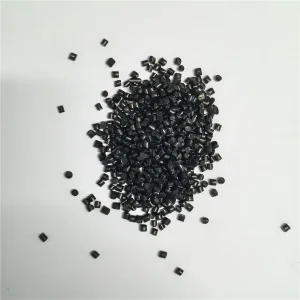
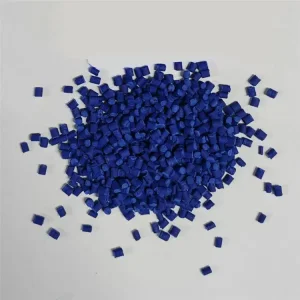
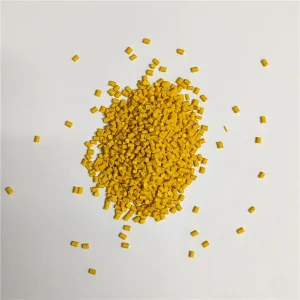
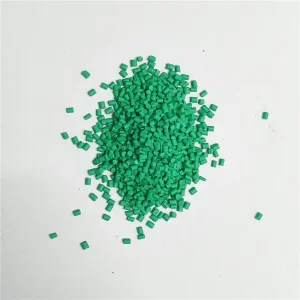
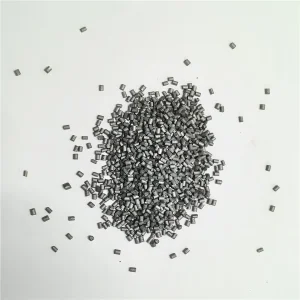
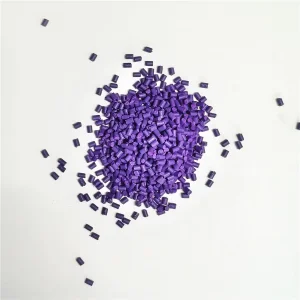
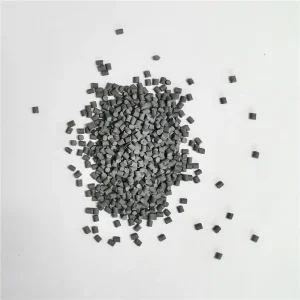
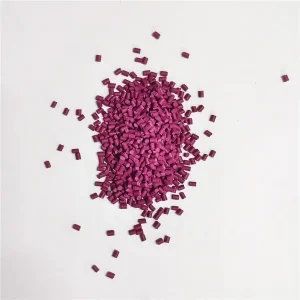
Explore our core inventory of ultra-high concentration polyethylene masterbatches optimized for thin-film blowing, sheet extrusion, and high-speed injection operations.
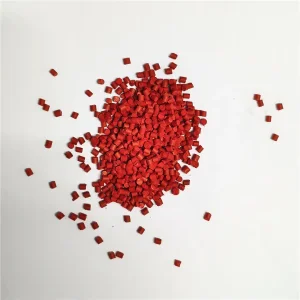
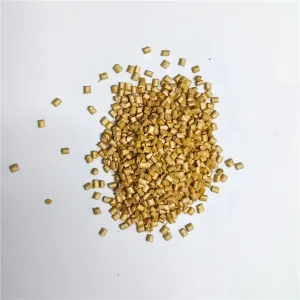
The global food packaging industry demands rigid performance parameters: non-toxic chemical stability, zero additive migration, controlled oxygen/moisture transmission rates, and high visual appeal. Polyethylene (PE) masterbatches engineered for blown food packaging films represent a critical component in achieving these operational benchmarks.
As international supply chains expand, the valuation of flexible food packaging films continues to surge, projected to reach over USD 160 Billion in the coming years. Polyethylene—specifically Low-Density Polyethylene (LDPE), Linear Low-Density Polyethylene (LLDPE), and Metallocene LLDPE (mLLDPE)—dominates this space due to its sealability, optical transparency, and mechanical elasticity.
However, raw PE resins alone cannot fulfill multi-functional packaging roles. Masterbatch manufacturers act as key enablers by compounding high loadings of pigments, anti-block silicates, erucamide slip additives, and UV inhibitors into compatible PE carrier resins. Procuring high-performance masterbatch from a direct, cost-efficient Chinese factory allows converters to maintain profit margins amid volatile polymer resin prices.
Food contact packaging is subjected to rigorous international regulations. Masterbatch formulations intended for food contact must comply strictly with FDA 21 CFR 177.1520 (USA), EU Regulation No 10/2011 (European Union), and national standards such as China's GB 4806.
Key challenges involve managing Overall Migration Limits (OML) and Specific Migration Limits (SML). Leading manufacturers utilize high-purity organic and inorganic pigments that do not degrade or leach low-molecular-weight species into lipid or aqueous food simulators during pasteurization, deep freezing, or microwave heating.
Achieving uniform dispersion and zero bubble instability on modern high-speed 3-layer, 5-layer, and 7-layer blown film lines requires absolute control over melt flow index (MFI), polymer viscosity matching, and microscopic pigment particle breakdown.
The carrier polymer must possess a slightly higher Melt Flow Index (MFI) than the matrix film resin to promote rapid shear thinning and complete homogenization. Using virgin LLDPE/LDPE carriers with an MFI between 10 g/10min to 20 g/10min ensures seamless blending without inducing melt fracture (sharkskin effect) on film surfaces.
Agglomerated pigment particles cause pinholes, tear points, and gauge variation in thin food packaging films (< 25 microns). Utilizing high-torque co-rotating twin-screw extruders with specialized mixing elements guarantees that pigment clusters are micronized below 2.5 micrometers, yielding exceptional color yield and tensile strength retention.
Food packaging films require multiple additives operating simultaneously. Masterbatches can combine primary/secondary antioxidants (phosphites & hindered phenols) for thermal protection, erucamide slip agents for controlled Coefficient of Friction (COF), and synthetic silica for anti-blocking properties without clouding film optical clarity.
| Performance Parameter | Standard Commercial Masterbatch | Jiazhou Food-Grade PE Masterbatch | Industrial Benefit for Packaging Converters |
|---|---|---|---|
| Pigment Dispersion Quality | Particle aggregates > 10 µm present | Sub-micron filtration (< 2.5 µm) | Eliminates pinholes in high-speed blown thin films. |
| Let-Down Ratio (LDR) | 3.0% – 5.0% Addition Rate | 1.0% – 2.0% Addition Rate | Reduces raw material shipping and storage costs by 40%. |
| Thermal Stability | Up to 220°C | 260°C – 280°C Continuous | Prevents pigment discoloration during thermal processing. |
| Organoleptic Neutrality | Minor trace odor / VOC emissions | Zero residual odor / Low VOC formulation | Preserves original taste & aroma profiles of packaged foods. |
| Food Contact Compliance | Basic domestic standards | FDA 21 CFR, EU 10/2011, REACH, RoHS | Unlocks seamless export capabilities to EU & US markets. |
The global flexible packaging sector is undergoing a structural transition away from un-recyclable multi-material laminates (such as PET/PE or PET/ALU/PE) toward 100% Monomaterial Polyethylene (PE) structures. Masterbatch engineering plays a pivotal role in resolving the mechanical and barrier deficiencies traditionally associated with pure PE films.
Formulations engineered to withstand high machine-direction orientation (MDO) stretch ratios without pigment cavitation or streak formation.
Specialized masterbatches designed to restore opacity, neutralize yellowing, and compensate for viscosity loss in post-consumer recycled PE streams.
Ultra-high opacity white masterbatches (up to 70% TiO2 loading) allowing film thickness reduction without sacrificing light barrier properties.
From cold-chain produce packaging to automated dry food bagging, customized masterbatches serve specific operational environments around the globe.
High-moisture produce packaged in sealed PE pouches often suffers from water condensation droplet formation, obstructing clarity and accelerating decay.
Our masterbatch incorporates dual-action anti-fog surfactants that lower liquid surface tension, causing water droplets to form a transparent continuous film over the interior surface. This improves product display while extending shelf-life.
Vertical Form-Fill-Seal (VFFS) packaging machines demand tight control over film friction. Excessive friction causes jamming, while insufficient friction leads to tracking errors.
Formulated with non-migratory high-temperature slip additives, our PE masterbatch maintains a consistent Kinetic Coefficient of Friction (COF ~ 0.20) across seal jaws running at high speeds.
Sub-zero temperatures in frozen food logistics render standard PE films brittle and prone to impact failure during handling.
By compounding specialized elastomer modifiers into our PE carrier matrix, our masterbatches maintain low-temperature flexibility down to -40°C, ensuring package integrity during transcontinental shipping.
Established in 2010, Changzhou Jiazhou Plastic Products Co., Ltd. stands as a benchmark B2B manufacturer specializing in high-concentration PE color masterbatch, pigment masterbatch, and functional filler additives.
Situated in Changzhou, Jiangsu Province, our modern 6,000m² manufacturing plant houses advanced twin-screw continuous extrusion lines, computer-controlled color matching spectrophotometers, and dedicated melt index testing facilities. With over 50 polymer engineers, quality control specialists, and international trade professionals, we serve plastic processors across 100+ countries worldwide.
Our core operating philosophy combines factory-direct wholesale pricing ("cheap" operational efficiency without technical compromises) with strict adherence to international quality management frameworks (ISO certified production).
Anticipating industry demands over the next decade, Jiazhou Plastic is committing R&D capital toward advanced functional masterbatch architectures.
Dispersing nano-clay and bio-silicates to reduce oxygen transmission rates in single-layer PE food films.
Incorporating food-safe organic oxygen scavengers directly into masterbatch matrices to lengthen food shelf life.
Transitioning from fossil-based PE carriers to 100% bio-based polyethylene derived from sugarcane bio-ethanol.
Implementing real-time machine learning spectral feedback systems during twin-screw compounding for zero-defect output.
Expert answers to technical queries regarding masterbatch selection, food safety compliance, and blown film processing optimization.
Review our expanded range of specialized color masterbatches engineered for injection molding, profile extrusion, and multi-layer blown films.