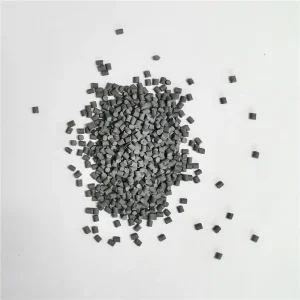
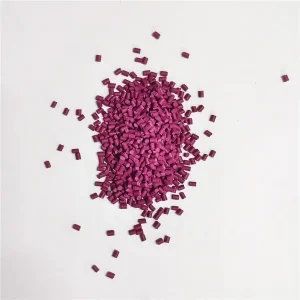
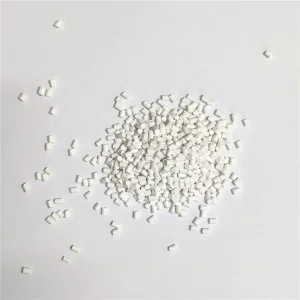
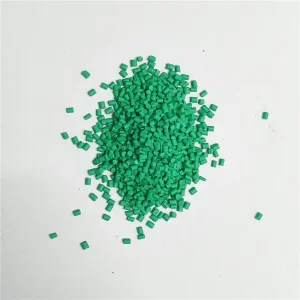
Optimized for high-speed blown film co-extrusion, heavy-duty shipping sacks, agricultural film, and industrial packaging.
Understanding market dynamics, carrier compatibility, and cost-efficiency trade-offs in modern polyolefin extrusion.
The global industrial flexible packaging sector relies heavily on polyethylene (PE) matrix resins—specifically low-density polyethylene (LDPE), linear low-density polyethylene (LLDPE), high-density polyethylene (HDPE), and metallocene LLDPE (mLLDPE). To transform raw polymer matrices into functional, visually consistent, weather-resistant, and cost-effective industrial packaging films, converters utilize highly specialized color and functional masterbatches.
When procurement managers search for "cheap PE industrial packaging film masterbatch factories & factory," the primary commercial goal is achieving an optimal balance between unit raw material cost (USD/kg) and total operational performance. Low-cost masterbatch sourcing should never translate to compromised film opacity, die buildup, bubble instability, or premature melt fracture during high-speed blown film co-extrusion. Leading Chinese masterbatch producers, such as Changzhou Jiazhou Plastic Products Co., Ltd. (operating over 16 years with a 6,000m² manufacturing footprint), demonstrate how scale, raw material vertical integration, and continuous twin-screw compounding allow global B2B buyers to access highly competitive factory-direct pricing without surrendering technical quality.
Industrial packaging films—ranging from heavy-duty shipping sacks (FFS - Form, Fill, and Seal) to agricultural stretch silage wrap, protective surface films, and e-commerce courier bags—demand precise physical parameters. Masterbatches engineered for these applications must deliver uniform dispersion (Filter Pressure Value < 1.5 bar/g), zero pigment agglomeration, low volatile organic compound (VOC) emission, and flawless carrier resin rheology matching.
How carrier selection, pigment loading, and functional additives govern blown film extrusion performance.
Masterbatches designed for industrial PE packaging films utilize virgin LDPE or LLDPE carriers with specific Melt Flow Rates (MFR: 4–20 g/10min at 190°C/2.16kg). This prevents viscosity mismatch and prevents optical defects like pinholes or gel specks.
Utilizing high-torque co-rotating twin-screw extruders, organic and inorganic pigments (such as Rutile TiO₂ up to 70% or P-type Carbon Black up to 50%) are dispersed uniformly down to sub-micron particle sizes, minimizing screen pack clogging.
Integration of Hindered Amine Light Stabilizers (HALS) for UV weatherability, fluoropolymer Polymer Processing Aids (PPA) to eliminate melt fracture (shark skin), and erucamide slip agents to tune coefficient of friction (COF).
In thin film applications (15µm to 50µm), poor masterbatch dispersion causes high Filter Pressure Value (FPV). A masterbatch with an FPV exceeding 2.5 bar/g will cause frequent screen pack changes, extruder backpressure spikes, and micro-tears in blown film bubbles. Premium Chinese factories maintain FPV < 0.8 bar/g by incorporating specialized low-molecular-weight polyethylene waxes and organosilane surface modifiers during compounding.
| Masterbatch Grade | Active Concentration | Carrier Resin Type | MFI (190°C / 2.16kg) | Heat Resistance | Primary Industrial Application |
|---|---|---|---|---|---|
| PE White Masterbatch | 50% – 70% Rutile TiO₂ | LLDPE / LDPE | 12 – 25 g/10min | 280°C | Milk pouches, courier mailers, lamination film |
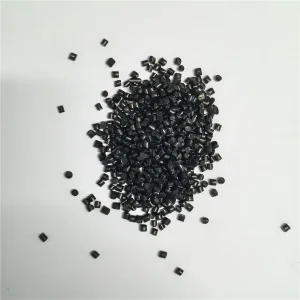
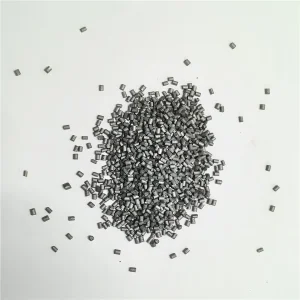
| PE Black Masterbatch | 30% – 50% Carbon Black | LDPE Virgin | 8 – 18 g/10min | 260°C | Geomembranes, silage bags, agricultural mulch |
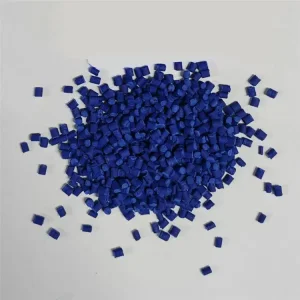
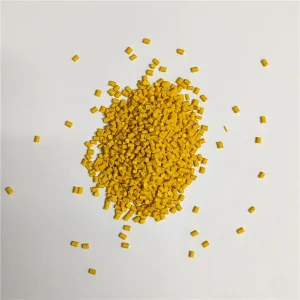
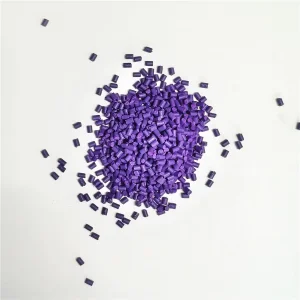
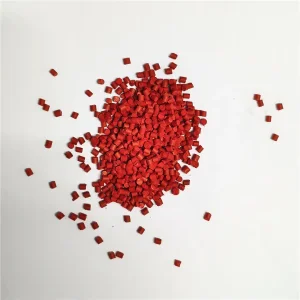
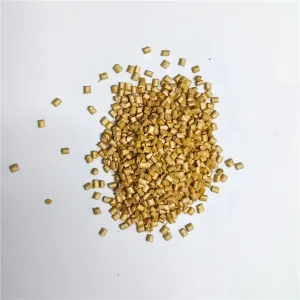
| Color Masterbatches | 20% – 45% Pigment Concentration | PE Polymer Matrix | 10 – 20 g/10min | 240°C – 260°C | Industrial shrink wrap, warning tapes, packaging |
| CaCO₃ Filler Masterbatch | 75% – 85% Fine Calcium Carbonate | LLDPE / HDPE | 2 – 8 g/10min | 260°C | Cost reduction, anti-blocking in heavy-duty sacks |
Analyzing raw material proximity, continuous twin-screw automation, and supply chain scale.
Factories based in Changzhou, Jiangsu benefits from seamless access to PetroChina and Sinopec PE base resins, high-purity ultrafine calcium carbonate deposits, and leading domestic synthetic pigment manufacturers. This cluster economy drastically reduces inbound freight costs and raw material procurement lead times.
Equipped with automated gravimetric feeding lines and continuous multi-zone temperature control extruders, Chinese factories produce dozens of metric tons daily. Automated colorimetry and inline spectrographic evaluation ensure batch-to-batch color stability with a Delta E < 0.5.
By working directly with 16-year B2B specialists like Changzhou Jiazhou Plastic Products Co., Ltd., international buyers eliminate intermediary markups while obtaining custom-tailored formulations (such as non-migratory colorants, high weatherability outdoor additives, or eco-friendly non-toxic masterbatches).
Real-world deployment across logistics, agriculture, e-commerce, and industrial containment.
Industrial stretch films require high tensile strength and puncture resistance. Low-addition-rate color masterbatches (1% to 3%) provide distinctive branding without causing film tearing or gel defects during extreme biaxial stretching.
Agricultural films demand high UV protection and thermal stabilization. Black, white, or green masterbatches formulated with HALS and high opacity pigments shield crops and preserve forage over 12 to 36 months of intense sun exposure.
Co-extruded ABA courier bags require complete light opacity to protect privacy. Utilizing high-tinting PE Black masterbatch in the inner layer and bright White/Color masterbatch on the outer layer provides superior opacity and tear strength.
Sustainability, Post-Consumer Recycled (PCR) compatibility, and Total Cost of Ownership evaluation.
As global environmental regulations enforce mandatory recycled plastic quotas (such as the EU Packaging and Packaging Waste Directive), masterbatch manufacturers are innovating carriers compatible with Post-Consumer Recycled (PCR) PE resins. Compatibilizers and antioxidant booster packages are directly incorporated into masterbatches to compensate for degradation in recycled resin streams.
Advanced masterbatches utilize nano-scale TiO₂ and sub-micron calcified minerals to achieve high opacity and mechanical stiffness at reduced film gauges (downgauging). This reduces total resin consumption per square meter of industrial packaging film while preserving barrier integrity.
When negotiating with masterbatch factories, evaluating the invoice cost per kilogram is only part of the equation. Intelligent buyers assess:
Expert answers to common engineering, procurement, and technical queries regarding PE packaging film masterbatches.
Direct factory procurement for color, black, white, special effect, and functional filler masterbatches.