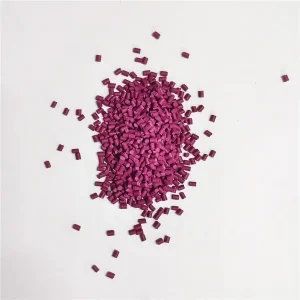
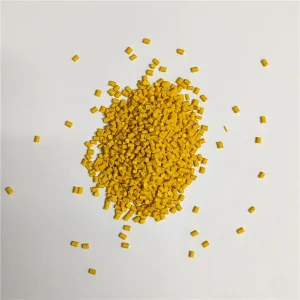
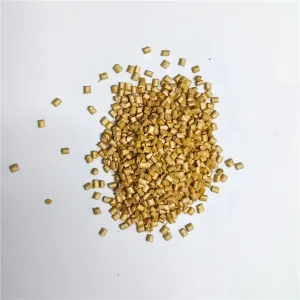
Explore our top-tier, high-concentration PE pigment masterbatches optimized for thermal stability, anti-migration, and low total cost of processing.
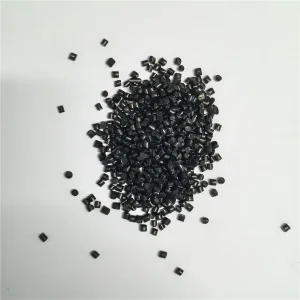
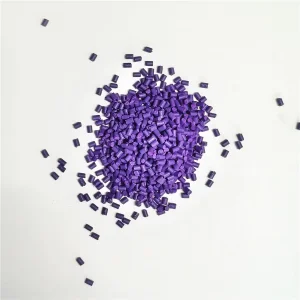
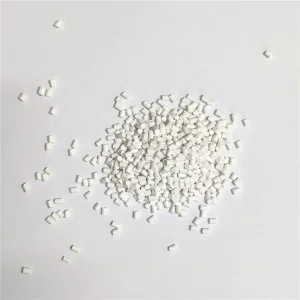
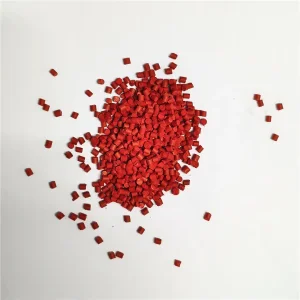
Understanding the economic forces, raw material volatility, and total operational cost structures driving the international market for polyethylene plastic colorants.
The global polyolefin industry is experiencing a profound structural realignment. As global polyethylene (PE) production capacity expands—driven by ethane cracking megaprojects in the Middle East and North America, alongside advanced coal-to-olefin complexes in Asia—plastic converters are under continuous pressure to optimize unit production costs.
In this high-volume commodity market, procurement teams frequently query for "cheap PE plastic colorant suppliers & manufacturers." However, enterprise-level procurement officers recognize that true cost efficiency cannot be achieved merely by purchasing the lowest price-per-kilogram masterbatch. Substandard color additives lead to severe operational losses: nozzle clogging, screen-pack blinding, high scrap rates, filter pressure spikes, and premature mechanical degradation of the finished polymer matrix.
To establish a true strategic advantage, modern plastic processors evaluate PE masterbatch through a Total Cost of Processing (TCOP) model. A masterbatch formulated with high pigment loading, superior melt rheology matching, and sub-micron dispersion actually drastically lowers overall production expenditure.
By increasing pigment concentration while preserving carrier compatibility, processors can reduce masterbatch dosing (let-down ratios) from 4%-5% down to 1%-2%. This significantly reduces shipping freight, inventory footprint, and energy consumption per melt cycle, proving that technical precision is the ultimate path to economical manufacturing.
A technical breakdown of carrier resin selection, melt flow index matching, pigment physics, and thermal resistance in polyolefin coloration.
The primary prerequisite for defect-free plastic coloration is matching the Melt Flow Index (MFI) of the masterbatch carrier resin to the base polymer (LDPE, LLDPE, HDPE). If the masterbatch carrier possesses an incompatible MFI, phase separation occurs during shear in the extruder barrel.
Our formulation architecture utilizes ultra-pure LLDPE/LDPE carrier resins with calibrated MFI values ranging from 4 to 20 g/10min (190°C/2.16kg). This guarantees instant wet-out and homogenous integration into the base polymer melt stream without inducing die buildup or surface hazing.
Pigment powders naturally exist as primary particles that form tightly bound aggregates and agglomerates. Poorly dispersed agglomerates cause pinholes in blown films and act as stress concentration points in injection-molded structural parts.
Utilizing high-shear continuous twin-screw compounding lines (L/D ratios 44:1 to 48:1) equipped with specialized dispersion elements, our manufacturing process breaks down pigment clusters to sub-micron scales (< 2.5 µm), yielding maximal tinting strength and optical density per mass unit.
High-speed extrusion and injection molding processes frequently operate at elevated processing temperatures reaching 260°C to 280°C. Lower-grade organic pigments degrade under these conditions, resulting in color shifting, gas emission, and unpleasant odors.
Our engineered PE colorants incorporate high-heat organic (Phthalocyanines, Quinacridones, Perinones) and inorganic (Titanium Dioxide, Iron Oxides, Carbon Black) pigments combined with primary and secondary antioxidant packages (Hindered Phenols & Phosphites) to guarantee zero thermal degradation or pigment migration.
| Colorant Variant | Carrier Resin Type | Pigment Content (%) | Melt Flow Index (g/10min) | Heat Resistance (°C) | Light Fastness (Blue Wool) | Primary Applications |
|---|---|---|---|---|---|---|
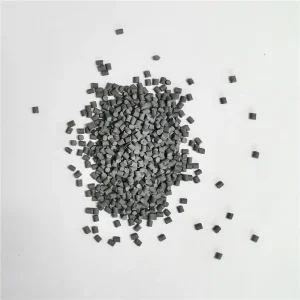
| High-Con. PE Black | LLDPE / LDPE | 40% - 50% Carbon Black | 8.0 - 15.0 | 260°C - 300°C | Class 8 (Maximum) | Agricultural Film, Geomembranes, Pipes |
| High-Con. PE White | LDPE / Rutile TiO2 | 60% - 70% TiO2 | 5.0 - 12.0 | 280°C | Class 8 | Lamination Film, Milk Bags, Food Packaging |
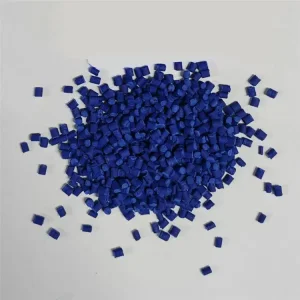
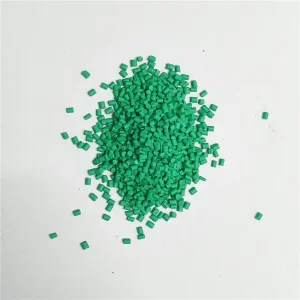
| Standard Chromatic PE | HDPE / LLDPE | 25% - 40% Organic/Inorganic | 6.0 - 18.0 | 240°C - 260°C | Class 6 - 7 | Crates, Bottles, Injection Toys, Household |
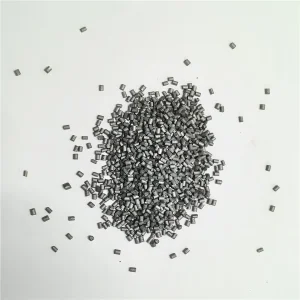
| Special Metallic/Silver | LLDPE / Specialty Wax | 15% - 30% Metallic Pigment | 10.0 - 25.0 | 220°C - 240°C | Class 7 | Cosmetic Bottles, Premium Caps, Auto Trim |
Optimized polymer colorant configurations tailored specifically for blown film extrusion, precision injection molding, and large-scale profile manufacturing.
Thin-gauge blown films (down to 10 microns) represent the most demanding operational test for plastic masterbatches. Any undispersed particle or grit immediately causes film bubble breakage or pinhole defects.
Our film-grade PE colorants undergo multi-stage micro-filtration (using 325-mesh to 500-mesh screens during compounding). This guarantees smooth bubble stability, high puncture resistance, uniform opacity, and flawless surface printability for shopping bags, courier packaging, and agricultural mulch film.
For injection-molded components—ranging from heavy-duty industrial pallets and beverage crates to daily consumer containers—dimensional stability and warp resistance are paramount technical considerations.
Improperly formulated color pigments can alter the crystallization behavior of polyethylene, causing differential shrinkage and warpage in large molded parts. Our non-nucleating colorant formulations prevent micro-crystallization distortions, delivering exact part dimensions and high impact strength.
HDPE pressure pipes, corrugated conduit, and wire insulation jackets demand long-term structural integrity and extreme environmental stress crack resistance (ESCR).
Our outdoor-grade PE black masterbatches contain specialized P-type and N-type Carbon Blacks with particle sizes below 20nm. This provides outstanding UV absorption, blocking photo-oxidative degradation for up to 50 years of continuous outdoor service in infrastructure networks.
Rigorous international certification compliance paired with robust supply chain support for overseas converters and brand owners.
International environmental regulations are increasingly stringent. Enterprise buyers must verify that raw material additives meet the consumer safety standards of their target distribution markets.
To eliminate batch-to-batch color variance, every production run is analyzed using Datacolor spectrophotometers under D65, F11, and A light sources. Our factory enforces a strict color difference standard of Delta-E (ΔE) < 0.5 relative to master customer targets.
Furthermore, through localized warehousing hubs and established ocean freight logistics, we guarantee 15-day expedited lead times to major sea ports across Europe, the Americas, the Middle East, and Southeast Asia.
Pioneering sustainable, circular, and smart colorant innovations engineered for next-generation plastic recycling and carbon neutrality.
Traditional carbon black absorbs Near-Infrared (NIR) radiation, preventing automated optical sorting in recycling plants. Our new NIR-sortable black masterbatches allow black plastics to be detected and sorted by polymer type (PE, PP, PET), enabling true circular recycling.
Replacing fossil-derived polyolefins with 100% bio-based polyethylene carriers derived from sugarcane ethanol. This reduces the net cradle-to-gate carbon footprint of masterbatches by up to 70% while maintaining identical physical compounding properties.
Integration of machine learning algorithms for real-time spectrophotometric adjustment during extrusion. Smart masterbatches engineered with IoT micro-markers permit automated dosing correction directly inside the extruder hopper.
Detailed answers to technical, commercial, and operational questions commonly raised by B2B plastic buyers and procurement managers.
True cost reduction stems from high pigment concentration and optimized dispersion efficiency, not low-grade filler substitution. By increasing pigment loading, plastic converters can lower the Let-Down Ratio (LDR) from 4% to 1% or 2%. This significantly reduces carrier resin usage, shipping mass, and storage costs per ton of finished product.
Using a mismatched carrier (such as EVA or PP in a high-density polyethylene matrix) can cause phase separation, surface delamination, lowered impact strength, and severe warpage. A PE-based carrier matches the melt rheology and refractive index of the base resin, ensuring structural integrity and homogenous color.
High-speed machinery frequently generates localized thermal shear spikes up to 260°C - 280°C. Pigments with inadequate heat stability degrade thermally, resulting in severe color drifting, streaking, die drool, and off-gassing. Thermally stable PE colorants ensure uniform color tone across variable machine cycles.
Depending on film thickness or injection part opacity requirements, standard let-down ratios range between 1% and 3%. For high-opacity white or deep black applications, LDR can be adjusted between 1.5% and 4% based on technical trial results.
Yes, provided the masterbatch is formulated using FDA-compliant pigments, non-migrating additives, and virgin carrier resins certified under EU 10/2011 and FDA 21 CFR standards. Always request food-grade compliance documentation prior to commercial production.
Weatherable masterbatches integrate light fastness pigments (Blue Wool Scale 7-8) alongside Hindered Amine Light Stabilizers (HALS) and UV absorbers. HALS scavenge free radicals generated by solar UV radiation, safeguarding both pigment hue and polymer tensile strength.
Color verification relies on spectrophotometric measurement under standardized light sources (D65/TL84). Measurements evaluate CIELAB color space values (L*, a*, b*). Batches pass inspection only when total color difference ΔE*ab is below 0.5 against approved physical targets.
High moisture content in masterbatches leads to steam voids, surface splay marks, bubbles, and film tearing during processing. High-quality masterbatches maintain moisture levels under 0.15% (1500 ppm), packaged in moisture-proof aluminum-foil composite bags.
Select from our certified range of custom masterbatches tailored for blown film extrusion, injection molding, and specialized industrial plastics.