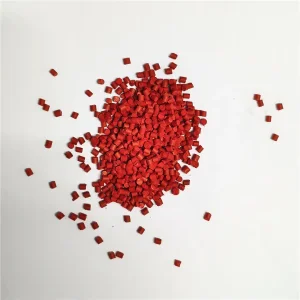
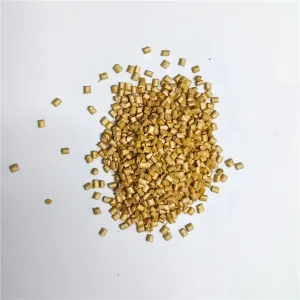
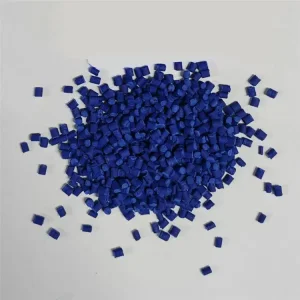
Direct factory supply featuring optimized dispersion, heat stability up to 260°C, and exceptional luster effects for global plastic manufacturers.
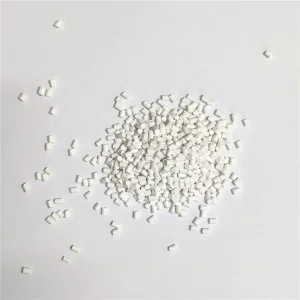
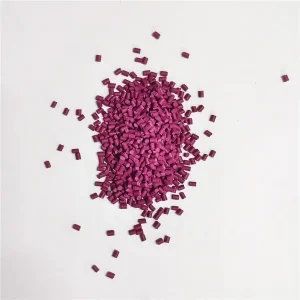
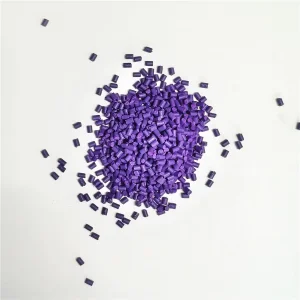
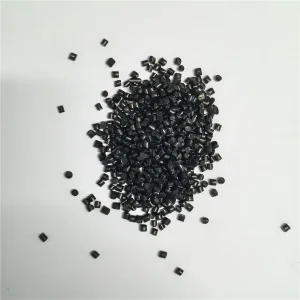
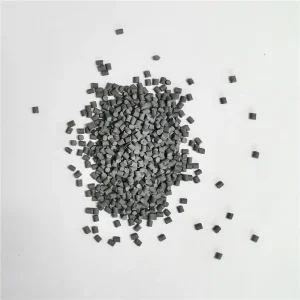
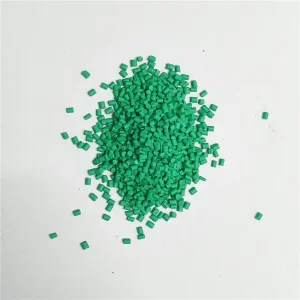
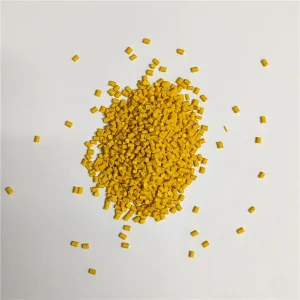
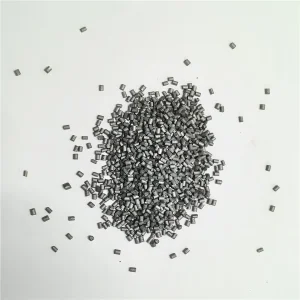
An engineering breakdown of mica-titanium dioxide interference structures, polymer carrier rheology, and cost-efficiency dynamics for industrial procurement.
Pearlescent PE masterbatch operates through light refraction, reflection, and wave interference caused by microscopic platelet structures suspended within a Polyethylene (PE) carrier matrix. Unlike traditional organic pigments that absorb specific light wavelengths, high-grade pearl masterbatch relies on transparent mica flakes coated with precise layers of metal oxides—primarily Titanium Dioxide ($TiO_2$) and Iron Oxide ($Fe_2O_3$).
When light encounters the high refractive index layer ($TiO_2, n \approx 2.5$) compared to the underlying low refractive index mica ($n \approx 1.5$) and PE polymer substrate ($n \approx 1.51$), multiple reflections occur at varying depths. This creates a shimmering, silky luster effect that elevates the aesthetic value of everyday packaging, blow-molded bottles, and injection-molded consumer products. Sourcing from experienced cheap pearlescent PE masterbatch suppliers ensures access to optimized particle size distributions ($10–60\,\mu\text{m}$) that maximize luster while maintaining structural integrity.
The fundamental challenge in manufacturing cost-effective pearlescent masterbatch lies in achieving flawless pigment dispersion without shearing the fragile mica flakes. Excessive mechanical shear forces during twin-screw compounding can break platelet structures, resulting in a dull gray appearance instead of a lustrous pearl effect.
Industrial-grade PE carrier resins—typically Low-Density Polyethylene (LDPE) or Linear Low-Density Polyethylene (LLDPE)—are matched with precise Melt Flow Index (MFI) values ranging from $12\text{ g/10min}$ to $20\text{ g/10min}$ ($190^\circ\text{C}/2.16\text{kg}$). This melt flow profile allows thorough wetting of pigment surfaces during processing, minimizing agglomeration while keeping the let-down ratio (LDR) low—usually between $1\%$ and $3\%$.
How Changzhou Jiazhou Plastic Products Co., Ltd. delivers high-concentration, ultra-stable masterbatch solutions at competitive price points.
Located in the Yangtze River Delta industrial belt, Changzhou Jiazhou leverages direct sourcing of refined natural mica, synthetic fluorophlogopite, and high-purity $TiO_2$. Bulk material procurement minimizes raw cost fluctuations, enabling us to offer competitive wholesale pricing to global plastic color compounding factories.
Our 6,000m² facility operates co-rotating twin-screw compounding lines equipped with loss-in-weight gravimetric feeders. This automated setup guarantees precise pigment loading tolerances ($\pm0.2\%$), preventing batch-to-batch shade variation while operating at scale to reduce production costs per metric ton.
Every batch undergoes colorimetric evaluation using Datacolor spectrophotometers to verify CIELAB values ($\Delta E < 0.50$). Melt Flow Index, filter pressure value (FPV), moisture content ($< 0.05\%$), and thermal stability ($260^\circ\text{C}$) are tested before shipment to safeguard global processing lines against film breaks or nozzle clogs.
| Technical Parameter | Jiazhou Premium Grade | Standard Commercial Grade | Testing Method |
|---|---|---|---|
| Pigment Loading Rate | 30% - 40% Active Mica-Titanium | 15% - 25% Active Content | ISO 3451-1 Ash Test |
| Heat Resistance | 260°C - 280°C Continuous (5 min) | 200°C - 220°C Limit | DIN EN 12877-2 |
| Color Tolerance ($\Delta E$) | < 0.50 (Spectrophotometric) | < 1.50 Standard | CIELAB D65 / 10° |
| Heavy Metal Compliance | RoHS 2.0 / REACH / FDA Approved | Basic Industrial Only | ICP-OES Spectrometry |
| Carrier Base Resin | 100% Prime Virgin LDPE / LLDPE | Recycled Polymer Blends | FTIR Spectroscopy |
Moving beyond unit cost per kilogram: Evaluating total cost of ownership, dispersion efficiency, and process stability.
When global procurement buyers evaluate cheap pearlescent PE masterbatch suppliers, focusing solely on the initial price per metric ton can be misleading. The true economic efficiency is governed by the Let-Down Ratio (LDR) required to achieve the targeted opacity and sparkle.
Formulations with low pigment concentration require higher addition rates ($4\%–6\%$), increasing masterbatch volume requirements and disturbing the physical strength of the base polymer. Jiazhou's high-concentration formulations ($30\%–40\%$ pigment loading) allow processors to operate at an addition rate of just 1.5% to 2.5%. This significantly reduces overall additive volume, cuts freight overhead per finished unit, and preserves the mechanical integrity of blown films and injection-molded components.
Poorly dispersed masterbatches with coarse agglomerates lead to filter screen pack clogging, die buildup, and high reject rates in high-speed extrusion lines. In film blowing operations, coarse particles cause pinholes and bubble instability.
By utilizing multi-stage microscopic dispersion processes and vacuum degassed twin-screw compounding, Changzhou Jiazhou guarantees continuous filterability down to fine mesh sizes. This operational reliability reduces line maintenance stops, minimizes scrap material, and ensures long-term protection for your extrusion and molding equipment.
Tailored masterbatch solutions for high-performance plastic processing sectors across global markets.
Applications: Cosmetic packaging film, shopping bags, courier pouches, agricultural films, and decorative wrappers.
Key Requirements: Uniform dispersion, zero pinholes, high tensile strength retention, and non-blocking surface characteristics. Our PE silver and white masterbatches produce smooth pearlescent surface sheens on films as thin as 25 microns without causing bubble instabilities during blown film extrusion.
Applications: Household storage items, electronic enclosures, cosmetics caps, automotive interior accessories, and toys.
Key Requirements: High thermal stability (260°C+), flowability in complex molds, resistance to weld-line flow marks. Jiazhou's pearl masterbatch is formulated with optimized flow-promoting carriers that assist melt distribution, eliminating flow-mark defects in large-surface injection molded components.
Applications: Shampoo containers, detergent bottles, pharmaceutical packaging, and industrial chemical drums.
Key Requirements: Environmental Stress Crack Resistance (ESCR), barrier preservation, and uniform wall thickness distribution. Formulations are fully non-toxic and non-migratory, fulfilling FDA food contact compliance standards.
Meeting international environmental guidelines while delivering localized OEM technical assistance.
Global plastic markets demand strict compliance with chemical safety frameworks. Products manufactured by Changzhou Jiazhou Plastic Products Co., Ltd. are rigorously tested to align with major international frameworks:
To assist global clients with short lead times, Jiazhou offers custom color matching services based on Pantone, RAL, or physical plastic swatches. Our color lab delivers precise lab-matched samples within 24 to 48 hours.
Furthermore, our team of technical sales engineers provides remote and on-site guidance to adjust processing parameters—such as barrel temperature profiles, screw speed, and back pressure—ensuring smooth masterbatch integration into your production workflow.
Emerging developments in sustainable polymer colorants, synthetic mica substrates, and circular economy integration.
While natural mica delivers classic pearlescent sheens, synthetic fluorophlogopite mica offers superior purity, higher transparency, and brighter metallic reflections. Next-generation masterbatches utilize synthetic substrates to produce bright silver, gold, and interference shades with minimal heavy metal impurities.
With global legislation pushing for post-consumer recycled (PCR) plastics and biodegradable polymers (such as PLA and PHA), masterbatch carriers are evolving. Modern cheap pearlescent PE masterbatch suppliers are developing bio-compatible and high-MFI recycled PE carriers that integrate cleanly into closed-loop plastic recycling systems.
Advanced surface treatments utilizing HALS (Hindered Amine Light Stabilizers) and UV absorbers are directly compounded into pearl masterbatches. This prevents yellowing, chalking, and gloss degradation in outdoor plastic products, such as stadium seating, agricultural films, and automotive exterior parts.
Expert answers regarding procurement, processing parameters, troubleshooting, and carrier compatibility.
The standard recommended let-down ratio ranges between 1.0% and 3.0%, depending on the wall thickness of the plastic part and desired opacity. For thin blown films (under 30 microns), an LDR of 2.0% to 3.0% ensures full pearlescent coverage. For thicker injection-molded products (over 2mm), a 1.0% to 1.5% addition rate is typically sufficient to produce a deep, lustrous pearl effect.
Cost efficiency is achieved through direct upstream sourcing of raw mica and titanium dioxide, high-volume automated twin-screw extrusion, and strategic factory location in industrial manufacturing hubs like Changzhou. By operating high-capacity 6,000m² facilities, scale efficiencies reduce production overhead per metric ton while maintaining strict CIELAB color control ($\Delta E < 0.50$).
Yes, Low-Density Polyethylene (LDPE) carrier resins offer high compatibility with Polypropylene (PP), High-Density Polyethylene (HDPE), and LLDPE. However, for engineering polymers like ABS, PC, or PET, a dedicated compatible carrier resin is recommended to prevent phase separation or mechanical property degradation.
Flow lines occur when mica flakes align along flow fronts during mold filling. To minimize this, increase back pressure slightly during plastication, raise nozzle and barrel processing temperatures by 5°C–10°C (within the 260°C limit), widen gate sizes, or increase injection speed to promote uniform flake distribution before melt solidification.
Yes, all masterbatch formulations produced by Changzhou Jiazhou Plastic Products Co., Ltd. undergo independent third-party laboratory testing. They comply fully with EU REACH, RoHS 2.0, and FDA 21 CFR 177.1520 regulations for non-toxic, eco-friendly plastic processing.
High-concentration pigment masterbatches ready for immediate global shipment with standardized lead times.