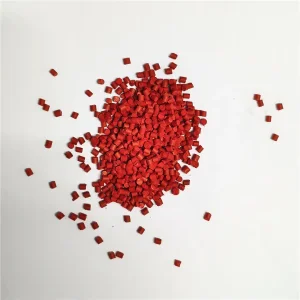
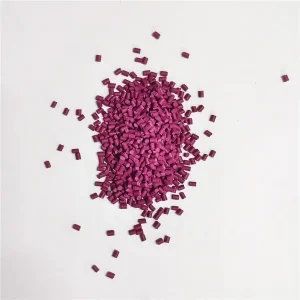
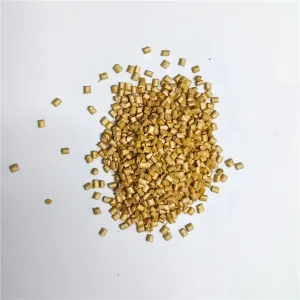
Engineered specifically for blown film extrusion, in-mold plastic labeling (IML), pressure-sensitive label stocks, and heavy-duty industrial polyolefin packaging.
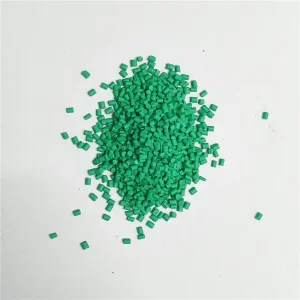
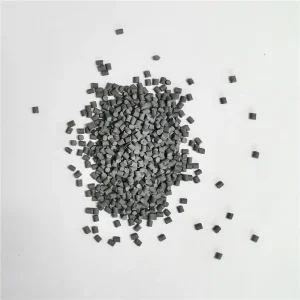
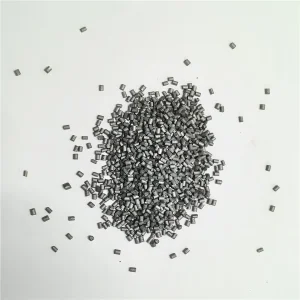
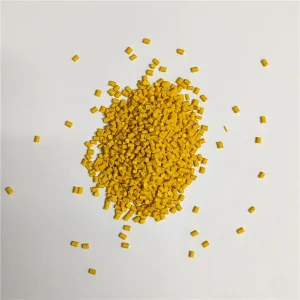
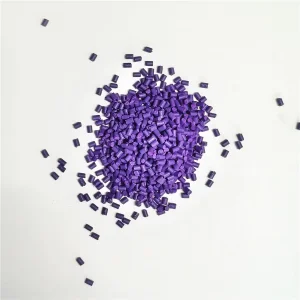
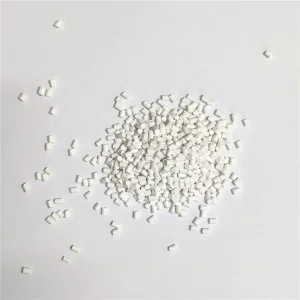
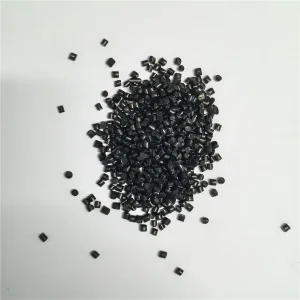
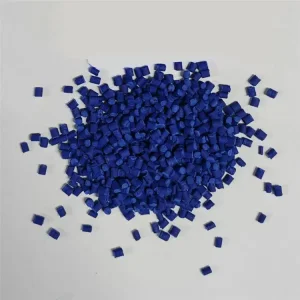
In the high-speed processing of flexographic, gravure, and offset printed plastic labels, substrate surface energy and interfacial ink/adhesive anchoring are the primary determinants of product performance. Polyethylene (PE), due to its inherently non-polar structure and low critical surface tension (typically 31 dynes/cm), presents formidable technical hurdles when converting films into pressure-sensitive labels, shrink sleeves, or In-Mold Labels (IML). Industrial label converters routinely encounter edge lifting, ink flaking, adhesive delamination, and severe pinholing when low-grade color and filler additives migrate to the film surface.
As global B2B label manufacturers balance tight margin structures against stringent performance parameters, the term "Cheap Plastic Label High Adhesion PE Masterbatch" has evolved from a simple pricing inquiry into a multi-variable engineering challenge. Sourcing teams require additive systems that drastically lower unit costs per metric ton while delivering superior dispersion, high thermal resistance (up to 260°C), zero pigment migration, and sustained surface dyne retention (>42 dynes/cm post-corona treatment).
High-adhesion PE masterbatch formulations leverage functionalized polyolefin carriers grafted with polar groups (such as maleic anhydride or acrylic acid derivatives). These polar moieties concentrate along the film boundary during blown film or cast extrusion, creating hydrogen bonding and molecular entanglement sites for UV-curable inks, polyurethane adhesives, and hot-melt resins without compromising matrix ductility.
Optimized carrier chemistry prevents low-molecular-weight wax bloom, ensuring corona-treated PE films maintain >42 dynes/cm surface energy for over 180 days of storage.
Utilizing co-rotating twin-screw compounding with high shear mixing zones to eliminate agglomerates, reducing screen-pack blinding and film pinholes down to <10 microns.
Direct factory-to-converter pricing coupled with high pigment loading (up to 70%) enables lower let-down ratios (LDR 1%-3%), driving down total unit cost per printed label.
Changzhou Jiazhou Plastic Products Co., Ltd. custom engineers carrier melt flow indexes (MFI) to match specific LLDPE, LDPE, HDPE, and PP substrate resins. Below is the standardized technical threshold maintained across our label-grade masterbatch series.
| Property Parameter | Test Standard / Method | Technical Value Range | Impact on Label Converting |
|---|---|---|---|
| Carrier Resin Compatibility | ISO 11357 / DSC | LLDPE / LDPE / MAH-g-PE | Prevents phase separation & delamination under tension |
| Melt Flow Index (MFI) | ASTM D1238 (190°C / 2.16 kg) | 4.0 – 25.0 g/10 min | Matches film extrusion viscosity to avoid gauge variation |
| Pigment Loading | ISO 3451-1 / Ash Content | 30% – 70% High Concentration | Achieves maximum opacity at low let-down ratios (1-3%) |
| Heat Resistance | DIN EN 12877-2 | 220°C – 260°C | Zero thermal degradation during high-speed blown film extrusion |
| Adhesion Test Performance | ASTM D3359 Cross-Cut Tape Test | Class 5B (0% Area Removal) | Guarantees 100% ink and varnish adhesion post-printing |
| Light Fastness & Weatherability | ISO 105-B02 / Blue Wool Scale | Grade 6 to Grade 8 | Prevents yellowing and color fading in outdoor storage |
| Moisture Content | Karl Fischer / ASTM E203 | < 0.05% (500 ppm) | Eliminates bubbles, streaks, and fish-eyes in thin label films |
When manufacturing plastic label substrates with film thicknesses ranging between 25 and 80 microns, inorganic fillers or organic pigments with poor dispersion act as stress concentrators. Under mechanical tension, these micro-agglomerates cause film tearing and pinholes. Jiazhou Masterbatch utilizes triple-stage filtration screens (up to 120 mesh) during the twin-screw compounding process. By matching the Melt Flow Index (MFI) of the masterbatch carrier to the base polymer matrix, we guarantee seamless polymer chain entanglement during melt blending.
Furthermore, for functional plastic labels—such as those applied to squeezable cosmetic bottles or chemical drums—our high-adhesion formulations incorporate tailored anti-blocking and slip-agent packages that do not migrate excessively to the surface. Excessive migration of traditional erucamide or oleamide slip agents coats the PE surface with an oleophilic layer, dropping surface dyne levels from 44 dynes/cm down to 32 dynes/cm in less than 48 hours. Our non-migrating formulation architecture preserves surface dyne levels over long storage intervals, ensuring uninterrupted downstream printing and laminating.
China remains the world's leading hub for polyolefin additive manufacturing. Operating out of Changzhou, Jiangsu Province, Changzhou Jiazhou Plastic Products Co., Ltd. benefits from an integrated supply chain network—from raw monomer refining to precision masterbatch extrusion—enabling cost-efficient production without compromising raw pigment purity.
Strict environmental regulations (such as the EU Circular Economy Action Plan and FDA food contact standards) require international label manufacturers to transition toward fully recyclable mono-material packaging. Our PE-based masterbatches are engineered to comply with mono-material PE recycle streams (RIC 4).
Label converters in Southeast Asia, Latin America, and the Middle East are rapidly upgrading from paper labels to durable, moisture-resistant plastic labels. Securing high-adhesion masterbatches directly from Tier-1 Chinese manufacturers allows converters to capture market share with competitive end-product pricing.
In the plastic additive market, "cheap" must be defined by Total Cost of Ownership (TCO) rather than price-per-kilogram. Low-grade suppliers often utilize recycled carrier resins contaminated with low-boiling volatile compounds or calcium carbonate fillers loaded with heavy moisture. While the initial purchase price may be 10% lower, the hidden costs—such as extrusion filter clogging, die lines, ink flaking claims, and machine downtime—can increase operational expenses by 30%. Changzhou Jiazhou balances cost optimization through high pigment concentration, automated batch compounding, and direct B2B factory export pricing.
High Adhesion PE Masterbatch is versatile across multiple plastic processing technologies. Below are the specific operational protocols for primary industrial label segments.
Used for polypropylene (PP) and polyethylene (PE) blow-molded containers. The masterbatch ensures the printed IML label fuses completely with the container wall during the hot melt injection process without blistering or edge curling.
Extruded PE face stocks for squeeze bottles (shampoos, liquid detergents). Provides high flexibility, tear resistance, and smooth surface topography required for uniform pressure-sensitive adhesive coating.
Thick PE labels attached to chemical drums, shipping pallets, and construction materials. Engineered with high weatherability pigments (Blue Wool Grade 7-8) to endure long-term UV and rain exposure.
Compatible with blended PE shrink films. Maintains color brilliance and opacity under thermal shrinkage ratios up to 70% without graphic distortion or surface cracking.
Global B2B procurement demands strict adherence to chemical safety, environmental, and international trade regulations. Importing masterbatch from China requires transparent documentation and standardized testing protocols. Changzhou Jiazhou Plastic Products Co., Ltd. provides full regulatory support packages for all international shipments:
Certified free from heavy metals (Lead, Cadmium, Mercury, Hexavalent Chromium), PBBs, PBDEs, and SVHCs (Substances of Very High Concern) per European Union directives.
Formulated using food-grade carrier resins and non-toxic, non-migrating organic/inorganic pigments suitable for indirect food packaging labels and beverage containers.
Operating under strict Quality Management Systems with end-to-end traceability—from incoming raw pigment spectro-photometric testing to finished pellet lot retention.
The plastic packaging and labeling industry is undergoing a structural shift driven by sustainability targets and advanced digital manufacturing. R&D initiatives at Changzhou Jiazhou are focused on three core pillars:
Developing color masterbatches utilizing 100% bio-based LLDPE derived from sugarcane ethanol, as well as high-purity Post-Consumer Recycled (PCR) polyolefin carriers, maintaining identical dyne adhesion values while reducing carbon footprint.
Integrating nano-scale inorganic adhesion promoters that reduce required masterbatch loading ratios by 30% while improving film tensile strength and optical transparency in ultra-thin 15-micron label stock.
Formulating non-staining, heat-stable pigment matrices that allow labels to be cleanly washed and de-inked during industrial mechanical recycling processes, supporting closed-loop bottle-to-bottle recycling.
Answers to common technical, commercial, and operational questions asked by B2B plastic label manufacturers and converter sourcing managers.
Delamination typically stems from two issues: low matrix surface energy (<38 dynes/cm) or low-molecular-weight additives (such as cheap waxes or migrating slip agents) blooming to the film surface and creating a weak boundary layer. High Adhesion PE Masterbatch eliminates low-grade wax dispersants and utilizes polar-grafted carriers to permanently bind ink and adhesive layers.
We achieve cost efficiency through economies of scale at our 6,000 m² Changzhou facility, high automated production throughput, direct pigment synthesis sourcing, and high pigment loading formulations (up to 70%). High concentration allows label converters to run lower Let-Down Ratios (LDR 1%-3%), significantly lowering cost-per-ton of finished film.
Depending on required opacity and color shade, the standard LDR ranges between 1% and 4%. For high-opacity white PE face stocks, an LDR of 2% to 3.5% of our high-titanium white masterbatch is recommended. For solid colors (black, blue, red), 1% to 2% is typically sufficient.
While optimized for LLDPE, LDPE, and HDPE base resins, our functionalized PE carriers exhibit good interfacial compatibility with EVA co-polymers and select polyolefins. For 100% BOPP or PET label stock, we provide specialized carrier-matched formulations to prevent phase separation.
Every batch undergoes lab extrusion into a test film sample, followed by corona treatment to 42 dynes/cm. Standard UV-cured flexo ink is applied, and an ASTM D3359 / DIN EN ISO 2409 Cross-Cut Tape Test (3M 610 tape) is executed. Only lots achieving a 5B rating (zero grid detachment) are released for export packaging.
Standard production lead time is 10 to 15 business days upon order confirmation. Standard packaging consists of 25 kg moisture-proof heavy-duty PE bags, palletized and shrink-wrapped (1.0 to 1.2 metric tons per pallet). Custom 1,000 kg jumbo bags are also available for automated bulk handling systems.
Yes. Our state-of-the-art laboratory features spectrophotometric color-matching systems. We can match custom OEM colors to within a Delta E (ΔE) < 0.8 based on Pantone, RAL, or physical resin samples provided by the customer within 48 to 72 hours.
No. Thermal stability up to 260°C prevents pigment thermal degradation or color shifting during extrusion. The thermal additives do not alter the glass transition temperature (Tg) or molecular weight distribution of the base PE resin, maintaining full clarity, toughness, and orientation for shrink film applications.
Select from our full spectrum of PE carrier masterbatches engineered for high-speed blown film, injection molding, and label processing.