High-concentration pigment masterbatches specifically optimized for T-shirt shopping bags, grocery bags, and industrial film extrusion lines.
A comprehensive analysis of polymer carrier matching, pigment dispersion kinetics, rheological control, and unit economics in plastic bag manufacturing.
In global flexible packaging, shopping bags—ranging from high-density polyethylene (HDPE) T-shirt bags to low-density polyethylene (LDPE) boutique carrier bags—operate under razor-thin margin profiles. Procurement directors often face a paradox: sourcing a cheap shopping bag blown film PE masterbatch without causing catastrophic film tearing, die drool, pinholes, or opacity variations on continuous high-speed extrusion lines (operating above 150 m/min).
True cost efficiency is achieved not merely through low per-kilogram resin costs, but through high pigment concentration and superior melt flow dispersion that lower the Let-Down Ratio (LDR) to between 1.0% and 3.0%. By leveraging optimized carrier resins (with targeted Melt Flow Indexes ranging from 7 to 20 g/10min), masterbatch formulations reduce energy consumption during twin-screw compounding and prevent melt fracture during blown film processing.
The performance of blown film masterbatch hinges on pigment particle size distribution ($d_{50} < 0.5\,\mu\text{m}$) and carrier resin rheology. Mismatched carrier polymers create localized stress concentration points, degrading film tensile strength and dart impact resistance.
Our PE masterbatches utilize virgin Linear Low-Density Polyethylene (LLDPE) or specialized HDPE carrier matrices coated with high-efficiency dispersion agents (such as micronized polyethylene wax and zinc stearate). This guarantees low Filter Pressure Values (FPV < 0.8 bar/g), preventing filter screen clogging and maintaining ultra-thin film integrity down to 8 microns.
A high Filter Pressure Value indicates un-dispersed pigment agglomerates. For blown film shopping bags, masterbatch with an FPV > 1.5 bar/g causes frequent bubble breaks and gauge variation. Premium cheap masterbatch formulations strictly maintain an FPV under 0.8 bar/g, ensuring non-stop extruding for 72+ hours without screen pack replacement.
Rigorous laboratory metrics engineered for blown film extruders, injection molders, and plastic bag converters worldwide.
| Masterbatch Grade | Carrier Base | Pigment Loading (%) | MFI (190°C/2.16kg) | Heat Stability (°C) | Lightfastness (1-8) | Rec. LDR (%) | Primary Application |
|---|---|---|---|---|---|---|---|
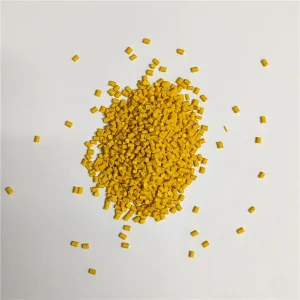
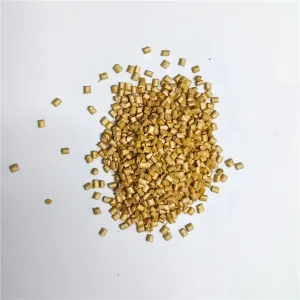
| PE Yellow High-Con. | LLDPE / HDPE | 35% - 50% | 12 - 18 g/10min | 260°C | Grade 6 - 7 | 1.5% - 3.0% | Retail T-Shirt Bags, Grocery Packaging |
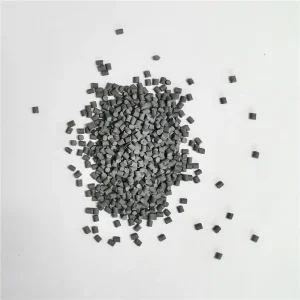
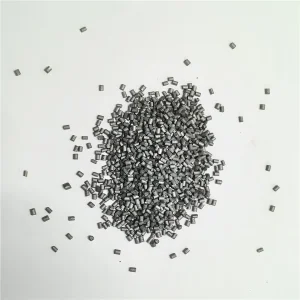
| PE Grey Non-Migration | PE Resin | 40% - 60% | 8 - 15 g/10min | 250°C | Grade 7 | 1.0% - 2.5% | Industrial Liners, Opaque Shipping Bags |
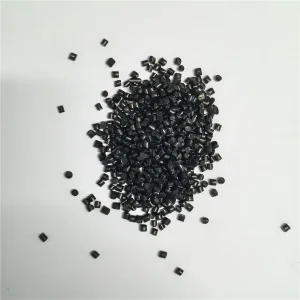
| PE Black Eco-Grade | HDPE / LLDPE | 30% - 50% (Carbon Black) | 5 - 12 g/10min | 260°C | Grade 8 | 1.0% - 4.0% | Trash Bags, Courier Bags, Heavy Duty Film |
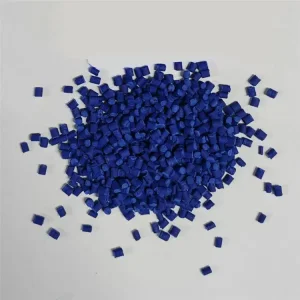
| PE Blue High-Dispersion | PE Resin | 30% - 45% | 10 - 16 g/10min | 260°C | Grade 7 | 1.5% - 3.0% | Shopping Bags, Hygiene Packaging |
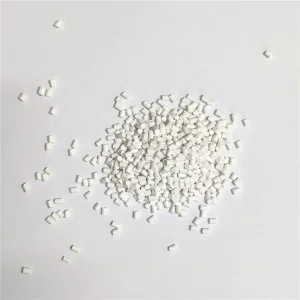
| PE White High-Opacity | LLDPE / TiO2 Rutile | 60% - 70% (Titanium Dioxide) | 15 - 25 g/10min | 280°C | Grade 8 | 1.0% - 3.0% | Boutique Bags, Food Contact Shopping Bags |
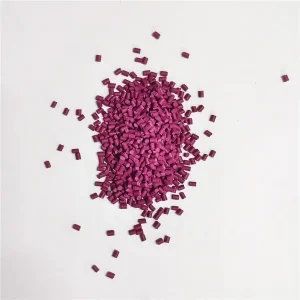
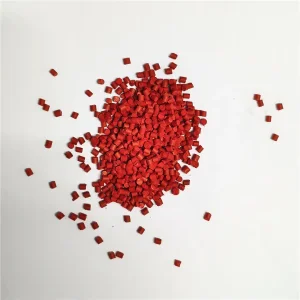
| PE Red & Rose Special | PE Resin | 30% - 40% | 10 - 15 g/10min | 240°C | Grade 6 | 2.0% - 3.5% | Custom Promotional Bags, Gift Packaging |
How direct sourcing from Changzhou Jiazhou Plastic Products Co., Ltd. delivers maximum value for high-volume film converters.
Located in Changzhou, Jiangsu Province—China's primary chemical and polymer processing hub—we leverage direct raw material procurement contracts with global pigment giants (Rutile $\text{TiO}_2$, furnace-grade carbon black, and high-purity organic pigments). This reduces raw material acquisition costs by 15-22% compared to regional compounders.
Our factory operates continuous high-torque twin-screw extruders integrated with gravimetric loss-in-weight dosing systems. Automated temperature control zones maintain precise thermal histories, eliminating thermal degradation and ensuring batch-to-batch color stability ($\Delta E < 0.8$).
Every batch undergoes rigorous quality assurance testing: Melt Flow Index (MFI) verification, moisture content analysis (< 0.05%), filter pressure testing, and blown film sample extrusion. Goods are packed in heavy-duty moisture-barrier aluminum foil bags to ensure long-term shelf life during ocean freight.
Mitigating supply chain risks, ensuring regulatory compliance, and supporting large-scale plastic converters.
Tier-1 retail brands and supermarket packaging buyers mandate strict vendor audits. Changzhou Jiazhou Plastic Products maintains complete traceability from raw pigment lots to final masterbatch shipments. Our ISO 9001 quality management framework guarantees compliance with global ESG standards and operational security.
Global market penetration demands absolute compliance with chemical safety and food-contact directives. Our cheap shopping bag masterbatch series is rigorously tested to ensure complete compliance across key jurisdictions:
Navigating circular economy demands, down-gauging trends, and sustainable masterbatch carriers.
As global regulations mandate the inclusion of Post-Consumer Recycled (PCR) plastics in shopping bags (e.g., 30% to 50% PCR content), conventional masterbatches often suffer from poor phase compatibility. Our modified carrier formulas include interfacial tension modifiers that homogenize PCR blends and mask yellowing or odor.
To minimize plastic tax levies, converters are down-gauging shopping bag wall thickness to under 10 microns. This places extreme demands on pigment dispersion. Our sub-micron particle dispersion technology prevents pinholes and tear propagation under high draw ratios.
Combining color pigments with functional additives—such as anti-block agents, slip additives (erucamide/oleamide), anti-static agents, and UV stabilizers—into a single masterbatch pellet reduces dosing complexity and storage requirements for plastic bag factories.
Tailored formulations optimized for diverse film processing environments and end-use applications.
Extruded primarily via high-density polyethylene (HDPE) high-stalk blown film lines. Requirements include high yield strength, puncture resistance, and bright color consistency. Recommended LDR: 1.5% - 2.5%.
Utilizes LLDPE/LDPE rich blends requiring high gloss, smooth tactile feel, and high opacity to mask interior bag contents. Recommended masterbatches: High-Opacity White, Silver, and Gold Metallic series.
Co-extruded ABA or ABC multi-layer film applications. The outer layer utilizes high-whiteness PE masterbatch for graphics printing, while the inner layer uses high-carbon black masterbatch for 100% light blocking and privacy protection.
Focuses heavily on cost per bag reduction. Formulated with cost-effective PE Black Masterbatch mixed with high-dispersion $\text{CaCO}_3$ filler masterbatch, ensuring high tear resistance and leak-proof sealability.
Requires weather resistance and UV protection. Formulated with hindered amine light stabilizers (HALS) and high lightfastness pigments (Blue Wool Scale ≥ 7) to withstand prolonged sun exposure.
Must comply strictly with food contact regulations (FDA / EU 10/2011). Non-toxic, non-migrating PE color masterbatches ensure zero chemical leaching into fresh food produce.
Field-tested remedies for common defects encountered during masterbatch plastic film processing.
| Film Defect Observed | Probable Masterbatch / Extrusion Cause | Technical Diagnostic Check | Recommended Corrective Action |
|---|---|---|---|
| Color Streaking / Specks | Incomplete pigment dispersion or melt viscosity mismatch between carrier and base resin. | Check Filter Pressure Value (FPV) and screw shear profile. | Switch to higher MFI carrier masterbatch; increase barrel temperature in Zone 2/3 by 5-10°C; increase back pressure. |
| Frequent Bubble Rupture | High moisture content in masterbatch (>0.1%) or coarse pigment agglomerates. | Perform moisture test using Karl Fischer titrator; check die gap. | Pre-dry masterbatch at 80°C for 2 hours; select masterbatch grade with FPV < 0.8 bar/g; verify filler particle size. |
| Poor Heat Sealing Strength | Excessive migration of low-molecular-weight waxes or lubricant additives to film surface. | Inspect seal bar temperature and surface tension (Dyne level). | Reduce masterbatch LDR; select masterbatch formulated with high-molecular-weight LLDPE carrier wax systems. |
| Die Lip Accumulation ("Die Drool") | Low thermal stability of masterbatch additives or degradation of low-cost pigments. | Monitor die temperature and additive volatilization at extruder exit. | Incorporate fluoropolymer Process Aid (PPA) masterbatch; reduce die zone temperature; switch to high thermal stability colorants (≥260°C). |
Direct answers to technical questions raised by film extruders, engineers, and international procurement managers.
Select from our specialized masterbatch series designed for superior color brilliance, dispersion, and thermal stability.