Direct from verified ISO-certified manufacturing facilities. Standardized for high melt flow indices, thermal stability up to 260°C, and exceptional outdoor weather resistance.
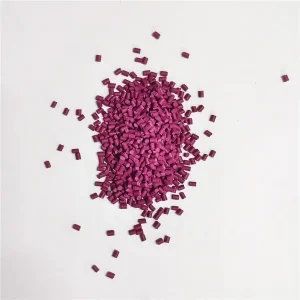
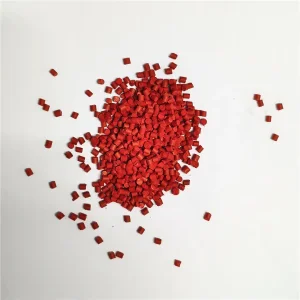
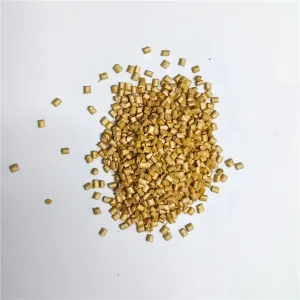
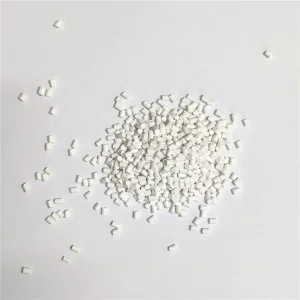
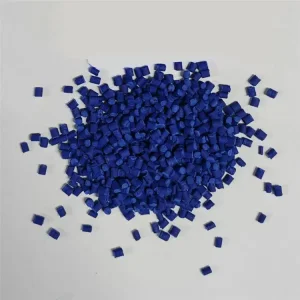
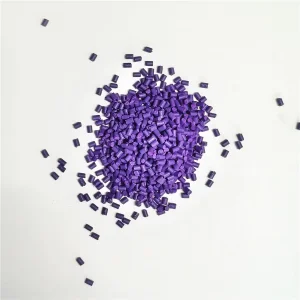
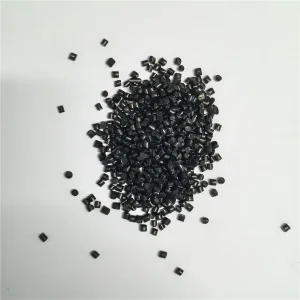
In the global polymer processing market, procuring a cheap weather-resistant PE masterbatch is frequently misunderstood as sourcing the lowest price-per-kilogram resin compound. Professional polymer chemical engineers and industrial procurement directors recognize that true economic efficiency lies in Total Cost of Ownership (TCO) optimization—mitigating Norrish Type I and II photo-oxidative degradation while maximizing additive dispersion efficiency.
Integration of synergistic Hindered Amine Light Stabilizers (HALS) and UV absorbers (Triazines & Benzotriazoles) traps free radicals generated by solar UV-A and UV-B spectra, preventing backbone scission in LLDPE, LDPE, and HDPE resins.
By enforcing a Filter Pressure Value below 0.8 bar/g, our masterbatches prevent extrusion screenpack clogging, reducing machine downtime during high-speed film blowing and pipe extrusion runs.
Ultra-high pigment concentration loading (up to 70% titanium dioxide or carbon black) lowers down-stream let-down ratios (LDR) down to 1%–2%, directly slashing logistics and per-unit coloring costs for converters.
The international demand for outdoor-durable polyolefin compounds is undergoing a structural expansion driven by renewable energy infrastructure, agricultural modernization, and civil engineering megaprojects.
Photovoltaic tracking systems, floating solar farms, and high-voltage underground telecommunication conduits require HDPE/LLDPE outer sheaths capable of surviving 25+ years of direct solar exposure. Masterbatches designed for these applications incorporate sub-micron P-type carbon black (20nm particle size) to achieve complete UV absorption across 290nm–400nm wavelengths.
Multi-layer blown greenhouse films demand specialized weather-resistant PE masterbatches that resist pesticide-induced degradation. Advanced formulations combine low-basicity HALS (such as NOR-HALS) with nickel quenchers to prevent sulfur and chlorine chemical attack while preserving film light transmission.
With global sustainability mandates expanding, plastic convertors increasingly utilize Post-Consumer Recycled (PCR) PE resins. Incorporating high-potency weather-resistant masterbatches neutralizes the pre-existing thermal-oxidative damage in PCR stocks, restoring outdoor mechanical integrity to near-virgin resin performance.
| Masterbatch Variant | Active Chemical System | UV Stabilization Index | Primary Industrial Application | Thermal Limits (°C) |
|---|---|---|---|---|
| High-White Rutile PE | Rutile TiO₂ (93% min) + Organo-silane Surface Treatment | ISO 4892-2 (5,000 hrs ΔE < 1.5) | Co-extruded Milk Film, Geomembranes | 280°C |
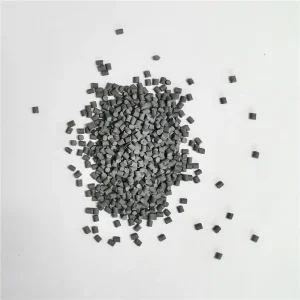
| High-Purity Black PE | Furnace Carbon Black (20nm) + Primary Antioxidant 1010 | ASTM G155 Cycle 1 (>8,000 hrs) | HDPE Water Pipes, Cable Conduits | 300°C |
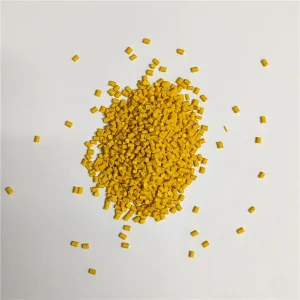
| Non-Migratory Yellow PE | Isoindoline Pigment + HALS 622 Synergist | Blue Wool Scale 7-8 | Outdoor Storage Crates, Traffic Safety Barricades | 260°C |
| Anti-Fading Color Range | Phthalocyanine Complex + UV Absorber 326 | QUV-A 340 (3,000 hrs No Blooming) | Agricultural Drip Tubes, Outdoor Stadium Seating | 270°C |
Why can Chinese specialized masterbatch suppliers provide high-concentration, highly durable weather-resistant masterbatches at significantly lower market rates? The secret lies in automated, integrated manufacturing ecosystems and raw material cluster economics.
State-of-the-art continuous twin-screw extrusion systems feature multi-component gravimetric feeders. This guarantees a precise dosing accuracy of ±0.2%, eliminating batch-to-batch color variance and eliminating costly raw material waste.
Factory bases situated within major Eastern China polymer clusters (such as Changzhou, Jiangsu) benefit from direct pipeline and bulk container access to virgin PE carrier resins (LLDPE 7042, HDPE 5000S) and pigment manufacturers, drastically lowering inland freight overheads.
Operating multi-line twin-screw extruders operating 24/7 yields monthly outputs exceeding thousands of metric tons. High capacity utilization significantly lowers per-ton energy consumption and labor cost overhead per kilogram.
Polymer behavior varies drastically across microclimates. Weather-resistant masterbatches must be engineered to withstand specific environmental stressors, from high solar radiation deserts to humid tropical coastlines.
Challenge: Extreme UV radiation combined with surface temperatures exceeding 70°C causes rapid embrittlement and chalking of outdoor HDPE water tanks and pipes.
Solution: Incorporation of high-density Rutile White Masterbatch loaded with secondary phosphite antioxidants (Irgafos 168) to inhibit thermal auto-oxidation during daytime heating cycles.
Challenge: High moisture combined with saline conditions leads to heavy pigment migration, dye leaching, and hydrolytic degradation of plastic fish cages and ocean buoys.
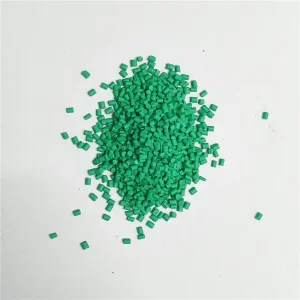
Solution: Custom Non-migration PE Blue and Green masterbatches utilizing inorganic cobalt/copper phthalocyanines with hydrophobic carrier resin coatings to prevent chemical extraction by seawater.
Challenge: Thin LLDPE mulch films (down to 10-15 microns) suffer premature tearing under mechanical stress and sunlight exposure, disrupting crop cycles.
Solution: Ultra-dispersed Masterbatches featuring specialized micronized carbon black combined with polymeric HALS, enabling high draw ratios without pinhole defects.
Addressing key technical inquiries regarding masterbatch formulation, carrier matching, laboratory testing, and direct factory procurement.
Standard and custom color matches developed for blown film, profile extrusion, injection molding, and blow molding machinery.