Engineered with high dispersion stability, thermal resistance up to 260°C, and exceptional weatherability for pipe extrusion and technical plastics.
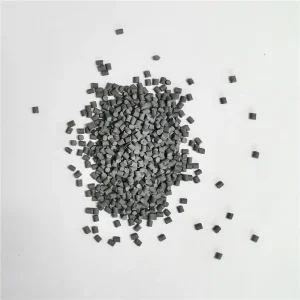
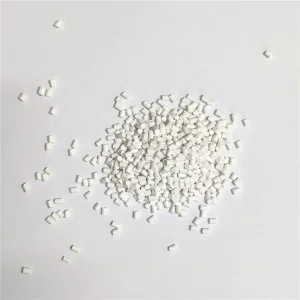
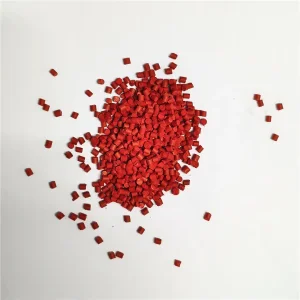
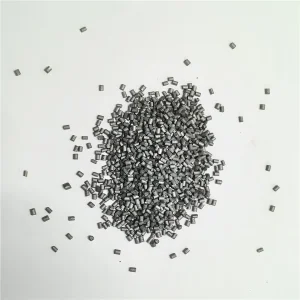
Understanding the chemical degradation vectors of polyolefin resins under subterranean stress, chemical exposure, and elevated operating pressures.
Industrial HDPE pipeline infrastructure (PE80, PE100, and PE100-RC) faces continuous thermo-oxidative degradation during melt processing and throughout multi-decade operating lifespans. Unstabilized polyethylene reacts with dissolved oxygen, acidic effluents, and soil electrolytes, leading to polymer chain scission, micro-cracking, and loss of tensile yield strength. Chemical Anti-Corrosion Pipe PE Masterbatch acts as a functional barrier by incorporating primary hindered phenolic antioxidants (e.g., Antioxidant 1010) and secondary phosphite processing stabilizers (e.g., Antioxidant 168) dispersed homogeneously within a high-molecular-weight polyolefin matrix.
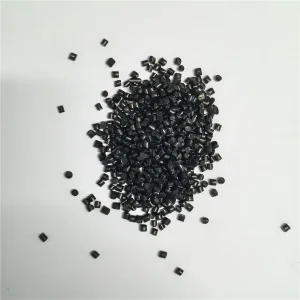
Subterranean and exposed pipe networks require superior protection against environmental stress cracking (ESCR) and photo-oxidation. Incorporating specialized P-Type furnace carbon black with a primary particle size of < 25 nm ensures complete UV-blocking capabilities. By achieving a dispersion classification of Category ≤ 2 according to ISO 18553 standards, the masterbatch prevents micro-void formation and stress concentration points. This formulation extends Oxidative Induction Time (OIT) values beyond 100 minutes at 200°C, exceeding global ISO 4427 and EN 12201 municipal pipeline longevity mandates.
The technological trajectory of pipe additive masterbatches from simple color carriers to multi-functional smart barrier additives.
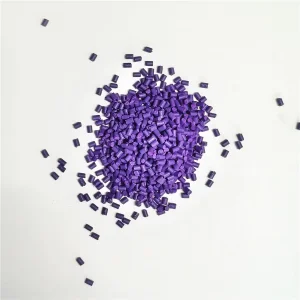
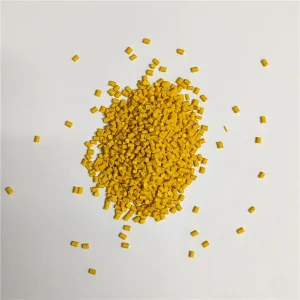
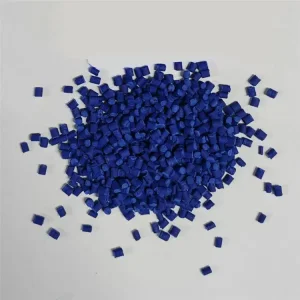
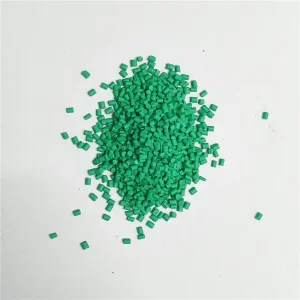
Historical formulations focused primarily on visual color coding (blue for potable water, yellow for gas lines) with minimal stabilizer additive integration. High melt-flow index carriers often degraded the mechanical integrity of PE100 pressure pipe resins.
Today's high-performance anti-corrosion masterbatch integrates dual-action antioxidants, HALS light stabilizers, and hydrophobic nano-fillers. Designed to maintain pipe wall integrity under acidic (pH 1-3) and alkaline (pH 11-14) chemical environments.
Next-generation development targets micro-encapsulated corrosion inhibitors that activate upon physical impact or crack formation. Future formulations utilize bio-based LLDPE carriers to align with global carbon-neutrality targets (ISO 14067).
Tailored chemical masterbatch formulations resolving extreme operating conditions across critical industrial sectors.
In 3-Layer Polyethylene (3LPE) steel pipe coating systems, our functional masterbatch serves as the outer protective jacket layer. It protects fusion-bonded epoxy (FBE) and adhesive tie-layers from soil stress, cathodic disbondment, mechanical puncture, and moisture ingress according to ISO 21809-1 and DIN 30670 requirements.
Industrial processing plants require pipe materials resistant to organic acids, solvents, and corrosive salts. Our anti-corrosion masterbatch prevents environmental stress cracking under high temperature chemical flow, ensuring zero-leakage security in hazardous fluid transmission networks.
Designed for large-diameter HDPE water mains and coastal seawater intake pipes. Offers non-toxic, lead-free, heavy-metal-free compliance (NSF/ANSI Standard 61) while preventing biological fouling, chlorine dioxide oxidation, and soil-mineral abrasion.
Tailings and slurry transport pipes endure severe internal mechanical wear coupled with corrosive liquid media. The incorporation of ultra-dispersed anti-corrosion masterbatch maintains resin tough ductility, minimizing notch sensitivity and catastrophic pipe splitting.
Rigorous lab-tested parameters verifying physical, thermal, and mechanical compliance for high-density polyethylene masterbatches.
| Property Parameter | Test Standard | Technical Value / Specification | Industrial Significance |
|---|---|---|---|
| Carrier Resin Compatibility | ISO 1133 / ASTM D1238 | PE / LLDPE / HDPE Carrier Matrix | Ensures homogeneous melt blending without phase separation |
| Melt Flow Index (MFI @ 190°C/2.16kg) | ISO 1133 | 2.0 – 12.0 g/10 min (Customizable) | Matches pipe extrusion resin viscosity for smooth wall finish |
| Pigment / Carbon Black Content | ASTM D1603 / ISO 6964 | 40% – 50% High Concentration | Optimizes dosage cost-efficiency (Standard addition: 2% – 3%) |
| Carbon Black Dispersion Grade | ISO 18553 | Category ≤ 2 (Micro-dispersion) | Eliminates structural weak points and micro-cracks |
| Oxidative Induction Time (OIT @ 200°C) | ISO 11357-6 / EN 728 | > 100 Minutes | Guarantees 50+ year long-term thermal oxidation resistance |
| Heat Resistance Temperature | DIN EN 12877 | 260°C – 300°C | Prevents thermal degradation during high-speed extrusion |
| Moisture Content | ASTM E203 | < 0.05% (< 500 ppm) | Prevents surface pitting, bubbles, and void defects |
| Heavy Metal & RoHS Compliance | IEC 62321 / REACH SVHC | Pass / Zero Pb, Cd, Hg, Cr(VI) | Meets strict European Union environmental health standards |
Changzhou Jiazhou Plastic Products Co., Ltd. leverage advanced automation, continuous twin-screw extrusion, and massive inventory reserves to support global plastic processors.
Founded in 2010, operating a modern 6,000m² manufacturing plant in Changzhou, Jiangsu. Supported by a skilled workforce of 50+ polymer experts, R&D chemists, and international trade professionals.
Utilizing high-torque multi-screw extrusion lines integrated with loss-in-weight gravimetric feeders. Ensures lot-to-lot consistency with ΔE color variation controlled strictly below 0.3.
Exporting to 100+ countries across North America, Europe, Southeast Asia, and the Middle East. Strategic proximity to Shanghai and Ningbo ports enables swift 15-day order fulfillment.
Ensuring seamless market entry and certification alignment for multinational pipe extrusion manufacturers.
Fully certified under ISO 9001:2015 for quality control and ISO 14001:2015 for environmental management. Production workflows undergo rigorous batch-traceability protocols from raw material intake to final shipment.
Formulations are independently tested by SGS / Intertek to confirm zero presence of SVHC (Substances of Very High Concern), heavy metals, polybrominated biphenyls (PBB), or phthalate plasticizers.
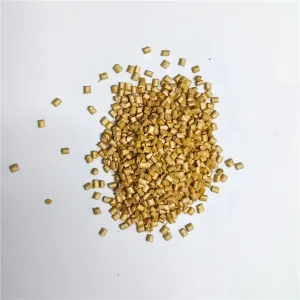
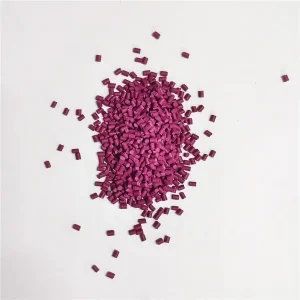
Our engineering team provides custom color matching (RAL / Pantone), melt flow indexing matching, and carrier optimization tailored specifically to your extrusion machine screw profile and raw resin grade.
Key technical criteria for procurement managers and quality assurance directors when evaluating masterbatch suppliers.
Selecting an incompatible carrier resin (e.g., standard low-density LDPE for high-density PE100 pipe extrusion) reduces pipe ring stiffness and burst pressure rating. Procurement teams must verify that the masterbatch carrier resin matches or exceeds the host polymer's molecular density and melt index characteristics.
Evaluating masterbatch unit cost alone is deceptive. High-concentration masterbatches (up to 50% active pigment/additive loading) allow lower addition rates (2% vs. 4%), significantly reducing freight costs, storage footprints, and overall cost per ton of finished polyolefin pipe production.
Expert solutions to common technical challenges in pipe masterbatch extrusion, storage, and chemical anti-corrosion performance.
Using a Polyethylene (PE) carrier matrix ensures complete molecular compatibility with base HDPE pipe resins (PE80/PE100). Unlike universal carriers (EVA or SAN), PE carriers do not lower the heat deflection temperature (HDT), cause phase segregation, or compromise long-term Environmental Stress Crack Resistance (ESCR) under chemical exposure.
Carbon black particle sizes below 25 nanometers absorb harmful UV radiation before it can initiate free-radical polymer chain scission in polyethylene. When combined with a uniform dispersion (ISO 18553 Category ≤ 2), it prevents micro-void initiation, enabling outdoor pipes and buried pipelines to achieve a 50+ year design life.
The standard recommended let-down ratio ranges between 2.0% and 3.0% by weight, depending on the specific pipe wall thickness, pigment loading, and UV resistance requirements. For critical 3LPE steel pipe coating jackets or heavy chemical effluent pipes, custom dosages can be calculated by our technical support engineers.
OIT testing is conducted via Differential Scanning Calorimetry (DSC) in accordance with ISO 11357-6. The sample is heated to 200°C under an inert nitrogen atmosphere before switching to pure oxygen. The time elapsed until exothermic thermal oxidation begins is recorded. Our anti-corrosion pipe masterbatches consistently achieve OIT values exceeding 100 minutes.
Yes. We adjust the carrier resin melt flow index (MFI) and processing aid package (e.g., fluoropolymer processing additives) to eliminate melt fracture, shark-skin defects, and die buildup during high-speed extrusion, ensuring smooth internal and external pipe surface finishes.
Premium quality PE pigment masterbatches engineered for blown film, injection molding, profile, and pipe extrusion.
Partner with Changzhou Jiazhou Plastic Products Co., Ltd. for engineered polyolefin masterbatch solutions. Our technical team responds within 12 hours with complete TDS, SDS, and free lab sample dispatches.