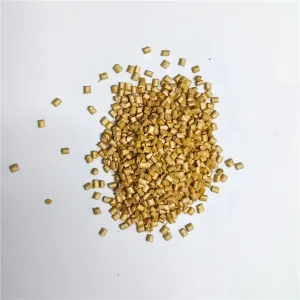
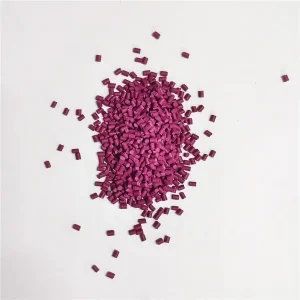
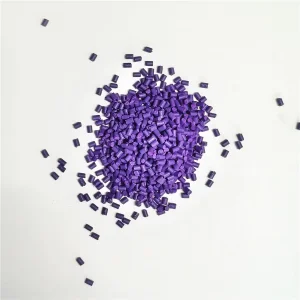
Precision-engineered color and filler concentrates for film extrusion, injection molding, and complex food packaging applications.
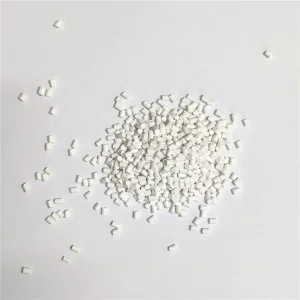
Understanding the technical standards, regulatory mandates, and supply chain shifts defining food-grade blown film masterbatch manufacturing in China.
In modern flexible packaging, white masterbatch formulated for food-contact blown film applications serves far beyond cosmetic aesthetics. It provides essential light-blocking opacity, protects light-sensitive food nutrients (such as lipids and vitamins) from photo-oxidation, enhances printability for high-speed flexographic printing, and maintains structural film integrity under high-draw ratio processing. Titanium Dioxide ($\text{TiO}_2$) in its pure Rutile crystalline phase represents the industry benchmark for maximum refractive index ($n = 2.73$) and light scattering capacity.
China has emerged as the global powerhouse for polymer masterbatch compounding, driven by integrated petrochemical supply chains, state-of-the-art co-rotating twin-screw extrusion technology, and unmatched raw material scaling. Leading Chinese manufacturers like Changzhou Jiazhou Plastic Products Co., Ltd. leverage over 16 years of direct factory expertise to offer top-tier Rutile-based masterbatches with loading concentrations up to 75%, delivering optimal opacity while dramatically reducing Total Cost of Ownership (TCO) for international converter facilities.
Global food brand owners are transitioning from traditional 3-layer packaging structures to micro-thin 5-layer, 7-layer, and 9-layer co-extrusion films. This shift demands masterbatches with exceptional pigment dispersion (Filter Pressure Value FPV < 0.5 bar/g) to prevent die lip buildup, gel formation, and bubble instability at high throughput rates exceeding 800 kg/hr.
The technological forces re-shaping formulation engineering, polymer additives, and food contact safety.
Film down-gauging (reducing food bag thickness from 40 microns to 15–20 microns) without sacrificing light opacity requires ultra-high-concentration Rutile $\text{TiO}_2$ (70%–75% loading) engineered with organic surface treatments (Alumina/Silica/Polyol) to maximize dispersion uniformities.
Modern food safety compliance mandates zero non-intentional added substances (NIAS), heavy-metal-free formulations, and strict compliance with FDA 21 CFR 178.3297, EU Regulation 10/2011, and China’s GB 4806.6 standards for direct food contact.
Global regulatory bans on Per- and Polyfluoroalkyl Substances (PFAS) have forced compounding factories to innovate fluorine-free PPA additives within white masterbatches to prevent melt fracture (sharkskin) during high-speed extrusion.
Transitioning towards mono-material PE packaging (PE/PE laminates) and integrating Post-Consumer Recycled (PCR) resins demands white masterbatches with high antioxidant protection to neutralize thermal degradation during reprocessing.
Phenolic antioxidants interacting with atmospheric nitrogen oxides ($\text{NO}_x$) can cause severe yellowing of white food bags during warehouse storage. Advanced masterbatches utilize specialized Hindered Amine Light Stabilizers (HALS) to eliminate gas fading.
High moisture content in masterbatches leads to volatile release during extrusion, causing "lacing" pinholes in thin films. Vacuum-dried formulations with < 0.05% moisture content ensure zero voiding in cast and blown films.
Analytical evaluation of carrier resin selection, crystal phase dynamics, and filter pressure value (FPV) benchmarks.
| Technical Parameter | Premium Food Grade Benchmark | Standard Commercial Grade | Impact on Blown Film Extrusion |
|---|---|---|---|
| TiO₂ Crystal Structure | Rutile (99.2% Purity, Inorganic Surface Treated) | Anatase or Blend | Rutile provides 25% higher opacity, superior UV stability, and no photocatalytic degradation. |
| TiO₂ Loading Concentration | 60% – 75% Wt. | 30% – 50% Wt. | Higher concentration allows lower let-down ratios (LDR), reducing carrier polymer interference. |
| Carrier Resin MFI (190°C/2.16kg) | 12 – 20 g/10min (LLDPE / LDPE Matrix) | 2 – 8 g/10min | Optimal Melt Flow Index ensures instant shear-thinning dispersion without reducing film tensile strength. |
| Filter Pressure Value (FPV) | < 0.5 bar/g (DIN EN 13900-5) | > 2.5 bar/g | Low FPV prevents screen pack clogging, allowing continuous multi-day extrusions without pressure spikes. |
| Moisture Content (Karl Fischer) | < 0.05% (500 ppm) | > 0.15% (1500 ppm) | Prevents micro-voiding, surface roughness, and lacing defects on high-temperature blown film lines. |
| Whiteness Index (WI ASTM E313) | 95.0 – 98.5 | 82.0 – 88.0 | Delivers clean, bright background ideal for multi-color flexography and consumer retail presentation. |
Achieving flawless dispersion of Titanium Dioxide particles (mean particle size 0.25 to 0.35 microns) requires intensive mechanical shear inside twin-screw extruders. Un-dispersed agglomerates act as stress concentration points, causing bubble breaks on continuous film lines (W&H, Hosokawa Alpine). Leading Chinese factories utilize hydrophobic organic surface modifiers (zirconia, alumina, and silane coupling agents) to lower interfacial tension between polar $\text{TiO}_2$ particles and non-polar Polyolefin matrices.
In 5-layer and 7-layer food packaging, white masterbatch is often localized in the skin layer or sub-surface layer. Mismatched shear viscosity between the masterbatch carrier resin and surrounding structural polymer layers (such as metallocene LLDPE or EVOH gas barrier layers) causes interfacial viscous encapsulation. Custom formulating the melt index ensures uniform layer thickness and zero interfacial instability across the entire blown film bubble.
How enterprise buyers mitigate risks, ensure batch consistency, and optimize Total Cost of Ownership (TCO).
Procurement teams must evaluate cost beyond price-per-ton. Premium masterbatches with high pigment efficiency allow lower let-down ratios (e.g., 2% LDR vs. 4% LDR), directly cutting freight costs, inventory holding, and machine downtime caused by screen pack changes.
Color shifts between production runs can destroy brand integrity for multinational food packagers. Top Chinese suppliers implement Datacolor 800 spectrophotometers to enforce a strict Delta E threshold (ΔE < 0.3) for every outbound lot.
Modern international buyers require suppliers with heavy-duty moisture-barrier packaging (aluminum foil inner liner bags), rapid lead times (≤ 15 days), and flexible logistics support to maintain uninterrupted raw material flow to global plants.
Overcoming real-world film extrusion defects through advanced masterbatch compounding and process engineering.
Problem: During high-speed blown film extrusion below 20 microns, un-dispersed pigment particles or trace moisture cause micro-pinholes, leading to gas leakage in Modified Atmosphere Packaging (MAP).
Engineering Solution: Implementing double-vacuum degassing twin-screw extruder compounding combined with 325-mesh fine melt filtration. This ensures complete de-agglomeration of $\text{TiO}_2$ sub-micron particles and reduces volatile moisture content to below 300 ppm.
Problem: Excessive low-molecular-weight waxes or low-grade carriers in cheap white masterbatches migrate to the film surface, impairing heat-seal strength and pouch seam integrity.
Engineering Solution: Formulating with 100% virgin metallocene-catalyzed LLDPE carriers matching the exact melt enthalpy of the matrix resin. This maintains high heat-seal strength (> 15 N/15mm) and seal-through-contamination performance for food pouches.
Verified regulatory credentials and technical service infrastructure backing enterprise buyers worldwide.
Certified compliance for colorants used in polymers intended for direct contact with food, liquids, and fatty edibles.
Strict Overall Migration Limits (OML) and Specific Migration Limits (SML) compliance tested via simulant liquids.
Complete absence of SVHCs (Substances of Very High Concern), heavy metals (Pb, Cd, Hg, Cr VI), and phthalate plasticizers.
Standardized production controls across 6,000m² facilities, ensuring total lot traceability from raw TiO₂ to exported pellet.
Next-generation innovations shaping the next decade of plastic packaging colorants and additives.
Development of 100% renewable bio-PE carriers derived from sugarcane ethanol, allowing food brands to produce carbon-neutral white packaging films without compromising mechanical extrudability.
Integration of inline spectrophotometer optical sensors with AI gravimetric dosing systems to automatically adjust masterbatch feed rates in real-time, eliminating color variations caused by virgin resin MFI fluctuations.
Engineered white masterbatch formulations on PLA/PBAT carriers for fully home-compostable food packaging bags, meeting EN 13432 standards while providing superior opacity and UV resistance.
Direct, authoritative answers to common procurement and engineering questions regarding food-grade white masterbatch.
For blown food bag film applications, standard white masterbatches typically contain between 50% and 70% Rutile $\text{TiO}_2$ by weight. Premium grades reach up to 75% loading. The choice depends on film thickness: ultra-thin films (10-25 microns) require 70-75% $\text{TiO}_2$ loading to maintain opacity without overloading the extruder with carrier resin.
Leading factories like Changzhou Jiazhou Plastic Products Co., Ltd. utilize 100% virgin polyolefin carrier resins and high-purity Rutile $\text{TiO}_2$ free of heavy metals (lead, cadmium, mercury, hexavalent chromium). Every batch undergoes third-party SGS/TÜV testing for migration limits, heavy metal speciation, and compliance with FDA 21 CFR 178.3297 and EU Regulation 10/2011.
Rutile $\text{TiO}_2$ has a higher refractive index (2.73) compared to Anatase (2.55), delivering approximately 20-25% greater opacity and tinting strength. Additionally, Rutile is far more UV-stable and non-photocatalytic, preventing polymer degradation, embrittlement, and color fading under indoor and outdoor lighting.
Lacing is caused by moisture or volatile organic compounds escaping during high-temperature melt processing, resulting in thin streaks or micro-pinholes. It is prevented by ensuring the white masterbatch has a moisture content below 0.05% (500 ppm), using high-purity hydrophobic inorganic surface treatments, and storing raw materials in sealed aluminum vacuum packaging.
Recommended Let-Down Ratios typically range from 1% to 4% depending on the masterbatch $\text{TiO}_2$ concentration and final target opacity. For a 70% Rutile masterbatch, a 2% LDR is generally sufficient to achieve high opacity in standard 25-micron food bags, optimizing both performance and unit cost.
Factory-direct plastic coloring solutions manufactured under strict ISO 9001 quality controls.