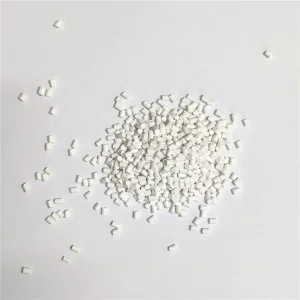
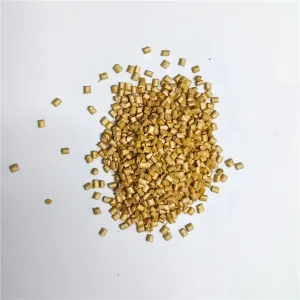
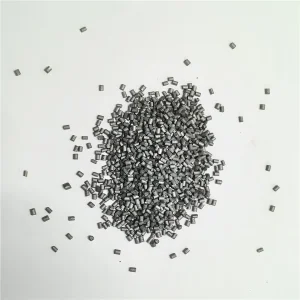
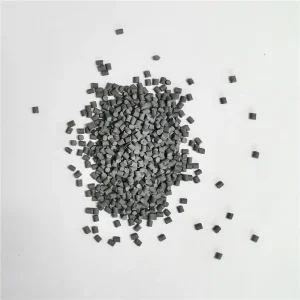
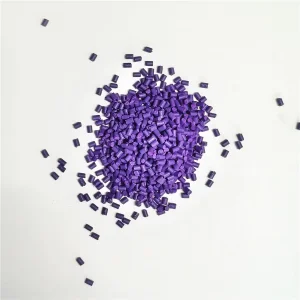
Engineered for high-dispersion blown film, precision injection molding, and continuous food-grade extrusion applications.
Understanding titanium dioxide dispersion chemistry, carrier resin alignment, and regulatory compliance paradigms in flexible and rigid food packaging.
In the global polyolefin processing sector, Food Grade White PE Masterbatch represents one of the most technically demanding material categories. Designed to impart high opacity, superior whiteness, UV barrier protection, and aesthetic brilliance to polyethylene packaging, its manufacturing requires an absolute alignment of chemical purity, physical dispersion, and strict compliance with international food-contact safety standards.
Utilizing premium chloride-process Rutile Titanium Dioxide (TiO₂) coated with dense silica and alumina matrix layers to maximize light scattering (refractive index ~2.73) while eliminating photocatalytic degradation of food contents.
Formulated with virgin LLDPE/LDPE carrier resins featuring narrow molecular weight distributions (MWD). Ensures zero low-molecular-weight wax migration into food contact media under extreme thermal processing conditions.
Advanced continuous twin-screw compounding reduces pigment agglomerates below 5 microns, preventing pinholes in ultra-thin blown films (down to 12 microns) and minimizing Filter Pressure Value (FPV) build-up.
The global transition away from single-use unrecyclable containers toward lightweight, multi-layer recyclable barrier films has elevated performance expectations for white masterbatches. Converters now demand maximum opacity at minimum let-down ratios (LDR), typically ranging between 1.0% and 4.0%. Achieving total optical opacity in ultra-thin liquid milk pouches or laminated standing pouches requires titanium dioxide loadings of up to 60% to 75% within the masterbatch pellet, without compromising flow melt index (MFI) or mechanical elongation properties of the host PE matrix.
Furthermore, organoleptic integrity—ensuring that color concentrates impart zero odor or off-taste to sensitive consumables like ultra-pure water, liquid dairy, and edible oils—has become a mandatory procurement benchmark. Modern Chinese manufacturing facilities leverage vacuum degassing and low-shear processing technologies to strip volatile organic compounds (VOCs) and residual monomers during extrusion compounding.
In-depth analysis of technical audit criteria, compliance documentation, and long-term risk mitigation strategies when sourcing PE masterbatch.
Global procurement teams require strict regulatory alignment including FDA 21 CFR 178.3297 (Colorants for Polymers), EU Regulation No 10/2011, RoHS 3, REACH SVHC compliance, and heavy metals limits (EN 71-3). Leading Chinese suppliers provide complete migration testing dossiers for global clearance.
Poorly dispersed inorganic TiO₂ creates build-up on film extruder die lips, resulting in film tears, downtime, and optical streaks. Purchasing managers evaluate masterbatch formulations by measuring Filter Pressure Value (FPV bar/g) to guarantee continuous uninterrupted line operation.
Maintaining brand color consistency across millions of packaging units requires strict CIELAB color space validation. Factories utilizing automatic gravimetric feeding and inline spectrophotometer monitoring ensure CIE Whiteness Index (WI > 90) remains unwavering across production cycles.
Procurement Takeaway: When auditing China Food Grade White PE Masterbatch Suppliers, request third-party NIAS (Non-Intentionally Added Substances) screening reports alongside standard food contact certificates to ensure compliance for premium dairy, baby food, and pharmaceutical packaging applications.
How leading Chinese manufacturers like Changzhou Jiazhou Plastic Products combine automated twin-screw extrusion with robust raw material integration.
China's masterbatch manufacturing sector has evolved from labor-intensive compounding into high-precision, Industry 4.0 smart manufacturing ecosystems. Suppliers located in key industrial clusters such as Jiangsu Province benefit from localized resin production, automated handling of bulk inorganic pigments, and direct access to global logistics ports in Shanghai and Ningbo.
Achieving optimum optical performance requires choosing the correct titanium dioxide crystal polymorph. The table below outlines the material parameters engineered into Changzhou Jiazhou's food-grade white PE masterbatch formulations:
| Performance Parameter | Standard Industrial White | Food-Grade Rutile White PE Masterbatch | Impact on Final Package / Film |
|---|---|---|---|
| TiO₂ Crystal Type | Anatase Grade | Chloride-Process Rutile Grade | Higher refractive index (2.73 vs 2.55) gives 35% higher opacity at lower film gauge. |
| TiO₂ Concentration | 30% – 50% | 60% – 75% High Density Loading | Reduces Let-Down Ratio (LDR) to 1%-2%, significantly lowering converter resin costs. |
| Thermal Stability | 200°C – 220°C | Up to 260°C – 280°C | Prevents polymer yellowing, VOC generation, and thermal degradation during high-speed extrusion. |
| Food Contact Compliance | General Industrial Grade | FDA 21 CFR 178.3297 / EU 10/2011 | Certified safe for direct food contact; zero migration of heavy metals or banned additives. |
| Filter Pressure Value (FPV) | > 1.5 bar/g | < 0.5 bar/g (Ultra-High Cleanliness) | Eliminates screen pack clogging, allowing continuous 24/7 extrusion runs. |
By implementing continuous gravimetric loss-in-weight feeders, high-torque co-rotating twin-screw extruders, and automated underwater pelletizing units, Chinese factories eliminate human error in compounding. Advanced side-feeders ensure that titanium dioxide particles are introduced into molten PE carrier without thermal degradation or pigment agglomeration.
Custom-formulated PE white masterbatches tailored for diverse converting processes across food, medical, and agricultural sectors.
Used extensively in multi-layer co-extruded LDPE/LLDPE milk film pouches and HDPE blow-molded bottles. The high Rutile content provides vital light barrier properties, preserving riboflavin (Vitamin B2) and extending dairy shelf life.
Custom masterbatch engineered with slip agents and organoleptic carrier resins for injection-molded PE caps, beverage bottle closures, and food container lids requiring clean torque release and zero odor transfer.
Ultra-clean masterbatch produced under dust-free conditions, meeting USP Class VI and ISO 10993 biological evaluation requirements for pharmaceutical bottles, IV bags, and medical device housings.
Optimized for blown extrusion lamination films (PE/PET, PE/BOPP). Ensures high bonding strength during adhesive lamination while providing uniform white background contrast for fine flexographic printing.
Weather-resistant white PE masterbatches enhanced with Hindered Amine Light Stabilizers (HALS) and UV blockers. Protects crops by reflecting solar radiation and reducing soil temperature in agricultural film applications.
Formulated for FFS (Form-Fill-Seal) heavy-duty polyethylene bags used for fertilizer, resin, and chemical packaging. Provides robust impact resistance, puncture strength, and UV shielding.
Select from our high-concentration masterbatch catalog manufactured under ISO 9001 certified quality controls.
Authoritative insights addressing common engineering, compliance, and supply chain queries regarding food-grade white PE masterbatch.
A white PE masterbatch is designated as food grade when all component materials—including the titanium dioxide (TiO₂), virgin PE carrier resin, and surface dispersion additives—strictly comply with international food contact regulations such as FDA 21 CFR 178.3297, EU Regulation (EU) No 10/2011, and GB 4806. Modern food-grade masterbatches must also be tested for overall migration limits (OML), specific migration limits (SML) of heavy metals, and pass organoleptic odor/taste tests under heat.
Rutile TiO₂ has a significantly higher refractive index (~2.73) compared to Anatase (~2.55), resulting in superior light scattering and optical opacity at lower coating thicknesses. Chloride-processed Rutile features a tightly controlled particle size distribution (~0.25 microns) and inert inorganic surface coatings (Al₂O₃/SiO₂), which prevent photocatalytic degradation of the host polyethylene resin and eliminate UV-induced deterioration of packed food products.
Incomplete pigment dispersion leads to TiO₂ agglomerates, which cause pinholes, stress cracks, windowing, and frequent web breaks in thin blown films (especially under 25 microns). High-quality masterbatches maintain a low Filter Pressure Value (FPV < 0.5 bar/g), ensuring smooth flow through fine melt screens, clean extruder die-lips, and uniform wall thickness across blown film bubbles.
Depending on the final product thickness and required opacity, standard let-down ratios range from 1.0% to 4.0%. For ultra-high concentration white masterbatches (70% TiO₂ loading), a 1.5% to 2.0% LDR is usually sufficient for standard injection molding or thick sheet extrusion, while thin co-extruded milk films may utilize 3.0% to 5.0% LDR in the core layer to ensure 100% UV opacity.
Leading factories like Changzhou Jiazhou utilize fully automated gravimetric continuous blending equipment combined with online X-ray fluorescence (XRF) ash testing and X-Rite CIELAB spectrophotometers. Each batch undergoes rigorous testing for melt flow index (MFI), moisture content (Karl Fischer titration < 0.05%), and CIELAB color tolerance (Delta E < 0.5) against master standards prior to global dispatch.
Exported masterbatch pellets are typically packed in 25kg moisture-proof heavy-duty PE bags or 1.1-ton PP Jumbo Super Sacks with internal aluminum foil moisture barriers. Shipments are palletized, shrink-wrapped, and fitted with desiccant packs to prevent moisture absorption during long-distance ocean transit across humid tropical routes.