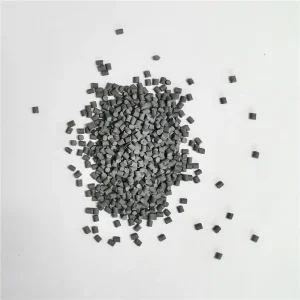
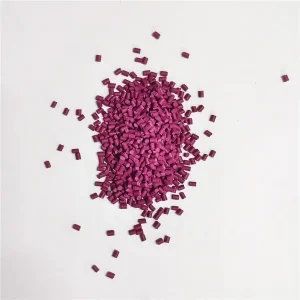
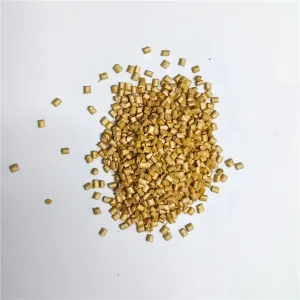
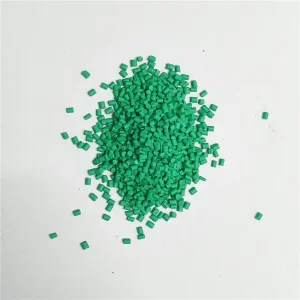
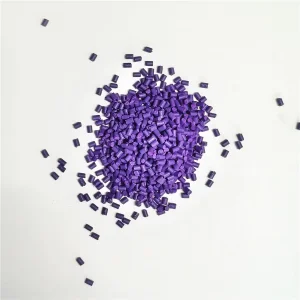
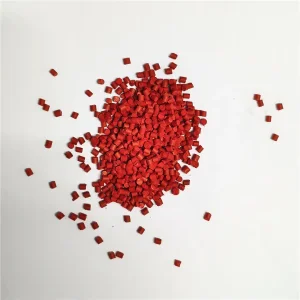
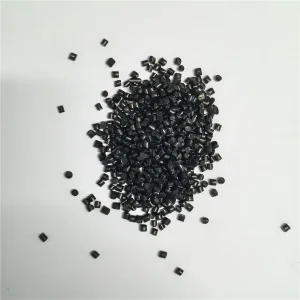
Engineered for superior dispersion, low CoF migration, high heat resistance (up to 260°C), and non-migratory pigment stability across blown film and injection processes.
Understanding the fundamental mechanisms of friction reduction, slip performance, and surface energy modulation in polyethylene processing.
In modern polyolefin conversion processes—spanning high-speed film blowing, thin-wall injection molding, micro-drip irrigation tube extrusion, and pipe manufacturing—interfacial friction presents a continuous technical challenge. Interfacial friction occurs both between polymer melts and metal equipment surfaces (internal/external lubrication boundaries) and between finished polymer surfaces during handling, stacking, and high-speed automated packaging. As a leading China friction resistant PE masterbatch company and factory, Changzhou Jiazhou Plastic Products Co., Ltd. (operating with a 6,000m² specialized manufacturing base and 16 years of compound engineering expertise) engineers ultra-high molecular weight (UHMW) tribological masterbatches designed to systematically lower the Coefficient of Friction (CoF), eliminate melt fracture, and minimize surface wear.
Reduces surface CoF from >0.55 down to steady-state values below 0.12–0.18 without blooming, ensuring smooth sliding in automated packaging equipment.
Decreases extruder die head pressure by 15%–28%, allowing higher throughput rates, lower melt temperatures, and reduced energy consumption per ton.
Formulated in full alignment with global EU REACH, US FDA, and emerging PFAS restrictions, replacing traditional fluoropolymer processing aids.
The physics of friction resistance in Polyethylene (PE) matrices relies on controlling boundary lubrication. Conventional fatty acid amides (such as Erucamide and Oleamide) operate via phase separation and migration to the plastic surface. While effective for short-term slip, traditional amides present critical limitations: thermal degradation above 220°C, visual blooming, compromised corona treatment stability, interference with printability and adhesive lamination, and volatility during high-temperature processing. Our engineering formulation integrates ultra-high molecular weight polysiloxane networks tailored within matching Linear Low-Density Polyethylene (LLDPE) or Low-Density Polyethylene (LDPE) matrix carriers. This semi-interpenetrating network locks inside the polymer matrix while concentrating optimal tribological silicone segments at the interface, yielding immediate shear reduction and long-lasting scratch resistance.
How friction-resistant masterbatch solutions are driving efficiency across international manufacturing sectors.
The global market for polyolefin friction-reducing additives and functional slip masterbatches has witnessed structural acceleration over recent years. Driven by the modern demand for ultra-high-speed converting equipment—where film line speeds routinely exceed 300 to 600 meters per minute—downstream converters can no longer tolerate high static friction, blocking, or die lip build-up. In response, Tier-1 manufacturing facilities across North America, Europe, Southeast Asia, and the Middle East are shifting from raw chemical additive blending to pre-dispersed, high-concentration functional masterbatches engineered by dedicated OEM factories in China.
Evaluating migration kinetics, thermal envelope, printability impact, and processing efficacy.
| Performance Metric | Standard Erucamide Slip | Oleamide Fast-Slip | UHMW Siloxane Masterbatch (Jiazhou Tech) | PFAS-Free PPA Solution |
|---|---|---|---|---|
| Primary Mechanism | Slow surface migration | Rapid surface migration | Permanent cross-network anchoring | Interfacial wall boundary layer |
| CoF Reduction Efficiency | Medium (0.20 - 0.30) | High initially (0.15 - 0.25) | Ultra-Low (<0.15) | Medium (0.25 - 0.35) |
| Thermal Stability (°C) | Up to 210°C | Up to 180°C | Up to 300°C | Up to 280°C |
| Blooming & Yellowing | High blooming risk | Severe blooming risk | Zero Blooming | Zero Blooming |
| Corona / Printability Impact | Decays surface energy | Severe printing failure | 100% Compatible | 100% Compatible |
| Regulatory / PFAS Status | Compliant | Compliant | 100% PFAS-Free | Requires verification |
Targeted solutions engineered for specific polymer conversion processes and industrial machinery requirements.
In 3-layer and 5-layer LLDPE/LDPE packaging film lines, adding 1.5%–3.0% friction resistant PE masterbatch into the outer skin layer eliminates film bubble instability, suppresses melt fracture at narrow die gaps, and stabilizes dynamic friction coefficient at 0.14 without migration into food contact layers.
Corrugated polyethylene tubing extruded with 2% Jiazhou siloxane-based masterbatch exhibits a 40% reduction in inner wall friction. Cable installation line speed increases by 35%, drastically lowering assembly labor costs for global automotive wire harness producers.
Prevents die-lip build-up during long-duration extrusion of thick-walled HDPE water pipes. Reduces melt temperature by 8°C–12°C while eliminating high-shear surface roughness, resulting in smooth interior pipe walls and improved fluid dynamics.
Advancing polymer additives through nano-engineered surface modification and sustainable circular economy integration.
Complete elimination of fluoropolymer-based processing aids in response to stringent EU ECHA and US EPA regulations. Implementation of eco-friendly siloxane-polyolefin hybrid carriers across all standard friction-resistant lines.
Introduction of cross-linked silicone micro-spherical additives that offer dual benefits: sub-micron surface texturing for anti-blocking and chemical boundary sliding for extreme wear environments.
Development of specialized friction masterbatches designed specifically for Post-Consumer Recycled (PCR) PE feeds. Neutralizes degradation contaminants and restores smooth extrusion flow behavior in 100% recycled resin streams.
Integration of 100% renewable bio-PE carriers derived from sugarcane ethanol, offering carbon-neutral footprint certifications alongside industry-leading tribological performance.
Your verified partner for custom color, filler, and high-concentration functional additive masterbatches.
Founded in 2010 in Changzhou, Jiangsu Province, Changzhou Jiazhou Plastic Products Co., Ltd. has established itself as an authoritative manufacturer and export partner in the global masterbatch market. Operating from a modern 6,000 square meter factory fitted with advanced twin-screw co-rotating compounding lines, precise loss-in-weight gravimetric feeders, and complete laboratory testing suites, Jiazhou delivers consistent, batch-to-batch quality across high-concentration PE color masterbatches, CaCO3 filler masterbatches, and technical processing additives.
High-concentration formulations engineered for maximum tinting strength, weather resistance, and processing safety.
Direct answers to technical queries regarding dosing ratios, friction testing, corona compatibility, and compliance.
For standard blown film applications, a dosage of 1.0% to 2.5% by weight is generally optimal to lower the CoF to below 0.20. For thick-walled pipe extrusion or heavy-duty industrial profiles requiring extreme wear resistance, addition levels of 2.0% to 4.0% are recommended depending on processing screw shear and base resin melt index.
Traditional amides (Erucamide/Oleamide) rely on continuous migration to the surface, which causes surface blooming, sticky residues, interference with heat sealing, and rapid decay of surface energy (ruining printability and adhesive lamination). Siloxane-based masterbatches anchor stably within the polymer matrix, providing immediate, permanent slip without blooming or affecting corona treatment efficiency.
Yes. Our friction resistant PE masterbatches are formulated using food-contact compliant carrier resins and additives that meet US FDA 21 CFR standards as well as EU Regulation No 10/2011 requirements for food packaging applications.
We measure static and dynamic coefficients of friction according to ASTM D1894 and ISO 8295 standards using calibrated friction incline and sled testing equipment. Standard tests evaluate film-to-film and film-to-metal friction metrics under controlled ambient temperatures (23°C ± 2°C, 50% RH).
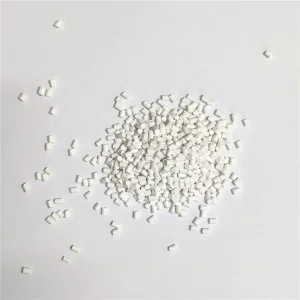
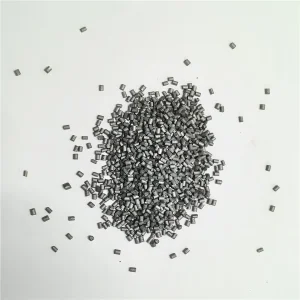
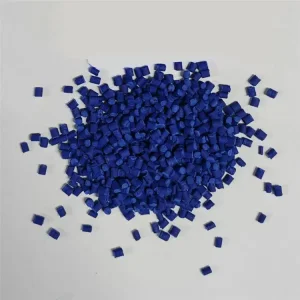
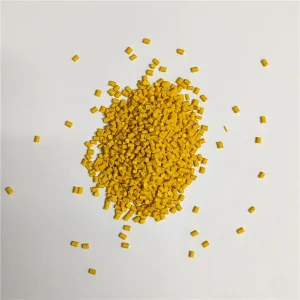
Absolutely. Our friction-resistant formulations demonstrate high chemical compatibility with PE/PP color masterbatches (White, Black, Blue, Yellow, etc.) as well as high-loading calcium carbonate (CaCO3) filler masterbatches without phase separation or degradation of tinting strength.