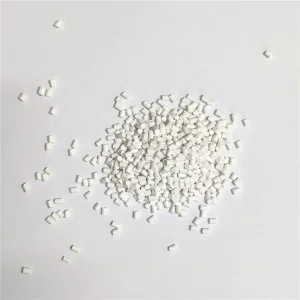
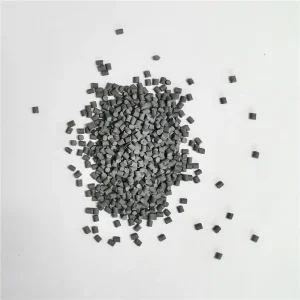
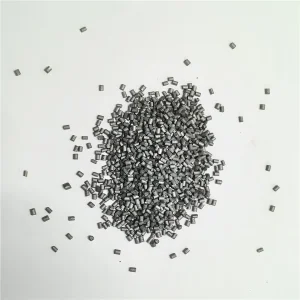
High-concentration carrier resins optimized for high-throughput polyolefin extrusion, blown film, and pressure pipe manufacturing.
How advanced polymer processing additive (PPA) matrices eliminate melt fracture, suppress die drool, and slash specific energy consumption during ultra-high-throughput extrusion.
In modern industrial plastic processing, the global market demands unprecedented throughput rates to maintain competitive margins. However, pushing linear low-density polyethylene (LLDPE), high-density polyethylene (HDPE), and polyolefin blends through extrusion dies at extreme shear rates (>500 s⁻¹) inevitably triggers severe fluid-dynamic instabilities. The primary bottleneck encountered by global extruders is melt fracture—commonly manifested as surface roughness ("sharkskin") or gross melt fracture—alongside excessive head pressure build-up and rapid die buildup ("die drool").
High lubrication masterbatch forms a dynamic, ultra-thin microscopic coating on the internal metal die wall. This shifts the boundary condition from non-slip to slip-flow, dramatically lowering wall shear stress below the melt fracture threshold (typically ~0.1 to 0.14 MPa).
By reducing apparent melt viscosity and internal friction between polymer chains and extruder barrel walls, motor load (extruder amperage) drops by 12% to 22%, yielding direct reductions in Kilowatt-Hours per Kilogram (kWh/kg) processed.
Low-molecular-weight fractions and pigment agglomerates tend to accumulate at the die exit. High lubrication chemistry prevents phase separation at the lip, increasing continuous operational runtime by over 300% without manual shutdown cleaning.
Analyzing regional adoption rates, economic trade-offs, and high-speed processing requirements across North America, Europe, Asia-Pacific, and emerging markets.
The global masterbatch market is experiencing a structural pivot toward hyper-efficient processing additives. Driven by escalating electricity costs in Europe and North America, combined with aggressive throughput targets in Asian packaging hubs, resin convertors no longer treat lubrication masterbatch as a mere option—it has become a core operational necessity.
| Global Region | Primary Application Focus | Main Processing Bottleneck | High Lubrication Masterbatch ROI Impact |
|---|---|---|---|
| North America | Heavy-Duty LLDPE Shipping Sacks, Agricultural Films | High backpressure on high-speed Reifenhauser / W&H lines | Reduces head pressure by 18-25%, enabling line speed increase up to 35% |
| Europe (EU27) | Recycled PCR/PIR PE Blends & Thin Packaging Films | Inconsistent Melt Flow Index (MFI) & severe die lip buildup | Homogenizes melt shear, suppresses die drool, lowers carbon footprint per kg |
| Asia-Pacific (China/SEA) | Micro-Drip Irrigation Tubes, HDPE Conduit Pipe Extrusion | Rough inner-wall pipe friction & high extrusion torque loads | Improves pipe surface smoothness (Ra < 0.4µm), cuts power consumption by 15% |
| Middle East & Africa | Geomembranes, Large-Diameter HDPE Water Pressure Pipes | Thermal degradation & melt fracture during high ambient temperature runs | Stabilizes heat profile, prevents melt fracture up to 280°C processing temps |
Furthermore, the global transition toward down-gauging (producing thinner films with higher tensile strength) demands resins with higher molecular weights. These high-viscosity resins inherently create higher extrusion backpressures. Engineered high-lubrication masterbatches act as an operational bridge, enabling processors to run tough, high-viscosity resins on legacy machinery without motor overload or thermal degradation.
How Chinese chemical manufacturing scale, specialized twin-screw compounding technology, and rigorous ISO quality control deliver unmatched cost-to-performance ratios for global buyers.
Located in Zouqu Town, Changzhou, Jiangsu, our integrated plant operates 12 high-torque twin-screw extrusion lines with micro-pelletizing capability, outputting over 30,000 metric tons annually.
Every batch undergoes inline pressure-filter testing (FPV), melt index verification (ASTM D1238), and optical dispersion analysis under high magnification before global dispatch.
Direct proximity to Shanghai and Ningbo deep-water ports allows Changzhou Jiazhou to streamline export customs, guaranteeing reliable 15-day delivery timelines across 100+ nations.
Precision-tailored masterbatch formulations designed for continuous high-speed extrusion lines across core industrial sectors.
Essential for agricultural mulch, greenhouse films, express courier bags, and food-grade packaging. Eliminates melt fracture bubbles, boosts optical clarity (haze reduction), and guarantees smooth winding speeds up to 300 meters/min.
Widely applied in municipal water supply pipes, gas lines, corrugated conduit, and drip irrigation tubing. Lubricates internal die flow channels, creating flawless mirror-smooth inner/outer pipe walls that lower fluid transport resistance.
Designed for high-speed line speed jacketing of telecommunication cables and power transmission lines using XLPE or HDPE resins. Prevents surface tears during high-draw-down extrusion through crosshead dies.
How Changzhou Jiazhou is pioneering compliant polymer additive technologies to meet global environmental regulations without sacrificing high-speed extrusion yield.
The global plastics industry is undergoing a regulatory transformation. Historically, traditional Polymer Processing Aids (PPA) relied heavily on fluoropolymer chemistry (fluoroelastomers). However, with impending global restrictions on Per- and Polyfluoroalkyl Substances (PFAS) under European REACH regulations and the US EPA mandates, global manufacturers urgently require non-PFAS high-lubrication masterbatch alternatives.
Jiazhou’s advanced R&D laboratory has successfully engineered non-fluorinated processing additives based on modified organic silicone matrices, hyper-branched ester polymers, and synthetic fatty acid complexes that achieve identical shear stress reduction without halogenated residues.
Post-Consumer Recyclate (PCR) resins possess inconsistent molecular weights and contaminant gels that severely disrupt high-speed extrusion. Next-generation lubrication masterbatch acts as a dynamic viscosity equalizer, enabling up to 100% recycled resin usage on high-speed lines.
By utilizing ultra-fine micro-pellet geometries (spherical size < 1.5mm), the masterbatch melts rapidly and disperses uniformly in shorter extruder L/D screws (24:1 to 30:1), eliminating un-melted additive fisheyes in high-speed cast films.
How process engineers and procurement officers can evaluate, test, and select the optimal masterbatch grade based on Melt Flow Index (MFI) and polymer carrier compatibility.
When sourcing High Lubrication High Speed Extrusion PE Masterbatch from China manufacturers, selecting the incorrect carrier resin or dosage rate can lead to screw slip or pigment segregation. Follow this 4-step engineering protocol for optimal qualification:
Ensure the masterbatch carrier matches your base polymer. For LLDPE/LDPE blown film, choose a high MFI (10–20 g/10min) LLDPE carrier to guarantee instantaneous melting and uniform boundary-layer migration.
Verify that active lubricant molecules do not volatilize or generate gas smoke at your processing temperatures (220°C – 280°C). Jiazhou masterbatches maintain thermal stability up to 260°C continuous.
Start trials at 1.0% LDR. If melt fracture disappears within 15 minutes of continuous running, incrementally decrease dosage down to 0.5% to establish the minimum effective economic concentration.
Direct technical answers for B2B procurement managers and extrusion plant engineers.
Select from our comprehensive inventory of color, filler, and performance-enhancing PE masterbatches engineered for global industrial buyers.