Explore our high-concentration color and function additive masterbatches manufactured in Changzhou, China for global export.
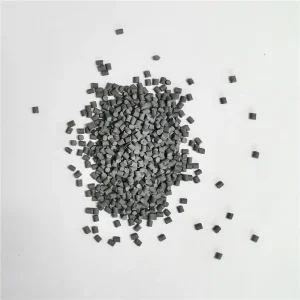
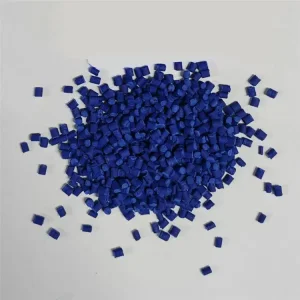
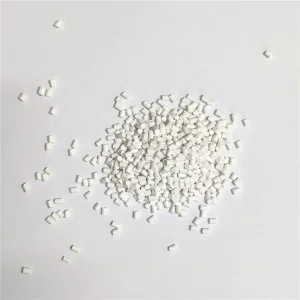
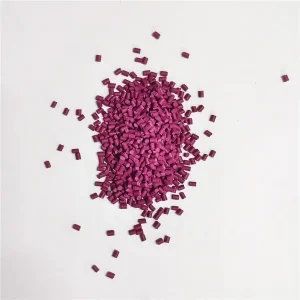
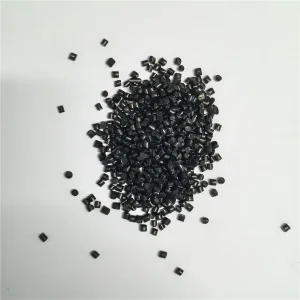
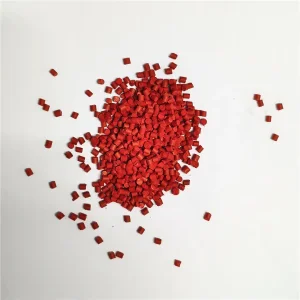
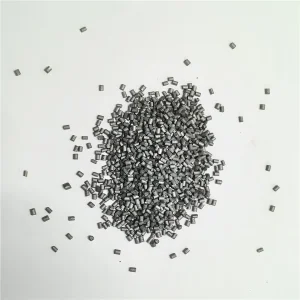
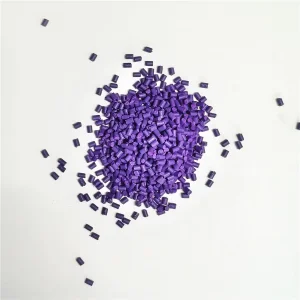
Analyzing the chemical dynamics, procurement requirements, and technological benchmarks across international polyolefin markets.
In the modern plastics processing ecosystem, Navy Blue Polyethylene (PE) Masterbatch represents one of the most technically demanding color concentrate formulations. Navy blue is not merely a single-pigment shade; it is a meticulously engineered chromatic balance achieved by compounding high-purity Alpha-Phthalocyanine Blue (Pigment Blue 15:1 / 15:3), Carbazole Dioxazine Violet (Pigment Violet 23), and ultra-fine High-Color Gas Carbon Black or Indanthrone Blue (Pigment Blue 60). Global polyolefin converters—spanning blown film extruders, rigid container blow molders, and rotational molding specialists—require navy blue masterbatch formulas that deliver absolute color consistency ($\Delta E < 0.5$ against CIELAB targets), extreme heat stability during high-shear extrusion, and complete freedom from pigment migration.
China has established itself as the world's primary epicenter for high-performance polyolefin masterbatch manufacturing. Driven by advanced chemical integration in the Yangtze River Delta cluster (specifically industrial hubs like Changzhou, Jiangsu), top-tier Chinese suppliers have transitioned from producing low-cost basic concentrates to manufacturing precision-engineered, high-concentration color and additive masterbatches. By leveraging state-of-the-art co-rotating twin-screw extruder technology, continuous loss-in-weight gravimetric dosing, and automated color-matching spectrophotometry, leading manufacturers like Changzhou Jiazhou Plastic Products Co., Ltd. provide B2B buyers across Europe, North America, Southeast Asia, and the Middle East with institutional-grade products that meet stringent international regulatory standards including EU REACH, RoHS 2.0, and US FDA food-contact directives.
Understanding carrier resin compatibility, rheology, thermal endurance, and anti-agglomeration mechanisms.
Matching the Melt Flow Index (MFI) of the masterbatch carrier resin with the end-use polymer is critical to avoid melt fracture, structural weakening, or phase separation.
Pigment particles naturally cluster into primary agglomerates. Advanced surface modification prevents clogging and streaks.
Navy blue pigments must resist degradation under high processing temperatures and intense outdoor ultraviolet exposure.
The table below provides engineering benchmark metrics for evaluating high-grade Chinese Navy Blue PE Masterbatch formulations:
| Property Parameter | Test Standard / Method | Technical Specification Value | Industrial Significance |
|---|---|---|---|
| Pigment Loading Rate | ISO 1183 Gravimetric | 30% – 50% High Concentration | Maximizes let-down ratio (LDR), reducing unit shipping and storage costs. |
| Melt Flow Index (MFI) | ASTM D1238 (190°C / 2.16 kg) | 12 – 30 g/10 min (Customizable) | Ensures homogeneous resin blending without causing die buildup or drag marks. |
| Color Difference ($\Delta E*$) | CIE L*a*b* D65/10° Spectrophotometer | ≤ 0.40 vs. Standard Target | Guarantees batch-to-batch visual identity across long production runs. |
| Filter Pressure Value (FPV) | EN 13900-5 (100 mesh filter screen) | ≤ 0.75 bar / g pigment | Prevents screen pack clogging during high-speed blown film processing. |
| Heat Resistance | DIN EN 12877-2 | 260°C – 290°C for 5 Minutes | Eliminates color fading or darkening during injection molding cycles. |
| Moisture Content | Karl Fischer Moisture Titration | < 0.08% (800 ppm) | Prevents pinhole defects, bubbles, and lamination voids in film extrusion. |
| Heavy Metal Compliance | ICP-OES / RoHS Directive 2011/65/EU | Pass (Pb, Cd, Hg, Cr VI non-detectable) | Meets strict global safety regulations for toy, packaging, and medical applications. |
How integrated industrial ecosystems in Changzhou deliver superior value, rapid lead times, and uncompromised quality.
Chinese manufacturers operate within dense polymer and pigment production hubs. Proximity to Sinopec/PetroChina resin refiners and organic pigment synthesis plants guarantees raw material security and stable cost control.
Equipped with co-rotating high-torque twin-screw extruders (L/D ratio 44:1 to 48:1), vacuum degassing, and underwater pelletizing systems, suppliers like Changzhou Jiazhou achieve throughput rates exceeding 1,500 kg/hour per line.
With immediate access to Shanghai and Ningbo ports, standardized products maintain a 7-to-10-day production lead time, backed by automated palletizing, stretch wrapping, and moisture-proof aluminum foil packaging.
The architectural resilience of China's masterbatch supply chain relies heavily on redundancy and digital quality control. In factories such as Changzhou Jiazhou Plastic Products Co., Ltd., raw materials undergo rigorous testing upon entry—including thermogravimetric analysis (TGA), Fourier-transform infrared spectroscopy (FTIR), and differential scanning calorimetry (DSC). By enforcing 100% digital trace-ability for every batch number, international buyers receive guaranteed consistency, eliminating color drift between container shipments.
Detailed operational protocols for integrating Navy Blue PE Masterbatch across diverse polyolefin manufacturing processes.
Used in heavy-duty shipping sacks, courier bags, express mailing envelopes, and agricultural greenhouse covers.
Technical Challenge: Avoiding dielectric breakdown during corona treatment and preventing pinholes or film tearing.
Recommended Solution: Use LDPE-based Navy Blue Masterbatch with a 1.5%–3.0% Let-Down Ratio (LDR) and particle size < 1 micron.
Applied in heavy-duty logistics crates, beverage bottle caps, waste bins, toolboxes, and automotive interior panels.
Technical Challenge: Minimizing differential mold shrinkage and warping in non-symmetrical molded parts.
Recommended Solution: Specially formulated non-nucleating phthalocyanine pigment complexes engineered with HDPE matrix resins.
Used in HDPE jerrycans, drums, cosmetic bottles, and Intermediate Bulk Containers (IBCs).
Technical Challenge: Resisting Environment Stress Cracking (ESCR) and maintaining chemical inertness against aggressive liquids.
Recommended Solution: Surfactant-free Navy Blue Masterbatch verified under ASTM D1693 ESCR testing protocols.
Ensuring seamless clearance through international customs and strict adherence to end-user health standards.
Procuring Navy Blue PE Masterbatch internationally requires strict alignment with chemical safety frameworks. Leading Chinese suppliers adhere to rigorous audit metrics:
Formulations are certified free of Substances of Very High Concern (SVHC) as updated under ECHA guidelines. Full registration documentation available for EU importers.
Pigment selection and carrier polymers meet strict extraction limits, allowing safe deployment in food wrapping films, direct food contact containers, and bottle caps.
Guaranteed total absence of heavy metals (Lead, Cadmium, Mercury, Hexavalent Chromium) and organic tin compounds, supporting toy packaging and consumer electronics extrusion.
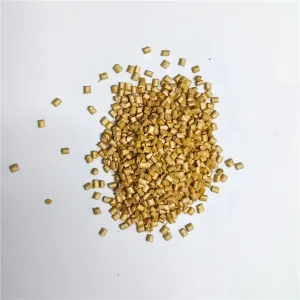
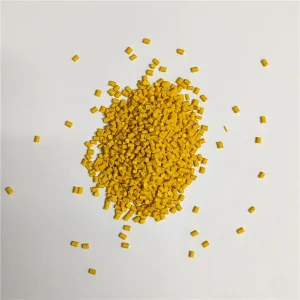
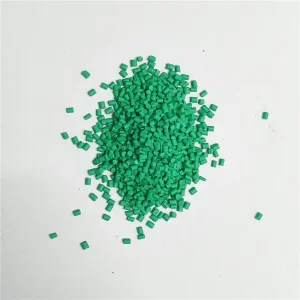
Discover our broader selection of high-concentration color masterbatch options for multi-purpose plastic manufacturing.
Expert answers to standard B2B inquiries regarding Navy Blue PE Masterbatch ordering, custom shade matching, and processing parameters.