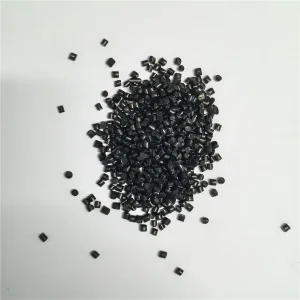
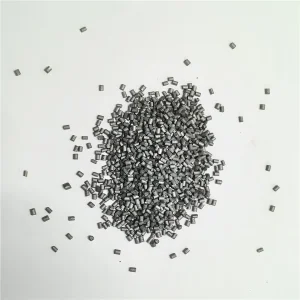
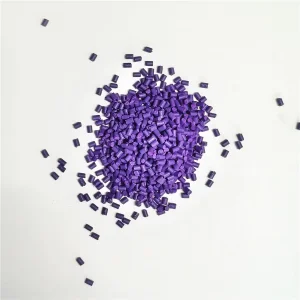
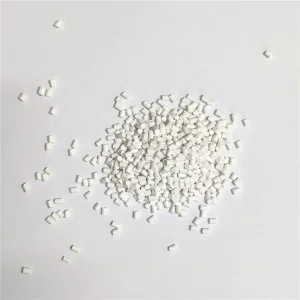
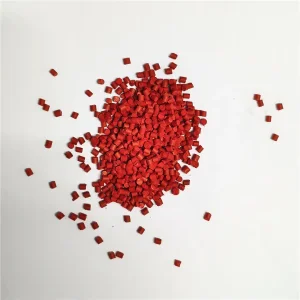
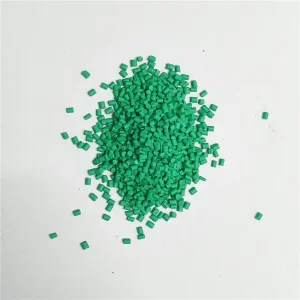
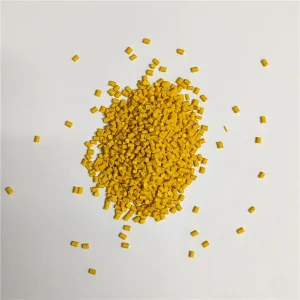
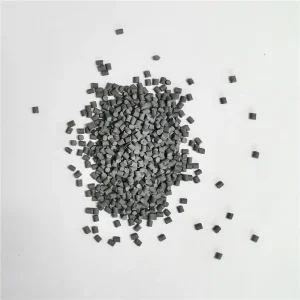
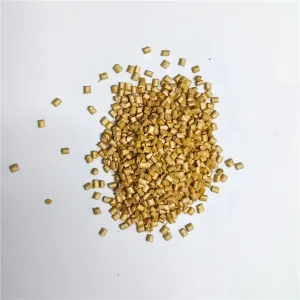
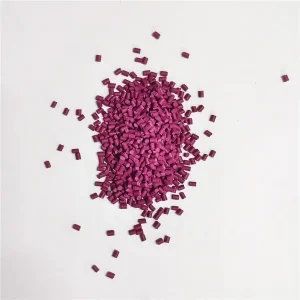
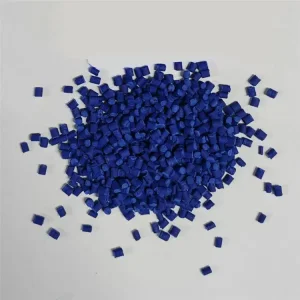
Explore our flagship masterbatch formulations engineered specifically for blown film, co-extrusion express mailers, and industrial packaging applications.
In the globalized logistics and e-commerce ecosystem, express mailers, courier envelopes, and heavy-duty shipping sacks represent critical infrastructure. The functional performance of polyolefin express films relies directly on carrier resin compatibility, pigment dispersion purity, and precise additive incorporation. As a premier China PE Express Film Masterbatch Manufacturer, Changzhou Jiazhou Plastic Products Co., Ltd. leverages 16 years of polymer compound engineering to optimize the melt-processing behavior of Linear Low-Density Polyethylene (LLDPE), Low-Density Polyethylene (LDPE), and High-Density Polyethylene (HDPE) film extrusions.
Express film production demands dual performance attributes: absolute visual opacity to safeguard privacy during package transit, alongside high mechanical toughness, tear resistance, and seal integrity. Achieving these properties at film thicknesses down to 35 microns requires masterbatch formulations engineered with nano-dispersed Rutile Titanium Dioxide ($TiO_2$), furnace carbon black of optimal structure, and balanced slip/anti-block additives.
A fundamental defect in co-extruded express films is visual banding, pinholing, or gel formation, which directly stems from Melt Flow Index (MFI) mismatches between the masterbatch carrier resin and the virgin base polymer matrix. Jiazhou's laboratory optimizes carrier resin selection by matching the Melt Flow Rate ($MFR_{190^\circ C / 2.16kg}$) of masterbatch to the precise shear rate experienced within modern multi-layer blown film dies (such as 3-layer ABA or 5-layer ABCDE co-extrusion setups).
When manufacturing co-extruded gray/black express bag film—where the inner layer features high carbon black content for opacity and security, while the outer layer features high whiteness for printability—our masterbatches maintain tight shear viscosity profiles. This prevents interfacial instability at the layer boundaries, ensuring superior film dart impact strength (ASTM D1709) and Elmendorf tear resistance (ASTM D1922).
Modern express mailers utilize 3-layer ABA co-extrusion. The outer 'A' layers require high-whiteness TiO2 masterbatch treated with organic silanes to resist weather yellowing and optimize ink adhesion. The core 'B' layer incorporates high-density black masterbatch with high structure furnace carbon black (P-type), blocking light transmission completely while maintaining economic viability.
High-speed automated express sorting centers generate extreme electrostatic charges. Jiazhou PE Express Film Masterbatches incorporate migratory Erucamide slip agents and permanent anti-static additives, adjusting the surface coefficient of friction (COF) to 0.18–0.25 and reducing surface resistivity to $10^9 - 10^{11} \ \Omega/\text{sq}$.
Navigating international chemical regulations is critical for global brand owners, parcel delivery conglomerates, and packaging converters. Products exported to North America, the European Union, and Southeast Asia must strictly adhere to complex environmental and safety directives. As a fully certified China PE Express Film Masterbatch Manufacturer, Changzhou Jiazhou enforces comprehensive raw material screening and laboratory validation.
| Regulatory Framework | Compliance Scope & Testing Protocol | Impact on Express Film Packaging |
|---|---|---|
| EU REACH (EC 1907/2006) | Screened for >230 Substances of Very High Concern (SVHC) via GC-MS and ICP-OES. | Guarantees non-toxic exposure during postal handling and recycling. |
| RoHS 2.0 Directive | Strict restriction of Heavy Metals (Pb, Cd, Hg, $Cr^{VI}$) & Flame Retardants (PBBs, PBDEs). | Protects municipal incinerators and circular economy recycling streams. |
| FDA 21 CFR 177.1520 | Food contact safety evaluation for polyolefin resins and color additives. | Ensures indirect safety when express mailers transport food items or cosmetics. |
| GRS 4.0 Certification | Global Recycled Standard trace validation for Post-Consumer Recycled (PCR) carriers. | Enables eco-friendly e-commerce mailers with up to 50% recycled content. |
Understanding that film processing equipment varies dramatically—from high-speed European extruders (such as Reifenhäuser or Alpine) to domestic multi-layer lines—our engineering team provides technical support tailored to local processing parameters. We assist clients with optimized temperature profiles, screen pack mesh selection (filtering up to 100 mesh without pressure spikes), and masterbatch addition ratios (typically 2% to 4% for color/opacity and 1% to 2% for functional slip/anti-static).
Located in Changzhou, Jiangsu Province—at the center of China’s advanced plastics manufacturing triangle—Changzhou Jiazhou Plastic Products Co., Ltd. benefits from direct integration with petrochemical refineries and pigment synthesis suppliers. This local supply chain ecosystem allows immediate access to premium low-viscosity LLDPE resins, titanium dioxide pigments, and specialized organic additives at optimal cost structures.
By eliminating multi-tier distributor markups and securing raw materials via long-term strategic contracts, we provide global B2B procurement officers with a distinct Total Cost of Ownership (TCO) advantage without compromising compounding quality.
Our 6,000m² facility operates co-rotating twin-screw compounding extruders engineered with high length-to-diameter ($L/D = 44:1$ to $48:1$) screw configurations. Specialized kneaders and mixing blocks impart intense shear stress, breaking pigment agglomerates down to primary particle sizes below 0.5 microns.
Equipped with loss-in-weight gravimetric feeders, our production lines achieve precise additive dosing with a tolerance of $\pm 0.2\%$. This ensures lot-to-lot consistency, preventing color variation during long packaging production runs.
For global procurement directors overseeing high-volume express packaging conversion, choosing the right masterbatch partner directly impacts line yield, scrap rates, and final product aesthetics. Below are the critical performance indicators evaluated by global tier-1 packaging converters during factory audits:
Measured according to EN 13900-5, an FPV below $1.5 \ \text{bar/g}$ guarantees complete pigment dispersion. Low FPV prevents filter screen blinding, reduces extruder backpressure, and eliminates thin-film tearing during high-speed blowing at speeds up to 120 m/min.
Utilizing X-Rite CIELAB spectrophotometers under D65 illuminant, masterbatch color tolerance is controlled within $\Delta E < 0.5$. This rigorous color consistency ensures uniform brand identity across international postal carrier fleets.
Extensive vacuum degassing during twin-screw compounding strips residual moisture and low-molecular volatiles. Moisture content controlled under 0.15% prevents bubble instability, surface fish-eyes, and void formation in blown film.
The flexible packaging industry is undergoing a structural transition driven by sustainability mandates, material down-gauging, and circular design principles. As a forward-thinking PE Express Film Masterbatch Manufacturer, Changzhou Jiazhou is driving R&D innovations across three key technological vectors:
Express film thicknesses are decreasing from traditional 60–70 micron structures to ultra-thin 30–40 micron films to reduce virgin resin usage and freight weight. Down-gauging demands significantly higher pigment concentration and dispersion quality, as color defects and light leakage become more pronounced at reduced thicknesses. Our high-loading formulations (up to 70% Rutile $TiO_2$ or 50% high-opacity carbon black) deliver full opacity in ultra-thin layers without compromising film tensile modulus.
With global regulations mandating 30%+ recycled plastic content in courier mailers, processing recycled PE feedstocks presents challenges such as variable melt flow indices, residual odors, and thermal degradation. Jiazhou’s specialized masterbatches integrate antioxidant complexes (Irganox 1010/Irgafos 168 thermal stabilizers) and odor-scavenging additives, enabling seamless processing of PCR resins while maintaining smooth surface aesthetics and puncture resistance.
Automated recycling triage centers utilize Near-Infrared (NIR) optical sorting to categorize post-industrial plastic waste. Standard carbon black masterbatches absorb NIR radiation, rendering black express bags invisible to optical sorters. Jiazhou offers specialized NIR-detectable black masterbatches formulated with non-absorbing black pigments, allowing automated recycling systems to identify and sort black polyolefin films efficiently.
Our PE Express Film Masterbatches are tailored to excel across diverse environmental conditions and structural requirements. The matrix below outlines optimal masterbatch grades, loading ratios, and targeted physical properties:
| Application Scenario | Recommended Masterbatch Grade | Typical Loading % | Key Performance Attribute |
|---|---|---|---|
| Co-Ex Courier Envelopes | PE White / Black Masterbatch Dual-Layer | 2.5% - 4.0% | High opacity, hot-melt seal compatibility, tear resistance. |
| Co-Ex Bubble Mailers | PE Silver / Color Masterbatch Series | 2.0% - 3.5% | Metallic luster, UV resistance, cushioning layer adhesion. |
| Heavy-Duty Cargo Bags | PE High-Concentration Black Masterbatch | 3.0% - 5.0% | Puncture strength, UV weatherability (ASTM G154 >1000 hrs). |
| Cold-Chain Stretch Film | PE Anti-Static / Anti-Block Masterbatch | 1.5% - 2.5% | Sub-zero toughness, static dissipation, cling control. |
The optimal carrier resin is a low-density polyethylene (LDPE) or linear low-density polyethylene (LLDPE) carrier with a Melt Flow Index (MFI) slightly higher than the base resin—typically between $10 \ \text{g/10min}$ and $20 \ \text{g/10min}$ at $190^\circ\text{C} / 2.16\text{kg}$. This ensures rapid melting and uniform dispersion throughout the matrix without lowering the overall tensile strength or puncture resistance of the blown film.
Opacity in thin films is achieved by selecting small primary particle size furnace carbon black (typically 18–25 nanometers) with high jetness and structure. When compounded on high-shear twin-screw extruders, the carbon black is dispersed down to primary aggregates, maximizing light absorption and preventing light leakage even at film thicknesses of 35 microns or below.
Modern high-speed blown film co-extrusion lines operate at elevated temperatures ($200^\circ\text{C}$ to $240^\circ\text{C}$) and high shear rates to maximize output. Thermal stability up to $260^\circ\text{C}$ ensures that organic pigments, TiO2 coatings, and functional slip additives do not undergo thermal degradation, discoloration, or gas generation, preventing pinholes and maintaining mechanical film strength.
Yes. We formulate customized masterbatches designed for PCR-rich resin matrices. These formulations incorporate primary and secondary antioxidants, heat stabilizers, and compatibilizers that bridge viscosity gaps between PCR and virgin PE, preventing premature polymer gelation during blown film extrusion.
Every production lot undergoes rigorous laboratory testing, including Melt Flow Rate (MFR) testing (ISO 1133), Filter Pressure Value (FPV) assessment (EN 13900-5), CIELAB Spectrophotometer color matching ($\Delta E < 0.5$), and moisture content analysis using Karl Fischer titration. Test reports (COA) are provided with every shipment.
Discover specialized color formulations engineered for plastic extrusion, blown film, and injection molding.