Engineered specifically for polyolefin drinking straw extrusion, blown film, and micro-injection molding applications with 260°C thermal stability.
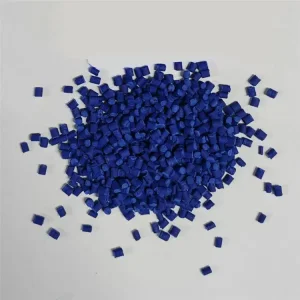
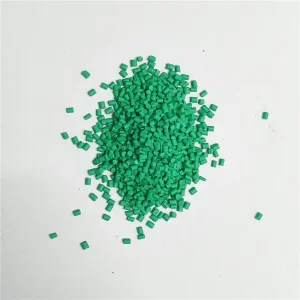
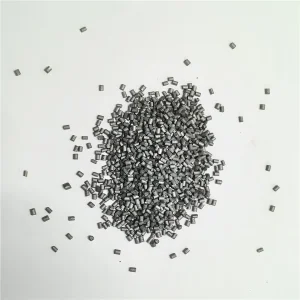
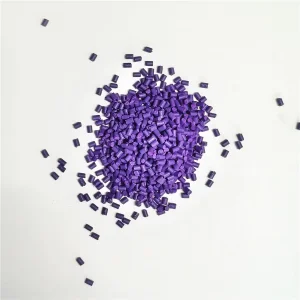
Analyzing rheological requirements, ultra-thin wall extrusion challenges, and international compliance shifts in the global plastic straw industry.
In high-speed drinking straw extrusion (exceeding 800 pieces/min), matching the Melt Flow Index (MFI) of the masterbatch carrier resin (typically 12-25 g/10min) with base LDPE, LLDPE, or HDPE resins is paramount to prevent melt fracture, wall thickness variation, and cut-end burring.
Straws come into direct contact with diverse liquid matrices ranging from cold acidic juices (pH 2.5) to warm dairy emulsions (60°C). Masterbatch pigment formulations must exhibit zero organic pigment migration, preventing chemical leaching under strict EN 1186 test protocols.
Using high-purity inorganic and organic pigments dispersed at sub-micron scales ensures a Filter Pressure Value (FPV) below 0.2 bar/gram. This prevents filter screen clogging and maintains unbroken production runs for continuous straw extrusion machinery.
Deep dive into additive physics, dispersion technology, and carrier selection engineered by Changzhou Jiazhou Plastic Products Co., Ltd.
The choice of carrier resin directly determines the compatibility between the color masterbatch and the virgin polymer matrix. For thin-walled plastic straws (wall thickness between 0.15mm to 0.30mm), a mis-matched carrier causes severe delamination and structural brittleness.
Jiazhou utilizes low-molecular-weight Linear Low-Density Polyethylene (LLDPE) and Low-Density Polyethylene (LDPE) copolymer matrices with tightly controlled molecular weight distribution. This guarantees instant homogenization during single-screw extrusion without requiring excessive back pressure.
Pigment agglomerates are the primary cause of pinholes, weak spots, and color streak defects in extruded straws. Through multi-stage co-rotating twin-screw extruders featuring specialized kneading elements, our pigment particles are de-agglomerated to particle sizes below 1 micron, enveloped by dispersing agents such as low-molecular PE wax.
| Masterbatch Grade | Pigment Loading (%) | MFI (190°C/2.16kg) | Heat Resistance (°C) | Light Fastness (Blue Wool Scale) | Primary Application |
|---|---|---|---|---|---|
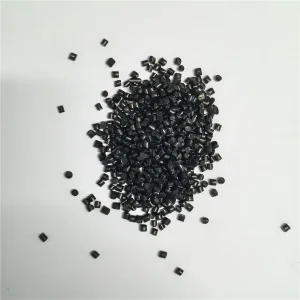
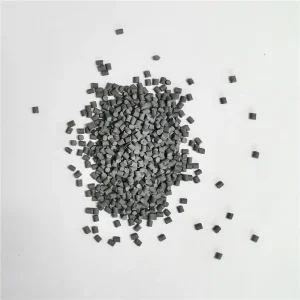
| PE Black Masterbatch | 40% - 50% Carbon Black | 15 - 25 g/10min | 260°C | Grade 8 | Boba Straws, Industrial Pipe |
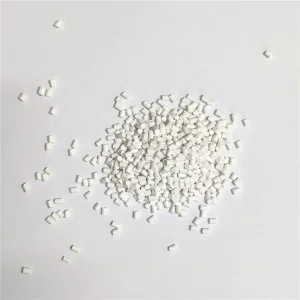
| PE White Masterbatch | 60% - 70% TiO2 (Rutile) | 10 - 20 g/10min | 260°C | Grade 7-8 | U-Shaped Milk Carton Straws |
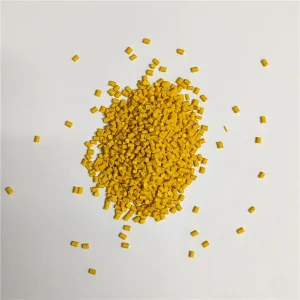
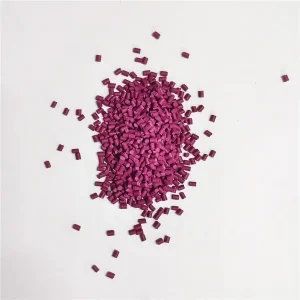
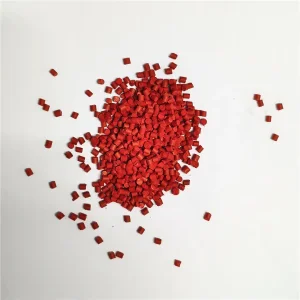
| PE Color Series (Blue/Red/Yellow) | 35% - 50% Organic Pigments | 18 - 30 g/10min | 240°C - 260°C | Grade 6-7 | Beverage Straws, Blown Film |
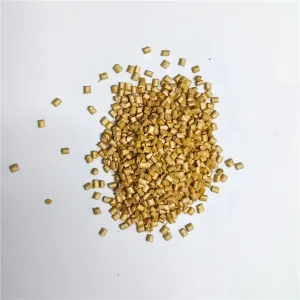
| PE Specialty Luster (Gold/Silver) | 25% - 40% Pearlescent/Metallic | 12 - 22 g/10min | 240°C | Grade 6 | Premium Cocktail Straws |
Providing tailored color masterbatch formulations across diverse polyolefin manufacturing sectors worldwide.
Specifically tailored for straight straws, flexible corrugated straws, U-shaped milk box straws, and wide-diameter Boba tea straws. Delivers vibrant hues without color transfer or structural brittleness under chilling conditions.
High-opacity white and black masterbatches optimized for multi-layer co-extrusion blown film lines. Provides high opacity, tear resistance, and anti-puncture strength for express courier bags and agricultural mulch films.
Formulated for HDPE municipal conduits, agricultural drip irrigation tubing, and daily consumer plastic injection molding, featuring elevated UV weather resistance and thermal degradation control.
Our masterbatches are designed for let-down ratios (dosage) between 1.0% to 4.0% depending on the wall thickness and opacity demand. This low dosage capability dramatically reduces raw material consumption per straw unit while preserving mechanical rigidity.
Rigorous international certification frameworks verifying food contact safety, organoleptic neutrality, and zero hazardous substances.
Meets strict U.S. Food and Drug Administration specifications for olefinic polymers intended for direct food and beverage contact, covering total extractable fraction limits.
Compliant with European plastic materials regulation for food contact, passing overall migration testing (OM2) in food stimulants including 3% acetic acid and 10% ethanol.
Full compliance with Chinese National Food Safety Standards for plastic resins and additives used in food contact applications.
Drinking straws must not impart off-flavors or odor to beverages. Changzhou Jiazhou Plastic Products Co., Ltd. implements a multi-stage high-vacuum degasification process during twin-screw compounding to eliminate residual volatile organic compounds (VOCs), low-molecular waxes, and monomeric residues. Every production lot undergoes sensory panel evaluation to ensure absolute organoleptic neutrality.
Changzhou Jiazhou Plastic Products Co., Ltd. — 16 Years of Precision B2B Masterbatch Manufacturing Excellence.
Established in 2010, Changzhou Jiazhou Plastic Products Co., Ltd. operates a modern 6,000m² manufacturing plant located in the strategic industrial center of Changzhou, Jiangsu Province, China. Equipped with state-of-the-art continuous twin-screw compounding lines, gravimetric feeder systems, and underwater pelletizing machinery, Jiazhou delivers consistent quality across global export markets.
Maximizing ROI and operational efficiency for international plastic processors through engineered masterbatch solutions.
By increasing pigment concentration up to 70% while optimizing carrier fluidity, processors reduce shipping weight, storage footprints, and let-down ratios, lowering total raw material cost per metric ton of extruded straws.
Sub-micron pigment dispersion minimizes die lip buildup (drooling) and prevents wall thickness fluctuations. This leads to a measurable decrease in extrusion scrap rates from ~4% down to under 0.8%.
Full color matching support based on Pantone, RAL, or physical target samples. Jiazhou provides lab-scale test samples within 48 hours for rapid line validation prior to commercial orders.
Explore our full line of color and specialty functional masterbatches supplied directly from our Changzhou factory.
Expert responses to critical engineering, food safety, and global purchasing queries regarding PE plastic straw masterbatch.
For standard drinking straw wall thicknesses (0.18mm to 0.25mm), a let-down ratio of 1.5% to 3.0% is recommended. For high-opacity white or deep metallic shades (gold/silver), dosage can be adjusted up to 4.0% without altering the MFI or mechanical elasticity of the extruded straw.
All masterbatches engineered for food contact applications utilize pigments registered on the EU Positive List and FDA 21 CFR 177.1520. Every shipment undergoes heavy metal analysis (RoHS), phthalate-free verification, and overall migration testing prior to issuing the Certificate of Analysis (COA).
Rough surfaces (sharkskin effect) occur when carrier resins have incompatible melt viscosity compared to the primary polymer matrix. Jiazhou matches the carrier resin MFI (15-25 g/10min) and incorporates internal fluoroelastomer processing aids (PPA) to ensure smooth die exit and pristine surface gloss.
While PE carrier masterbatches exhibit partial compatibility with PP at low let-down ratios (< 2%), we strongly advise using carrier-matched formulations. Jiazhou produces specialized PP-carrier and PLA/PBAT bio-carrier masterbatches to guarantee maximum inter-molecular binding and thermal stability.
Our standard Minimum Order Quantity (MOQ) for custom color formulations is 500 kg. Custom color matching (Pantone/RAL target) requires 48 hours for laboratory sample synthesis, and commercial production lead time is consistently within 15 business days.
Masterbatches should be stored in their original sealed moisture-barrier bags in a cool, dry, well-ventilated warehouse away from direct sunlight. Under proper storage conditions (temperature < 35°C, humidity < 60%), the shelf life is 24 months from the date of manufacture.