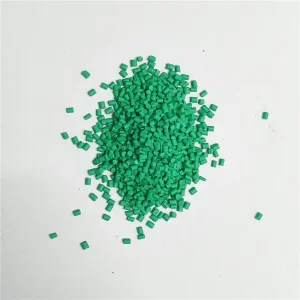
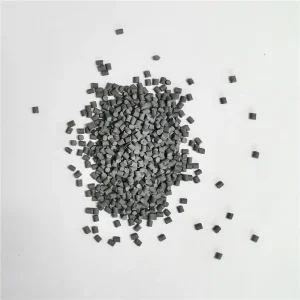
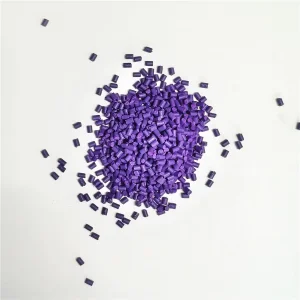
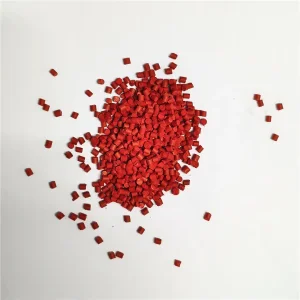
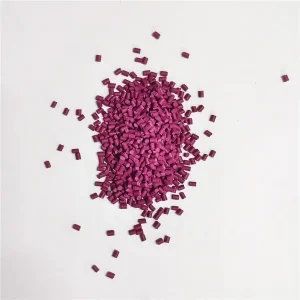
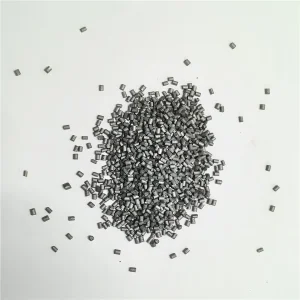
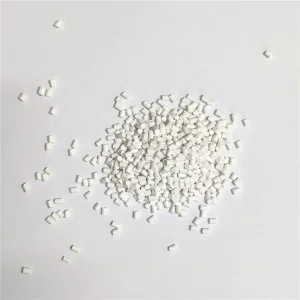
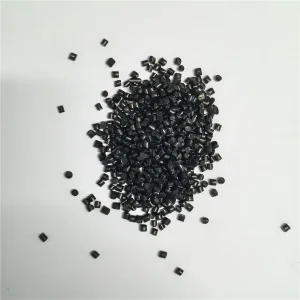
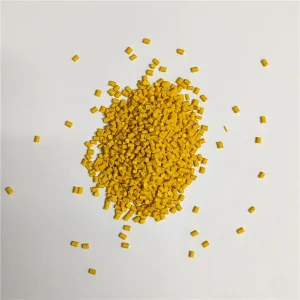
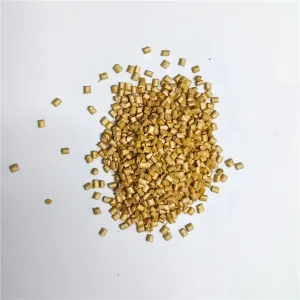
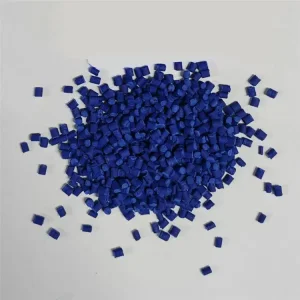
Engineered specifically for high-shear profile extrusion, blown film, and technical molding applications. High pigment load, thermal stability up to 260°C–300°C, and superior dispersion kinetics.
The global polymer extrusion industry is experiencing a structural transition toward high-performance, weather-stabilized, and aesthetically consistent thermoplastic profiles. Among polyolefins, Polyethylene (PE) profile extrusion masterbatch represents a critical technological node. Driven by expanding applications in civil engineering, architectural wood-plastic composites (WPC), municipal sub-surface drainage, microduct telecommunications, and agricultural drip irrigation networks, global demand for high-concentration PE masterbatches has reached unprecedented heights.
Unlike continuous blown film extrusion or cycle-based injection molding, continuous profile extrusion subjects colorants and functional additive concentrates to unique hydrodynamic stress profiles. The process demands exact melt flow index (MFI) matching between the carrier resin matrix and the base polymer substrate (HDPE, LLDPE, or LDPE), alongside flawless pigment dispersion kinetics to prevent die drool (extrusion necking), micro-void formation, and mechanical stress concentration points across complex profile cross-sections.
As multinational procurement teams evaluate global supply chains, China has consolidated its standing as the primary manufacturing epicenter for specialty masterbatch formulations. China-based manufacturers leverage backward-integrated petrochemical chains, state-of-the-art co-rotating twin-screw compounding lines, and specialized micronization facilities to produce masterbatches that comply with stringent REACH, RoHS, and ISO 9001:2015 frameworks while offering significant total cost of ownership (TCO) optimization.
Achieving uniform wall thickness, flaw-free surface finish, and color consistency in complex polyethylene profiles requires meticulous masterbatch formulation engineering. When introducing masterbatch pellets into a primary PE extrusion matrix, several physical-chemical parameters govern processing efficiency:
The Melt Flow Index (MFI) of the PE masterbatch carrier resin must be engineered slightly higher than that of the matrix resin (typically 4–12 g/10min at 190°C/2.16kg for profile-grade HDPE). This differential guarantees rapid melting and micro-dispersion under extrusion shear without lowering the flexural modulus or tensile strength of the extruded profile.
Sub-micron pigment particles (such as Rutile TiO₂ or Low-Structure Carbon Black) are pre-treated with specialized low-molecular-weight PE waxes and coupling agents. This eliminates agglomeration, reduces Pressure Filter Value (PFV < 0.5 bar/g), and prevents die lip buildup during continuous multi-day production runs.
Formulated with heat-stabilized organic pigments and inorganic oxides, our masterbatches endure processing temperatures up to 260°C–300°C without thermal degradation. High molecular weight UV absorbers (HALS) ensure zero dye migration or surface blooming under intensive UV exposure.
| Performance Parameter | Inorganic Color Series | Organic Color Series | High-Opacity White (TiO₂) | High-Jetness Black |
|---|---|---|---|---|
| Carrier Matrix Type | LLDPE / LDPE / HDPE Grade | LLDPE / LDPE Grade | Virgin LLDPE Carrier | HDPE / LLDPE Carrier |
| Pigment Loading (%) | 40% – 60% | 20% – 40% | 50% – 70% Rutile TiO₂ | 35% – 50% Carbon Black |
| Heat Fastness (°C) | 280°C – 300°C | 240°C – 260°C | 280°C – 300°C | 280°C – 300°C |
| Light Fastness (Wool Scale) | Grade 7 – 8 | Grade 6 – 7 | Grade 8 (Max) | Grade 8 (Max) |
| Dispersion Index (PFV) | < 0.8 bar/g | < 1.2 bar/g | < 0.3 bar/g | < 0.5 bar/g |
| Weather Resistance | Extreme Weatherability | Moderate to High UV | High UV Blocking | Maximum UV Absorbing |
Global OEMs and plastic profile extruders increasingly rely on Chinese manufacturing partners for their masterbatch procurement. This trend is driven by China's comprehensive industrial clusters, advanced automation, and sophisticated quality assurance ecosystems. Chinese masterbatch leaders offer several structural advantages:
Direct integration with regional petro-chemical complexes (Sinopec, PetroChina) guarantees steady access to high-grade virgin LLDPE/HDPE carrier resins. Coupled with localized micron-scale pigment production, Chinese plants maintain strict raw material consistency and competitive cost baselines.
Utilizing high-torque, co-rotating twin-screw extruders equipped with loss-in-weight gravimetric dosing and underwater pelletizing technology. This process guarantees narrow pellet size distribution, zero dust contamination, and uniform pigment dispersion across high-volume production runs.
Every batch undergoes computer-controlled spectrophotometric color matching (CIELAB system, Delta E < 0.3 tolerances), melt flow rate verification, moisture analysis (< 0.05%), and real-time screen-pack pressure testing to ensure flawless downstream performance.
Polyethylene profile extrusion spans a wide variety of industrial and architectural end-uses. Custom PE color and additive masterbatch formulations are engineered to meet specific localized operational environments:
Extruded HDPE/WPC profiles require specialized brown, grey, and natural earth-tone masterbatches containing HALS light stabilizers and antioxidants to prevent chalking, color fading, and polymer chain scission in outdoor decking installations.
HDPE micro-irrigation profiles and agricultural channels demand high-opacity carbon black masterbatch (20–25nm particle size) to provide maximum opacity, protecting against thermal degradation and root-zone algal bloom.
Large-diameter corrugated HDPE pipe profiles rely on high-dispersion black and yellow identification striping masterbatches. These must maintain complete color integrity under subterranean chemical exposure and soil overburden stress.
Multi-duct fiber optic microduct profiles utilize vibrant, non-migrating color masterbatches (blue, orange, green, red, silver) for color coding, combined with low-friction slip additives to facilitate ultra-smooth cable pulling.
When establishing international supplier relationships with Chinese masterbatch manufacturers, procurement directors must systematically evaluate technical qualifications to guarantee long-term supply chain reliability:
Ensure masterbatch formulations strictly adhere to international environmental frameworks including EU REACH (SVHC compliance), RoHS 3 (Directive 2015/863), FDA 21 CFR (for food-contact profiles), and Heavy Metal-Free certification (EN 71-3).
Require suppliers to issue a Certificate of Analysis (CoA) for every shipment detailing MFI tolerance (±10%), moisture content (<0.05%), Delta E color spectrum variance (<0.5 against master standard), and screen pack pressure filter values.
Industrial masterbatch shipments must be packed in heavy-duty moisture-proof aluminum foil lined valve bags (25kg) or 1000kg bulk jumbo bags, palletized with stretch-wrap to prevent moisture pickup during multi-week ocean transport.
The masterbatch sector is entering a phase of rapid innovation driven by circular economy mandates and technological advancements. Key development trajectories in Chinese masterbatch manufacturing include:
Explore our specialized masterbatch grades engineered for plastic extrusion, blown film, and injection molding factories worldwide.
For standard profile extrusion, the typical let-down ratio ranges between 1.5% to 4.0% by weight, depending on the pigment concentration in the masterbatch and the target wall thickness of the profile. High-concentration white (70% TiO₂) or black (50% Carbon Black) formulations often achieve complete opacity at LDRs as low as 1.0% to 2.0%, minimizing additive costs while retaining the virgin resin's mechanical properties.
Die buildup is prevented by strictly controlling the pressure filter value (PFV < 0.5 bar/g) through advanced twin-screw filtration during masterbatch production. Additionally, we incorporate low-molecular-weight processing aids and fluoropolymer fluoropolymer processing additives (PPA) into our PE masterbatches, which coat the interior die surface and eliminate melt fracture and shear-induced plate-out.
Using an incompatible carrier resin (such as PP or PS) in a PE profile extrusion matrix creates phase separation, micro-cracks, and severe impact strength reduction. Our masterbatches utilize linear low-density polyethylene (LLDPE) or fractional melt HDPE carriers that match the melt temperature and crystallizability of your substrate polymer, ensuring homogenous melt integration and uniform structural integrity.
All exported masterbatch shipments are accompanied by comprehensive compliance documentation, including EU REACH SVHC declarations, RoHS 3 chemical analysis, ISO 9001:2015 certificates of conformity, and Technical Data Sheets (TDS) with SDS documentation. Food-contact grades also include FDA 21 CFR 177.1520 compliance reports.