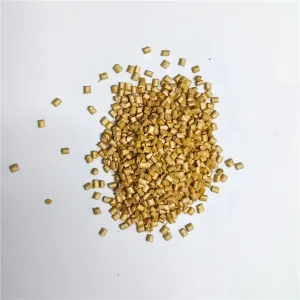
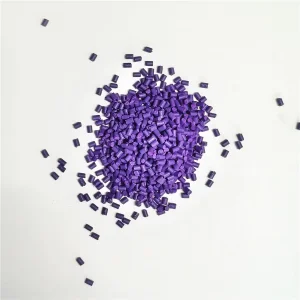
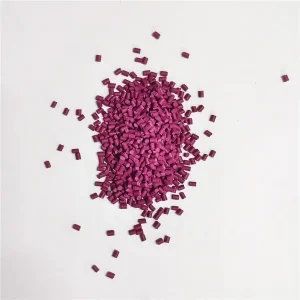
Precision-engineered colorants and performance additives designed for extreme heat stability & seamless extrusion.
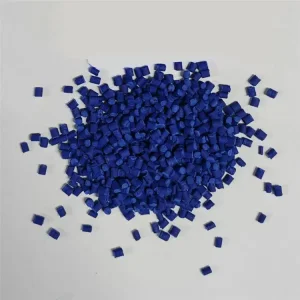
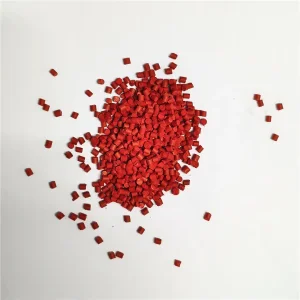
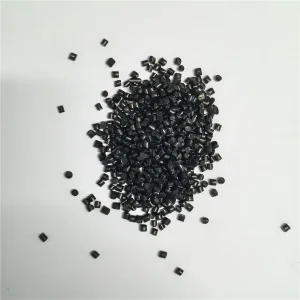
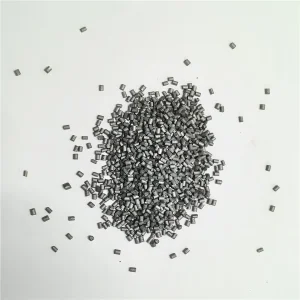
Understanding the molecular interaction between copper phthalocyanine pigments, low-density polyethylene (LDPE/LLDPE) carriers, and process dispersants is critical for achieving zero-defect plastic manufacturing.
Sapphire blue masterbatch predominantly utilizes Phthalocyanine Blue BGS (Pigment Blue 15:3), a beta-modification copper complex offering exceptional thermodynamic stability. It withstands processing temperatures up to 300°C without crystal phase conversion or color drift, ensuring extreme tinting strength.
To eliminate melt fracture and interfacial tension during high-speed extrusion, modern Chinese factories match the Melt Flow Index (MFI) of the virgin PE carrier resin (typically 20g–40g/10min at 190°C/2.16kg) to seamlessly disperse within target virgin or recycled polymer matrices.
Utilizing high-grade PE waxes and zinc stearate secondary lubricity systems, primary pigment agglomerates (typically 10–50 µm) are broken down via intense shear into sub-micron primary particles (<0.5 µm), preventing die buildup and screen pack clogging.
China's masterbatch manufacturing ecosystem in regions like Jiangsu (Changzhou), Zhejiang, and Guangdong delivers unprecedented cost efficiencies, technological sophistication, and end-to-end quality guarantees.
Leading Chinese facilities employ triple-flight co-rotating twin-screw compounders equipped with side-feeders and dynamic degasification zones. This setup ensures homogeneous melt mixing without thermal degradation of organic colorants.
Gravimetric feeding systems continuously measure weight reduction per unit time, maintaining formulation precision within ±0.2% tolerance. This guarantees color consistency across multi-ton shipment orders.
Proximity to major petrochemical complexes (Sinopec, PetroChina) and domestic synthesis plants for organic pigments lowers freight overheads, enabling Chinese suppliers to offer competitive FOB/CIF pricing.
Compare physical properties, compliance metrics, and processing thresholds to make informed procurement decisions for your manufacturing lines.
| Performance Parameter | Standard Commercial Grade | Premium Industrial / Food-Contact Grade | Testing Standard Method |
|---|---|---|---|
| Carrier Resin Type | Recycled / Off-spec LLDPE | 100% Virgin LLDPE / HDPE (MI: 20-30) | ASTM D1238 / ISO 1133 |
| Pigment Loading Concentration | 20% - 30% PB 15:3 | 40% - 50% PB 15:3 (High Density) | TGA (Thermal Gravimetric Analysis) |
| Filter Pressure Value (FPV) | ≤ 2.5 bar/g | ≤ 0.8 bar/g (Ultra-clean melt) | EN 13900-5 (Mesh filter test) |
| Heat Resistance Temperature | 220°C - 240°C | 260°C - 300°C (No shade change) | DIN EN 12877-2 |
| Lightfastness Rating | Grade 5 - 6 | Grade 7 - 8 (Maximum UV stability) | ISO 105-B02 (Xenon Arc Lamp) |
| Weatherability & Migration | Grade 3 - 4 | Grade 5 (Zero blooming / non-migration) | ISO 4892-2 Accelerated Weathering |
| Regulatory Approvals | Basic RoHS | FDA 21 CFR 178.3297, REACH, EU 10/2011 | SGS / TÜV Rheinland Audited |
Sapphire Blue PE masterbatch is customized for diverse processing technologies, serving high-consequence industries globally.
Heavy-duty agricultural films, pond liners, and greenhouse covers demand severe UV exposure resistance and chemical inertness. Chinese suppliers formulate Sapphire Blue masterbatch with Hindered Amine Light Stabilizers (HALS) and antioxidant synergies (AO 1010/168). This prevents polymer chain degradation, photo-oxidation, and color fading during multi-year outdoor usage.
For beverage bottle caps, crates, and consumer cosmetics packaging, color shade consistency ($\Delta E < 0.3$) and dimensional stability are paramount. Premium Sapphire Blue masterbatches feature zero organic filler content to eliminate warpage, uneven shrinkage, and stress cracking in fast-cycle high-cavity injection molds.
High-molecular-weight HDPE blow molding applications require masterbatch pellets with excellent melt strength and environmental stress crack resistance (ESCR). Sapphire Blue masterbatch ensures complete opacity, shielding light-sensitive industrial chemicals while providing vibrant branding identity.
Thin gauge blown films (down to 15 microns) require ultra-low Filter Pressure Values (FPV) to prevent film pinholes or bubble instability. Sapphire Blue masterbatch formulated with micro-milled pigments ensures continuous, break-free high-speed extrusion line runs.
Leading Chinese manufacturers deploy state-of-the-art laboratory instrumentation to validate technical parameters before dispatch.
Using Datacolor spectrophotometers under D65, A, and F11 illuminants, color coordinates ($L^*, a^*, b^*$) are measured against master plaques to ensure strict batch-to-batch color matching.
Extrusion melt viscosity is analyzed via automated MFI testers to verify that addition of masterbatch does not alter the shear behavior or cycle time of client machinery.
TGA testing quantifies absolute inorganic content, active organic pigment loading, and moisture level, protecting buyers against diluted formulations.
A step-by-step roadmap for overseas procurement managers to mitigate quality risks, negotiate commercial terms, and establish reliable supply chains.
Always request a 1kg to 5kg pilot sample for trail runs. Perform film blowing or injection molding under full operating temperature profiles to check for screw drag, smoke generation, or streak defects.
Mandate batch-specific COAs detailing MFI, density, FPV value, and moisture content (must be <0.15% to prevent steam void voids during molding).
Ensure suppliers use heavy-duty PE inner liners combined with aluminum foil barrier bags or PP woven outer bags on fumigated ISPM-15 wooden pallets to survive sea transport.
Addressing critical technical queries from plastic molders, compounding engineers, and global purchasing agents.
Explore our extensive range of high-concentration colorants, metallic shades, and engineering masterbatches.