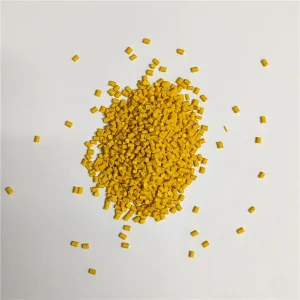
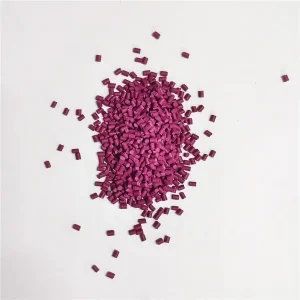
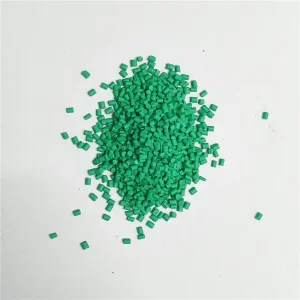
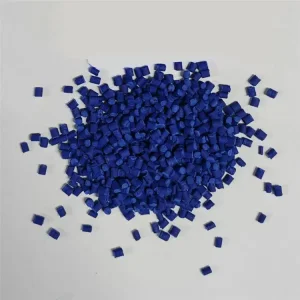
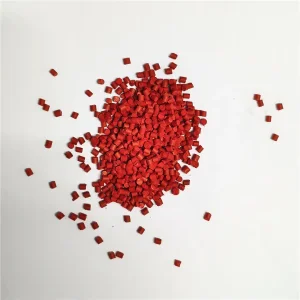
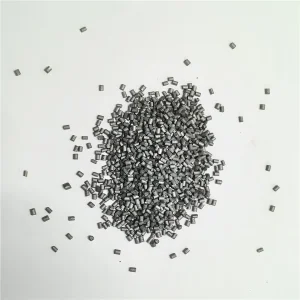
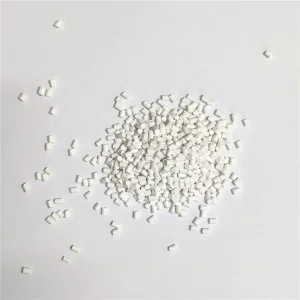
Explore our top-tier PE color masterbatches optimized for thermal stability, non-migration, and flawless melt dispersion in continuous thermoforming lines.
In modern polymer processing, thermoforming represents one of the fastest-growing converters of polyolefins, specifically High-Density Polyethylene (HDPE), Linear Low-Density Polyethylene (LLDPE), and specialized Low-Density Polyethylene (LDPE) resins. The global demand for thermoformed rigid containers, clamshell trays, industrial dunnage, and barrier packaging requires raw material suppliers to provide colorants and additive systems that maintain absolute rheological integrity under extreme biaxial stretching.
As premier **China thermoforming PE masterbatch companies & suppliers**, advanced manufacturers have shifted from traditional batch compounding to continuous, high-shear twin-screw extrusions with automated gravimetric dosing. Thermoforming is uniquely sensitive to melt elasticity, Melt Flow Index (MFI) variance, and microscopic dispersion defects. A minor agglomerate of pigment or filler can initiate stress crystallization, causing localized wall-thinning, pin-holing, or container collapse during deep-draw vacuum forming.
This comprehensive technical guide explores how top-tier Chinese chemical engineers optimize polyethylene masterbatches to support high-speed rotary thermoforming lines, meet global compliance standards (FDA, EU 10/2011, REACH), and reduce Total Cost of Ownership (TCO) for global plastic converters.
Formulated using organic and inorganic pigments engineered to withstand prolonged heat exposure in sheet extruders without thermal degradation, shade shifting, or VOC release.
Precision MFI matching between carrier resins (LLDPE/HDPE) and matrix polymers prevents melt fracture, die build-up, and phase separation during sheet formation.
High molecular weight carrier systems prevent surface blooming, dye migration, and plate-out on expensive thermoforming molds and silicone plug assists.
Unlike standard injection molding where shear rates are elevated and mold filling is driven by high hydraulic pressure, sheet thermoforming relies on heating an extruded plastic sheet past its Vicat softening point and drawing it into a cavity via pneumatic pressure or vacuum. Consequently, the masterbatch introduced into the extruder must not compromise the **sag resistance** or **melt strength** of the base PE resin.
Leading Chinese suppliers like Changzhou Jiazhou Plastic Products Co., Ltd. utilize narrow molecular weight distribution (MWD) metallocene LLDPE or high-density PE carriers. The selection of carrier resin dictates the final mechanical parameters of the thermoformed sheet:
| Masterbatch Carrier Type | Melt Flow Index (190°C/2.16kg) | Density (g/cm³) | Primary Application Scenario | Key Advantage in Thermoforming |
|---|---|---|---|---|
| Metallocene LLDPE (mLLDPE) | 4.0 – 12.0 g/10min | 0.918 – 0.924 | Deep-draw food packaging trays, flexible-rigid lids | Superior impact resistance, zero pin-holing, pristine clarity |
| High-Density PE (HDPE) | 1.0 – 4.0 g/10min | 0.950 – 0.962 | Industrial dunnage, heavy-gauge automotive sheets | High structural rigidity, high heat deflection temperature (HDT) |
| Functionalized PE Copolymer | 8.0 – 20.0 g/10min | 0.930 – 0.945 | Multi-layer barrier sheets (PE/EVOH/PE) | Enhanced tie-layer adhesion, prevents delamination under vacuum |
| Ultra-High Dispersion CaCO3/PE | 0.8 – 2.5 g/10min | 1.40 – 1.80 | Cost-reduction rigid sheets, clamshell packaging | Accelerates cycle cooling times by up to 18%, lowers carbon footprint |
Achieving uniform opacity and color depth in deep-draw thermoforming demands high pigment concentrations without particle agglomeration. For instance, in White PE Masterbatches engineered for dairy tubs, titanium dioxide ($\text{TiO}_2$) loading ranges from 50% to 70% by weight. To prevent optical streaks during sheet orientation, $\text{TiO}_2$ particles are surface-treated with hydrophobic silanes and alumina-silica coatings, preventing moisture absorption and micro-voiding.
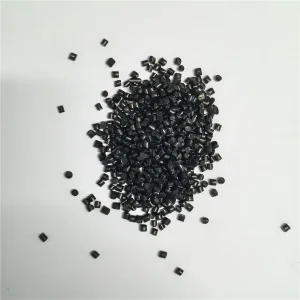
Similarly, Carbon Black masterbatches for automotive trays utilize P-type or E-type furnace blacks with particle sizes between 18nm and 25nm, ensuring maximum UV stability, high jetness, and antistatic performance when coupled with conductive additives.
Discover how Chinese B2B masterbatch manufacturers leverage automated processing, advanced colorimetry, and localized petrochemical integration to provide unmatched value globally.
Multi-component gravimetric feeders feed twin-screw co-rotating extruders, adjusting pigment-to-carrier ratios dynamically to ensure $\Delta E < 0.30$ batch consistency.
Located within major Yangtze River Delta industrial clusters (Changzhou, Jiangsu), factories enjoy direct pipeline access to top-grade PE resins and raw pigments.
Streamlined customs clearance and proximity to Shanghai/Ningbo ports allow customized thermoforming masterbatches to ship worldwide within 10 to 15 days.
Global procurement teams sourcing **China thermoforming PE masterbatch** face shifting regulatory frameworks across North America, the European Union, and Asia-Pacific. Environmental sustainability, circular economy directives, and food-contact safety now drive purchase specifications alongside unit price.
Precision-formulated masterbatches serving rigid, flexible, and structural thermoforming applications globally.
Thermoformed PE trays for meat, poultry, and frozen produce require low-temperature impact strength and anti-fog performance. Specialized masterbatch compounds incorporate internal slip and anti-static additives, preventing sheet sticking during denesting in automated packaging lines.
Extruded HDPE sheets with thicknesses up to 10mm are thermoformed into structural transport totes and agricultural containers. Carbon Black masterbatches with high jetness and Hindered Amine Light Stabilizers (HALS) ensure over 10 years of outdoor UV endurance.
Formulated in Class 100,000 cleanrooms using medical-grade pigments. Guaranteed non-cytotoxic, compatible with Gamma-ray and Ethylene Oxide (EtO) sterilization without discoloration or embrittlement.
High-filler (CaCO3/PE) masterbatches engineered for ultra-thin wall vacuum forming. Enhances sheet stiffness, reduces heating cycle time, and optimizes raw material cost for disposable agricultural trays.
To uphold the highest E-E-A-T (Experience, Expertise, Authoritativeness, Trustworthiness) guidelines, verified Chinese masterbatch suppliers execute a rigorous 5-stage quality assurance process before any lot is released for dispatch:
Select from our certified high-concentration masterbatches designed for thermoforming, injection molding, blown film, and sheet extrusion.
Clear, authoritative technical answers to common queries faced by procurement engineers and plastic converters sourcing PE thermoforming masterbatch from China.
The recommended let-down ratio (LDR) typically ranges between 1.0% and 4.0% by weight, depending on the pigment concentration and sheet thickness. For high-opacity white masterbatches (e.g., 60-70% TiO2 loading), an LDR of 2.0% to 3.0% is sufficient for deep-draw packaging trays. For color masterbatches in thick industrial sheet extrusion, 1.5% to 2.5% guarantees uniform color intensity without affecting sheet melt strength.
Pin-holing and micro-voiding during sheet stretching occur when pigment agglomerates or un-melted filler particles create localized stress concentrations. Leading Chinese suppliers utilize sub-micron pigment grinding and high-dispersion metallocene LLDPE carriers with Filter Pressure Values (FPV) < 0.8 bar/g, ensuring homogenous elongation under vacuum or plug-assist drawing.
Yes. Custom PE masterbatches formulated for food contact comply strictly with FDA 21 CFR 177.1520 and EU Regulation 10/2011. They are compounded using heavy-metal-free organic pigments, high-purity titanium dioxide, and non-migratory stabilization systems, tested regularly via certified third-party labs (SGS, Intertek).
While PE carrier masterbatches are compatible in minor amounts (under 2% LDR) with PP without causing structural delamination, it is best practice to use a universal polyolefin carrier or matched PP carrier masterbatch if thermoforming temperatures exceed 230°C. For co-extruded multi-layer PE/PP sheets, PE masterbatches function exceptionally well in PE surface layers.
Custom spectrophotometric color matching (matching target RAL, Pantone, or physical plastic samples) takes 2 to 4 business days. Once approved, production and dispatch of full container loads (20ft/40ft FCL) take approximately 7 to 12 working days from our Changzhou manufacturing facility.
Incorporating ultrafine nano-treated CaCO3 filler masterbatch (at 10% to 30% loading) increases the thermal conductivity of the PE sheet. This allows the sheet to heat up and cool down faster in the mold, decreasing thermoforming cycle times by 10% to 20% while significantly reducing virgin resin raw material costs.