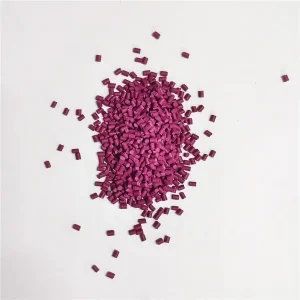
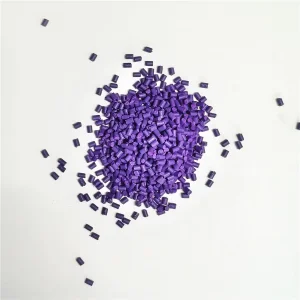
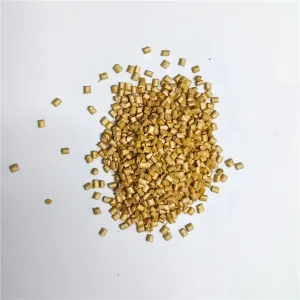
Precision-engineered masterbatch products tailored for blown film, sheet extrusion, and high-performance polyolefin applications.
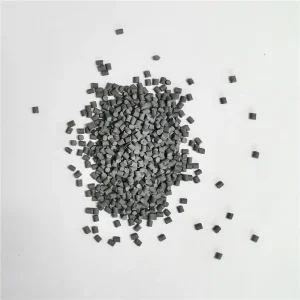
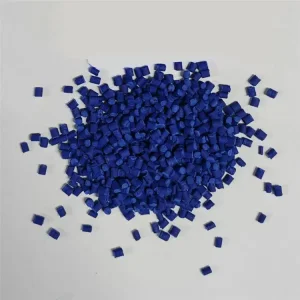
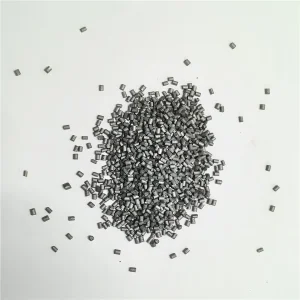
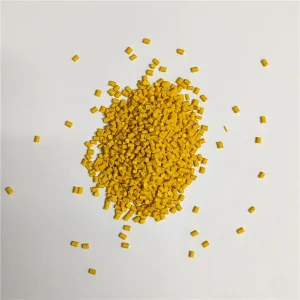
Macro-Environmental Containment Engineering & Polyolefin Material Science Optimization
Modern geotechnical engineering relies heavily on High-Density Polyethylene (HDPE) and Linear Low-Density Polyethylene (LLDPE) geomembranes to prevent toxic leachate migration in municipal solid waste (MSW) landfills and chemical mining basins.
Exposed geomembranes endure severe photo-oxidative degradation caused by solar ultraviolet radiation and high ambient surface temperatures, requiring advanced Hindered Amine Light Stabilizers (HALS) and antioxidant carrier systems.
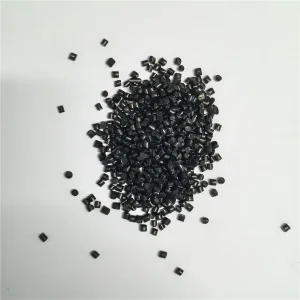
The anti-ultraviolet efficacy of black geomembrane masterbatch depends directly on primary particle size (<25 nm) and sub-micron agglomerate dispersion quality inside the Polyethylene matrix.
Understanding Carrier Resin Rheology, Antioxidant Synergism, and Microscopic Agglomerate Control
In standard plastic coloring, generic LLDPE or EVA carriers are frequently used. However, for critical waterproof geomembranes, utilizing mismatched low-molecular-weight carriers degrades the continuous HDPE polymer matrix, causing phase separation, reduced Environmental Stress Crack Resistance (ESCR), and premature pinhole formation under high hydraulic heads. As a specialized China supplier, Changzhou Jiazhou Plastic Products formulates special PE masterbatches using strictly matched virgin LLDPE/HDPE carrier resins with identical Melt Flow Indexes (MFI 0.05 – 0.3 g/10min).
Long-term thermal-oxidative protection requires a multi-stage additive blend that neutralizes free radicals during high-temperature sheet extrusion and throughout decades of field exposure:
Modern civil infrastructure projects increasingly specify multi-layer functional geomembranes to enhance safety, thermal control, and leak detection capabilities:
Comprehensive Performance Metrics for Waterproof Geomembrane Extrusion Mills
| Property Parameter | Testing Standard | HDPE Black Geomembrane Grade | White Reflective Top Grade | Conductive Bottom Grade |
|---|---|---|---|---|
| Carrier Resin Type | ISO 11357 / FTIR | 100% Virgin LLDPE / HDPE | 100% Virgin LLDPE / HDPE | Special Polyolefin Matrix |
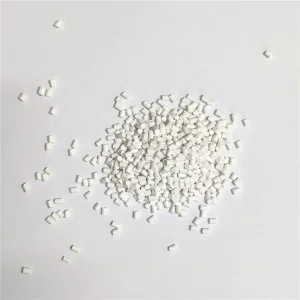
| Active Pigment / Fill Loading | ASTM D1603 / ISO 6964 | 40% - 50% P-Type Carbon Black | 60% - 70% Rutile TiO₂ | 25% - 35% Conductive Carbon |
| Melt Flow Index (190°C/2.16kg) | ASTM D1238 / ISO 1133 | 0.15 ± 0.05 g/10 min | 0.30 ± 0.10 g/10 min | 0.10 ± 0.05 g/10 min |
| Standard OIT (100 kPa O₂) | ASTM D3895 / EN 728 | > 130 minutes | > 100 minutes | > 120 minutes |
| High-Pressure OIT (3.5 MPa O₂) | ASTM D5885 | > 900 - 1200 minutes | > 800 minutes | > 850 minutes |
| Carbon Black Dispersion Rating | ASTM D5596 / ISO 18553 | Category 1 (Rating ≤ 1.0) | N/A (Nodules < 5μm) | Category 1 (Rating ≤ 1.0) |
| Primary Particle Size | TEM Micrograph | 19 nm - 22 nm | 200 nm - 300 nm | 15 nm - 20 nm |
| Moisture Content | ASTM D6980 (Karl Fischer) | < 0.05% (500 ppm) | < 0.04% (400 ppm) | < 0.05% (500 ppm) |
Deploying Tailored Polyolefin Masterbatch Solutions Across Harsh Global Operating Environments
In South American (Chile, Peru) copper mining and Western Australian gold extraction operations, geomembranes are continuously subjected to highly acidic sulfuric leachates and alkaline cyanide solutions combined with heavy physical aggregate wear.
Masterbatch Requirement: Ultra-clean Carbon Black masterbatch with zero calcium carbonate fillers to prevent chemical acid-washing degradation, preserving maximum stress crack resistance (NCTL ASTM D5397 > 500 hours).
Landfill containment facilities require secure basal composite liners that maintain hydraulic impermeability under massive waste overburden forces for over 100 years of service life.
Masterbatch Requirement: High-OIT antioxidant masterbatch formulation engineered to withstand aggressive organic solvent exposure, heavy volatile fatty acids, and microbial degradation pathways without additive leaching.
In arid agricultural sectors across the Middle East and North Africa (MENA region), open-air water storage basins demand flexible geomembranes capable of enduring UV radiation above 220 kLy/year and temperatures reaching 70°C on exposed dark surfaces.
Masterbatch Requirement: Solar-reflective white top-layer PE masterbatch that reduces ambient panel temperatures, curbs water evaporation loss, and mitigates thermal stress expansion buckling.
Shrimp and fish farming lined ponds require non-toxic, food-contact grade geomembranes that inhibit toxic heavy metal migration and prevent harmful algal blooms.
Masterbatch Requirement: RoHS & REACH compliant food-contact certified masterbatch produced without heavy metals (Lead, Cadmium, Hexavalent Chromium free), ensuring zero aquatic toxicity.
Ensuring Regulatory Compliance, Supply Chain Efficiency, and Regional Factory Support
Changzhou Jiazhou Plastic Products Co., Ltd. operates strict ISO 9001:2015 quality control systems. Our waterproof geomembrane masterbatch lines fully comply with globally recognized civil engineering frameworks:
Every extrusion sheet line operates under different mechanical constraints—ranging from 7-meter continuous blown film lines to wide-die flat sheet co-extrusion plants. We offer localized technical support:
With an annual production capacity exceeding 30,000 metric tons and export footprints across 100+ countries, Jiazhou guarantees rapid turnarounds and seamless supply chain security:
Next-Generation Polymer Additive Innovations for Sustainable Civil Engineering
Future containment challenges require higher UV barrier efficacy with lower overall pigment loadings. Next-gen masterbatches will integrate sub-15nm Carbon Black particles with surface-functionalized coupling agents to enhance UV absorption by 40% while preserving polymer elongation properties.
In response to global decarbonization mandates, Jiazhou is developing 100% bio-allocated PE carrier matrices derived from ISCC PLUS certified circular feedstocks, reducing the net carbon footprint of geomembrane masterbatch production by over 65%.
Emerging research focuses on incorporating micro-encapsulating chromogenic additives into the masterbatch matrix. When structural micro-cracks occur under shear stress, the encapsulated colorants release fluorescent signal markers, allowing automated drone leak detection in vast tailings dams.
Expert Answers for Geomembrane Extrusion Engineers & Procurement Specialists
Trusted B2B Factory Solutions Exporting to Over 100+ Countries Worldwide