Engineered for blown film, precision injection molding, and high-speed profile extrusion with optimal pigment dispersion and thermal stability.
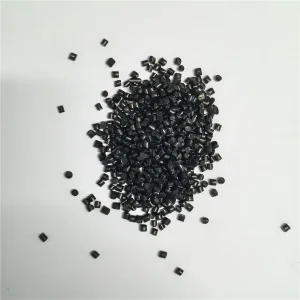
Black masterbatch remains the single largest volume color additive segment in the global plastics processing industry, representing over 40% of all masterbatch demand worldwide.
Valued at over USD 5.2 Billion globally with a projected CAGR of 5.4%, the demand for high-concentration PE black masterbatch is driven by infrastructure expansion, automotive lightweighting, modern agricultural film adoption, and flexible packaging proliferation in emerging and developed markets alike.
The primary functional pigment—Carbon Black—varies drastically in primary particle size (ranging from 15nm to 40nm) and structure (DBP absorption value). Sourcing high-purity furnace blacks with controlled polycyclic aromatic hydrocarbon (PAH) levels is critical for complying with stringent international safety standardizations.
Achieving optimal melt flow rate (MFR) matching between the carrier resin (such as LDPE, LLDPE, HDPE, or PP) and the target polymer matrix is the central engineering challenge. Improper melt viscosity matching leads to phase separation, die lip buildup, and localized mechanical failure points.
The quality of custom black masterbatch is governed by twin-screw compounding mechanics, surface wetting energy, and particle agglomerate breakdown kinetics.
Carbon black raw material naturally forms complex tightly bound agglomerates due to intense Van der Waals forces. During extrusion, our custom twin-screw co-rotating compounding systems generate high hydrodynamic shear stress. This breaks down sub-micron agglomerates into primary aggregates below 0.1 microns, ensuring zero pinholes or streaks during ultra-thin blown film production down to 10 microns.
To quantify technical quality under Google's E-E-A-T benchmark, Changzhou Jiazhou Plastic utilizes strict EN 13900-5 Pressure Filter Value testing. By passing molten PE masterbatch through 14-micron mesh screens, our formulations maintain ultra-low FPV rates (< 0.5 bar/g), guaranteeing high-speed spinning without fiber filament breakage or filter clogging in client extruders.
| Masterbatch Grade | Carbon Black Content (%) | Primary Particle Size (nm) | Carrier Resin Type | MFI (190°C / 2.16kg) | Primary Application Field |
|---|---|---|---|---|---|
| Premium Film Grade | 40% - 50% | 16 - 20 nm | LLDPE / LDPE | 15 - 25 g/10min | Agricultural Mulch, Micro-Films, Food Packaging |
| Injection Molding Grade | 30% - 45% | 25 - 35 nm | HDPE / PP / Universal | 20 - 40 g/10min | Automotive Parts, Crates, Household Appliances |
| Pipe & Extrusion Grade | 35% - 45% (P-Type) | 20 - 25 nm | HDPE (PE100 Grade) | 5 - 12 g/10min | HDPE Water Pipes, Geomembranes, Conduit |
| Recycled PCR Grade | 30% - 40% | 28 - 40 nm | Recycled PE/PP Base | 10 - 20 g/10min | Trash Bags, Construction Sheets, Non-Critical Packaging |
The global shift toward a circular plastic economy requires black masterbatch manufacturers to innovate beyond traditional formulations, addressing optical recycling bottlenecks and regulatory imperatives.
Standard carbon black absorbs Near-Infrared (NIR) light, making black plastic undetectable to automated optical sorting sensors in municipal recycling facilities. Next-generation custom black masterbatches utilize special NIR-reflective pigments or specialized carbon structures, enabling automated material recovery facilities (MRFs) to sort and recycle rigid black packaging.
To meet EU Packaging and Packaging Waste Regulation (PPWR) mandates, custom masterbatch formulations are increasingly compounding carbon black directly into Post-Consumer Recycled (PCR) or Post-Industrial Recycled (PIR) carrier resins. Advanced antioxidant packages are incorporated to counter thermal degradation histories inherent in recycled polymers.
Leading masterbatch suppliers must provide robust compliance documentation. Formulations must undergo testing for Heavy Metals (RoHS), Substances of Very High Concern (REACH SVHC), Halogen-free compliance, and FDA/EU food-contact suitability for food packaging applications.
From heavy-duty agricultural film exposed to extreme UV radiation to precision medical devices, masterbatch formulation parameters must match exact field conditions.
Agricultural films and underground drip irrigation tubes require continuous protection against UV degradation and weathering. Utilizing 20nm P-type carbon black loaded with Hindered Amine Light Stabilizers (HALS), custom PE black masterbatch prevents polymer chain scission, extending field service life beyond 5 years under intense solar irradiance.
Water transport and gas distribution lines manufactured from HDPE (PE100) demand exceptional carbon black dispersion to achieve hydrostatic strength. Our custom masterbatches ensure macro-dispersion ratings below Grade 1.5, protecting infrastructure against stress cracking and oxidative embrittlement over 50-year service lifespans.
Co-extruded multi-layer blown films (such as black/white courier bags) require high opacity black masterbatch in the inner layer to block light transmission and protect privacy. High tinting strength carbon blacks enable minimal let-down ratios (LDR 1.5% to 3.0%), minimizing raw material costs while retaining mechanical puncture resistance.
Automotive plastics require strict thermal stability up to 260°C - 280°C without off-gassing or fogging. Specialized polypropylene (PP) and polyolefin masterbatches provide jetness, high surface gloss, and low volatile organic compound (VOC) emissions for interior trim, bumpers, and engine covers.
Backing every metric ton of custom black masterbatch with 16 years of compounding expertise, automated processing infrastructure, and rigorous quality assurance laboratory operations.
Located in Zouqu Town, Changzhou, Jiangsu, our state-of-the-art facility operates multiple high-shear twin-screw extrusion compounding lines equipped with loss-in-weight gravimetric feeders, guaranteeing precise recipe control and batch consistency.
Our plant strictly executes ISO 9001 quality management protocols. Every production run undergoes rigorous sampling for Melt Flow Index (MFI), ash content verification, moisture testing (<0.15%), and spectrophotometric color shade analysis.
Serving clients across 100+ countries, Jiazhou Plastic provides tailored OEM/ODM formulation development, rapid 15-day order fulfillment, customized moisture-proof palletized packaging, and full international trade documentation.
Our ongoing commitment to research and development guarantees continuous advancement in masterbatch performance, environmental compatibility, and processing automation.
Implementation of ultra-high-shear compounding technology to lower volatile emissions and optimize particle dispersion for food-contact micro-thin films.
Full commercial scaling of NIR-detectable black masterbatch across rigid polypropylene and polyester packaging segments to support global circular sorting standardizations.
Introduction of 100% biodegradable carrier masterbatches (PLA, PBAT, PHA) engineered for compostable packaging without compromising color intensity or processability.
Deployment of AI-driven spectrophotometry algorithms across automated production lines for real-time viscosity and tinting calibration during continuous compounding.
Addressing key engineering, procurement, and polymer processing inquiries for global B2B buyers and technical directors.
Select from our specialized masterbatch formulations engineered for global B2B plastic processors and OEM manufacturers.