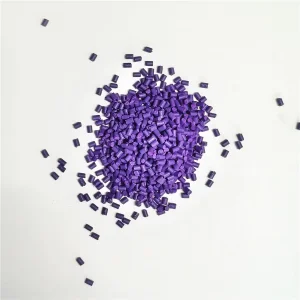
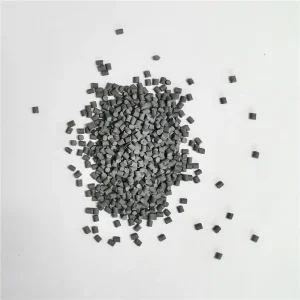
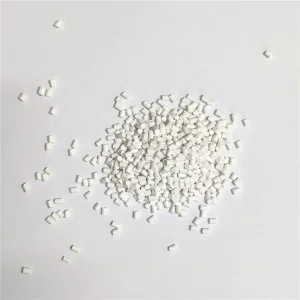
Direct factory supply engineered with superior micro-dispersion, heat resistance up to 260°C, and non-migration properties for extrusion, blown film, and injection molding.
Bridging polymer material science with economic efficiency for modern plastic extruders, blow molders, and injection molders worldwide.
Global petrochemical markets face persistent price swings driven by crude oil fluctuations and complex supply chains. Custom filler masterbatches (CaCO₃/BaSO₄) provide plastic processors with a strategic buffer, substituting 10% to 50%+ of prime LLDPE, HDPE, or PP resin without compromising structural integrity or visual appeal.
Replacing energy-intensive synthetic polymers with natural micro-calcite or barium mineral matrices significantly lowers overall embodied carbon (CO₂ emissions per ton). Incorporating specialized filler compounds directly supports global ESG mandates, circular economy certifications, and ISO 14067 carbon footprint reduction protocols.
Calcium carbonate possesses higher thermal conductivity than raw polyethylene or polypropylene polymers. Incorporating finely dispersed filler masterbatch accelerates heating during melt processing and speeds up cooling rates, directly cutting molding cycle times by 8% to 15% while improving volumetric output.
Changzhou Jiazhou Plastic Products Co., Ltd. delivers global-grade reliability across high-volume polymer processing operations.
Understanding interfacial surface chemistry, particle size distribution (PSD), carrier matching, and dispersion physics.
A high-performance filler masterbatch is not merely a mixture of raw mineral powder and carrier plastic. Achieving flawless melt homogeneous dispersion requires precise chemical modification of inorganic particles. Raw calcium carbonate (calcite crystal) is intrinsically hydrophilic, while polyolefin polymers like LLDPE, HDPE, and PP are hydrophobic. Without proper interfacial compatibilization, raw mineral powder agglomerates, causing screen-pack clogging, dart drop test failures, surface pinholes, and severe extruder die buildup.
At Changzhou Jiazhou Plastic Products Co., Ltd., raw ultra-fine CaCO₃ (ground or precipitated micro-powder with D50 particle size from 0.8μm to 2.5μm) undergoes dual-stage hot coating with titanate or titanate-silane coupling agents and stearic acid. This surface functionalization transforms the mineral surface from hydrophilic to hydrophobic, dramatically lowering interfacial tension between inorganic crystals and the molten resin matrix.
Our facility utilizes multi-zone temperature-controlled twin-screw compounding extruders operating with L/D ratios up to 48:1. High-shear kneading blocks ensure complete de-agglomeration of mineral particles. The molten mixture is filtered through fine mesh melt filters (up to 250 mesh) before strand-pelletizing or under-water die cutting to yield dust-free, highly uniform spherical pellets.
To prevent phase separation during downstream blown film or injection processing, the masterbatch carrier resin must perfectly match the target melt flow index (MFI) and processing temperature of the host resin. We customize carrier formulations using virgin LLDPE (20 g/10min MFI), LDP, HDPE, or PP copolymer carriers tailored specifically to your extrusion or molding parameters.
Inorganic minerals naturally adsorb trace atmospheric moisture. To eliminate fish-eyes, silver streaks, and bubble instabilities in high-speed film extrusion, our specialized custom filler formulations integrate active calcium oxide (CaO) desiccant agents and hindered phenol antioxidants (Irganox 1010/168) to protect virgin polymers from thermal degradation up to 260°C.
A comparative engineering breakdown of Calcium Carbonate (CaCO₃), Barium Sulfate (BaSO₄), and Transparent Na₂SO₄ Filler Masterbatches.
| Filler Type / Mineral Base | Refractive Index | Primary Physical Benefits | Key Application Focus | Typical Loading (LDR) |
|---|---|---|---|---|
| Calcite CaCO₃ Masterbatch | 1.48 – 1.65 | Cost reduction, enhanced thermal conductivity, improved stiffness, high whiteness | T-shirt bags, garbage liners, agricultural film, woven sacks, HDPE pipe | 10% - 60% |
| Transparent Na₂SO₄ Masterbatch | 1.49 (Matches PE resin) | Ultra-high optical transparency, anti-blocking, smooth gloss, high tensile strength retention | High-end LLDPE stretch film, transparent shopping bags, thin-walled food containers | 5% - 30% |
| High-Density BaSO₄ Masterbatch | 1.64 | Extreme specific gravity (density), high surface gloss, sound damping, X-ray opacity | Engineered automotive parts, premium injection molding, heavy noise-barrier sheets | 15% - 50% |
| Talc Mineral Filler Masterbatch | 1.57 | Extreme flexural modulus, heat deflection temperature (HDT) boost, dimensional stability | PP automotive bumpers, appliance housings, furniture parts, corrugated plastic packaging | 10% - 40% |
Engineered to deliver exceptional performance across high-speed manufacturing equipment worldwide.
Prevents film blocking, boosts anti-tear properties, enhances printability, and reduces raw material costs in PE shopping bags, Courier mailing bags, agricultural mulch film, and heavy-duty shipping sacks. Formulated for ultra-thin films down to 8 microns without bubble instability.
Reduces sink marks, suppresses warpage, lowers mold shrinkage rates, and dramatically accelerates cooling cycles for industrial crates, pallets, household buckets, toy parts, and automotive interior trims.
Improves line stability during high-speed flat yarn stretching (up to 500 m/min), prevents fibrillation fractures, increases anti-skid stacking properties, and provides excellent opacity for FIBC jumbo bags and woven sacks.
Enhances ring stiffness, improves burst pressure resistance, and provides dimensional stability in double-wall corrugated drain pipes, electrical conduits, and agricultural irrigation tubing.
Ensures uniform wall thickness distribution, suppresses container collapse, enhances top-load stack strength, and improves tactile feel for detergent bottles, oil jerrycans, and hollow industrial drums.
Provides excellent sheet sag resistance during thermoforming, improves deep-draw mold definition, and maintains uniform rigidity in disposable food containers, cups, and trays.
Backed by 16 years of manufacturing rigors, Changzhou Jiazhou Plastic Products Co., Ltd. ensures full international compliance for food-contact, medical, and industrial plastics.
Strictly screened for SVHC (Substances of Very High Concern), heavy metals (Pb, Cd, Hg, Cr VI), phthalates, and polycyclic aromatic hydrocarbons (PAHs).
Formulated using high-purity natural calcium carbonate and virgin PE/PP food-contact grade resins compliant with US FDA 21 CFR standards for direct food packaging.
Every batch undergoes rigorous quality testing including Melt Flow Rate (MFR), Density, Moisture Content (Karl Fischer), Thermogravimetric Analysis (TGA), and Dispersion Filter Pressure Index (FPI).
Supported by custom moisture-proof packaging (25kg PP/PE valve bags or 1200kg jumbo totes), rapid international door-to-door technical sampling, and 15-day order dispatch times.
In-depth technical answers for procurement managers, polymer chemists, and extrusion plant engineers.
When added at optimal dosage levels (typically 10% to 25% depending on film thickness), micro-fine treated calcium carbonate maintains high machine-direction (MD) and transverse-direction (TD) tensile strength. Micro-particles act as physical nucleation agents, encouraging fine polymer crystalline structures. However, exceeding 30-35% loading without elastomeric toughening agents (such as POE or metallocene LLDPE) can lead to a gradual decline in elongation at break and dart drop impact resistance. Our technical engineers tailor carrier blends to optimize toughness retention.
Calcium Carbonate (CaCO₃) has a refractive index (~1.59) different from virgin PE resin (~1.49), which causes light scattering and renders the final plastic product opaque or translucent white. In contrast, Sodium Sulfate (Na₂SO₄) or specific synthetic barium sulfates have refractive indices that match PE/PP polymers almost perfectly. Transparent Na₂SO₄ filler allows up to 20-30% loading in LLDPE stretch and clarity packaging films without sacrificing optical transparency or surface gloss.
Raw natural calcite minerals can contain trace hard quartz (silica) impurities if unrefined. Changzhou Jiazhou uses exclusively heavy-precipitated or wet-ground calcite with a Mohs hardness of 3.0 and zero coarse residue (>45 microns). Combined with surface stearic acid coating acting as an internal lubricant, our filler masterbatches cause negligible wear on bimetallic screws and barrels under normal extrusion temperatures.
Because inorganic filler powders have a micro-porous surface that absorbs moisture from humidity during storage, we recommend two solutions: First, store masterbatches in dry, sealed environments and use moisture-proof aluminum foil packaging. Second, pair the filler masterbatch with 1% to 2% of Jiazhou Active Calcium Oxide Desiccant Masterbatch, which chemically reacts with moisture in the extruder melt to form stable Ca(OH)₂ powder, eliminating bubbles and voids without pre-drying.
The Let-Down Ratio depends on the final application and equipment design:
• Blown Film (Shopping/Garbage bags): 10% to 45% CaCO₃ Filler Masterbatch.
• Injection Molding (Crates/Pallets): 15% to 50% CaCO₃ or Talc Filler.
• PP Raffia / Woven Tape: 5% to 20% Anti-Fibrillation CaCO₃ Filler.
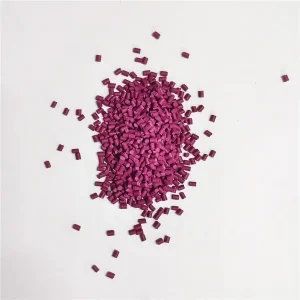
• PE Color Masterbatch: 1% to 4% depending on required color opacity.
We operate computerized gravimetric loss-in-weight dosing feeder systems on every twin-screw extrusion line. For color masterbatches, spectrophotometers check Delta E (ΔE < 0.5) against master color standards. Filter pressure tests (FPI) ensure complete micro-dispersion with zero un-dispersed agglomerates prior to packaging.
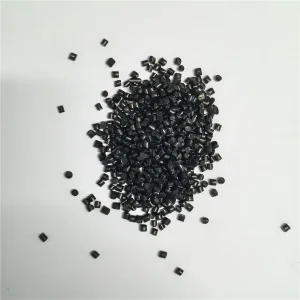
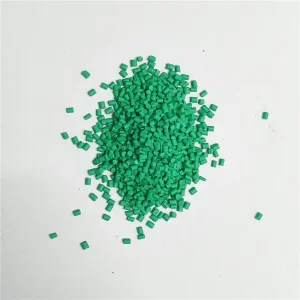
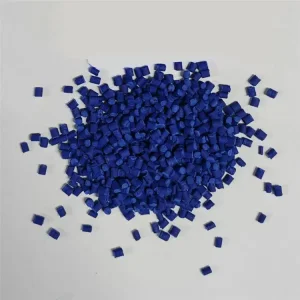
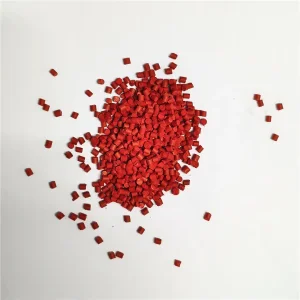
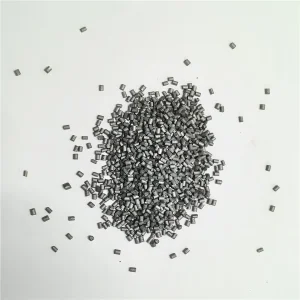
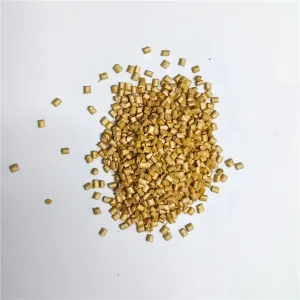
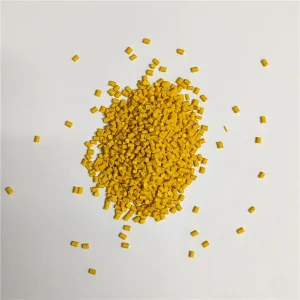
Select your required color or functional filler compound below to request detailed technical datasheets (TDS) and OEM quote options.