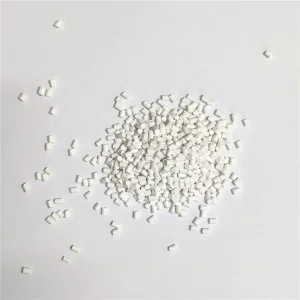
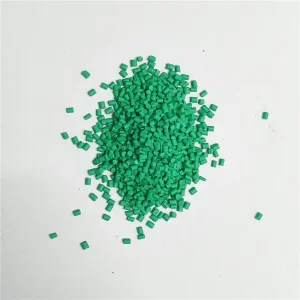
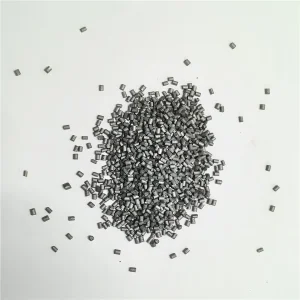
Engineered for High-Speed Monofilament Drawing, Blown Film, and Industrial Injection Molding
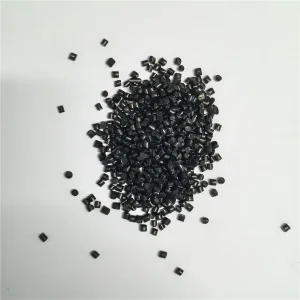
A Comprehensive Technical Benchmark for B2B Procurement Teams, Aquaculture Engineers, and Synthetic Fiber Manufacturers
Polyethylene (PE) monofilaments used in deep-sea fishing nets, aquaculture cages, and pelagic trawling gear operate under continuous exposure to aggressive environmental degradation factors. Solar ultraviolet radiation (UV-A and UV-B wavelengths between 290nm and 400nm), coupled with photo-oxidative stress, mechanical friction, and marine salt-water immersion, initiates rapid polymer chain scission. Without advanced photostabilization, un-stabilized High-Density Polyethylene (HDPE) netting suffers catastrophic loss of tensile strength, embrittlement, and discoloration within 3 to 6 months of offshore deployment.
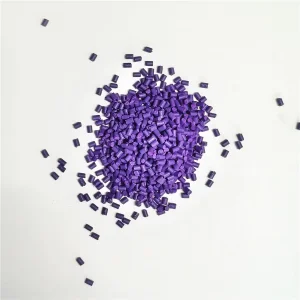
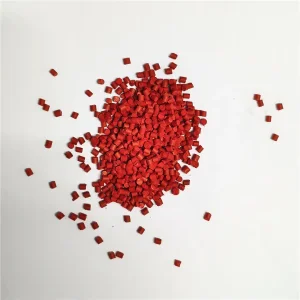
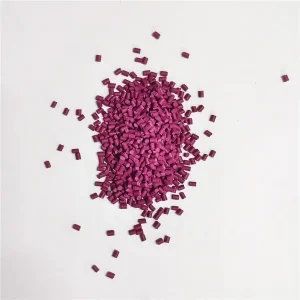
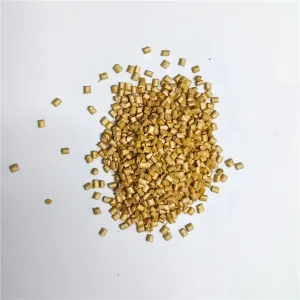
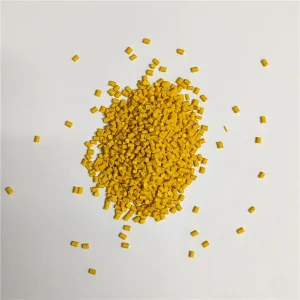
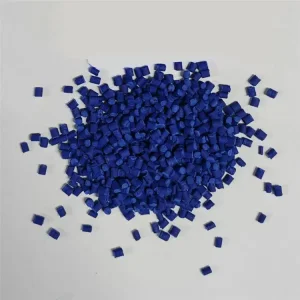
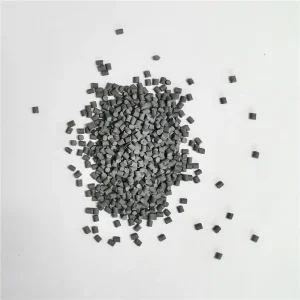
Custom Fishing Net Anti-Aging Drawing PE Masterbatch engineered by top-tier Chinese manufacturing facilities addresses these core polymer vulnerabilities. By integrating high-purity Hindered Amine Light Stabilizers (HALS), UV absorbers, thermo-oxidative antioxidants, and carrier resin matrices precisely matched to the Melt Flow Index (MFI) of base resins, modern masterbatch technology extends the operational lifespan of commercial fishing nets to 5–10 years under harsh tropical solar exposure.
In monofilament drawing (extrusion draw ratios typically ranging between 1:8 and 1:11), polymer chains are highly oriented along the longitudinal axis. Photodegradation breaks these oriented molecular chains, causing micro-void formation and rapid propagation of stress cracks under wave action. Masterbatch additives must not only block UV photons but also preserve original draw ratios without causing spinneret clogging or melt fracture during high-speed drawing lines (up to 250 m/min).
Why Leading Global Netting Manufacturers Partner with Specialized Chinese Masterbatch Factories
Chinese production clusters in Jiangsu (such as Changzhou Jiazhou Plastic Products Co., Ltd.) leverage direct supply chains of virgin virgin PE carrier resins (Sinopec, PetroChina) and specialized chemical additive manufacturers. This complete industrial integration ensures consistent polymer purity, minimal batch-to-batch variance, and rapid cost optimization for global B2B procurement.
The key performance factor in drawing monofilaments is particle dispersion. Standard masterbatches suffer from agglomerated pigment or additive clusters that cause thread breakages during high-speed drawing. Chinese masterbatch factories utilize continuous twin-screw extruders with high length-to-diameter (L/D) ratios (up to 48:1), achieving sub-micron dispersion and flawless melt filterability.
Factory-direct manufacturers offer fully customized additive ratios tailored to target geographical deployment zones—ranging from moderate UV exposure in Northern Europe to high-radiation equatorial waters. OEM/ODM customization allows client-specific masterbatch loading rates (typically 2% to 5%), maximizing performance while controlling raw material costs.
Understanding the Interplay Between HALS, UV Absorbers, and Phenolic Antioxidants in PE Drawing
Polyolefin degradation proceeds via a self-propagating free radical mechanism. Under exposure to light ($h\nu$) and oxygen ($O_2$), polymer bonds ($R-H$) form alkyl radicals ($R^\bullet$), which swiftly combine with oxygen to yield hydroperoxides ($ROOH$). These unstable hydroperoxides undergo homolytic cleavage into alkoxy ($RO^\bullet$) and hydroxyl ($HO^\bullet$) radicals, accelerating macromolecular chain scission and dramatic loss of mechanical knot strength in fishing nets.
Low-molecular-weight UV stabilizers tend to migrate out of thin monofilament fibers (0.15mm – 0.80mm diameter) due to seawater leaching and thermal evaporation during drawing. Modern formulations utilize polymeric HALS (such as HALS 944 / HALS 622) with high molecular weights (>2000 g/mol). These additives act as radical scavengers via the Denisov Cycle, continuously regenerating nitroxyl radicals ($R-NO^\bullet$) to neutralize alkyl and peroxy radicals without being consumed.
Benzotriazole and Benzophenone UV absorbers transform harmful ultraviolet radiation into harmless thermal energy via intramolecular proton transfer. When combined with specialized fine-particle Carbon Black (20nm–25nm primary particle size) or high-chroma inorganic pigments, the masterbatch forms an impenetrable optical barrier, absorbing 99.9% of incident UV wavelengths before they penetrate the fiber core.
The following performance indicators represent the manufacturing standards of Changzhou Jiazhou Plastic Products Co., Ltd. for high-tenacity monofilament drawing masterbatches:
| Parameter | Standard Test Method | Technical Benchmark Value | Operational Impact on Netting |
|---|---|---|---|
| Active UV Additive Content | ISO 11358 (TGA) | 15.0% - 30.0% (Customizable) | Determines overall life expectancy under solar irradiation |
| Carrier Resin Type | ISO 1183 (Density) | HDPE / LLDPE Pure Carrier | Ensures 100% melt compatibility with monofilament grade resin |
| Melt Flow Index (MFI) | ISO 1133 (190°C/2.16kg) | 2.0 - 8.0 g/10min | Matches drawing resin MFI; prevents melt fracture & fiber breakage |
| Filter Pressure Value (FPV) | EN 13900-5 | < 0.5 bar/g (Mesh size 14µm) | Guarantees continuous, break-free monofilament spinning |
| Heat Resistance / Thermal Stability | ISO 306 (Vicat) | 260°C - 280°C | Prevents thermal degradation during high-temperature extrusion |
| QUV Tenacity Retention (3000 Hours) | ISO 4892-3 / ASTM G154 | > 85% Initial Tensile Strength | Prevents net tearing and cage collapse in deep marine zones |
The Future of Sustainable Aquaculture, Eco-Friendly Masterbatch Formulations, and Microplastic Reduction
Weathered plastic nets shed millions of microplastic filaments into marine ecosystems under mechanical abrasion. Next-generation anti-aging masterbatches incorporate specialized fluoroelastomer processing aids (PPA) and surface-modifying hydrophobic agents that reduce friction coefficients, preventing fiber breakdown and microplastic detachment.
Global environmental regulations (RoHS 3.0, REACH SVHC, US EPA) strictly limit heavy metals such as Lead, Cadmium, Hexavalent Chromium, and Diarylide organic pigments in marine equipment. Chinese factories have shifted 100% to eco-friendly, non-toxic organic/inorganic pigments with supreme migration resistance.
Modern buyers are demanding combo-masterbatches that unite photostabilities, color matching, anti-static property, and anti-biofouling performance into a single, uniform pellet. This eliminates multi-feeder dosing errors during extrusion and optimizes processing efficiency.
Engineered Resilience Across Varied Oceanic Conditions and Climate Zones
Offshore fish farming cages (e.g., Salmon, Sea Bass, and Tilapia mariculture) are exposed to high UV exposure in surface ocean layers. Masterbatch-enhanced HDPE monofilament netting maintains structural integrity against predatory attacks, heavy tidal currents, and high-pressure water jet cleaning operations without embrittlement.
Trawling nets endure extreme friction against ocean floors and heavy deck winches. Anti-aging drawing PE masterbatch ensures that repeated thermal expansion and contraction cycles, combined with salt crystallization within fiber bundles, do not induce early strand snapping.
Beyond marine applications, PE monofilament drawing masterbatches are widely applied in high-radiation agricultural regions (Middle East, Latin America, Australia) for hail nets, greenhouse shade covers, and windbreak barriers requiring 5–10 year outdoor guarantees.
Architectural safety netting suspended high above building sites requires unyielding tensile stability. Photostabilized PE monofilaments prevent catastrophic UV-induced degradation caused by prolonged outdoor exposure on construction sites.
Mitigating Risks When Sourcing Anti-Aging PE Masterbatch from OEM China Factories
When enterprise buyers source anti-aging drawing PE masterbatch at container scale, verifying product reliability goes beyond basic price comparisons. Quality variations in carrier resin purity or additive dispersion can result in extrusion line downtime, spinning breakages, and field failures. Enterprise buyers should mandate the following verification standards:
With 16+ years of specialized B2B masterbatch manufacturing, a 6,000m² standardized factory, precision twin-screw production lines, and export footprint in over 100 countries, Changzhou Jiazhou Plastic delivers uncompromising masterbatch quality. Our in-house QC laboratory tests every batch for FPV, thermal stability, and color accuracy, guaranteeing flawless monofilament extrusion for global fishing net manufacturers.
Expert Answers to Critical Engineering Questions Regarding Masterbatch Extrusion and Lifetime Expectations
High-Concentration PE Color & Functional Masterbatch Catalogs Direct From Changzhou Jiazhou Factory