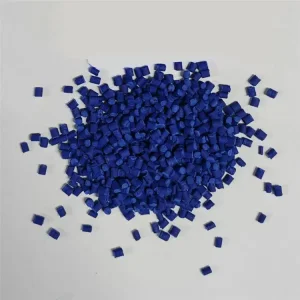
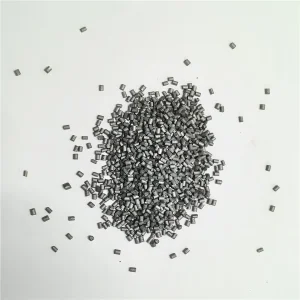
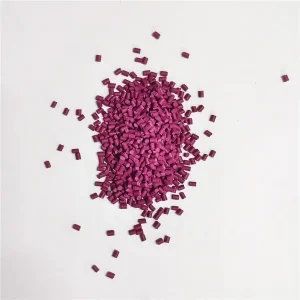
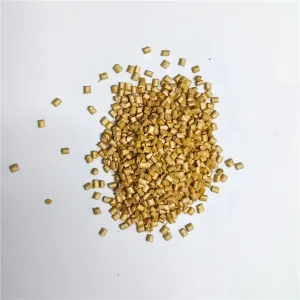
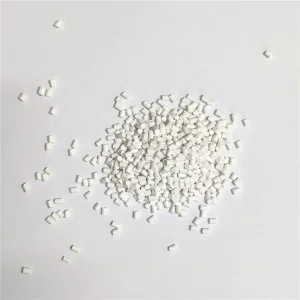
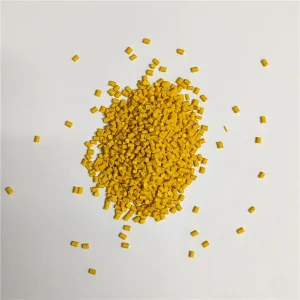
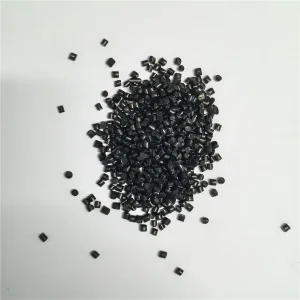
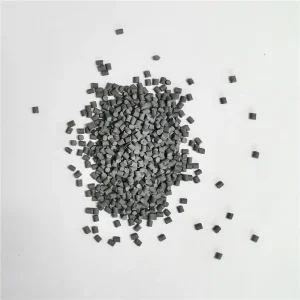
High-dispersion, heat-stabilized masterbatches optimized for film blowing, injection molding, and continuous extrusion.
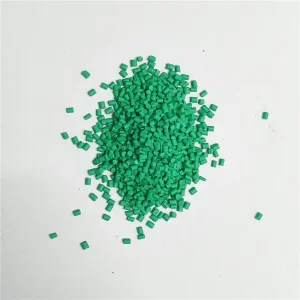
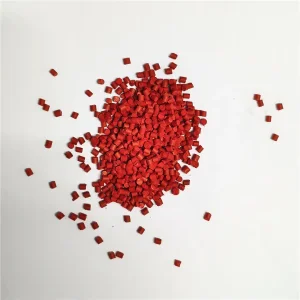
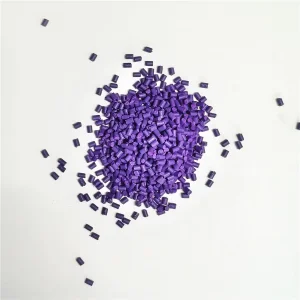
Understanding Stokes shift phenomena, solid-solution fluorophore dynamics, and polyolefin carrier matching for high-impact visual brilliance.
Fluorescent polyethylene (PE) masterbatches operate on a fundamental quantum mechanics principle: the conversion of high-energy ultraviolet (UV) and short-wavelength visible light into longer, intensely bright visible wavelengths. Unlike conventional inorganic or organic pigments that merely absorb selective spectrums, daylight fluorescent colorants absorb UV light (300 nm - 400 nm) and re-emit it virtually instantaneously (within $10^{-8}$ seconds) as visible luminescence. This wavelength shift—known as the Stokes Shift—creates an apparent reflectance greater than 100%, causing the plastic compound to visually glow under ambient daylight.
The formulation of a high-performance custom fluorescent PE masterbatch requires exacting melt flow index (MFI) alignment with target end-use resins (LDPE, LLDPE, HDPE, EVA). If the carrier resin exhibits excessive viscosity relative to the matrix, pigment agglomeration occurs, leading to dielectric breakdown and pinhole flaws in thin films. Our manufacturing process utilizes high-flow Low-Density Polyethylene (LDPE) modified with low-molecular-weight polar waxes and dispersants. This ensures complete micro-encapsulation of organic fluorophores without inducing phase separation or migration during high-shear processing.
For premium thin-blown film applications (down to 15 microns), our fluorescent masterbatches achieve an FPV of < 0.8 bar/gram across 14-micron mesh screens. This exceptional dispersion minimizes filter pack clogging, reduces machine downtime in continuous extrusion lines, and eliminates surface roughness (orange peel effect) on molded industrial products.
Analyzing macro demand drivers, regional regulatory frameworks, and economic compounding advantages across global industrial sectors.
Occupational safety standards (such as ANSI/ISEA 107 in North America and EN ISO 20471 in Europe) have expanded the industrial demand for fluorescent PE masterbatches. Injection-molded safety helmets, traffic cones, highway delineators, and protective barrier netting require high-chroma Fluorescent Yellow (GS), Neon Orange, and Safety Pink shades with long-term weatherability and UV stability.
In fast-moving consumer goods (FMCG), brand owners leverage fluorescent colors to achieve immediate shelf-impact. Blow-molded HDPE personal care containers, sports bottles, high-impact retail shopping bags, and promotional caps rely on custom masterbatch formulations that deliver vibrant neon hues without leachability or off-gassing issues during automated fill operations.
Advanced agricultural film extruders incorporate specialized light-converting fluorescent masterbatches to optimize greenhouse photosynthetic active radiation (PAR). By absorbing green/UV light and converting it into red spectral output, these specialized masterbatches assist in accelerating crop photosynthesis, promoting yield growth, and providing crop pest deterrence.
| Property Parameter | Standard Masterbatch | Jiazhou High-Concentration Fluorescent PE | Testing Method |
|---|---|---|---|
| Pigment Loading Content | 15% - 25% | 35% - 50% High-Density Matrix | ISO 3451-1 Ash / TGA |
| Thermal Stability (°C) | 180°C - 200°C | 240°C - 260°C Extended Window | DIN 53772 Extrusion Test |
| Lightfastness (Blue Wool Scale) | Grade 3 - 4 | Grade 5 - 7 (UV Stabilized) | ISO 105-B02 Xenon Arc |
| Migration Resistance | Class 2 (Slight Bleeding) | Class 4 - 5 (Non-Migratory) | DIN 53775 Solvent Extraction |
| Compatibility Spectrum | LDPE Only | LDPE, LLDPE, HDPE, EVA, PP Blends | DSC Thermal Analysis |
Overcoming classic processing defects: thermal degradation, plate-out phenomenon, fluorophore migration, and screen pack buildup.
Problem: Organic daylight fluorophores typically rely on thermoset resin matrices (such as melamine-formaldehyde or polyamide-polyester condensate resins). Low-cost fluorescent pigments often contain unreacted oligomers or low-melting dye residues that migrate under heat and deposit onto extruder screws, die lips, and chilled rolls—a defect known as plate-out.
Factory Solution: Our factory utilizes fully condensed micro-encapsulated fluorophores subjected to thermal vacuum extraction during twin-screw compounding. Combined with multi-functional fluorosurfactants, our custom PE masterbatches eliminate die deposit accumulation, permitting continuous 72-hour film blowing runs without machine shutdowns.
Problem: Standard fluorescent dyes degrade rapidly above 200°C, causing severe color shift from bright fluorescent pink/yellow to a dull, brownish-gray hue during high-speed injection molding.
Factory Solution: We engineer thermal-stabilized masterbatches utilizing Hindered Amine Light Stabilizers (HALS), primary phenolic antioxidants, and secondary phosphite heat stabilizers within the PE melt phase. This synergist protection matrix raises the safe processing window up to 260°C (500°F), accommodating high-speed thin-wall injection molding of industrial containers.
Pioneering sustainable, recyclable, and smart optical masterbatch technologies for the next decade of polyolefin processing.
Integration of 100% renewable sugarcane-derived Low-Density Polyethylene (Bio-LDPE) carriers. Our factory is driving lower scope 3 carbon emissions without compromising pigment dispersibility, melt flow behavior, or color intensity in green packaging projects.
Developing Near-Infrared (NIR) reflective fluorescent masterbatch compounds. Conventional dark or intensely dyed plastics often fail automated sorting in Materials Recovery Facilities (MRFs). Our next-gen fluorophores allow optical sensors to rapidly detect, categorize, and sort post-consumer PE films into pure recycling streams.
Transitioning from mechanical disperse phase fluorophores to reactive dyes covalently bound directly to low-molecular-weight polyethylene chains. This technology completely eliminates migration, solvent extraction risk, and heavy metal cross-contamination in regulated consumer applications.
Tailored formulations engineered specifically for process-dependent heat profiles, shear rates, and wall thicknesses.
Target Products: Courier mailing bags, warning tapes, high-vis shopping bags, greenhouse cover films.
Recommended Dosage: 2.0% - 4.0%
Technical Focus: High melt strength carrier matching, zero pinhole formation, FPV < 0.8 bar/g, high blown film bubble stability.
Target Products: Industrial safety helmets, road cones, tool handles, consumer electronic housings.
Recommended Dosage: 1.5% - 3.0%
Technical Focus: Non-warping formulations, low dimensional shrinkage impact, rapid cycle time compatibility, thermal stability to 260°C.
Target Products: Detergent bottles, agrochemical containers, sporting goods bottles.
Recommended Dosage: 2.0% - 3.5%
Technical Focus: Uniform parison wall thickness, high environmental stress crack resistance (ESCR), clean pinch-off line integrity.
Stringent laboratory verification protocols and international safety compliance for seamless global export.
All Jiazhou masterbatches are formulated in compliance with strict international chemical safety standards. Our products conform to EU REACH Regulation (EC No. 1907/2006), RoHS 3 Directive (EU 2015/863), EN 71-3 (Safety of Toys - Migration of Certain Elements), and FDA 21 CFR 178.3297 for indirect food contact applications. Every shipment is accompanied by a certified Certificate of Analysis (COA), SDS, and heavy-metal test reports.
Our 6,000m² factory features a state-of-the-art analytical testing suite equipped with Datacolor spectrophotometers (CIE $L^*a^*b^*$ color space measurement), two-roll lab mills, twin-screw test extruders, and melt flow indexers (ASTM D1238). We offer digital color-matching services within 24 hours, matching Pantone, RAL, or customer physical target plaques with a color difference tolerance ($\Delta E$) < 0.8.
Direct insights from our chemical engineering team regarding masterbatch selection, dosing, and compounding.
A: For most injection molding applications, a let-down ratio (LDR) of 1.5% to 2.5% is recommended to achieve bright, opaque fluorescent coloration. For thin blown films (under 25 microns) or high-visibility safety equipment, an LDR of 3.0% to 4.0% ensures optimal UV excitation and maximum light output.
A: Unstabilized organic fluorescent pigments generally exhibit lower lightfastness (Blue Wool Scale 3-4) compared to inorganic oxides. However, Jiazhou’s outdoor-grade fluorescent masterbatches are co-compounded with HALS UV stabilizers and nickel-based quenchers, raising outdoor lightfastness ratings to Grade 6+, preventing premature fading in outdoor agricultural and safety barrier applications.
A: Yes. Because our carrier resin utilizes low-density polyethylene (LDPE) with high melt flow indices, it exhibits excellent thermodynamic compatibility with Polypropylene (PP), Ethylene-Vinyl Acetate (EVA), and Linear Low-Density Polyethylene (LLDPE). For specialized engineering polymers (ABS, PET, PA), custom matrix-matched carriers are available upon request.
A: Color streaks typically stem from inadequate melt homogenization or mismatched viscosity between the masterbatch carrier and base resin. Ensure the extruder backpressure is adjusted properly (typically 10-15 bar) and check that the screw L/D ratio is at least 20:1. Utilizing our high-dispersion masterbatch formulations with micro-wax lubricants guarantees rapid dispersion across high-speed extrusion lines.
A: When stored in cool, dry conditions in original unopened moisture-barrier bags, Jiazhou masterbatches have a shelf life of 24 months. Although PE carrier resin is hydrophobic, non-hygroscopic storage is recommended to prevent surface dust accumulation. Pre-drying at 70°C for 2 hours is advised if bags are exposed to high ambient humidity prior to processing.
Direct factory sourcing across our full spectrum of specialized polymer coloration and modification products.