Engineered high-opacity colorants and functional polyolefin additives for high-speed extruders and injection molders.
An authoritative breakdown of global polyolefin colorant consumption, food safety compliance frameworks, and polymer processing shifts.
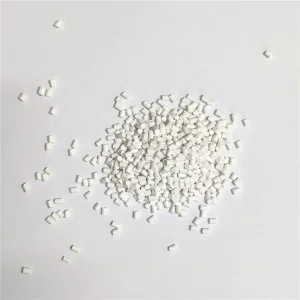
The global plastic packaging and technical polyolefin extrusion sectors are undergoing a massive transformation driven by regulatory compliance, downstream automation, and intense consumer demand for hygienic, safe, and visually immaculate food contact packaging. At the center of this industrial sector lies Food Grade White Polyethylene (PE) Masterbatch—a highly specialized formulation of premium-grade Rutile Titanium Dioxide ($\text{TiO}_2$) dispersed homogenously within virgin Low-Density Polyethylene (LDPE), Linear Low-Density Polyethylene (LLDPE), or High-Density Polyethylene (HDPE) carriers.
Global demand for high-concentration white masterbatch has expanded at a Compound Annual Growth Rate (CAGR) of over 5.8%, driven largely by flexible food packaging (milk films, lamination stocks, barrier pouches), rigid blow-molded liquid food containers, and inject-molded dairy closures. Unlike standard industrial-grade colorants, food-grade white PE masterbatch must satisfy non-negotiable chemical purity standards, zero heavy metal migration thresholds, low volatile organic compound (VOC) emissions, and strict organoleptic neutrality to prevent off-flavor transfer into dairy, edible oils, or baby food products.
E-E-A-T Technical Insight: Food contact compliance is not merely about using non-toxic pigment raw materials. It requires full supply chain traceability, vacuum degassing during twin-screw melt compounding to remove trace volatiles, and rigorous Filter Pressure Value (FPV) testing to ensure sub-micron dispersion without micro-agglomerates that compromise film barrier properties.
Understanding the engineering nuances of high-concentration pigment loading, melt rheology, and surface passivating additives.
We exclusively select surface-treated Rutile Titanium Dioxide coated with Alumina ($\text{Al}_2\text{O}_3$) and Silica ($\text{SiO}_2$). Rutile's higher refractive index (2.73 vs 2.55 for Anatase) delivers maximum opacity, whiteness index ($L^* > 98.5$), and superior UV shielding capabilities in ultra-thin agricultural and food films.
A frequent point of failure in blown film production is Melt Flow Index (MFI) mismatch. Our food-grade white PE masterbatch utilizes fractional MFI high-purity virgin PE carriers that blend seamlessly into HDPE, LLDPE, and PP matrices without causing melt fracture or die build-up.
Designed to withstand extrusion thermal spikes up to 280°C–300°C without lacing, yellowing, or polymer chain scission. Advanced heat stabilizer packages neutralize residual catalyst residues from base resins, guaranteeing zero discoloration during multi-pass reprocessing.
Below is a comparative evaluation highlighting the performance delta between standard grade industrial white masterbatch and Changzhou Jiazhou Plastic's custom high-concentration food grade white PE masterbatch:
| Technical Parameter | Standard Industrial White Masterbatch | Jiazhou Custom Food-Grade White PE Masterbatch | Testing Standard / Protocol |
|---|---|---|---|
| $\text{TiO}_2$ Content (Mass %) | 30% - 50% Anatase / Low Rutile | 60% - 80% Premium Chloride Rutile | ISO 3262-1 / Ash Content Test |
| Whiteness Index ($WI$) | 82 - 88 | 95 - 99 (CIE Whiteness) | ASTM E313 Spectrophotometry |
| Filter Pressure Value (FPV) | > 2.5 bar/g | < 0.3 - 0.5 bar/g | EN 13900-5 (Mesh Screen 25µm) |
| Food Contact Compliance | Basic Non-Certified or General Industrial | FDA 21 CFR 178.3297, EU 10/2011, REACH, RoHS | SGS / TÜV Rheinland Migration Tests |
| Heavy Metal Residues ($\text{Pb}, \text{Cd}, \text{Hg}, \text{Cr}^{VI}$) | < 100 ppm combined | Undetectable (< 5 ppm strictly controlled) | ICP-OES Spectrometry |
| Heat Resistance Ceiling | 220°C - 240°C | 260°C - 300°C Continuous | TGA / Melt Extrusion Thermal Aging |
How 16+ years of specialized compounding infrastructure translates to cost advantages, speed, and uncompromising quality control.
For international procurement directors, supply chain managers, and plastic convertors, sourcing directly from top-tier Chinese masterbatch manufacturers like Changzhou Jiazhou Plastic Products Co., Ltd. delivers a massive strategic edge over local regional compounders. Located in the heart of China’s advanced chemical industrial cluster in Jiangsu Province, Changzhou Jiazhou operates a modern 6,000m² manufacturing facility optimized for lean compounding, high throughput, and energy-efficient processing.
Our long-standing partnerships with world-class Rutile $\text{TiO}_2$ producers and major petrochemical resin suppliers allow us to bypass intermediary markups. By purchasing high-purity polymer carriers and inorganic titanium dioxide pigments in multi-thousand-ton batches, Changzhou Jiazhou passes directly-leveraged raw material cost economies to international buyers.
Achieving an 80% titanium dioxide concentration while maintaining fluid melt dispersion is physically impossible on standard single-screw equipment. Our production lines feature co-rotating, high-torque twin-screw extruders equipped with continuous gravimetric loss-in-weight feeders, multi-stage melt filtration systems, and underwater pelletizing units. This guarantees zero batch-to-batch variation and perfectly spherical pellet geometry for clean, dust-free dosing at the customer's hopper.
To eliminate cross-contamination risks, our food-grade white masterbatch compounding lines operate within segregated clean zones. Every production lot undergoes rigorous laboratory verification prior to packaging, including:
Delivering tailored color and opacity solutions across diverse plastic transformation processes globally.
Used extensively in milk pouches, liquid packaging, and agricultural silages. Provides complete light barrier protection against UV exposure, preserving nutrition and extending liquid dairy shelf life without chemical preservatives.
Optimized for food container tubs, dairy bottles, thin-wall food packaging, and beverage caps. Provides high gloss, dimensional stability, zero warpage, and uniform surface aesthetic even at high cycle speeds.
Formulated with ultra-pure carrier resins designed for high draw ratios in stretch blow molding (ISBM) and extrusion blow molding (EBM). Prevents pinholes, streaks, and wall thickness variations in squeeze condiment packaging.
Strategic insights for enterprise B2B buyers navigating circular plastic economies and strict ESG targets.
The global masterbatch market is rapidly pivoting toward sustainable compounding, bio-compatible carriers, and ultra-high-efficiency additive integration. Procurement executives must evaluate suppliers not only on immediate price-per-kilogram metrics, but on Total Cost of Ownership (TCO) and long-term sustainability alignment.
To reduce international freight overheads and carbon footprints, plastic convertors are shifting from standard 40-50% white masterbatch to ultra-high 70-80% concentration formulations. Dosing 1.5% of an 80% concentration masterbatch yields identical opacity to dosing 3.0% of a 40% masterbatch, effectively cutting logistics costs and warehouse storage footprints in half.
As global packaging legislation mandates recycled plastic content (e.g., EU Packaging and Packaging Waste Regulation), masterbatch must perform in dirty or yellow-tinted PCR feeds. Jiazhou’s advanced food-grade white PE masterbatch features special optical brighteners and neutralizing tint technology that restores crisp, virgin-like whiteness to PCR LLDPE and HDPE streams.
Modern supply chain security requires absolute compliance with REACH SVHC (Substances of Very High Concern), California Proposition 65, and heavy metal limits under EU Directive 94/62/EC. Changzhou Jiazhou provides comprehensive documentation packages, third-party SGS test reports, and certificate of analysis (COA) documentation for every shipment.
Direct answers to critical questions regarding custom white masterbatch formulations, food compliance, and ordering parameters.
Complete product catalog for plastic injection molders, film blowers, and extrusion factories globally.