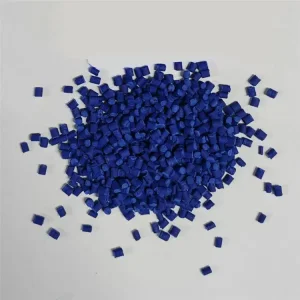
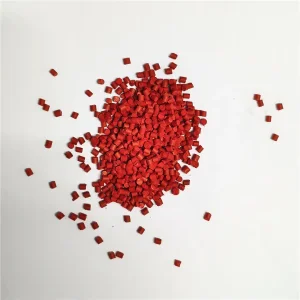
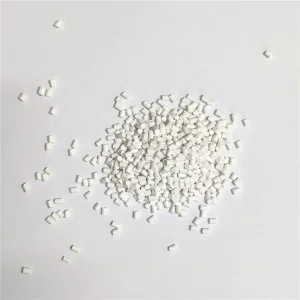
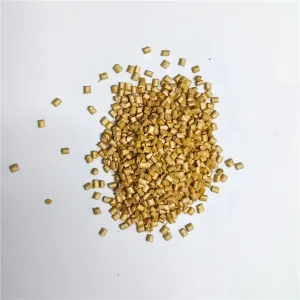
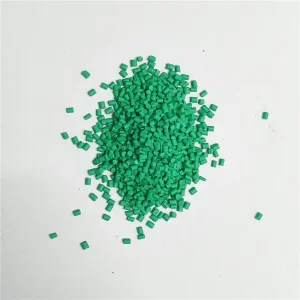
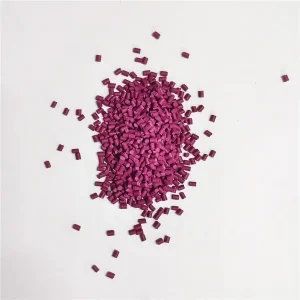
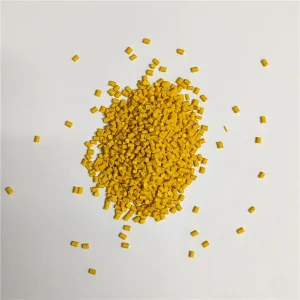
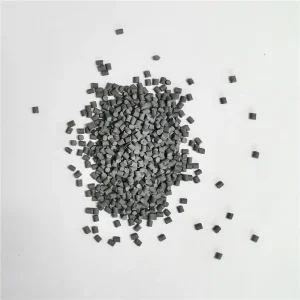
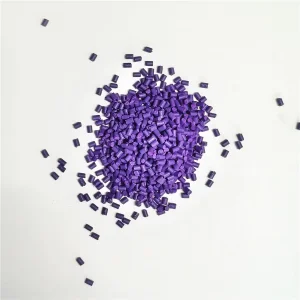
Explore our core product engineering lines. Each masterbatch formulation leverages high-purity Polyethylene carriers and advanced dispersion technologies, designed specifically to reduce extrusion torque, eliminate melt fracture, and optimize surface lubricity across blown film, injection molding, and profile extrusion pipelines.
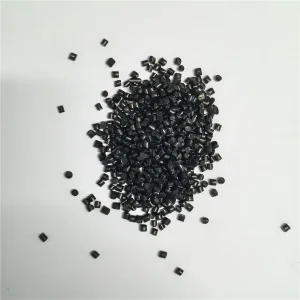
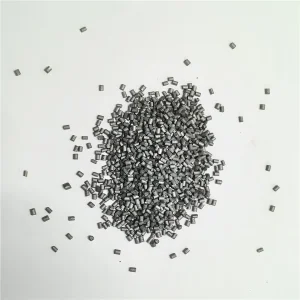
In modern high-speed polyolefin processing, thermal friction and interfacial shear forces represent primary bottlenecks that compromise polymer throughput, energy efficiency, and structural surface integrity. A professionally formulated Custom High Lubrication PE Masterbatch serves as a targeted rheological intervention. By combining specific migratory and non-migratory active agents within a precision-matched Polyethylene (LDPE/LLDPE/HDPE) carrier matrix, modern compounding engineers alter interfacial polymer dynamics at microscopic contact points.
Technical Insight: Dynamic vs. Static COF Reduction
Standard processing aids frequently suffer from thermal degradation at temperatures exceeding 220°C. Advanced High Lubrication PE Masterbatch formulations utilize ultra-high molecular weight (UHMW) siloxane polymer complexes coupled with saturated primary amides to maintain structural dynamic lubrication up to 280°C, lowering the Coefficient of Friction (COF) from typical un-modified values of 0.65+ down to ≤ 0.15.
Primary and secondary lubricative additives migrate gradually to the polymer surface during melt cooling. Saturated fatty acid amides form a monomolecular boundary film on the extruded polyolefin surface, which drastically reduces interfacial stick-slip actions during film winding, bag converting, and automated packaging lines.
When Linear Low-Density Polyethylene (LLDPE) undergoes high shear stress at the die exit, surface melt fracture (sharkskin) frequently occurs. High lubrication masterbatches form a microscopic fluoropolymer or silicone lubricating layer along the metal barrel wall, allowing uniform polymer wall-slip and eliminating sharkskin without reducing mechanical tensile strength.
By reducing internal molecular friction (viscous heat generation within the melt core) and external friction against extruder walls, processing machinery experiences up to a 15–25% drop in head pressure and motor torque load, translating directly into reduced kilowatt energy consumption per kilogram processed.
Rigorous laboratory evaluations conducted under ASTM D1894 (Standard Test Method for Static and Kinetic Coefficients of Friction of Plastic Film and Sheeting) confirm the performance enhancements achieved when integrating high-lubrication additive packages into PE compounding lines.
A common failure mode in plastic manufacturing is the structural incompatibility between carrier resins and base polymers. As a specialized Custom High Lubrication PE Masterbatch Manufacturer, Changzhou Jiazhou Plastic Products Co., Ltd. addresses resin matching at a molecular chemistry level.
If the melt flow index (MFI) of the masterbatch carrier does not closely align with the target matrix polymer (e.g., LLDPE blown film resin vs. HDPE pipe grade resin), additive migration becomes uneven, causing surface haze, printability loss, or phase separation. Our custom formulation team adjusts carrier resin densities (ranging from 0.918 g/cm³ to 0.955 g/cm³) and tailored MFI profiles (2 g/10min to 45 g/10min under 190°C/2.16kg parameters) to guarantee homogenous dissolution.
Our 6,000m² factory deploys co-rotating twin-screw extruders featuring high length-to-diameter (L/D) ratios of 44:1 to 48:1. Multi-stage side feeding allows delicate lubrication additives—such as non-migratory UHMW silicone compounds—to be introduced downstream of high-shear melting zones, preventing thermal degradation and assuring precise concentration accuracy (+/- 0.2%).
Lubrication masterbatches frequently work alongside anti-blocking agents (such as synthetic amorphous silica or natural talc). Pure lubrication agents without anti-block additives can lead to surface oiliness. Our dual-action custom formulations combine micro-spherical space-creating anti-blocks with fast-migrating erucamide to offer minimal COF while preventing film-to-film blocking under high pressure roll storage.
B2B procurement directors and senior plastics engineers evaluate masterbatch suppliers based on multi-variable metrics extending far beyond initial unit price. Operating across North America, Europe, Southeast Asia, and the Middle East, high-volume converters require absolute lot-to-lot consistency, low volatile organic compound (VOC) emissions, and transparent supply chains.
Continuous 24/7 extrusion facilities suffer heavy financial losses when forced to stop lines to scrape degraded polymer residue (die drool or die build-up) off extrusion dies. Custom high-lubrication additives clean and coat internal die surfaces, suppressing die build-up and permitting continuous operation for hundreds of machine hours.
When high-lubrication additives are incorporated into heavily filled compounds (such as 70% TiO2 white masterbatches or 50% Calcium Carbonate filler masterbatches), the lubricant acts as a dispersion aid. It lowers shear viscosity around pigment agglomerates, yielding smooth, streak-free surface finishes in end products.
A recurring pain point for flexible packaging manufacturers is slip additive migration destroying surface tension (dyne levels), preventing proper ink adhesion or lamination strength. Our custom silicone-based non-migratory lubricants provide superior surface slip without compromising post-extrusion corona treatment or solvent-based ink printing.
Navigating global regulatory landscapes requires rigorous analytical testing and compliance certification. Polymer products destined for food packaging, medical devices, or water infrastructure must comply with stringent international standards. Changzhou Jiazhou Plastic Products Co., Ltd. provides robust local regulatory support across target export markets.
Comprehensive Regulatory Compliance Guarantee:
All custom high lubrication PE masterbatch grades manufactured at our ISO-certified facilities are fully documented with raw material traceability, meeting FDA 21 CFR 177.1520 (Olefin Polymers), EU Regulation No 10/2011 (Plastic Materials intended to come into contact with food), REACH SVHC compliance, RoHS 3 directive standards, and BPA-free declarations.
For blown film processors manufacturing stretch film, food wrap, or food-grade storage bags, our high-lubrication additive packages use ultra-pure, low-odor, food-contact approved active ingredients. Specific overall migration limit (OML) and specific migration limit (SML) testing datasheets are provided for seamless client audit approval.
We provide remote trial monitoring and localized dosage recommendations tailored to specific client processing line parameters (e.g., L/D ratio, temperature profiles across barrel zones 1 to 5, die gap settings, and blow-up ratios). Our technical engineering team provides immediate response protocols for dosage troubleshooting.
Situated in Changzhou, Jiangsu Province—at the core of China's primary chemical and plastic processing corridor—Changzhou Jiazhou Plastic Products Co., Ltd. leverages world-class industrial infrastructure. Direct access to raw polymer monomers, localized additive chemical synthesis hubs, and proximity to Shanghai Port yield unmatched cost efficiency and logistics agility.
By managing the entire production chain—from raw material spectrophotometric quality screening and twin-screw micro-compounding to automated pellet classification and moisture-proof vacuum packing—our manufacturing model minimizes overhead while safeguarding precision quality control.
High Lubrication PE Masterbatch is a vital processing additive across diverse industrial plastic conversion methods. Below are detailed operational application scenarios:
In multi-layer co-extrusion blown film lines (producing agricultural stretch films, heavy-duty shipping sacks, and courier bags), adding 1.0% to 2.5% of high lubrication masterbatch to the outer skin layer lowers surface friction, preventing bubble instability, bubble collapse, and gauge variation during high-speed winding (>120 meters/minute).
Complex mold geometries with deep draws, thin walls, or internal rib structures frequently experience ejector pin marks or part deformation upon ejection. Incorporating an internal high-lubrication masterbatch acts as a permanent mold release agent, shaving 10–18% off total cooling and cycle times while eliminating external silicone spray usage.
Thick-walled HDPE corrugated pipes and water conduits demand high extrude volume. High-lubrication masterbatches prevent internal melt shear overheating, smooth out inner wall roughness to boost water flow dynamics, and prevent die-lip buildup during long production runs.
The plastic processing industry is undergoing a structural shift toward the Circular Economy and decarbonization. As global brands increase Post-Consumer Recycled (PCR) resin content to 30%, 50%, or 100%, new manufacturing challenges emerge. PCR Polyethylene resins exhibit wide batch-to-batch viscosity fluctuations, residual contaminants, and reduced melt strength.
Next-generation High Lubrication PE Masterbatches incorporate functionalized chain-compatibilizers and non-migratory hyper-branched siloxane polymers. These modern additives stabilize the melt strength of contaminated PCR streams, reduce processing torque spikes, and mask surface imperfections inherent to recycled feedstock, enabling high-quality film and bottle production using recycled materials.
Gain technical clarity regarding custom formulation options, dosage protocols, regulatory compliance, and logistics parameters.
Select from our extensive portfolio of high-concentration color, filler, and additive masterbatches. Designed for optimum compatibility across PE, PP, and polyolefin processing lines.