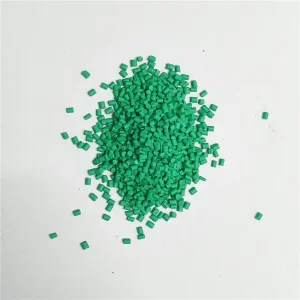
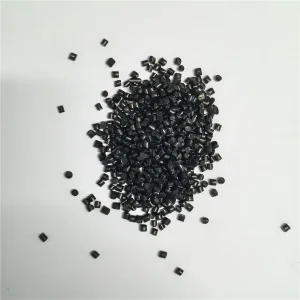
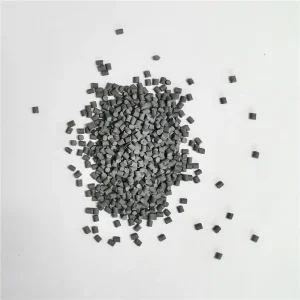
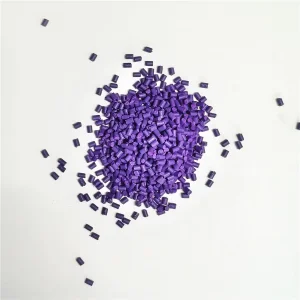
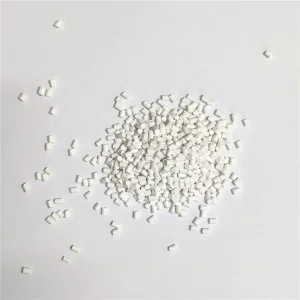
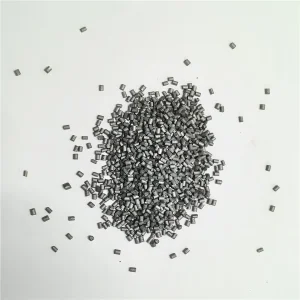
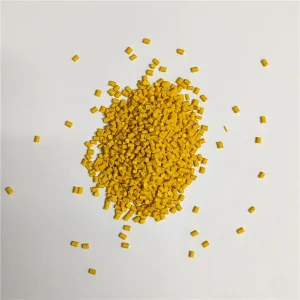
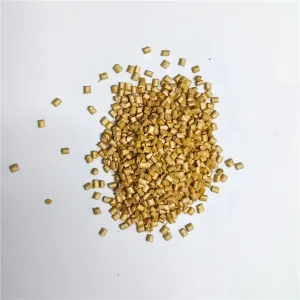
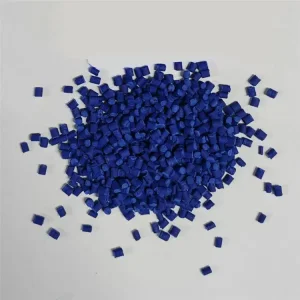
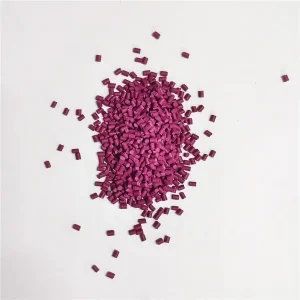
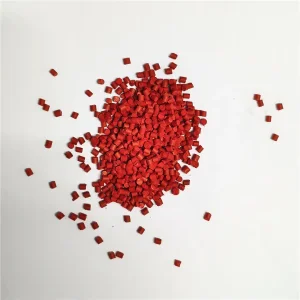
High-concentration Polyethylene masterbatch solutions engineered for injection molding, blown film, and pipe extrusion with non-migration and low odor characteristics.
Resolving volatile organic compound (VOC) emissions and thermal degradation odor in Polyethylene processing.
Polyethylene resins naturally undergo thermo-oxidative chain scission during high-temperature extrusion, forming trace low-molecular-weight aldehydes, ketones, and short-chain alkanes. Our low-odor masterbatch utilizes virgin LLDPE/LDPE carriers thoroughly degassed under high vacuum to eliminate organic volatiles at the source.
Incorporating nanostructured synthetic aluminosilicate zeolites with precise pore diameters (3Å to 10Å), our formulations irreversibly trap polar odor molecules and volatile organic residues within the polymer matrix during the melt phase, rendering finished products organoleptically neutral.
By combining high-efficiency primary hindered phenolic antioxidants with secondary phosphite thermal stabilizers, our low-odor PE masterbatch prevents hydroperoxide formation at temperatures up to 260°C, ensuring zero thermal discoloration or gas-fading emissions.
In standard Polyethylene masterbatch manufacturing, unrefined carrier resins and low-purity wax dispersants release volatile compounds such as 2-ethylhexanol, nonanal, octanal, and organic acids under melt shear. These compounds generate unpleasant odors detectable in automotive cabins, cleanrooms, and food packaging containers. As a dedicated Custom Low Odor PE Masterbatch Company & Manufacturer, Changzhou Jiazhou Plastic Products Co., Ltd. deploys triple-stage melt filtration and vacuum degassing extruders to achieve a total volatile organic carbon (TVOC) level below 50 µg/g according to VDA 277 testing standards.
| Odor & Volatile Characteristic | Standard PE Masterbatch | Jiazhou Low-Odor PE Masterbatch | Test Standard / Method |
|---|---|---|---|
| VDA 270 Odor Rating (Score 1-6) | 4.5 - 5.0 (Strong / Offensive) | 1.5 - 2.0 (Barely Perceptible) | VDA 270 (80°C, 2 Hours) |
| TVOC Emission (µg C/g) | > 250 µg/g | < 35 µg/g | VDA 277 Headspace GC-MS |
| Thermal Stability Ceiling | 220°C | 260°C - 280°C | TGA (Thermal Gravimetric Analysis) |
| Organoleptic Flavor Transfer | Detectable Off-Taste | Zero Flavor Alteration | Sensory Panel (Robinson Test) |
Engineered solutions meeting strict regional regulations for automotive interiors, beverage closures, medical equipment, and domestic appliances.
Automotive OEMs in North America and Europe enforce stringent cabin air quality (CAQ) limits. Our low-odor PE color masterbatch is extensively used in HVAC ductwork, door trim panels, seat covers, and under-dash wiring conduits, helping tiers comply with BMW GS 97014, Mercedes-Benz DBL 5430, and Toyota TSM0505G specifications.
Organoleptic neutrality is critical for bottled water caps, dairy packaging, and edible oil spouts. Our specialized low-odor PE white, blue, and custom color masterbatches undergo organoleptic testing to guarantee zero taste alteration or odor transfer, satisfying FDA 21 CFR 177.1520 and EU Regulation 10/2011 standard requirements.
Medical device packaging and pharmaceutical fluid containers require ultra-pure masterbatches free of heavy metals and odoriferous volatiles. Our cleanroom-manufactured low-odor PE masterbatches protect diagnostic housings and specimen containers from volatile contamination without compromising tensile strength or clarity.
Pioneering eco-friendly scavengers, bio-based carriers, and circular plastic odor control systems.
Transitioning from fossil-derived Polyethylene to ISCC PLUS-certified bio-PE carriers derived from sugarcane ethanol, drastically reducing net carbon footprint while maintaining identical low-odor melt profiles for circular packaging.
Post-consumer recycled (PCR) Polyethylene frequently suffers from persistent contamination odors. Our latest R&D roadmap includes reactive chemical deodorizers embedded within the masterbatch to neutralize legacy fragrance and oxidation odors during PCR re-processing.
Developing micro-encapsulated functional additives that delay chemical release until final melt processing. This technology prevents degradation during compounding and maximizes active VOC trapping inside the end-user's extrusion line.
Leveraging Changzhou's world-class petrochemical ecosystem to deliver rapid custom formulations, unmatched cost efficiency, and supply security.
Located in Changzhou, Jiangsu Province—the heart of East China's advanced polymer cluster—Changzhou Jiazhou Plastic Products Co., Ltd. benefits from immediate access to premium virgin LLDPE/LDPE carriers, high-purity pigments, and specialized organic scavengers. This localized chemical supply chain allows us to insulate global buyers from raw material volatility while maintaining strict cost control.
Every production batch undergoes strict quality control checks before release:
Navigating complex international environmental mandates with certified compliance and dedicated engineering assistance.
Our low-odor PE masterbatches are formulated in accordance with global chemical restrictions. Products strictly comply with EU REACH (SVHC-free), RoHS Directives (2011/65/EU), China GB 4806 food contact standards, and California Proposition 65, eliminating compliance risks for global exporters.
We offer direct engineering support to optimize masterbatch dosing ratios (typically 1% to 4%), barrel temperature profiles, and screw speed configurations. Our technical team works alongside your processing engineers to resolve silver streaks, gas marks, or die buildup during production trials.
Beyond standard color lines, we engineer multi-functional combination masterbatches combining low-odor properties with UV stabilization, anti-static protection, slip agents, or flame retardants, reducing feeder complexity on your processing machinery.
Expert answers regarding processing parameters, carrier selection, odor testing, and dosing guidelines.
A low odor PE masterbatch is manufactured using ultra-pure polymer carrier resins, refined low-volatility dispersants, and vacuum-degassed extrusion compounding lines. Furthermore, active organic odor scavengers (synthetic zeolites) are incorporated to trap thermal degradation volatiles like aldehydes, ketones, and residual monomers, resulting in a VDA 270 odor rating of 1.5 - 2.0 compared to 4.5+ for standard grades.
Depending on the final wall thickness and target opacity/color intensity, the recommended dosing ratio typically ranges from 1% to 4%. For thin-wall blown film applications (e.g., 25 microns), a 2% to 3% dosing ratio is standard. For automotive injection-molded parts, 1.5% to 2% delivers optimal opacity and low VOC performance without impacting physical mechanical properties.
Yes. Polyethylene (PE) carriers are generally compatible with Polypropylene (PP) matrices in small dosing percentages (1% - 3%). However, for high-rigidity PP parts requiring absolute optical clarity or specialized impact resistance, we can engineer custom low-odor PP-based masterbatches using identical scavenger and low-VOC technology to match matrix rheology.
Odor performance is tested according to VDA 270 guidelines. Masterbatch samples are molded into plaques, placed in sealed glass vessels, and heated in an environmental chamber to 80°C for 2 hours. A trained sensory panel evaluates the vessel headspace on a scale from 1 (not perceptible) to 6 (offensive). Additionally, headspace Gas Chromatography-Mass Spectrometry (GC-MS) measures specific TVOC output in accordance with VDA 277.
No. In fact, our low-odor PE masterbatches exhibit superior thermal stability compared to conventional grades. By utilizing synergistic phenolic/phosphite antioxidants, the polymer structure remains protected against thermal degradation at temperatures up to 260°C - 280°C, preventing yellowing and polymer breakdown during long residency cycles.
When stored in original sealed moisture-barrier bags in a dry, cool environment below 35°C, our low-odor PE masterbatches have a shelf life of 24 months. Because the synthetic zeolites are active scavengers, unopened bags prevent ambient moisture and vapor absorption prior to melt compounding.
Partner with Changzhou Jiazhou Plastic Products Co., Ltd. for tailor-made low-VOC color solutions, exact color matching, and global factory-direct supply flexibility.
Contact Our Polymer Engineering TeamPremium colorants and additive combinations for extrusion blowing, injection molding, and film manufacturing.