Precision-engineered masterbatch formulations manufactured under strict ISO quality controls for blown film, injection molding, and continuous extrusion.
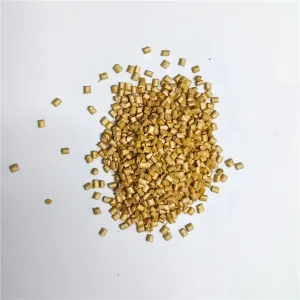
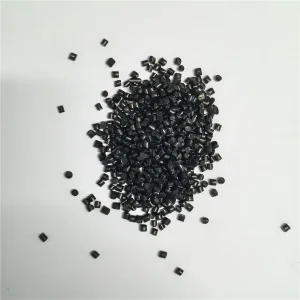
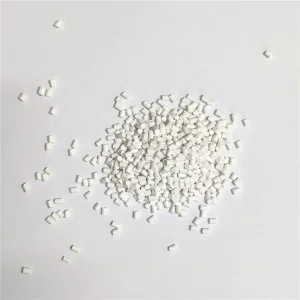
How modern polymer compounding bridges the gap between surging raw material cost volatility, regulatory pressures, and the demanding optical requirements of modern blown film and injection molding.
For decades, plastics processors have relied exclusively on high concentrations of Rutile Titanium Dioxide (TiO₂) to achieve maximum opacity, bright whiteness, and UV barrier performance in polyethylene (PE) products. However, global market dynamics in 2026 present a severe challenge for film extruders and injection molders: raw TiO₂ pricing volatility, tightening EU REACH restrictions regarding dust exposure and chemical classifications, and intense downward pressure on finished goods margins.
Historically, simply increasing TiO₂ percentage (e.g., standard 60%–70% white masterbatch) was the default strategy for thin-wall packaging, multi-layer milk films, and heavy-duty shipping sacks. Yet this brute-force approach comes with substantial technical trade-offs: elevated Filter Pressure Values (FPV), die-lip build-up (drool), accelerated screw wear, and reduced film dart impact strength due to inorganic agglomeration.
Changzhou Jiazhou Plastic Products Co., Ltd. has disrupted conventional compounding by developing Custom Low Titanium Dioxide High Covering White PE Masterbatch. By utilizing Mie Light Scattering Optimization combined with surface-treated nano-scale co-opacifiers, our formulation matches or exceeds the visual opacity of standard 70% TiO₂ masterbatches while reducing raw TiO₂ content by up to 35%. This engineered particle matrix dramatically lowers density, improves dispersion, and decreases overall cost-per-ton for global buyers.
The opacity of white plastic relies on the difference in refractive index between the pigment particles and the polymer matrix. Rutile TiO₂ possesses a exceptionally high refractive index ($n = 2.73$), compared to polyethylene ($n \approx 1.51$). Light passing through the polyolefin film scatters when it encounters these refractive index boundaries.
Under traditional processing, TiO₂ particles frequently aggregate at micron scales, causing light to pass through unscattered voids between agglomerates. Jiazhou’s R&D team solves this through a dual-mechanism approach:
Understanding shifting regulatory frameworks, sustainability benchmarks, and international supply chain requirements shaping the plastic masterbatch sector.
Global FMCG brands are demanding thinner polyolefin packaging films without sacrificing light barrier protection (especially for dairy, pharmaceutical, and food pouch packaging). Low-TiO₂ high-covering masterbatches enable consistent opacity in down-gauged films down to 10–15 μm.
With non-intentionally added substances (NIAS) under intense scrutiny, multinational buyers require fully certified masterbatches. Jiazhou’s white masterbatch formulations are heavy-metal free, RoHS compliant, FDA food-contact approved, and REACH SVHC compliant.
Titanium dioxide carries a high embedded carbon footprint (~4.5 kg CO₂ per kg of TiO₂ produced). By switching to optimized low-TiO₂ formulations, processors immediately lower Scope 3 carbon emissions while enjoying reduced head pressure on extrusion lines.
Quantitative evaluation illustrating processing stability, optical density, filter pressure, and cost performance.
| Performance Parameter | Standard High-TiO₂ Masterbatch (70%) | Jiazhou Custom Low-TiO₂ High Covering (45% TiO₂ + Matrix) | Technical Advantage |
|---|---|---|---|
| TiO₂ Content (Rutile) | 70% | 45% (Optimized Micro-Matrix) | 35% Cost & Carbon Savings |
| Whiteness Index (CIE WI) | 91.5 – 93.0 | 92.8 – 94.5 | +1.5 Higher L* Brightness |
| Film Opacity (50 μm Film) | 97.8% | 98.4% | Superior Hiding Power |
| Specific Gravity (g/cm³) | 1.95 – 2.05 | 1.62 – 1.70 | 15% Lower Specific Weight |
| Filter Pressure Value (FPV) | 1.2 – 1.8 bar/g | < 0.45 bar/g | 70% Less Screen Clogging |
| Thermal Stability (°C) | 260°C | 280°C | No Yellowing / Off-Gassing |
| Die-Lip Drool / Build-Up | Moderate to High | Minimal to Zero | Longer Production Runs |
How Changzhou Jiazhou Plastic Products Co., Ltd. leverages 16 years of expertise, continuous compounding technology, and direct export infrastructure to serve buyers across 100+ nations.
Located in Changzhou, Jiangsu Province—one of China’s core advanced plastic manufacturing zones—Changzhou Jiazhou Plastic Products Co., Ltd. operates a modern 6,000 m² ISO-certified manufacturing site. Backed by 16 years of dedicated research and development in PE color masterbatches, filler masterbatches, and functional additive matrices, Jiazhou represents the apex of modern Industry 4.0 plastic compounding.
Compounding high-covering low-TiO₂ masterbatch requires extreme shear control and thermal regulation. Agglomerated filler or raw pigment causes pinholes in 10-micron agricultural films. Jiazhou utilizes co-rotating high-torque twin-screw extruders integrated with gravimetric multi-component dosing systems.
Recognizing that film processors operate under tight delivery deadlines, Jiazhou maintains robust raw material safety stocks and streamlined port access (Shanghai & Ningbo ports within 3 hours). Standard order lead times are kept to 15 business days. Furthermore, our engineering team offers customized carrier resin matching—matching LLDPE, LDPE, HDPE, PP, or EVA carriers directly to your base substrate to ensure 100% melt compatibility and zero phase separation.
Tailored masterbatch formulation matrices engineered specifically for diverse international manufacturing processes.
Used in black-and-white liquid food pouches (polyethylene milk pouches) where the white outer layer demands 100% UV barrier protection and high whiteness, while maintaining food contact safety (FDA compliant).
Co-extruded e-commerce mailer bags require high opacity so inner contents remain strictly confidential. Our low-TiO₂ white masterbatch gives maximum opacity at low let-down ratios (LDR 2%–4%) without degrading seal strength.
White silage films reflect thermal radiation to prevent crop spoilage. Our white masterbatch incorporates specialized HALS UV-stabilizers to withstand intense outdoor solar irradiance in North America, Europe, and Australia.
Eliminate sink marks, surface streaking, and yellowing in thin-wall injection molded buckets, caps, and closures. High dispersion guarantees smooth, high-gloss surface finishes under short molding cycle times.
Expert solutions and technical guidance for extrusion engineers, quality control officers, and procurement directors.
The opacity of white plastic is determined by how effectively pigment particles scatter visible light (Mie Scattering). Standard masterbatches often suffer from TiO₂ agglomeration, where densely packed pigment particles overlap and lose scattering efficiency. Jiazhou’s Custom Low Titanium Dioxide White Masterbatch uses microscopic inorganic spacers that isolate individual Rutile TiO₂ particles at the optimal wavelength distance ($0.22\,\mu\text{m}$). This prevents particle overcrowding and maximizes refractive index differentials, allowing a 45% TiO₂ formulation with optimized spacers to achieve equal or superior opacity to an un-spaced 70% TiO₂ masterbatch.
No. In fact, mechanical performance often improves. High loadings of raw TiO₂ can act as stress concentrators if poorly dispersed, reducing film dart impact strength and puncture resistance. Our low-TiO₂ formulations exhibit significantly lower Filter Pressure Values (FPV < 0.5 bar/g), confirming homogeneous dispersion. This leads to uniform resin melt strength, improved elongation at break, and consistent thermal seal integrity in high-speed form-fill-seal (FFS) packaging lines.
Depending on film thickness and desired contrast opacity:
• Thin Blown Film (15–30 μm): Recommended LDR is 2.0% to 4.0%.
• Heavy-Duty Sacks / Agricultural Film (50–100 μm): Recommended LDR is 1.5% to 3.0%.
• Injection Molding (Thin-Wall Containers): Recommended LDR is 1.0% to 2.5%.
Our engineering team can perform precise spectro-matching based on your specific target LDR and resin substrate.
Yes. All raw materials used in our food-grade white masterbatch series comply with FDA 21 CFR 178.3297 (Colorants for Polymers) and European Union Regulation (EU) No 10/2011 on plastic materials intended to come into contact with food. Products are certified free of heavy metals (RoHS Directive 2011/65/EU) and contain no Substances of Very High Concern (SVHC) listed under REACH.
We employ an automated closed-loop compounding protocol. Raw ingredients are metered via computerized gravimetric feeders. Every hourly production sample is molded and analyzed using a Konica Minolta Spectrophotometer. We enforce strict CIELAB color tolerances: $\Delta L^* < 0.3$, $\Delta a^* < 0.2$, and $\Delta b^* < 0.2$. Retained batch samples are stored for 24 months for complete quality traceability.
Yes. Our high-temperature white masterbatch grades feature low-volatility carrier resins and thermally stable dispersion additives capable of processing up to 280°C–300°C without dielectric breakdown, off-gassing, lacrimating smoke, or die lip buildup.
When stored in original unopened heavy-duty PE bags in a cool, dry, and ventilated warehouse out of direct sunlight, our masterbatch products have a shelf life of 12 to 24 months. Pallets are stretch-wrapped and moisture-sealed for safe ocean freight transit globally.
Direct factory supply with worldwide shipping, competitive B2B pricing, and technical support.