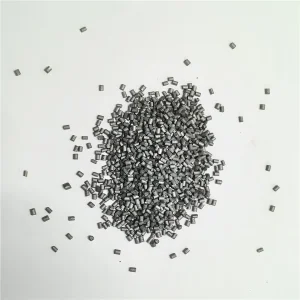
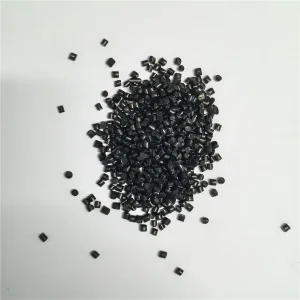
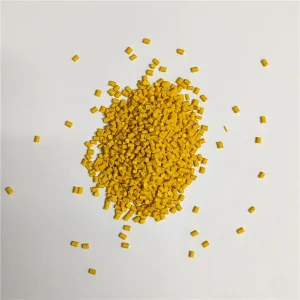
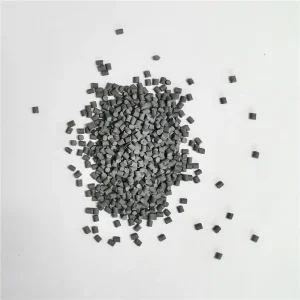
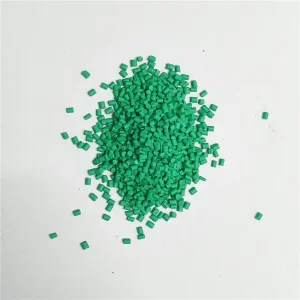
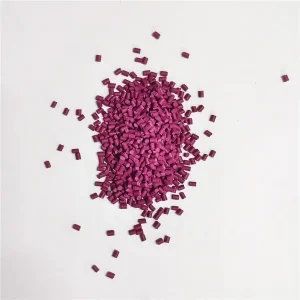
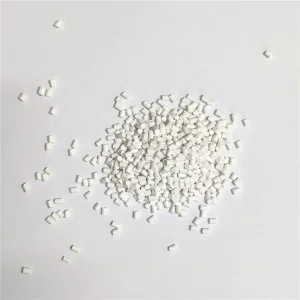
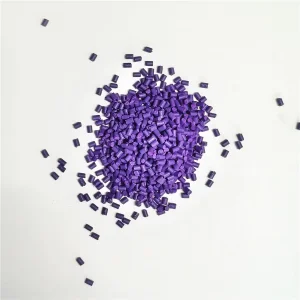
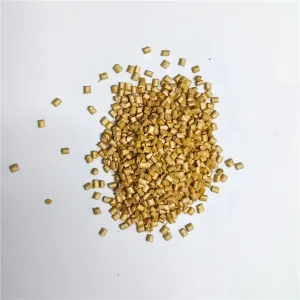
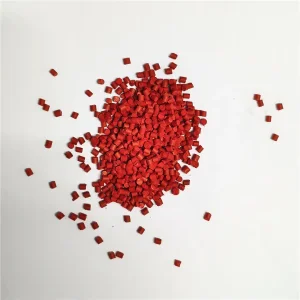
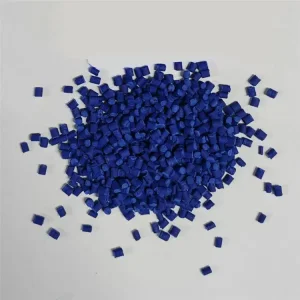
Discover our high-concentration, thermal-stable PE masterbatch solutions engineered for blown film, injection molding, and complex extrusion processes worldwide.
Navigating the intersection of Rutile Titanium Dioxide supply volatility, regulatory compliance under EU ECHA mandates, and the shift toward engineered low-TiO₂ high-opacity polymer matrices.
Rutile Titanium Dioxide ($\text{TiO}_2$) remains one of the most capital-intensive pigments in polyolefin processing. With global price fluctuations driven by sulphate/chloride feedstock constraints and energy-intensive calcination, plastic converters face expanding margin squeezes. Formulating custom Low Titanium Dioxide White PE Masterbatch enables up to 25-35% raw material cost reduction without compromising tinting strength or opacity.
Following European Chemicals Agency (ECHA) scrutiny regarding inhalable $\text{TiO}_2$ particles and micro-powder handling safety, global brand owners actively seek masterbatch formulations that optimize pigment efficiency. Encapsulating reduced $\text{TiO}_2$ loadings inside a tailored LLDPE/LDPE polymer matrix mitigates workplace dust exposure while aligning with stringent European REACH and food-contact compliance frameworks.
Every metric ton of virgin $\text{TiO}_2$ generated carries an estimated carbon footprint of 2.5 to 4.1 tons of $\text{CO}_2\text{e}$. By substituting a portion of pure titanium dioxide with ultra-fine, high-refractive mineral extenders and functional synergists, plastic manufacturers lower the embodied carbon content of finished blown packaging, agricultural mulch, and rigid containers dramatically.
Achieving maximum opacity with reduced titanium dioxide concentration requires deep mastery over Mie Scattering Theory, refractive index matching, and sub-micron particle spatial dispersion.
The opacity of white polyethylene film is governed by light scattering efficiency, which peaks when the particle diameter of $\text{TiO}_2$ ($n \approx 2.73$ for Rutile) is approximately half the wavelength of visible light ($\lambda \approx 400-700\text{ nm}$). Standard masterbatches often suffer from pigment agglomeration, where crowded particles overlap their scattering spheres, diminishing light reflectance per unit weight.
Our proprietary manufacturing technology utilizes hyper-dispersants and steric-hindrance wax systems that maintain an optimal particle spacing of $0.20 - 0.25\,\mu\text{m}$. This eliminates particle crowding, allowing a 45-50% Low TiO₂ Masterbatch to deliver light scattering power comparable to a un-optimized 60-70% standard white masterbatch.
To compensate for reduced $\text{TiO}_2$ loading, custom formulations incorporate surface-treated, ultra-fine functional mineral extenders:
| Performance Characteristic | Standard 70% TiO₂ White Masterbatch | Engineered Low-TiO₂ White PE Masterbatch | Industrial Value Advantage |
|---|---|---|---|
| Titanium Dioxide ($\text{TiO}_2$) Content | 70% Rutile | 40% - 50% Rutile + Functional Synergists | Substantial Raw Material Cost Reduction |
| Whiteness Index (CIE L*) | 94.5 - 95.5 | 93.5 - 94.8 | Visually Indistinguishable Tone Consistency |
| Filter Pressure Value (FPV) | > 1.2 bar/g (higher agglomeration risk) | < 0.45 bar/g (hyper-dispersed) | Extends Screen Pack Lifespan by 2.5x |
| Melt Flow Index (MFI @ 190°C/2.16kg) | 8 - 12 g/10min | 14 - 22 g/10min (Tailored Carrier) | Lower Extruder Head Pressure & Energy Use |
| Film Pin-hole & Tear Strength | Moderate vulnerability at thin gauges | Superior elongation and flex-crack resistance | Prevents web breaks in down-gauged films |
| Carbon Footprint Reduction | Baseline Reference (100%) | 22% - 30% Lower $\text{CO}_2\text{e}$ per ton | Supports Brand Owner ESG / Scope 3 Goals |
Tailored polymer carrier formulations optimized for blown film co-extrusion, high-speed injection molding, cast film, and heavy-duty blow-molded containment.
Used extensively in milk pouches, courier mailer bags, and lamination films. Low $\text{TiO}_2$ masterbatch prevents gauge variation and bubble instability on high-speed blown lines. In 3-layer and 5-layer ABA co-extrusion, feeding this masterbatch into skin layers delivers high surface opacity while allowing inner layers to incorporate recycled PE resins cleanly.
Agricultural mulch and stretch silage wraps require precise light barrier properties to suppress weed growth and protect ensilage nutrients. Our low $\text{TiO}_2$ formulations are co-formulated with Hindered Amine Light Stabilizers (HALS) and UV absorbers, providing high weatherability under extreme solar radiation without premature thermal degradation.
For thin-walled food containers, caps, closures, and industrial drums. High titanium dioxide loadings often induce anisotropic shrinkage, leading to part warpage and sink marks. By reducing pigment solids and incorporating melt-homogenizing carrier waxes, our masterbatch ensures dimensional stability, fast cycle times, and crisp surface gloss.
Driving transformation in plastic color science through smart additives, bio-based polyolefin carriers, and NIR-sorting circular design.
Encapsulating sub-micron mineral cores with nanoscale titanium dioxide shells. This architecture ensures 100% of the $\text{TiO}_2$ resides at the optical interface, reducing total $\text{TiO}_2$ volumetric requirements by up to 50% while maintaining identical light refraction performance.
Transitioning carrier resins from standard fossil-derived LLDPE to bio-allocated sugarcane polyethylene and certified circular PCR-PE matrices. This enables brand owners to achieve 100% closed-loop circular packaging without sacrificing masterbatch dispersion.
Formulating white masterbatches with Near-Infrared (NIR) reflective markers. This ensures that post-consumer white PE containers are accurately identified and sorted by automated optical sorting systems in Material Recovery Facilities (MRFs).
Authoritative guidance on processing parameters, FDA/EU regulatory compliance, dosage recommendations, and mechanical property retention.
Factory-direct supply, OEM custom color matching, and comprehensive technical support for plastic processors globally.