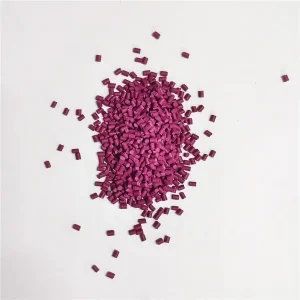
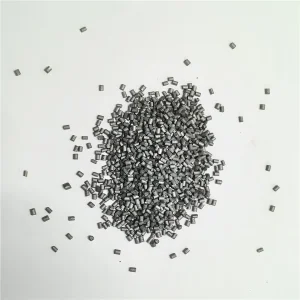
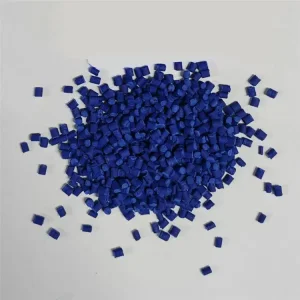
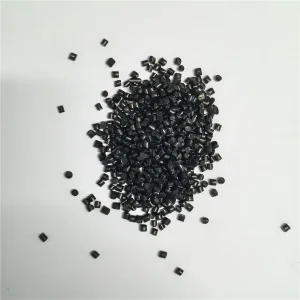
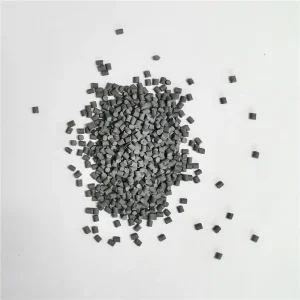
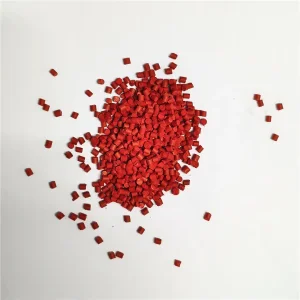
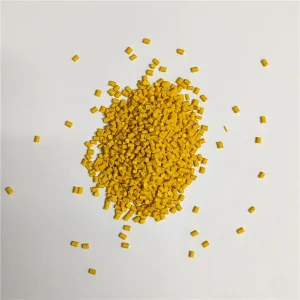
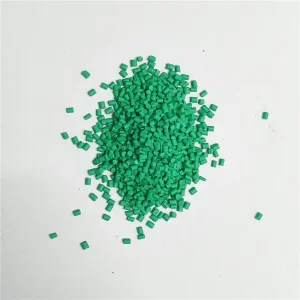
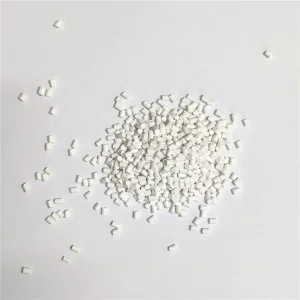
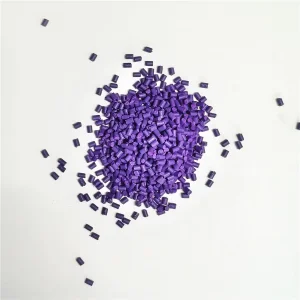
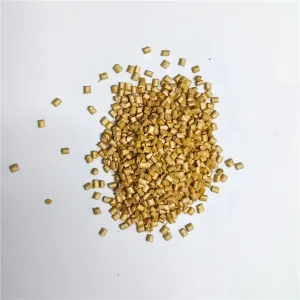
Engineered for superior color strength, heat stability up to 260°C–300°C, and flawless dispersibility in film blowing and injection molding.
An authoritative technical guide on carrier-matrix compatibility, pigment dispersion kinetics, thermal degradation thresholds, and rheological harmonization in Polyethylene resin processing.
In modern industrial plastic processing, achieving uniform color distribution, mechanical integrity, and batch-to-batch repeatability requires advanced compounding chemistry. A Custom Polyethylene (PE) Dye Masterbatch is not merely a mixture of raw pigments and carrier resin; it is a precisely engineered colloidal system designed to integrate seamlessly into host virgin polymers—including Low-Density Polyethylene (LDPE), Linear Low-Density Polyethylene (LLDPE), High-Density Polyethylene (HDPE), and Metallocene-PE (mPE).
The primary prerequisite for defect-free extrusion and blow molding is the harmonization of the Melt Flow Rate (MFR/MFI) between the masterbatch carrier resin and the base polyolefin matrix. As a rule of thumb, the MFR of the masterbatch carrier polymer must be slightly higher (typically 20% to 50% higher) than the MFR of the target processing resin. If the carrier polymer possesses an excessively high molecular weight (low MFR), the masterbatch pellets will fail to melt at the same shear plane as the matrix resin, resulting in un-melted specs, pigment agglomerates, and visible streaks in blown films.
At Changzhou Jiazhou Plastic Products Co., Ltd., our R&D laboratories custom-select virgin LDPE, LLDPE, or specialized wax-modified carriers depending on customer process constraints. For ultra-thin blown films (e.g., 10 to 25-micron agricultural mulch films or courier bags), we employ narrow-molecular-weight-distribution (NMWD) resins to maintain maximum tensile strength and tear resistance while ensuring swift color dispersion.
Pigment agglomeration is the single largest cause of film breakdown, bubble instability, and nozzle clogging during plastic manufacturing. Primary organic pigment particles (such as Phthalocyanine Blue, Quinacridone Magenta, or Isoindolinone Yellow) typically measure between 0.05 and 0.5 microns. However, without high-shear compounding, these primary particles clump together into large aggregates exceeding 20 microns.
Our factory utilizes high-torque, co-rotating twin-screw extruder systems equipped with specialized mixing segments (Kneading Blocks, Dispersive Mixing Elements, and Reverse Conveying Elements). This mechanical shear, combined with proprietary titanate and silane coupling agents, coats every pigment particle to prevent re-agglomeration. The ultimate metric of dispersion quality is the Filter Pressure Value (FPV) according to EN 13900-5:
Our high-end blown film grade PE masterbatches achieve an FPV below 0.5 bar/g (tested on a 14-micron screen pack). This ultra-low FPV ensures zero film breakage, exceptional color homogeneity, and extended filter screen operational lifespans for high-speed continuous extruders.
The table below summarizes our standardized custom PE dye masterbatch grades, detailing pigment loading ratios, heat resistance, lightfastness, weatherability, and target applications:
| Masterbatch Grade | Pigment Content | Carrier Resin | Heat Stability (°C) | Lightfastness (1-8) | Weathering (1-5) | Primary Target Process |
|---|---|---|---|---|---|---|
| PE Blue High-Concentration | 40% - 50% | LLDPE / LDPE | 260°C - 280°C | Grade 7 - 8 | Grade 4 - 5 | Blown Film, Injection Packaging |
| PE White Weather-Resistant | 60% - 75% TiO₂ | Rutile LDPE | 280°C - 300°C | Grade 8 | Grade 5 | Geomembranes, Milk Films, Lamination |
| PE Black Eco-Grade | 30% - 50% Carbon Black | HDPE / LDPE | 260°C - 280°C | Grade 8 | Grade 5 | Pipes, Drip Irrigation, Trash Bags |
| PE Red Anti-Migration | 35% - 45% Organic | LDPE Carrier | 240°C - 260°C | Grade 6 - 7 | Grade 4 | Blow Molded Bottles, Toys, Caps |
| PE Yellow Non-Toxic | 30% - 40% Organic/Inorg. | LLDPE Carrier | 240°C - 260°C | Grade 6 - 7 | Grade 4 | Food Containers, Shopping Bags |
| PE Silver Metallic Effect | 15% - 25% Mica/Alu | Special Polyolefin | 220°C - 240°C | Grade 7 | Grade 4 | Cosmetic Tubes, Premium Containers |
Leveraging Changzhou's strategic petrochemical hub, fully integrated raw material access, and automated twin-screw extrusion networks for optimal B2B procurement cost efficiency.
Located in the heart of Jiangsu's chemical manufacturing zone, Changzhou Jiazhou maintains direct bulk purchasing agreements with top-tier polymer giants (Sinopec, PetroChina, ExxonMobil, and Sabic). This eliminates middleman markups and guarantees virgin resin purity for every batch.
Our 6,000m² factory houses multiple fully automated twin-screw extrusion production lines equipped with loss-in-weight gravimetric feeders, underwater pelletizers, and optical laser sorting modules to deliver uniform particle geometry and consistent bulk density.
Every production run undergoes rigorous lab testing: X-Rite Ci7800 Spectrophotometer color matching, Melt Flow Index (MFI) verification, moisture content analysis (<0.15%), and thermal gravimetric analysis (TGA) to maintain strict Delta E < 0.5 tolerances.
Situated just 2 hours from Shanghai Port and Ningbo Port, Jiazhou Plastic simplifies international ocean shipping. We guarantee standardized export packaging (25kg moisture-proof PE bags with ocean-worthy pallets and shrink wrap) with expedited production lead times of 10 to 15 business days for FCL/LCL orders worldwide.
How high-concentration PE masterbatch formulations reduce Let-Down Ratios (LDR), eliminate manufacturing downtime, and lower net plastic coloring costs per ton.
For international procurement managers, plastics engineers, and enterprise B2B buyers, evaluating masterbatch price solely on a "per-kilogram" basis leads to hidden financial losses. The true financial metric is the Net Unit Cost of Coloration (NUCC) per ton of finished plastic product.
Conventional low-concentration masterbatches require an LDR of 4% to 6% to achieve acceptable color coverage, introducing high carrier resin volumes that alter the physical properties of the target polymer. Jiazhou's advanced high-pigment load masterbatches allow converters to lower their LDR to 1% – 2%.
Submit your target Pantone/RAL color codes or physical resin samples to our lab. Utilizing computer-aided spectrophotometry, our color engineers generate precise laboratory counter-samples within 48 hours, accompanied by full MFI, heat resistance, and regulatory compliance reports.
Tailor-made PE masterbatch formulations engineered for critical performance across diverse processing sectors.
Requires extreme lightfastness (Blue Wool Scale 7-8) and UV stabilization. Our PE color masterbatches incorporate Hindered Amine Light Stabilizers (HALS) to prevent resin degradation under intensive solar radiation in multi-season mulch and greenhouse films.
Specially formulated PE Black Masterbatch using premium P-type carbon black particles (<25 nm). Ensures strict adherence to ISO 18553 carbon black dispersion standards, protecting water supply lines, gas pipes, and cable conduits against thermo-oxidative cracking (OIT > 100 mins).
Non-migrating, non-warping formulations designed for HDPE and PP cosmetic bottles, household detergent containers, and industrial drums. Meets Environmental Stress Crack Resistance (ESCR) parameters without causing shrinkage distortion.
Meeting rigorous international health, safety, and environmental standards for food packaging, medical devices, and consumer products.
Regulatory compliance is non-negotiable for global plastic suppliers exporting to North America, the European Union, and Asia-Pacific markets. Products manufactured by Changzhou Jiazhou Plastic Products Co., Ltd. undergo continuous analytical testing to ensure complete alignment with environmental directives:
Fully compliant for direct food-contact olefin polymers, ensuring zero heavy metal leaching in food packaging films, caps, and dairy bottles.
Free of Substances of Very High Concern (SVHC). Verified chemical safety compliance for all European Union plastic converters.
Strictly eliminates Lead (Pb), Cadmium (Cd), Mercury (Hg), Hexavalent Chromium (Cr6+), PBBs, and PBDEs for electronic plastic housings.
Leading the transition toward Post-Consumer Recycled (PCR) polyolefin carriers, NIR-detectable colorants, and bio-based pigment solutions.
To support corporate ESG targets and European Plastic Packaging Tax mandates, Jiazhou has developed Masterbatches featuring 30% to 100% Post-Consumer Recycled (PCR-LDPE/HDPE) carrier resins, maintaining identical dispersion while dramatically shrinking carbon footprints.
Traditional carbon black absorbs Near-Infrared radiation, preventing automated optical sorting in recycling facilities. Our NIR-Detectable Black PE Masterbatch enables automated sensor separation of black HDPE/LDPE rigid containers into pure recycling streams.
Leveraging sub-micron pigment grinding technology, our next-generation PE color masterbatches deliver extreme opacity at ultralow let-down ratios (<1%), catering to micro-gauge packaging films and high-speed extrusion lines.
Expert technical insights regarding selection, storage, processing parameters, and custom color matching for PE dye masterbatches.
Premium colorants, eco-friendly blacks, high-opacity whites, and specialized functional additives direct from our China factory.