Engineered for extreme dispersion, heat stability up to 260°C, and long-term hydrostatic pressure resistance in blown film, injection molding, and pipe extrusion.
Analysis of international gas distribution infrastructure, material demands, and strict regulatory standards.
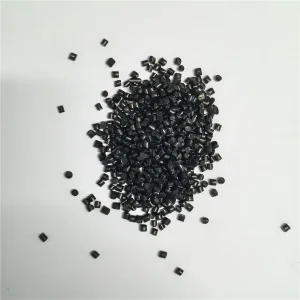
Polyethylene (PE) pipe systems have become the undisputed global benchmark for low-to-medium pressure natural gas transportation. Driven by municipal modernization, coal-to-gas transition projects, and suburban utility expansions, the demand for high-integrity PE100 and PE100-RC (Resistance to Crack) piping compounds is expanding at a compound annual growth rate (CAGR) of over 6.2% globally. Black masterbatch serves as the single most critical functional additive in this domain, imparting absolute opacity, UV shielding, and structural thermal-oxidative stability required to guarantee a 50-to-100-year underground operational lifespan.
Unlike standard packaging or agricultural film masterbatches, gas pipe black masterbatch is subject to rigorous global compliance frameworks, including ISO 4427, EN 12201, and ASTM D3350. Tier-1 pipe manufacturers can no longer rely on off-the-shelf black concentrates. Sourcing from custom PE gas pipe black masterbatch factories and suppliers allows extruders to match exact Melt Flow Indexes (MFI), achieve precise carbon black loading (typically 40%–50% concentrate diluted to 2.0%–2.5% in final pipe extrusion), and guarantee non-migratory antioxidant packages tailored to specific resin bimodal PE structures.
Emerging technologies shaping the future of PE gas pipe masterbatch manufacturing.
As global energy grids transition toward decarbonization, blending natural gas with up to 20% Hydrogen (H2) presents new permeation and stress-cracking challenges. Advanced masterbatch suppliers are developing low-volatility, nano-dispersed P-type carbon black formulations that minimize micro-voids, significantly reducing gas micro-permeation through the PE pipe matrix.
Extrusion failures and premature pipe rupture under notch-stress testing stem almost exclusively from carbon black agglomerates > 30 microns. Leading custom factories now deploy continuous twin-screw compounders equipped with specialized shear-element geometries to maintain agglomerate sizes below 5 microns, effortlessly satisfying ISO 18553 microscopic evaluation.
Modern pipe extruders demand longer Oxidation Induction Times (OIT). Custom masterbatch formulations incorporate high-molecular-weight primary Hindered Phenolic Antioxidants paired with secondary Organo-phosphites, maintaining OIT values above 30 minutes at 200°C even after high-shear extrusion passes.
How environmental stress, local standardizations, and trenching techniques dictate custom masterbatch formulations.
In North American municipal gas projects, black masterbatch must meet ASTM D3350 Cell Classification requirements (e.g., Code E for outdoor storage weatherability). Masterbatch suppliers must guarantee P-type carbon black with particle sizes between 15 nm and 25 nm, ensuring superior UV absorption while maintaining strict resistance to environmental stress cracking (ESCR) under ASTM D1693 / F1473 (PENT test).
Gas pipe installations across the GCC region suffer extreme ambient surface temperatures (exceeding 60°C during trench exposure) and elevated solar UV indexes. Custom masterbatches tailored for these markets increase primary carbon black loading with specialized thermal stabilizers to prevent pre-installation photo-degradation during long open-air staging periods.
European gas utilities demand strict non-migratory additives and low volatile organic compound (VOC) emissions during electrofusion joint welding. Custom suppliers formulate using ultra-pure virgin LLDPE/HDPE carrier resins with melt indexes perfectly matched to bimodal PE100-RC pipe bases, preventing weld-interface weakness.
Rapid urbanization in Asia relies heavily on Trenchless Horizontal Directional Drilling (HDD) to lay underground gas lines. Pipes experience severe surface abrasion. Masterbatches engineered for HDD applications incorporate surface-toughening additives and hydrophobic carbon black surfaces that reduce micro-scratch crack propagation.
Quantitative performance parameters required for premium PE gas pipe black masterbatch compounding.
| Performance Parameter | Test Standard | Standard Masterbatch | Custom PE Gas Pipe Masterbatch |
|---|---|---|---|
| Carbon Black Type | ASTM D3849 | N330 / Commodity Furnace | P-Type Fine Particle (≤ 20 nm) |
| Carbon Black Content (%) | ISO 6964 / ASTM D1603 | 30% - 40% | 40% - 50% (± 0.5% tolerance) |
| Microscopic Dispersion | ISO 18553 | Grade ≤ 4.5 | Grade ≤ 2.0 - 3.0 |
| Oxidation Induction Time (OIT) | ISO 11357-6 (200°C) | < 15 Mins | > 30 to 50 Mins |
| Melt Flow Index (MFI 190°C/21.6kg) | ISO 1133 / ASTM D1238 | Uncontrolled | Matched to Base Resin (± 10%) |
| Moisture Content (%) | Karl Fischer / ISO 15512 | < 0.1% | < 0.02% (200 ppm) |
| Hydrostatic Strength (50-Yr) | ISO 1167 / EN 921 | Not Certified | Passes 10.0 MPa / 80°C / 1000h |
Achieving these stringent parameters requires high-torque co-rotating twin-screw extruders featuring a Length-to-Diameter (L/D) ratio of 44:1 or higher. The processing setup employs multi-stage side feeders, twin-screw volumetric gravimetric dosing, and continuous vacuum degassing to strip residual volatiles. Subsequent underwater pelletizing guarantees uniform spherical granulate geometry, preventing bridging in standard pipe extruder hoppers.
A complete verification checklist for evaluating gas-pipe grade masterbatch manufacturers.
Ensure the factory utilizes prime virgin LLDPE/HDPE carrier resins with zero recycled content. The melt viscosity of the masterbatch must match the target PE100 or PE100-RC pipe compound to eliminate phase separation during extrusion.
Audit whether the supplier is equipped with microtome slicing equipment and transmission optical microscopes to perform routine dispersion testing on every production lot prior to dispatch.
Verify ISO 9001/14001 factory accreditation, REACH/RoHS compliance, and accredited third-party test reports (such as Bodycote or SKZ) confirming 50-year hydrostatic pressure performance.
Expert answers to standard engineering and procurement inquiries regarding gas pipe black masterbatch.
Factory-direct supply of specialized color, metallic, and filler masterbatches engineered for global plastic extruders.