Engineered for extreme melt-temperature stability, zero pigment agglomeration, and superior dispersion in Polyethylene (PE) pipe extrusion and film processing.
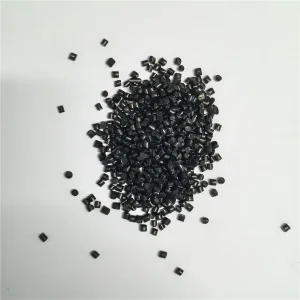
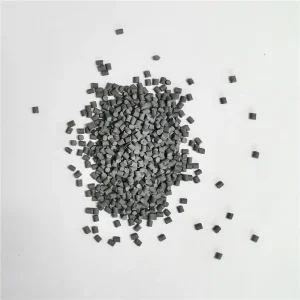
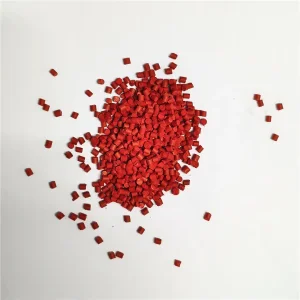
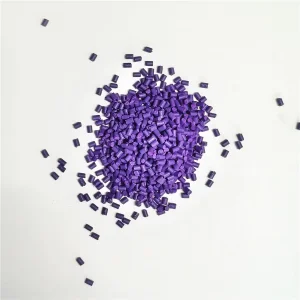
An authoritative analysis of high-density polyethylene (HDPE) stabilization, pigment dispersion thermodynamics, and structural integrity preservation in modern piping networks.
In the domain of modern civil infrastructure, municipal engineering, and industrial fluid transportation, Polyethylene (PE) piping networks—specifically those synthesized from High-Density Polyethylene 100 (HDPE PE100) and PE80 resins—form the critical vascular backbone of global municipal water, natural gas distribution, agricultural drip networks, and optical fiber conduit protection. However, the raw polyolefin matrix itself is inherently vulnerable to photo-oxidative degradation, thermal shearing stress during continuous high-output extrusion, and micro-structural stress cracking induced by localized pigment agglomeration.
This is where specialized custom PE pipe extrusion masterbatch engineering steps in. A premium masterbatch is far more than a simple colorant; it is a highly sophisticated, multi-functional polymer carrier matrix loaded with nano-dispersed Carbon Black (P-type or E-type), primary and secondary Antioxidants (Hindered Phenols and Phosphites), Hindered Amine Light Stabilizers (HALS), and precise rheology modifiers. As global pipe extrusion speeds increase beyond 30 meters per minute on high-efficiency single and twin-screw extruders, the technical burden on masterbatch manufacturers to deliver ultra-consistent dispersion without compromising Long-Term Hydrostatic Strength (LTHS) or Minimum Required Strength (MRS) has reached unprecedented levels.
Achieving absolute pigment dispersion at a sub-micron scale (< 5 microns) while maintaining carrier resin Melt Flow Index (MFI) parity with host HDPE/LDPE resins. This ensures zero pinhole formation, zero melt-fracture at the die face, and complete compliance with international pressure pipe standards including ISO 4427, EN 12201, EN 1555, and ASTM D3350.
Advanced twin-screw co-rotating compounding ensures pigment agglomerates are broken down below threshold levels, preventing localized stress concentrators in pipe walls under internal pressure.
Custom organo-metallic pigment systems paired with heat-stabilized carrier resins guarantee zero discoloration, blooming, or thermal degradation during long-barrel residence times.
Engineered with 20-25nm fine-particle Carbon Black at 40-50% loading rates, offering complete UV protection for above-ground mining and agricultural pipe applications.
Solving the critical processing challenges of melt fracture, die build-up, and oxidation in continuous pipe extrusion lines.
A primary failure mode in extruded PE pipes is the improper selection of the carrier resin within the masterbatch formulation. If the Melt Flow Index (MFI) of the masterbatch carrier is significantly higher than that of the base pipe compound (e.g., HDPE PE100 with an MFI of 0.25–0.45 g/10 min at 190°C/5kg), phase separation occurs inside the extruder barrel. This results in non-homogeneous layer distribution, internal voids, and uneven wall thickness.
At Changzhou Jiazhou Plastic Products Co., Ltd., our custom PE pipe masterbatches utilize narrow molecular weight distribution (MWD) LLDPE and bimodal HDPE carrier resins specifically calibrated to match the rheological shear behavior of host pipe polymers under high shear rates. This guarantees seamless interfacial bonding and uniform pigment dissolution during extrusion.
For black PE pressure pipes, Carbon Black is not merely a pigment—it is a critical UV absorber and free-radical scavenger. However, if Carbon Black particles re-agglomerate into clusters larger than 10 microns, they act as localized stress concentration points under internal hydrostatic pressure, dramatically lowering the pipe's resistance to Slow Crack Growth (SCG). Our manufacturing facility utilizes high-intensity continuous compounding lines with specialized mixing elements (Z-blade and kneader-block configurations) to achieve a pigment dispersion rating of Grade 1-2 according to ISO 18553 standards.
| Masterbatch Type | Pigment/Active Content | Carrier Matrix | Target Pipe Application | Key International Standard |
|---|---|---|---|---|
| Black PE Pipe Masterbatch | 40% - 50% Carbon Black (20-25nm) | Bimodal HDPE / LLDPE | Water, Gas, Sewage & Mining Pipes | ISO 4427 / EN 12201 / ISO 6964 |
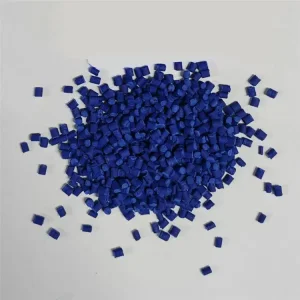
| Blue Identification Stripe MB | 25% - 35% Phthalocyanine Blue | HDPE PE100 Grade | Potable Water Co-extrusion Lines | BS EN 12201-2 / AS/NZS 4130 |
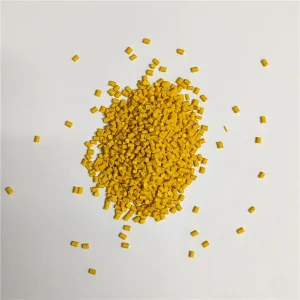
| Yellow Gas Pipe Masterbatch | 30% - 40% Anti-Migration Yellow | High-Density PE | Natural Gas & Fuel Line Extrusion | ISO 4437 / EN 1555-2 |
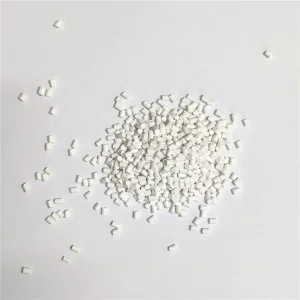
| UV Stabilized White MB | 60% - 70% TiO2 (Rutile Type) | LLDPE / PE Carrier | Agricultural Irrigation & Telecommunications | ASTM D3350 / ISO 1183 |
| CaCO3 Filler Masterbatch | 75% - 85% Fine Calcium Carbonate | PE Carrier Matrix | Non-Pressure Pipes & Drainage Conduits | GB/T 19472 / ISO 9001:2015 |
During the extrusion process, PE resins are exposed to temperatures between 180°C and 240°C in the presence of residual oxygen and mechanical shear. Without adequate antioxidant protection, thermal-oxidative degradation degrades the polymer chains, significantly reducing the pipe's operational lifespan. Jiazhou's pipe-grade masterbatches incorporate a synergistic blend of primary hindered phenolic antioxidants and secondary phosphite processing stabilizers. This formulation ensures that the final extruded pipe easily exceeds the mandatory Oxidation Induction Time (OIT > 30 minutes at 200°C) required by stringent international specifications.
Addressing the strict commercial, regulatory, and technical requirements of multinational plastic pipe manufacturers and infrastructure contractors.
Formulated in strict adherence to global food-contact and drinking water standards (FDA 21 CFR 177.1520, REACH, RoHS). Free from heavy metals, toxic plasticizers, and volatile organic compounds (VOCs) to guarantee taste-neutral, non-contaminating water conveyance.
Custom yellow and orange masterbatches formulated with ultra-high lightfastness (Blue Wool Scale 7-8) and weather stability. Ensures vivid color retention over 50 years of underground burial and outdoor storage without color migration or chalking.
Super-filtered through high-mesh screens (up to 325 mesh) during compounding to eliminate large particles. Prevents die buildup and screen-pack clogging in thin-walled drip irrigation tape extrusion down to 0.15mm wall thickness.
For modern high-capacity pipe production plants operating multi-layer co-extrusion systems, masterbatch efficiency directly impacts operational profit margins. Utilizing low-quality or inconsistent masterbatch leads to frequent line stoppages for screen pack changing, die lip cleaning, and off-spec pipe rejection. Changzhou Jiazhou's high-concentration masterbatches allow lower Let-Down Ratios (LDR typically between 1.5% to 3.0%), significantly reducing raw material freight costs, storage footprints, and per-meter pipe manufacturing expenses.
A 16-year B2B manufacturing hub dedicated to scientific masterbatch compounding, automated quality control, and worldwide customer support.
Operating from a modern 6,000 m² ISO-certified manufacturing facility in Changzhou, Jiangsu Province, Jiazhou is equipped with multi-stage co-rotating twin-screw extrusion compounding units, high-speed turbomixers, and underwater pelletizing systems. Our annual production capacity exceeds thousands of metric tons, servicing domestic and international markets across 100+ countries.
Every masterbatch batch manufactured at Jiazhou undergoes comprehensive laboratory inspection prior to dispatch. Our state-of-the-art Quality Control Center utilizes advanced testing apparatus to benchmark optical, thermal, and mechanical properties against strict customer tolerances.
Pioneering sustainable carrier resins, smart functional additives, and post-consumer recycled (PCR) polymer integration.
Developing specialized compatibilizing masterbatches that neutralize impurities and restore tensile strength in PE pipe extrusions containing up to 50% Post-Consumer Recycled (PCR) polyolefin feedstocks.
Integrating graphene and nano-clay platelets into PE pipe masterbatches to lower gas permeability in fuel lines and increase resistance to chemical leaching in industrial effluent piping.
Transitioning toward 100% bio-based Polyethylene carriers derived from sugarcane ethanol, enabling carbon-neutral pipe manufacturing without altering processing parameters.
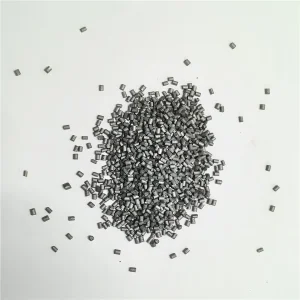
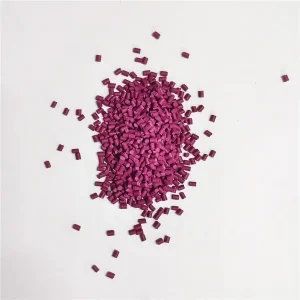
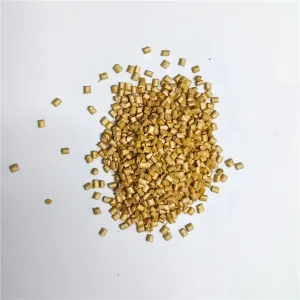
Explore our full line of non-toxic, heat-resistant, and anti-fading masterbatches engineered for injection molding, blown film, and pipe extrusion.
Detailed technical answers to common questions raised by polymer engineers, procurement directors, and extrusion line managers.
When properly formulated with sub-micron dispersed pigments and carrier resin MFI parity, high-quality masterbatch does not impair the Minimum Required Strength (MRS) of HDPE 100 compound (10 MPa at 50 years at 20°C). In fact, the inclusion of primary antioxidants and nano Carbon Black acts as a barrier against thermo-oxidative and photo-degradative degradation, preserving structural integrity per ISO 4427 tests.
For standard black HDPE pressure pipes, a masterbatch loading of 2.0% to 2.5% is typically specified to achieve the mandatory 2.0% - 2.5% carbon black content required by ISO 6964. For identification stripes (Blue, Yellow, Red), an LDR of 1.5% to 3.0% is recommended depending on the layer thickness and line speed.
We compound our masterbatches with high-performance Hindered Phenolic Antioxidants (such as Irganox 1010) combined with Phosphite processing stabilizers (Irgafos 168). This dual-action additive package scavenges alkyl radicals during high-temperature extrusion and neutralizes hydroperoxides, preserving an OIT well above the standard 20-minute ISO threshold.
Yes. Our laboratory uses advanced spectrophotometric equipment (Datacolor 800 series) to precise-match custom RAL, Pantone, or customer-supplied color targets. We ensure a tight color delta tolerance (ΔE < 0.3) across production batches for color-coded utility conduit systems.
Die buildup is primarily caused by low-molecular-weight waxes, undispersed fillers, or volatile additives migrating to the die exit under shear. Jiazhou masterbatches utilize high-purity carrier polymers, vacuum-degassed compounding processes, and specialized processing aids to eliminate low-molecular volatile fractions, ensuring clean die operation over extended extrusion runs.
All products manufactured by Changzhou Jiazhou Plastic Products Co., Ltd. comply with ISO 9001:2015 quality management standards. Furthermore, our raw materials and masterbatch formulations comply with EU REACH regulation (EC 1907/2006), RoHS Directives, and FDA 21 CFR 177.1520 for food and drinking water contact applications.
Contact our chemical engineering team today to request custom sample matching, technical data sheets (TDS), safety data sheets (SDS), or factory pricing for global bulk exports.