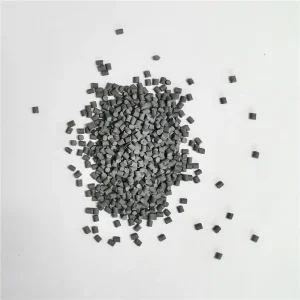
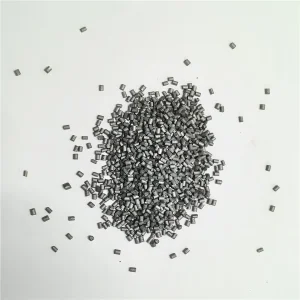
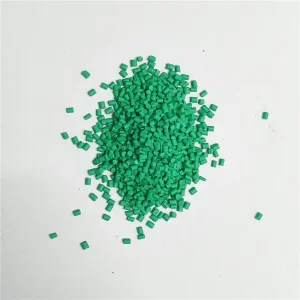
Explore our core range of high-dispersion, non-migratory pigment masterbatches manufactured specifically for high-load injection molded PE stools, chairs, and industrial seating.
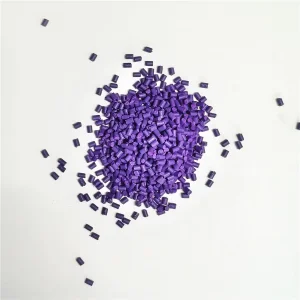
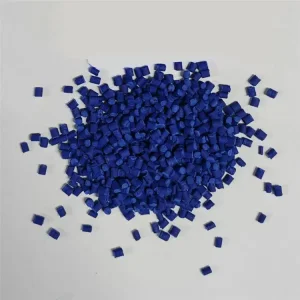
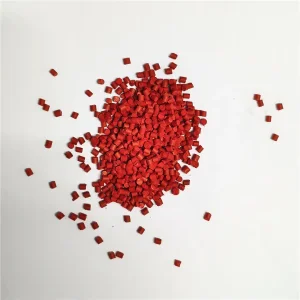
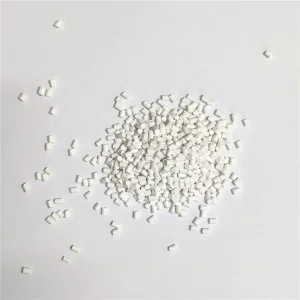
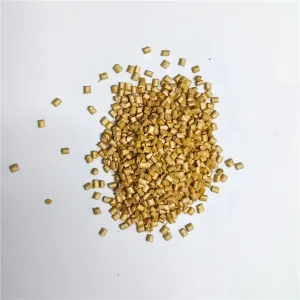
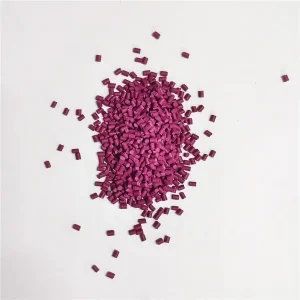
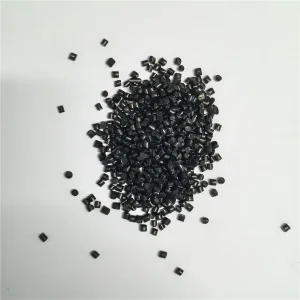
An authoritative analysis of polymer colorant dynamics, international trade flows, structural load demands, and global supply chain imperatives for high-density polyethylene (HDPE) seating systems.
The global polyethylene (PE) seating and plastic stool market has undergone a dramatic technological evolution over the past decade. No longer viewed strictly as low-cost domestic commodities, modern plastic stools are engineered industrial products deployed across commercial hospitality, logistics hubs, educational institutions, outdoor public infrastructure, and heavy industrial environments. Consequently, global procurement directors, quality assurance leads, and injection molding plant managers face stringent performance metrics regarding color consistency, UV stability, environmental stress crack resistance (ESCR), tensile retention, and non-migration of chemical additives.
Central to achieving these demanding specifications is the choice of **PE Plastic Stool Masterbatch**. As a custom formulation specialist and direct manufacturing enterprise, our company engineers tailored color masterbatches designed to seamlessly integrate with HDPE (High-Density Polyethylene), LLDPE (Linear Low-Density Polyethylene), and PP/PE blend resins. The global B2B procurement vector emphasizes four critical operational mandates:
Standard commercial colorants often compromise the crystalline matrix of HDPE resins during injection molding, leading to brittle fracture under load. Our masterbatches utilize rheologically matched carrier resins that protect impact resistance and flexural modulus under heavy static loads (200kg+ testing).
Outdoor plastic stools deployed in tropical, arid, or high-UV environments require superior lightfastness (Blue Wool Scale 7-8) and weatherability (ISO 4892-2 xenon-arc testing) to prevent surface chalking, micro-cracking, and premature color fading over 5+ years of exposure.
Plastic stools engineered for pediatric, educational, or domestic utility must prevent heavy metal leachability and organic pigment migration. Formulations are fully compliant with RoHS 3.0, REACH SVHC, FDA 21 CFR, and EN 71-3 safety frameworks.
Deep Technical Insight: Resolving Dispersion Velocity, Melt Flow Index (MFI) Discrepancies, and Rheological Phase Separation in Heavy Injection Molding Operations.
A primary failure mode in large-scale plastic stool injection molding is surface defect formation—specifically weld-line weakness, flow marks, streaking, and differential shrinkage leading to stool leg warping. From a microstructural polymer perspective, these flaws stem from mismatching the carrier resin of the color masterbatch with the virgin base polymer (typically HDPE injection grades with MFI ranging from 4.0 to 20.0 g/10 min at 190°C/2.16kg).
Our masterbatch compounding architecture utilizes custom-synthesized Low-Density and Linear Low-Density Polyethylene carrier matrices featuring optimized molecular weight distributions (MWD). By controlling shear stress within co-rotating twin-screw extruders operating with L/D ratios of 40:1 or 44:1, we achieve microscopic pigment deagglomeration down to sub-micron particle distributions (D90 < 1.5 μm).
| Technical Parameter | Standard PE Colorant | Jiazhou Custom Stool Masterbatch | Test Method Standard |
|---|---|---|---|
| Carrier Resin Compatibility | Generic LDPE Wax | Engineered HDPE/LLDPE Co-Polymer | ASTM D1238 / ISO 1133 |
| Melt Flow Index (MFI) | 2.0 - 5.0 g/10 min | 12.0 - 25.0 g/10 min (Customizable) | ISO 1133 (190°C / 2.16 kg) |
| Pigment Dispersion Index | Grade 3.0 (Visible Specks) | Grade 1.0 (Zero Micro-Agglomerates) | ISO 18553 Pressure Filter Test |
| Heat Thermal Stability | 200°C - 220°C | 260°C - 280°C (Zero Color Shift) | DIN EN 12877-2 |
| Lightfastness Rating | BW Grade 4 - 5 | BW Grade 7 - 8 (Maximum Outdoor Life) | ISO 105-B02 Xenon Arc |
| Environmental Stress Cracking | Standard Degradation | ESCR Enhanced (> 1000 Hours) | ASTM D1693 Condition B |
16+ Years of Masterbatch Manufacturing Rigor: Inside Changzhou Jiazhou Plastic Products Co., Ltd.’s 6,000m² Certified Production Facility.
Every custom plastic stool masterbatch is formulated using Datacolor 800 Spectrophotometer systems. We guarantee color tolerance matching below ΔE 0.3 against PANTONE, RAL, or physical client master samples under multiple illuminants (D65, A, TL84).
Equipped with analytical Thermogravimetric Analysis (TGA) units, Differential Scanning Calorimeters (DSC), and Melt Flow Rate (MFR) apparatus. Incoming pigments and base resins undergo 100% raw material inspection prior to compounding.
Operating out of Changzhou, Jiangsu Province, our factory enforces full ISO 9001:2015 quality management systems alongside eco-friendly manufacturing compliance. Annual production exceeds 20,000 metric tons supplying 100+ countries.
Our engineering laboratory collaborates directly with international furniture manufacturers, plastic stool molders, and chemical procurement teams to solve real-world processing issues. Whether addressing high mold deposit (plate-out), gas venting blockage during fast injection cycles, or sink-mark elimination via specialized filler masterbatches, our technical team provides on-site or remote technical support, masterbatch let-down ratio (LDR) optimization, and custom color development within 48 hours.
Tailored Masterbatch Formulations Designed for Distinct Physical, Thermal, and Environmental Requirements in Plastic Furniture Manufacturing.
Industrial seating requires high structural rigidity and impact strength under rough handling. Our black and grey PE masterbatches integrate high-surface-area carbon black (P-type) and reinforcing calcium carbonate (CaCO₃) fillers to increase structural stiffness while preventing stress whitening.
Commercial outdoor stools are subject to prolonged UV exposure, rain, and thermal cycles. We engineer masterbatches containing Hindered Amine Light Stabilizers (HALS 622/944) and UV Absorbers (UV-326) to deliver superior weatherability and color stability over extended multi-year outdoor usage.
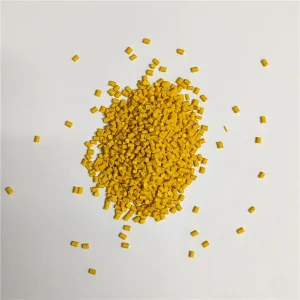
Color vibrance and toxicological safety are paramount for domestic and children's stools. Formulated with heavy-metal-free organic pigments, our non-toxic yellow, red, blue, green, and pastel masterbatches meet strict food-contact and toy safety regulations (EN 71-3 and FDA 21 CFR).
Next-Generation Sustainable Coloration, Circular Economy Compatibility, and AI-Optimized Compounding for Polyethylene Products.
With global legislation pushing for Post-Consumer Recycled (PCR) content in plastic goods, our R&D team has developed high-opacity, color-masking masterbatches. These allow plastic stool manufacturers to integrate up to 80% recycled HDPE regrind while maintaining vibrant, uniform end-product coloration.
Conventional carbon black absorbs Near-Infrared (NIR) light, making plastic stools undetectable in automated recycling sorting facilities. Our futuristic NIR-detectable black masterbatch range enables efficient optical sorting and mechanical recycling within circular plastics networks.
By leveraging neural network color formulation modeling, we reduce sample matching iteration times from days to hours. Smart compounding technology monitors melt pressure and temperature in real-time to maintain near-zero batch-to-batch color variance.
In-Depth Technical Solutions to Common OEM/ODM Masterbatch Selection, Injection Molding Processing, and Regulatory Compliance Queries.
For standard polyethylene plastic stool injection molding, our recommended Let-Down Ratio (LDR) ranges between **1.0% and 4.0%** depending on pigment concentration, opacity requirements, and wall thickness. High-concentration color masterbatches typically operate efficiently at 1.5% to 2.0% LDR, achieving complete opacity without altering the mechanical crystallization behavior of the base HDPE resin.
Warping and stress cracking occur when organic pigments act as nucleating agents, creating non-uniform crystalline structures and internal thermal stresses during cooling. Our plastic stool masterbatches utilize non-nucleating or nucleation-neutralized organic and inorganic pigment formulations combined with PE carriers engineered to match the melt flow rate (MFR) of your specific HDPE injection grade, ensuring balanced shrinkage across the mold cavity.
Yes. We custom-blend multi-functional additive masterbatches containing high-grade Hindered Amine Light Stabilizers (HALS) and UV absorbers combined with lightfast inorganic pigments (Blue Wool Scale 7-8). This synergistic additive package protects the PE polymer backbone against photo-oxidative degradation, preventing color shift, chalking, and loss of tensile impact strength under long-term solar radiation.
Our full masterbatch portfolio complies with **RoHS 3.0 (EU 2015/863)**, **REACH SVHC**, **FDA 21 CFR** (for food-contact safe variants), and **EN 71-3** (safety of toys and children's furniture). Heavy metal testing (Lead, Cadmium, Mercury, Hexavalent Chromium) is certified per batch via third-party SGS or Intertek laboratory reports.
We operate a computer-controlled spectrophotometer laboratory. Clients can provide a physical plastic piece, Pantone color code, or RAL reference. We analyze the spectral curve and develop custom trial samples (free of charge for qualification) within 48 to 72 hours, delivering precise delta E (ΔE < 0.3) matching under standardized D65/TL84 lighting conditions.
Explore our extended series of PE colorant and filler masterbatches engineered for injection molding, extrusion, and blown film processing factories worldwide.