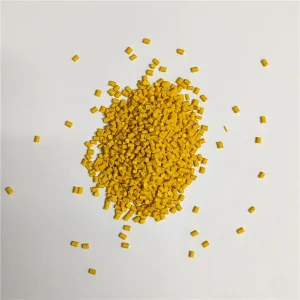
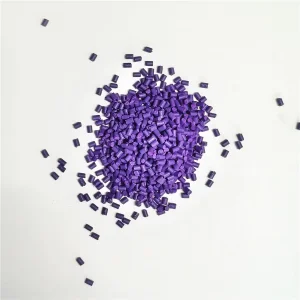
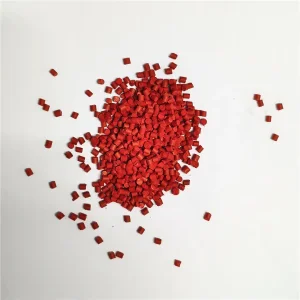
Engineered for high-concentration injection molding, blown film extrusion, and industrial plastic manufacturing.
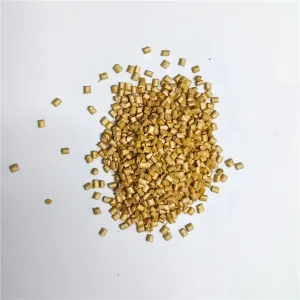
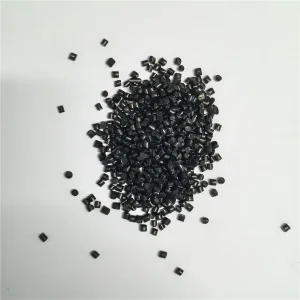
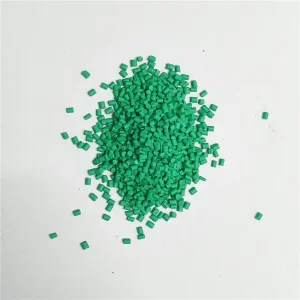
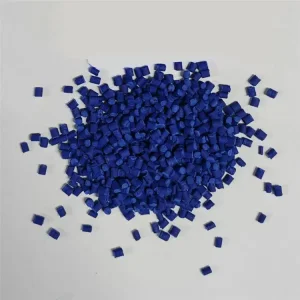
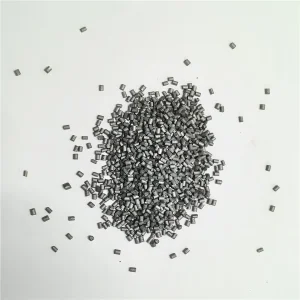
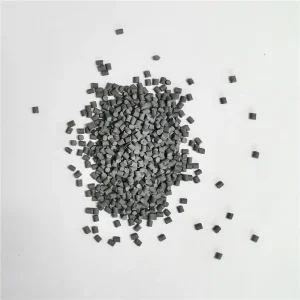
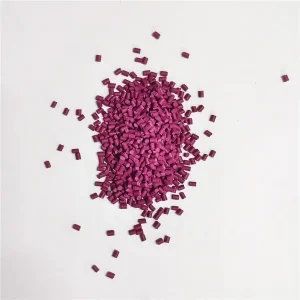
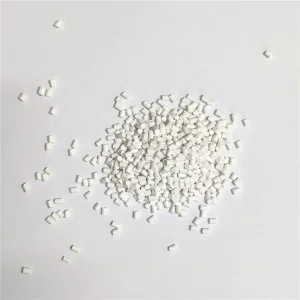
An analytical overview of processing economics, supply chain dynamics, and chemical manufacturing benchmarks driving the $13.5 Billion global color concentrate market.
The global plastics industry relies heavily on polymer color concentrates (commonly referred to as masterbatches) to impart visual, thermal, and mechanical functionality into virgin and recycled resin matrices. Custom resin color concentrates represent specialized formulations where high-density organic/inorganic pigments, dyes, and performance additives are compounding-dispersed into tailored carrier resins (such as PE, PP, PS, ABS, PET, and PA). Unlike standard off-the-shelf color pellets, custom concentrates are engineered to resolve specific rheological, thermal degradation, and spectro-photometric challenges encountered in high-speed converted products.
Polyethylene (PE) and Polypropylene (PP) carriers constitute over 62% of global volume demand. Their broad processing window and cost-efficiency make them ideal for film extrusion, blow molding, and high-volume injection processes.
Rapid expansion in automotive electronics and medical diagnostics has increased demand for high-temperature carrier systems (PBT, PC, Polyamide) capable of withstanding melt temperatures exceeding 300°C without shade shift.
Stringent global mandates (EU Packaging & Packaging Waste Regulation, US State PCR requirements) force color manufacturers to develop high-tinting concentrates tailored for discolored recycled polyolefins (PCR/PIR).
Deconstructing particle size distribution, melt viscosity index matching, and interfacial energy optimization in high-shear compounding.
The core challenge in color concentrate compounding is transforming agglomerated raw pigment powders (aggregates often exceeding 10–50 microns) into sub-micron primary particles distributed homogeneously within the carrier polymer. In high-speed blown film lines (producing films down to 10 microns thickness), un-dispersed pigment agglomerates create micro-voids, pinholes, and bubble breaks.
Leading suppliers utilize co-rotating twin-screw extruders featuring specialized kneading blocks and mixing elements designed to provide optimal shear stress without degrading the polymer carrier chains. Melt Flow Index (MFI) matching between the carrier resin and the target let-down matrix is critical: a carrier with excessively low MFI causes flow instabilities and shark-skin defects, while an overly fluid carrier leads to phase separation and streaks.
Precision industrial color formulation relies on the CIELAB color space, measuring lightness ($L^*$), red-green axis ($a^*$), and yellow-blue axis ($b^*$). Modern OEM specifications demand strict color tolerances, frequently requiring a total color difference ($\Delta E^*_{ab}$) of less than 0.5 under multiple standard illuminants (D65, A, F11/TL84).
To prevent metamerism—where two colored plastic parts match under office lighting but split under daylight—custom concentrate formulators evaluate spectral reflectance curves across 400nm–700nm ranges. Formulations incorporate high-fastness organic pigments (such as Phthalocyanine Blues/Greens, Quinacridones, and Perylenes) coupled with high-durability Rutile Titanium Dioxide ($\text{TiO}_2$) to ensure light fastness indices exceeding 7-8 on the Blue Wool Scale.
Analyzing technological breakthroughs reshaping masterbatch manufacturing across sustainability, digital color matching, and intelligent dosing systems.
Traditional Carbon Black color concentrates absorb Near-Infrared (NIR) radiation used in automated Material Recovery Facilities (MRFs), rendering black plastic packaging invisible to sorting sensors and forcing it into landfills.
Advanced suppliers now manufacture NIR-detectable black masterbatches using specialized organic dyes and perylene pigments. These allow automated sorting systems to identify and classify black HDPE, PP, and PET rigid containers, creating closed-loop recycling pathways.
Post-Consumer Recycled resins inevitably present residual yellowing, graying, and lot-to-lot shade variances. Custom concentrate manufacturers have created "PCR Color Neutralizers"—concentrates combining optical brighteners, tinting agents, and antioxidants.
These formulations offset the inherent background color of recycled feeds, permitting plastic converters to incorporate up to 100% PCR without compromising branded packaging color fidelity.
To comply with global bioplastic growth, manufacturers are replacing fossil-derived PE/PP carriers with certified compostable polylactic acid (PLA), polybutylene adipate terephthalate (PBAT), and PHA carriers.
These bio-concentrates ensure that industrial compostability certification (EN 13432 / ASTM D6400) is maintained for agricultural mulch films, food service disposables, and organic waste bags.
How customized color chemistry overcomes extreme processing environments across diverse end-use sectors.
Industrial Scenario: A flexible packaging manufacturer operating 7-layer co-extrusion blown film lines experienced frequent filter pack clogging and bubble tears when introducing standard 50% loaded PE white masterbatch at high let-down ratios (LDR).
Custom Solution: Formulated an ultra-dispersed, 70% Titanium Dioxide ($\text{TiO}_2$) white concentrate utilizing hydrophobic silane surface-treated pigments and a dual low-viscosity LLDPE/wax carrier matrix. Filter pressure value (FPV) dropped from 3.5 bar/g to < 0.6 bar/g, eliminating line outages and boosting film yield by 14%.
Industrial Scenario: Tier-1 automotive molders producing exterior bumper trims and side mirror housings faced severe color fading and surface chalking under accelerated Xenon Arc weathering tests (SAE J2527).
Custom Solution: Developed a synergistic UV-stabilized custom masterbatch combining high-tint organic pigments with Hindered Amine Light Stabilizers (HALS 944 / 119) and UV absorbers (Benzotriazole). The compound survived 3,000 hours of continuous irradiation with a total color change ($\Delta E^*$) under 1.2.
Anticipating next-generation masterbatch capabilities: AI-driven color matching, functional micro-encapsulation, and smart additives.
Integration of machine learning algorithms with spectrophotometric cloud databases allows custom suppliers to formulate optical matches within seconds. AI models predict color shifts during heat processing, reducing initial trial-and-error compounding cycles by 80%.
Future concentrates seamlessly combine vibrant pigment systems with active functionalities: anti-microbial silver ion agents, anti-static slip additives, infrared-reflective thermal barriers, and oxygen scavengers within a single pelletized carrier.
Using nano-clays, carbon nanotubes, and nano-titanium dioxide enables high color opacity and UV blocking at dramatically lower loading rates (LDR < 0.5%), retaining the native transparency and ductility of virgin polymers.
The complete technical compliance architecture ensuring batch-to-batch repeatability and global regulatory acceptance.
Modern resin color concentrate manufacturers adhere to rigid global chemical compliance standards. Formulations intended for food contact applications are certified under FDA 21 CFR 178.3297, EU Regulation No 10/2011, and GB 9685. Heavy-metal-free formulations ensure compliance with RoHS 3 (Directive 2015/863) and REACH SVHC (Substances of Very High Concern), mitigating liability for multinational brand owners.
Every production batch undergoes exhaustive laboratory validation before shipment:
Expert answers to complex technical questions encountered during resin color concentrate selection, dosing, and processing.
The Let-Down Ratio (LDR) typically ranges from 1% to 5%, depending on pigment loading efficiency and part thickness. For high-pigment masterbatches (50%–70% loading), an LDR of 1% to 2% is common for thick-walled injection molded parts, whereas 3% to 5% is standard for thin-film extrusion to guarantee uniform opacity and streak-free dispersion.
Using an incompatible carrier resin (e.g., a PE-based masterbatch in Polycarbonate or PET) leads to phase separation, severe mechanical strength degradation, delamination, and haze. The carrier resin must either match the base resin identically or belong to a chemically compatible polymer family with a slightly higher Melt Flow Index (MFI).
Well-formulated masterbatches maintain structural integrity. However, excessive pigment loading, poor dispersion, or coarse inorganic fillers can act as stress concentrators, lowering impact strength and tensile elongation. Working with experienced manufacturers ensures optimal wetting agents and coupling additives are incorporated to preserve impact metrics.
Migration and blooming occur when low-molecular-weight organic pigments or dyes possess partial solubility in the polymer matrix at elevated temperatures. As the plastic cools, the colorant crystallizes and migrates to the surface. Selecting high-molecular-weight, insoluble organic or inorganic pigments prevents migration across flexible PVC, EVA, and polyolefin substrates.
Thermal fastness measures a pigment system's resistance to thermal decomposition during melt processing (e.g., 260°C–300°C residence time in the barrel). Light fastness evaluates resistance to UV degradation and color fading when exposed to sunlight. Custom formulators evaluate both parameters independently to match processing and outdoor application lifetimes.
To achieve rapid color approval, buyers should specify: 1) Target polymer grade and MFI, 2) Processing method and peak processing temperature, 3) End-use environment (indoor vs. outdoor UV exposure), 4) Regulatory constraints (food contact, REACH, RoHS), and 5) Physical target sample or Pantone / RAL color reference code.
Browse high-performance masterbatches engineered for maximum tinting strength and process reliability.